
Report Feature
Airport System Market Trends and Forecast
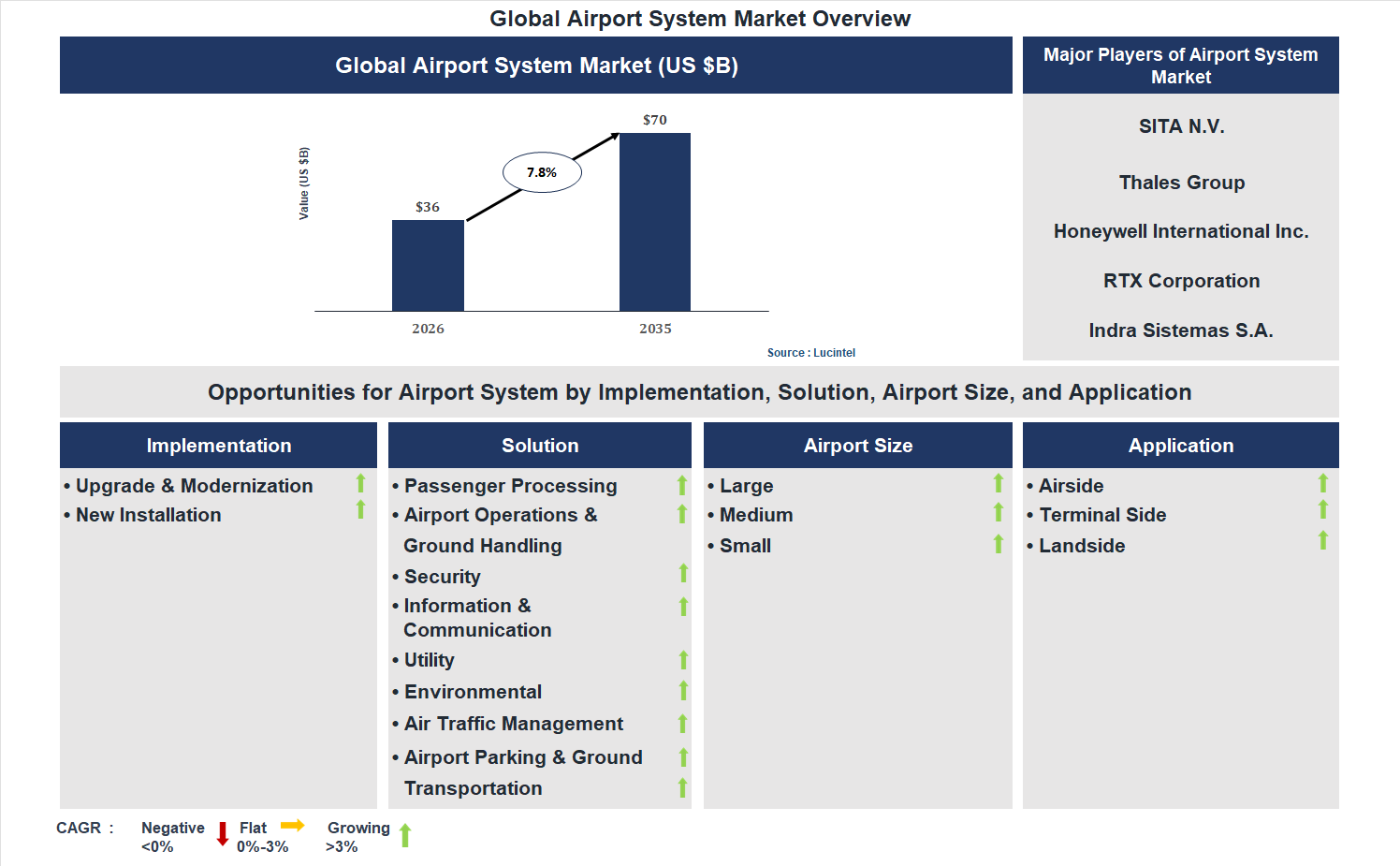
The future of the global airport system market looks promising with opportunities in the airside, terminal side, and landside markets. The global airport system market is expected to reach an estimated $70 billion by 2035 with a CAGR of 7.8% from 2026 to 2035. The major drivers for this market are the increasing demand for advanced security & surveillance systems, the growing demand for baggage handling & tracking systems, and the rising adoption of automation & digital technologies in airports.• Lucintel forecasts that, within the implementation category, upgrade & modernization is expected to witness higher growth over the forecast period.
• Within the application category, terminal side is expected to witness the highest growth.
• In terms of region, APAC is expected to witness the highest growth over the forecast period. Gain valuable insights for your business decisions with our comprehensive 150+ page report. Sample figures with some insights are shown below.
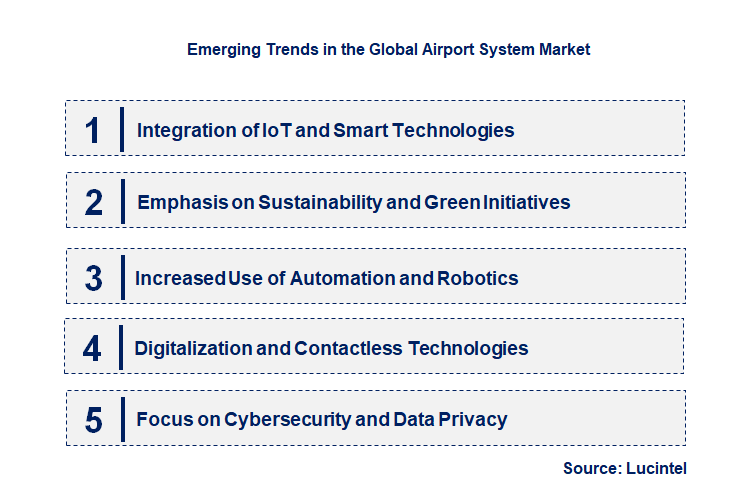
Emerging Trends in the Airport System Market
The airport system market is experiencing rapid transformation driven by technological advancements, evolving passenger expectations, and sustainability initiatives. As airports seek to enhance efficiency, security, and passenger experience, innovative solutions are increasingly integrated into existing infrastructure. The market is also influenced by digitalization, automation, and environmental concerns, prompting stakeholders to adopt smarter, greener, and more connected systems. These developments are not only improving operational performance but also redefining industry standards and competitive dynamics. Understanding these emerging trends is crucial for industry players aiming to stay ahead in a highly competitive and rapidly evolving landscape.• Integration of IoT and Smart Technologies: The adoption of Internet of Things (IoT) devices and smart systems is revolutionizing airport operations. IoT enables real-time data collection and analysis, improving baggage handling, security screening, and passenger flow management. Smart sensors and connected devices facilitate predictive maintenance, reducing downtime and operational costs. This integration enhances overall efficiency, safety, and passenger experience, making airports more responsive and adaptive to dynamic conditions. As IoT technology becomes more affordable and sophisticated, its adoption is expected to accelerate, leading to more intelligent and interconnected airport ecosystems.
• Emphasis on Sustainability and Green Initiatives: Environmental concerns are driving airports to adopt sustainable practices and green technologies. This includes the use of renewable energy sources, energy-efficient lighting, and eco-friendly building materials. Airports are also implementing water conservation measures and waste management systems to reduce their carbon footprint. These initiatives not only comply with regulatory requirements but also appeal to environmentally conscious travelers. The shift towards sustainability is prompting vendors to develop eco-friendly airport systems, fostering innovation in renewable energy integration, green building design, and sustainable operations, ultimately contributing to a greener aviation industry.
• Increased Use of Automation and Robotics: Automation is transforming various airport functions, from check-in and security to baggage handling and aircraft maintenance. Robotics and automated systems improve speed, accuracy, and security while reducing labor costs. Automated check-in kiosks, biometric security screening, and robotic baggage handlers streamline passenger processing and enhance safety. These technologies also minimize human error and improve operational reliability. As automation becomes more advanced and cost-effective, airports are increasingly deploying these solutions to enhance efficiency, reduce congestion, and deliver seamless passenger experiences, setting new standards for airport operations.
• Digitalization and Contactless Technologies: The COVID-19 pandemic accelerated the adoption of digital and contactless solutions in airports. Mobile boarding passes, contactless payment systems, and biometric identification reduce physical contact and improve hygiene. Digital platforms enable real-time flight updates, personalized services, and streamlined passenger journeys. These technologies enhance convenience, reduce wait times, and improve overall customer satisfaction. As digitalization continues to evolve, airports are investing in integrated digital ecosystems that facilitate smooth, contactless, and personalized travel experiences, aligning with changing traveler preferences and safety protocols.
• Focus on Cybersecurity and Data Privacy: As airports become more connected and reliant on digital systems, cybersecurity threats pose significant risks. Protecting sensitive passenger data, operational information, and critical infrastructure is paramount. Airports are investing in advanced cybersecurity measures, including encryption, intrusion detection, and regular security audits. Ensuring data privacy compliance is also a priority, especially with increasing regulations. Strengthening cybersecurity frameworks helps prevent cyberattacks that could disrupt operations or compromise safety. This focus on cybersecurity and data privacy is essential for maintaining trust, safeguarding assets, and ensuring resilient airport systems in a digital-first environment. These emerging trends are fundamentally reshaping the airport system market by fostering smarter, greener, and more secure airport environments. The integration of advanced technologies enhances operational efficiency and passenger experience, while sustainability efforts align the industry with global environmental goals. Automation and digitalization streamline processes, reducing congestion and contact points, especially in a post-pandemic world. Meanwhile, heightened cybersecurity measures ensure the integrity and safety of increasingly digital airport ecosystems. Collectively, these trends are driving innovation, competitiveness, and resilience, positioning the airport industry for sustainable growth and improved service delivery in the future.
Recent Development in the Airport System Market
The airport system market is experiencing rapid evolution driven by technological advancements, increasing passenger demand, and the need for enhanced security and operational efficiency. Innovations in automation, data analytics, and sustainable solutions are transforming airport infrastructure worldwide. These developments are creating new opportunities for stakeholders to improve passenger experience, reduce costs, and meet regulatory standards. As airports modernize, understanding these key growth areas is essential for market players aiming to capitalize on emerging trends and stay competitive in a dynamic environment.• Automation and Smart Technologies: The integration of automation and IoT in airport systems is revolutionizing operations. Automated check-in kiosks, baggage handling, and security screening streamline processes, reduce wait times, and enhance passenger experience. Smart sensors and data analytics enable real-time monitoring and predictive maintenance, minimizing downtime. These innovations lead to increased efficiency, lower operational costs, and improved safety standards, positioning airports to handle growing passenger volumes effectively.
• Enhanced Security Systems: Advanced security solutions, including biometric identification and AI-powered surveillance, are transforming airport safety protocols. These systems enable faster passenger processing while maintaining high security standards. The adoption of facial recognition and automated threat detection reduces human error and enhances overall security. As security concerns grow, airports investing in these technologies are better equipped to prevent threats, ensure passenger safety, and comply with international security regulations.
• Sustainable Airport Solutions: The focus on sustainability is driving the adoption of eco-friendly airport systems. Green building materials, energy-efficient lighting, and renewable energy sources like solar power are being integrated into airport infrastructure. Water conservation and waste management technologies further reduce environmental impact. These initiatives not only meet regulatory requirements but also reduce operational costs and improve airport reputation, attracting environmentally conscious travelers and stakeholders committed to sustainable development.
• Data Analytics and Passenger Experience: Data-driven insights are enabling airports to personalize services and optimize operations. Passenger flow analysis, predictive analytics, and mobile apps improve wayfinding, retail offerings, and overall experience. Real-time data helps in resource allocation, reducing congestion and wait times. Enhanced passenger satisfaction leads to increased loyalty and revenue. The ability to leverage big data is transforming airports into more efficient, customer-centric hubs, fostering competitive advantage in a crowded market.
• Infrastructure Modernization and Expansion: Upgrading existing facilities and expanding capacity are critical to meeting future demand. Modernization projects include new terminals, runways, and advanced baggage systems. These developments improve operational efficiency, safety, and passenger comfort. Investment in infrastructure attracts airlines and travelers, boosting regional connectivity and economic growth. As global travel rebounds, infrastructure modernization is essential for airports to remain competitive and accommodate increasing passenger and cargo volumes. These developments are significantly transforming the airport system market by enhancing operational efficiency, security, sustainability, and passenger experience. The integration of automation, advanced security, data analytics, and infrastructure upgrades is creating a more resilient and competitive industry. As airports adopt these innovations, they are better positioned to meet future demands, reduce costs, and improve service quality. Overall, these opportunities are driving growth and shaping the future landscape of global airport infrastructure.
Strategic Growth Opportunities in the Airport System Market
The airport system market is experiencing rapid growth driven by increasing air travel demand, technological advancements, and the need for enhanced security and operational efficiency. Airports worldwide are investing in modern infrastructure, automation, and integrated systems to improve passenger experience and streamline operations. Emerging markets and the adoption of smart airport solutions present significant opportunities for vendors and stakeholders. This evolving landscape offers numerous avenues for strategic expansion, innovation, and competitive advantage in the global airport system industry.• Integration of IoT and Smart Technologies for Real-Time Airport Management: The adoption of IoT devices and smart sensors enables airports to monitor and manage operations more efficiently. These technologies facilitate real-time tracking of baggage, aircraft, and personnel, reducing delays and improving safety. Enhanced data analytics support predictive maintenance and resource allocation, leading to cost savings and better passenger experiences. As airports seek digital transformation, integrating IoT into airport systems is a key growth driver.
• Expansion of Automated Passenger Processing and Biometric Security Solutions: Increasing passenger volumes demand faster, contactless processing methods. Automated check-in kiosks, biometric boarding, and facial recognition systems streamline passenger flow, reduce wait times, and enhance security. Governments and airports are investing heavily in biometric infrastructure to meet security standards and improve traveler convenience. The growth of these solutions is driven by technological advancements, regulatory support, and passenger preference for seamless travel experiences.
• Development of Sustainable and Energy-Efficient Airport Infrastructure: Environmental concerns and regulatory pressures are prompting airports to adopt sustainable practices. Green building materials, energy-efficient lighting, and renewable energy sources are being integrated into new and existing infrastructure. These initiatives reduce carbon footprints and operational costs, aligning with global sustainability goals. The demand for eco-friendly airport systems is expected to grow, creating opportunities for vendors specializing in sustainable technologies and infrastructure upgrades.
• Adoption of Integrated Airport Management Systems for Operational Efficiency: Comprehensive management platforms that unify various airport functions—such as security, baggage handling, and air traffic control—are gaining popularity. These systems improve coordination, reduce redundancies, and enhance decision-making. Cloud-based solutions and AI-driven analytics enable proactive management and resource optimization. As airports aim for higher efficiency and resilience, integrated systems are becoming essential, offering significant growth potential for technology providers.
• Increasing Deployment of Advanced Security and Surveillance Systems: Ensuring passenger safety remains a top priority, prompting airports to upgrade security infrastructure. Advanced surveillance technologies, including AI-powered cameras, biometric access controls, and automated threat detection, enhance security measures. These systems provide better situational awareness and faster response times. Growing security concerns and regulatory requirements drive demand for sophisticated security solutions, creating substantial opportunities for vendors offering cutting-edge surveillance and security technologies. The overall market is poised for substantial growth as airports worldwide adopt innovative, sustainable, and integrated systems to meet evolving operational, security, and passenger experience demands. These opportunities will foster technological advancements, improve efficiency, and support the development of smarter, safer airports globally.
Airport System Market Driver and Challenges
The airport system market is influenced by a complex interplay of technological advancements, economic conditions, and regulatory frameworks. Rapid innovations in automation, data analytics, and security systems are transforming airport operations, enhancing efficiency and passenger experience. Economic factors such as global travel demand, infrastructure investments, and airline industry growth significantly impact market expansion. Regulatory policies concerning safety, security, and environmental standards also shape market dynamics, often dictating technological adoption and operational practices. Navigating these drivers and challenges is crucial for stakeholders aiming to capitalize on emerging opportunities while addressing potential barriers in this evolving landscape. The factors responsible for driving the airport system market include:-• Technological Innovation: The integration of advanced technologies like IoT, AI, and automation is revolutionizing airport operations. These innovations enable real-time data management, predictive maintenance, and enhanced security, leading to improved efficiency and passenger satisfaction. As airports seek to modernize infrastructure, the adoption of smart systems becomes essential, driving market growth. The push for contactless check-ins and biometric security further accelerates technological deployment, making airports more efficient and competitive in a rapidly digitizing world.
• Increasing Passenger Traffic: Rising global travel demand, fueled by economic growth and increased disposable incomes, is a primary driver. Airports are expanding their infrastructure and upgrading systems to accommodate higher passenger volumes. This surge necessitates advanced airport management solutions to streamline operations, reduce congestion, and enhance passenger experience. The growth in air travel directly correlates with increased investments in airport systems, fostering market expansion across regions.
• Regulatory Compliance and Security Standards: Stringent safety and security regulations imposed by governments and international bodies compel airports to adopt sophisticated security systems. Compliance with standards such as TSA regulations, ICAO guidelines, and environmental policies necessitates continuous upgrades of airport infrastructure. These regulatory requirements drive demand for advanced screening, surveillance, and communication systems, ensuring safety while fostering technological innovation within the market.
• Infrastructure Modernization Initiatives: Governments and private stakeholders are investing heavily in upgrading existing airport infrastructure to meet modern standards. These initiatives include terminal expansions, runway improvements, and the integration of smart systems. Modernization projects create opportunities for deploying advanced airport management solutions, contributing to market growth. Such investments are often supported by public-private partnerships, emphasizing the importance of innovative airport systems in national and regional development plans.
• Economic Growth and Investment: The overall economic environment influences airport system investments. Growing economies tend to increase air travel demand, prompting airports to enhance their systems to support increased traffic. Additionally, investments from private players and international organizations facilitate the deployment of cutting-edge technologies. Economic stability and growth foster confidence among investors, accelerating the adoption of comprehensive airport management solutions and expanding the market. The challenges in the airport system market are:-
• High Implementation Costs: Deploying advanced airport systems requires significant capital investment, which can be a barrier for smaller airports or those with limited budgets. The costs associated with hardware, software, integration, and ongoing maintenance are substantial. This financial burden can delay or restrict modernization efforts, especially in developing regions. Additionally, the need for specialized personnel and training further adds to the overall expenditure, impacting the pace of technological adoption and market growth.
• Rapid Technological Changes: The fast-paced evolution of technology presents a challenge for airports to keep up with the latest innovations. Systems quickly become outdated, necessitating frequent upgrades and replacements, which can be costly and disruptive. This rapid change also complicates long-term planning and investment decisions, as airports must balance current needs with future technological trends. Staying ahead in this competitive landscape requires continuous innovation and flexibility, which can strain resources and strategic planning.
• Regulatory and Security Challenges: While regulations drive technological adoption, they also pose challenges due to their complexity and evolving nature. Ensuring compliance across different jurisdictions can be difficult, especially for international airports. Additionally, balancing security measures with passenger convenience remains a challenge, as overly stringent protocols may lead to delays and dissatisfaction. Navigating these regulatory landscapes requires constant adaptation, which can hinder swift implementation of new systems and increase operational risks. The airport system market is shaped by significant technological, economic, and regulatory drivers that promote growth and modernization. However, high costs, rapid technological changes, and complex regulatory environments pose substantial challenges. These factors collectively influence the pace and direction of market development, requiring stakeholders to strategically balance innovation with practical constraints. Overall, the markets future depends on how effectively these drivers are leveraged and challenges managed, ensuring sustainable growth and enhanced airport operations worldwide.
List of Airport System Companies
Companies in the market compete on the basis of product quality offered. Major players in this market focus on expanding their manufacturing facilities, R&D investments, infrastructural development, and leverage integration opportunities across the value chain. With these strategies airport system companies cater increasing demand, ensure competitive effectiveness, develop innovative products & technologies, reduce production costs, and expand their customer base. Some of the airport system companies profiled in this report include-• SITA N.V.
• Thales Group
• Honeywell International Inc.
• RTX Corporation
• Indra Sistemas S.A.
• Amadeus IT Group, S.A.
• Vanderlande Industries B.V.
• BEUMER Group
• Daifuku Co., Ltd.
• ADB SAFEGATE
Airport System Market by Segment
The study includes a forecast for the global airport system market by implementation, solution, airport size, application, and region.Airport System Market by Implementation [Value from 2019 to 2035]:
• Upgrade & Modernization
• New Installation
Airport System Market by Solution [Value from 2019 to 2035]:
• Passenger Processing
• Airport Operations & Ground Handling
• Security
• Information & Communication
• Utility
• Environmental
• Air Traffic Management
• Airport Parking & Ground Transportation
Airport System Market by Airport Size [Value from 2019 to 2035]:
• Large
• Medium
• Small
Airport System Market by Application [Value from 2019 to 2035]:
• Airside
• Terminal Side
• Landside
Airport System Market by Region [Value from 2019 to 2035]:
• North America
• Europe
• Asia Pacific
• The Rest of the World
Country Wise Outlook for the Airport System Market
The airport system market has experienced significant evolution driven by technological advancements, increasing passenger demand, and the need for sustainable solutions. Countries worldwide are investing in modernizing their airport infrastructure to enhance efficiency, security, and passenger experience. The United States, China, Germany, India, and Japan are leading these developments, each reflecting their unique economic priorities and technological capabilities. These countries are adopting innovative systems such as automated check-ins, biometric security, and green airport initiatives to stay competitive and meet future travel demands. The following summaries highlight recent key developments in each nations airport system market.• United States: The US has seen substantial investments in upgrading airport infrastructure, focusing on automation and passenger experience. Major airports are implementing biometric security systems, contactless check-ins, and smart baggage handling. There is also a push toward sustainable airport operations, including renewable energy use and eco-friendly building designs. The Federal Aviation Administration (FAA) is supporting modernization projects to improve air traffic management and reduce congestion. Private sector collaborations are accelerating the deployment of innovative technologies, making US airports more efficient and passenger-friendly.
• China: China continues rapid expansion and modernization of its airport systems, driven by increasing domestic and international travel. Major airports like Beijing Daxing and Shanghai Pudong are adopting advanced automation, including facial recognition and AI-powered security checks. The country is investing heavily in green airport initiatives, such as solar power and energy-efficient designs. Smart airport concepts are being integrated to streamline operations, reduce wait times, and enhance passenger experience. Government policies favor large-scale infrastructure projects, positioning China as a global leader in airport technology and capacity.
• Germany: Germany emphasizes sustainable and efficient airport systems, integrating digitalization and eco-friendly practices. Major airports like Frankfurt and Munich are deploying automated check-in kiosks, biometric security, and real-time baggage tracking. There is a focus on reducing carbon emissions through renewable energy sources and energy-efficient terminal designs. Germany is also investing in smart air traffic management systems to optimize flight operations and minimize delays. The country’s emphasis on environmental sustainability aligns with broader European Union goals for greener transportation infrastructure.
• India: India’s airport system market is experiencing rapid growth, driven by rising passenger numbers and government initiatives like the UDAN scheme. Major airports such as Delhi and Mumbai are expanding capacity and adopting advanced technologies like biometric boarding and automated baggage handling. The focus is on improving connectivity, reducing congestion, and enhancing passenger comfort. Green initiatives, including solar power installations and waste management, are gaining traction. Public-private partnerships are playing a crucial role in modernizing airport infrastructure, making India a key emerging market for airport system innovations.
• Japan: Japan is advancing its airport systems through automation and sustainability efforts. Major airports like Narita and Kansai are implementing biometric security, automated check-ins, and smart baggage systems. The country emphasizes eco-friendly airport designs, including energy-efficient buildings and renewable energy use. Japan is also investing in smart traffic management and AI-driven operational systems to improve efficiency and reduce delays. The focus on disaster resilience and safety remains a priority, ensuring airports can operate smoothly under various conditions. These developments support Japan’s goal of maintaining high standards in airport infrastructure and passenger experience.

Features of the Global Airport System Market
Market Size Estimates: Airport system market size estimation in terms of value ($B). Trend and Forecast Analysis: Market trends (2019 to 2025) and forecast (2026 to 2035) by various segments and regions. Segmentation Analysis: Airport system market size by various segments, such as by implementation, solution, airport size, application, and region in terms of value ($B). Regional Analysis: Airport system market breakdown by North America, Europe, Asia Pacific, and Rest of the World. Growth Opportunities: Analysis of growth opportunities in different implementation, solution, airport size, applications, and regions for the airport system market. Strategic Analysis: This includes M&A, new product development, and competitive landscape of the airport system market. Analysis of competitive intensity of the industry based on Porter’s Five Forces model.
FAQ
Q1. What is the airport system market size? Answer: The global airport system market is expected to reach an estimated $70 billion by 2035. Q2. What is the growth forecast for airport system market? Answer: The global airport system market is expected to grow with a CAGR of 7.8% from 2026 to 2035. Q3. What are the major drivers influencing the growth of the airport system market? Answer: The major drivers for this market are the increasing demand for advanced security & surveillance systems, the growing demand for baggage handling & tracking systems, and the rising adoption of automation & digital technologies in airports. Q4. What are the major segments for airport system market? Answer: The future of the airport system market looks promising with opportunities in the airside, terminal side, and landside markets. Q5. Who are the key airport system market companies? Answer: Some of the key airport system companies are as follows:• SITA N.V.
• Thales Group
• Honeywell International Inc.
• RTX Corporation
• Indra Sistemas S.A.
• Amadeus IT Group, S.A.
• Vanderlande Industries B.V.
• BEUMER Group
• Daifuku Co., Ltd.
• ADB SAFEGATE Q6. Which airport system market segment will be the largest in future? Answer: Lucintel forecasts that, within the implementation category, upgrade & modernization is expected to witness higher growth over the forecast period. Q7. In airport system market, which region is expected to be the largest in next 8 years? Answer: In terms of region, APAC is expected to witness the highest growth over the forecast period. Q8. Do we receive customization in this report? Answer: Yes, Lucintel provides 10% customization without any additional cost.
Table of Contents
List of Figures
List of Tables
Methodology
- In-depth interviews of the major players in this market
- Detailed secondary research from competitors’ financial statements and published data
- Extensive searches of published works, market, and database information pertaining to industry news, company press releases, and customer intentions
- A compilation of the experiences, judgments, and insights of Lucintel’s professionals, who have analyzed and tracked this market over the years.


Buy Now
Choose a license that fits your team. Instant PDF delivery.
Prices exclude taxes. Instant delivery. Custom licensing available on request.
Key Questions
- • What are some of the most promising, high-growth opportunities for the airport system market by implementation (upgrade & modernization and new installation), solution (passenger processing, airport operations & ground handling, security, information & communication, utility, environmental, air traffic management, and airport parking & ground transportation), airport size (large, medium, and small), application (airside, terminal side, and landside), and region (North America, Europe, Asia Pacific, and the Rest of the World)?
- • Which segments will grow at a faster pace and why?
- • Which region will grow at a faster pace and why?
- • What are the key factors affecting market dynamics? What are the key challenges and business risks in this market?
- • What are the business risks and competitive threats in this market?
- • What are the emerging trends in this market and the reasons behind them?
- • What are some of the changing demands of customers in the market?
- • What are the new developments in the market? Which companies are leading these developments?
- • Who are the major players in this market? What strategic initiatives are key players pursuing for business growth?
- • What are some of the competing products in this market and how big of a threat do they pose for loss of market share by material or product substitution?
- • What M&A activity has occurred in the last 5 years and what has its impact been on the industry? For any questions related to Airport System Market, Airport System Market Size, Airport System Market Growth, Airport System Market Analysis, Airport System Market Report, Airport System Market Share, Airport System Market Trends, Airport System Market Forecast, Airport System Companies, write Lucintel analyst at email: helpdesk@lucintel.com. We will be glad to get back to you soon.


