
Market Report · July 31, 2026

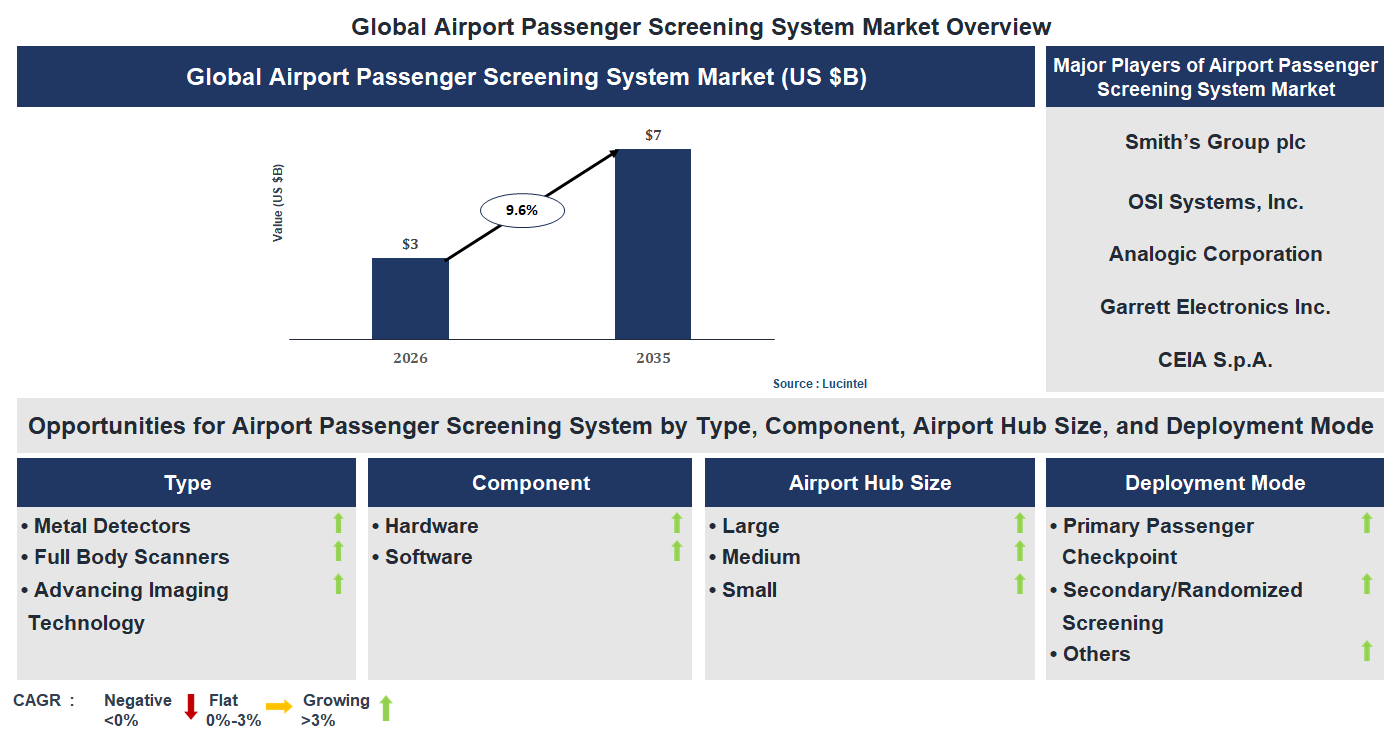
Key data points: The market size in 2035 = $7 billion, growth forecast = 9.6% annually for the next 8 years. Scroll below to get more insights. This market report covers trends, opportunities and forecasts in airport passenger screening system market to 2035 by type (metal detectors, full body scanners, and advancing imaging technology), component (hardware and software), airport hub size (large, medium, and small), deployment mode (primary passenger checkpoint, secondary/randomized screening, and others), and region (North America, Europe, Asia Pacific, and the Rest of the World)
We'll send your sample report shortly.
• Lucintel forecasts that, within the component category, hardware is expected to witness higher growth over the forecast period.
• Within the type category, metal detector is expected to witness the highest growth.
• In terms of region, North America is expected to witness the highest growth over the forecast period. Gain valuable insights for your business decisions with our comprehensive 150+ page report. Sample figures with some insights are shown below.
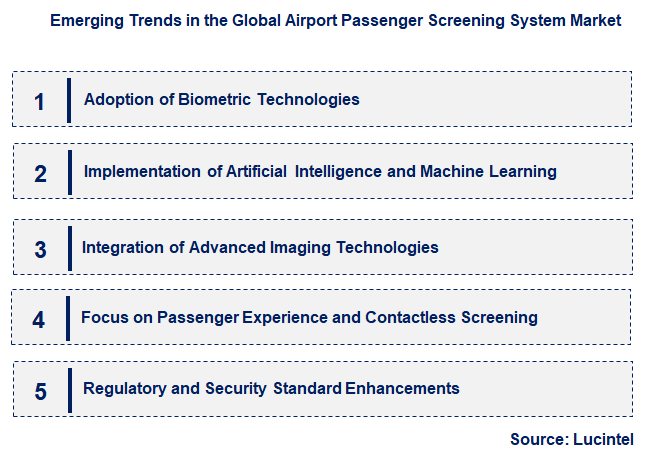
• Adoption of Biometric Technologies: The integration of biometric systems such as facial recognition and fingerprint scanning is revolutionizing passenger screening. These technologies enable faster, contactless identity verification, reducing processing times and enhancing security. Airports are increasingly deploying biometric solutions to streamline check-in, security checks, and boarding processes, which improves passenger experience and operational efficiency. The adoption is driven by advancements in AI and machine learning, making biometric systems more accurate and reliable. This trend is expected to significantly reduce queues and manual interventions, setting new standards for security and convenience.
• Implementation of Artificial Intelligence and Machine Learning: AI and machine learning are transforming screening systems by enabling predictive analytics, anomaly detection, and automated decision-making. These technologies improve threat detection accuracy and reduce false alarms, thereby enhancing security effectiveness. AI-powered systems can analyze vast amounts of data in real-time, allowing for quicker responses to potential threats. Additionally, AI enhances operational efficiency by optimizing resource allocation and workflow management. As these technologies become more sophisticated, they are expected to play a crucial role in creating smarter, more adaptive screening environments that can respond dynamically to emerging security challenges.
• Integration of Advanced Imaging Technologies: The deployment of advanced imaging systems such as 3D body scanners and computed tomography (CT) scanners is increasing. These systems provide detailed, high-resolution images that improve threat detection capabilities while reducing the need for physical pat-downs. They enable non-intrusive screening, which enhances passenger comfort and privacy. The use of 3D imaging and CT technology allows for more accurate identification of prohibited items, speeding up the screening process. As these systems become more affordable and efficient, their adoption is expected to grow, significantly elevating security standards and passenger satisfaction.
• Focus on Passenger Experience and Contactless Screening: Enhancing passenger experience through contactless and seamless screening processes is a key trend. Technologies such as mobile boarding passes, automated kiosks, and contactless payment options are being integrated into security workflows. These innovations reduce physical contact, minimize wait times, and improve overall convenience, especially important in the context of health concerns like COVID-19. Airports are investing in user-friendly interfaces and self-service options to make security checks less stressful. This focus on passenger-centric solutions is reshaping the market by prioritizing comfort, safety, and efficiency.
• Regulatory and Security Standard Enhancements: Governments and international agencies are continuously updating security regulations to address emerging threats. This includes stricter compliance requirements for screening systems, data privacy, and cybersecurity measures. The market is witnessing increased investments in systems that meet these evolving standards, ensuring legal compliance and operational integrity. Enhanced regulations drive innovation in security technology, prompting vendors to develop more robust, adaptable solutions. This trend ensures that airport screening systems remain effective against sophisticated threats while maintaining passenger trust and safety. These emerging trends are collectively transforming the airport passenger screening system market by making security processes faster, smarter, and more passenger-friendly. The integration of biometric, AI, and advanced imaging technologies, coupled with a focus on passenger experience and regulatory compliance, is leading to more efficient and secure air travel environments. These developments are not only improving operational efficiency but also elevating the overall passenger experience, setting new benchmarks for the future of airport security.
• Growing Adoption of Biometric Technologies: The integration of biometric systems such as facial recognition and fingerprint scanning is revolutionizing passenger screening. These technologies offer faster, contactless, and more accurate identification processes, reducing wait times and enhancing security. Airports are increasingly adopting biometric solutions to streamline operations and improve passenger experience. This shift not only boosts efficiency but also addresses privacy concerns, making biometric systems a critical component of modern screening processes. The market is expected to see substantial growth as technology matures and costs decrease.
• Implementation of Artificial Intelligence (AI): AI-driven screening systems are transforming security protocols by enabling real-time threat detection and decision-making. These systems analyze vast amounts of data quickly, identifying suspicious behaviors or items more accurately than traditional methods. AI enhances operational efficiency, reduces false alarms, and improves passenger throughput. As airports seek smarter security solutions, AI integration is becoming a key focus area. The deployment of AI-powered systems is expected to accelerate, driven by advancements in machine learning and data analytics, significantly impacting market dynamics.
• Increased Focus on Contactless Screening Solutions: The COVID-19 pandemic accelerated the demand for contactless security measures to minimize physical contact and prevent virus transmission. Contactless screening technologies, such as mobile scanning and automated bag checks, are gaining popularity. These solutions improve hygiene, reduce congestion, and enhance passenger comfort. Airports are investing in touchless systems to meet health guidelines and improve overall security efficiency. The market for contactless screening is projected to expand rapidly as airports prioritize health safety alongside security.
• Regulatory Enhancements and Standardization: Governments and international bodies are updating security standards and regulations to address emerging threats and technological advancements. These regulations influence the design, deployment, and operation of screening systems, ensuring higher security levels. Standardization efforts facilitate interoperability among different systems and airports, promoting seamless security processes. Compliance with evolving standards is crucial for vendors to access global markets. This regulatory landscape is shaping product development and market strategies, fostering innovation and ensuring consistent security practices worldwide.
• Integration of Advanced Screening Technologies: The adoption of multi-layered screening solutions combining X-ray, CT scans, and advanced sensors is on the rise. These integrated systems provide comprehensive threat detection capabilities, reducing false positives and enhancing security accuracy. They enable faster processing times and better passenger flow management. Airports are increasingly investing in such technologies to meet rising security demands and improve operational efficiency. The market is expected to grow as these integrated solutions become more affordable and technologically sophisticated, offering a competitive edge to early adopters. These developments are significantly transforming the airport passenger screening system market by enhancing security, efficiency, and passenger experience. The adoption of biometric, AI, and contactless technologies, coupled with regulatory updates and integrated solutions, is driving market growth and innovation. As airports worldwide prioritize safety and health, these advancements will continue to shape the future landscape, creating new opportunities for vendors and stakeholders while setting higher standards for security and operational excellence.
• Adoption of Biometric Screening Technologies: Biometric systems such as facial recognition and fingerprint scanning are transforming passenger verification processes. These technologies offer faster, contactless, and more secure screening, reducing wait times and enhancing security. Airports are increasingly integrating biometric solutions to streamline passenger flow, comply with security standards, and improve overall traveler experience. The growing demand for contactless procedures post-pandemic accelerates adoption, making biometric screening a key growth driver in the market.
• Integration of Artificial Intelligence for Enhanced Security: AI-powered screening systems enable real-time threat detection and anomaly identification, significantly improving accuracy and efficiency. These systems analyze vast data sets, recognize patterns, and adapt to emerging threats, reducing false positives and enhancing security protocols. The integration of AI with existing screening infrastructure offers scalable solutions for airports of all sizes. As security concerns intensify, AI-driven systems are becoming essential, opening new avenues for market expansion and technological innovation.
• Development of Portable and Modular Screening Solutions: Portable and modular screening systems provide flexibility for various airport sizes and temporary security needs. These lightweight, easy-to-deploy units facilitate quick setup in different locations, such as special events or remote airports. They enable cost-effective upgrades and rapid response to fluctuating passenger volumes. The demand for adaptable security solutions is rising, especially in emerging markets, creating opportunities for manufacturers to offer versatile, scalable screening technologies that meet diverse operational requirements.
• Implementation of Advanced Imaging and X-ray Technologies: Cutting-edge imaging and X-ray systems improve detection capabilities for concealed threats, including liquids, metals, and organic materials. Enhanced resolution and faster processing times increase throughput while maintaining high security standards. These technologies are vital for identifying sophisticated threats and complying with international security regulations. Continuous innovation in imaging quality and speed positions advanced screening systems as critical components for modern airports, driving market growth through increased safety and passenger confidence.
• Expansion of Automated and Contactless Screening Processes: Automation and contactless solutions reduce human intervention, minimize physical contact, and streamline passenger processing. Automated systems include conveyor-based scanners, automated threat detection, and self-service kiosks. These innovations improve operational efficiency, reduce staffing costs, and enhance passenger convenience. The shift towards contactless procedures, especially post-pandemic, accelerates adoption. As airports seek safer, faster, and more efficient screening methods, the market for automated, contactless systems is poised for significant growth. These growth opportunities collectively enhance airport security, operational efficiency, and passenger experience, fueling the expansion of the airport passenger screening system market. Technological innovations such as biometrics, AI, portable solutions, advanced imaging, and automation are transforming security protocols worldwide. As airports adapt to evolving threats and passenger expectations, these opportunities will drive market competitiveness, foster innovation, and ensure safer, more efficient air travel globally.
• Technological Innovation: The rapid development of advanced screening technologies such as biometric systems, AI-powered scanners, and automated threat detection enhances security efficiency and passenger experience. These innovations reduce wait times and improve accuracy, making them highly attractive to airports worldwide. As technology continues to evolve, airports are increasingly adopting these systems to meet rising security standards and passenger expectations, thereby fueling market growth.
• Growing Air Travel Demand: The surge in global air travel, driven by increasing disposable incomes, globalization, and tourism, necessitates more efficient and reliable passenger screening systems. Airports are expanding capacity and upgrading infrastructure to accommodate this growth, which directly boosts demand for advanced screening solutions. This trend is expected to persist, supporting sustained market expansion over the coming years.
• Regulatory and Security Standards: Governments worldwide are implementing stringent security regulations to prevent threats and ensure passenger safety. These regulations mandate the adoption of sophisticated screening systems, including biometric verification and threat detection technologies. Compliance with these standards compels airports to invest in modern screening solutions, thereby driving market growth and technological adoption.
• Economic Growth and Infrastructure Investment: Rising economic prosperity enables governments and private stakeholders to invest heavily in airport infrastructure upgrades. These investments often include the deployment of state-of-the-art passenger screening systems to enhance security and operational efficiency. As economies grow, so does the capacity and sophistication of airport security infrastructure, further propelling the market. The challenges in the airport passenger screening system market are:-
• High Implementation and Maintenance Costs: Deploying advanced screening systems involves significant capital expenditure, including procurement, installation, and ongoing maintenance. Smaller airports or those in developing regions may find these costs prohibitive, limiting market penetration. Additionally, the need for specialized personnel and regular updates adds to the financial burden, potentially slowing adoption rates.
• Privacy and Ethical Concerns: The use of biometric data and surveillance technologies raises privacy issues among passengers and advocacy groups. Concerns over data security, misuse, and potential breaches can lead to resistance against adopting certain screening methods. Addressing these concerns requires robust data protection measures and transparent policies, which can complicate deployment and acceptance.
• Evolving Regulatory Environment: Rapid technological advancements often outpace existing regulations, creating uncertainty and compliance challenges for airports and vendors. Frequent changes in security standards and legal frameworks necessitate continuous updates and adaptations, increasing operational complexity and costs. Navigating this evolving landscape is a significant challenge for market participants. The airport passenger screening system market is driven by technological advancements, increasing air travel, regulatory mandates, and economic growth, which collectively foster innovation and expansion. However, high costs, privacy issues, and regulatory complexities pose notable challenges that could hinder growth. Balancing these factors is crucial for stakeholders aiming to capitalize on market opportunities while mitigating risks. Overall, the markets future will depend on technological progress, regulatory adaptation, and addressing privacy concerns to ensure secure, efficient, and passenger-friendly screening solutions.
• Smith’s Group plc
• OSI Systems, Inc.
• Analogic Corporation
• Garrett Electronics Inc.
• CEIA S.p.A.
• Nuctech Technology Co., Ltd.
• Leidos, Inc.
• Rohde & Schwarz GmbH & Co. KG
• Liberty Defense Holdings Ltd.
• Astrophysics, Inc.
• Metal Detectors
• Full Body Scanners
• Advancing Imaging Technology
• Hardware
• Software
• Large
• Medium
• Small
• Primary Passenger Checkpoint
• Secondary/Randomized Screening
• Others
• North America
• Europe
• Asia Pacific
• The Rest of the World
• United States: The US market has seen substantial investments in biometric screening and AI-powered security systems. Major airports are deploying facial recognition technology to streamline passenger processing, reducing wait times and enhancing security. Regulatory agencies are promoting the adoption of automated screening lanes and advanced threat detection systems. The focus is on integrating contactless solutions to improve passenger experience amid health concerns. Additionally, collaborations between government agencies and private firms are accelerating innovation in security protocols and system interoperability.
• China: China is rapidly expanding its airport security infrastructure with a focus on automation and digitalization. The country has implemented extensive biometric and facial recognition systems across major airports to facilitate faster passenger flow. Investments in AI and big data analytics are improving threat detection accuracy. The government emphasizes smart airport initiatives, integrating IoT devices for real-time monitoring and management. The adoption of automated baggage screening and contactless check-in processes is also increasing, driven by the need for efficient, large-scale air travel management.
• Germany: Germanys airport screening market is characterized by the adoption of advanced security technologies such as computed tomography (CT) scanners and automated threat detection systems. The country emphasizes compliance with European Union security standards while investing in innovative solutions to enhance passenger throughput. German airports are integrating biometric verification and automated screening lanes to reduce congestion. There is also a focus on sustainability and energy-efficient systems, aligning security upgrades with environmental goals. Public-private partnerships are playing a key role in deploying cutting-edge security infrastructure.
• India: India is witnessing rapid growth in airport passenger screening systems driven by increasing air traffic and modernization efforts. The country is adopting biometric and facial recognition technologies to expedite passenger processing at major airports. Government initiatives like Digital India and Smart Airports are promoting contactless and automated security solutions. Investments are also being made in AI-powered threat detection and baggage screening systems. The expansion of airport infrastructure, especially in Tier 2 and Tier 3 cities, is fueling demand for scalable, efficient security systems to support the countrys aviation growth.
• Japan: Japans airport security market is focused on integrating advanced screening technologies with a strong emphasis on safety and efficiency. The country is deploying high-resolution imaging and automated threat detection systems to enhance security checks. Japan is also investing in contactless and biometric solutions to improve passenger flow, especially in response to health concerns. The adoption of AI and machine learning for threat analysis is increasing, alongside efforts to upgrade existing infrastructure to meet international security standards. Collaboration between government agencies and technology providers is driving innovation in airport security systems.


• Smith’s Group plc
• OSI Systems, Inc.
• Analogic Corporation
• Garrett Electronics Inc.
• CEIA S.p.A.
• Nuctech Technology Co., Ltd.
• Leidos, Inc.
• Rohde & Schwarz GmbH & Co. KG
• Liberty Defense Holdings Ltd.
• Astrophysics, Inc. Q6. Which airport passenger screening system market segment will be the largest in future? Answer: Lucintel forecasts that, within the component category, hardware is expected to witness higher growth over the forecast period. Q7. In airport passenger screening system market, which region is expected to be the largest in next 8 years? Answer: In terms of region, North America is expected to witness the highest growth over the forecast period. Q8. Do we receive customization in this report? Answer: Yes, Lucintel provides 10% customization without any additional cost.


Choose a license that fits your team. Instant PDF delivery.
Prices exclude taxes. Instant delivery. Custom licensing available on request.
Market Report · July 31, 2026
Market Report · July 31, 2026
Market Report · July 31, 2026
Trusted partner for strategic intelligence and business growth


Receive a complimentary market analysis tailored to your industry. Our analysts will identify key growth opportunities and competitive dynamics specific to your business.

Market size, growth rate, and key trend analysis for your specific sector.

Top competitor positioning and market share analysis.

Strategic recommendations backed by data-driven insights.
Get curated market intelligence and competitive moves straight to your inbox.
By subscribing, you agree to receive our monthly insights. Unsubscribe anytime.
Receive a complimentary market analysis tailored to your industry. Our analysts will identify key growth opportunities and competitive dynamics specific to your business.
Market size, growth rate, and key trend analysis for your specific sector.
Top competitor positioning and market share analysis.
Strategic recommendations backed by data-driven insights.
Get curated market intelligence, emerging trends, and competitive moves straight to your inbox each month.
By subscribing, you agree to receive our monthly insights. Unsubscribe anytime.
We'll send your sample report shortly.