
Market Report · July 31, 2026

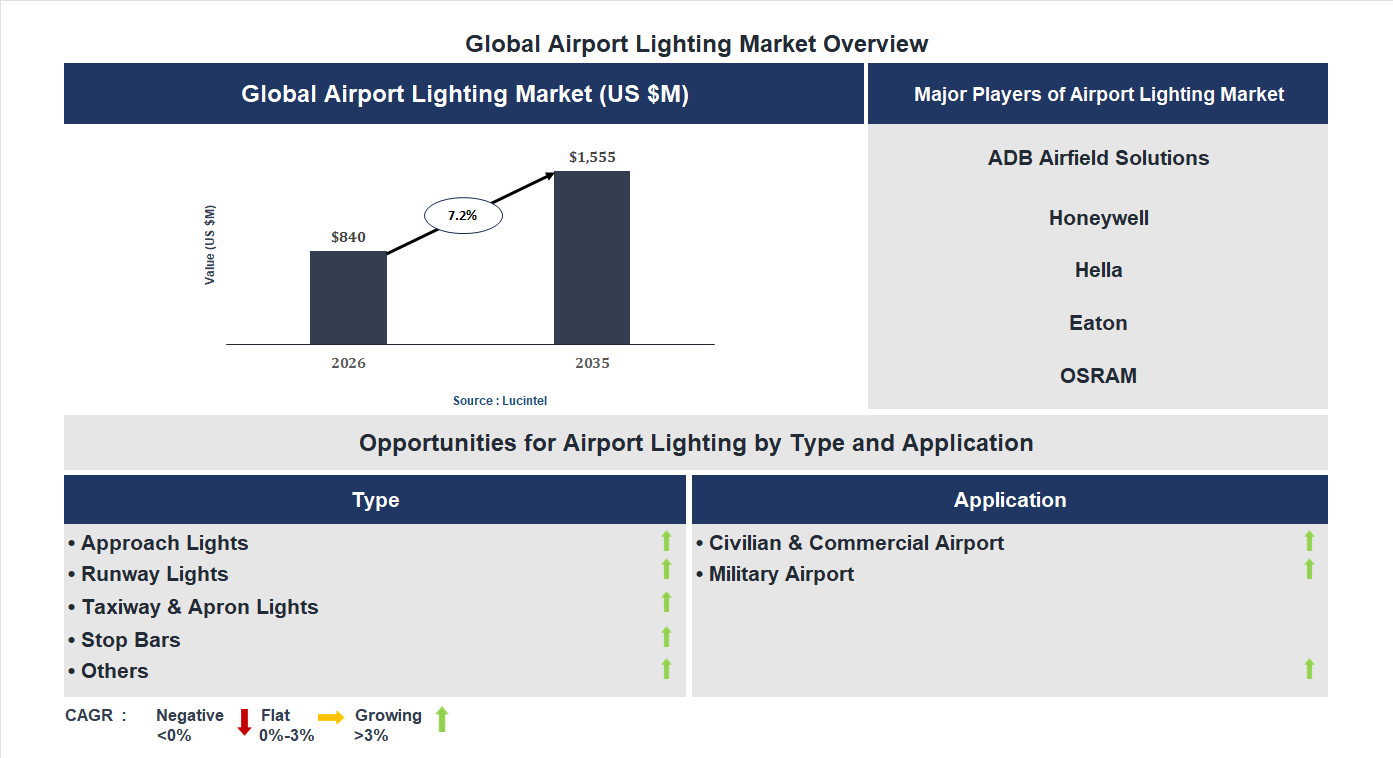
Key data points: The market size in 2035 = $1,555 million, growth forecast = 7.2% annually for the next 8 years. Scroll below to get more insights. This market report covers trends, opportunities and forecasts in airport lighting market to 2035 by type (approach lights, runway lights, taxiway & apron lights, stop bars, and others), application (civilian & commercial airport and military airport), and region (North America, Europe, Asia Pacific, and the Rest of the World)
We'll send your sample report shortly.
• Lucintel forecasts that, within the type category, taxiway & apron light is expected to witness the highest growth over the forecast period.
• Within the application category, civilian & commercial airport is expected to witness higher growth.
• In terms of region, APAC is expected to witness the highest growth over the forecast period. Gain valuable insights for your business decisions with our comprehensive 150+ page report. Sample figures with some insights are shown below.
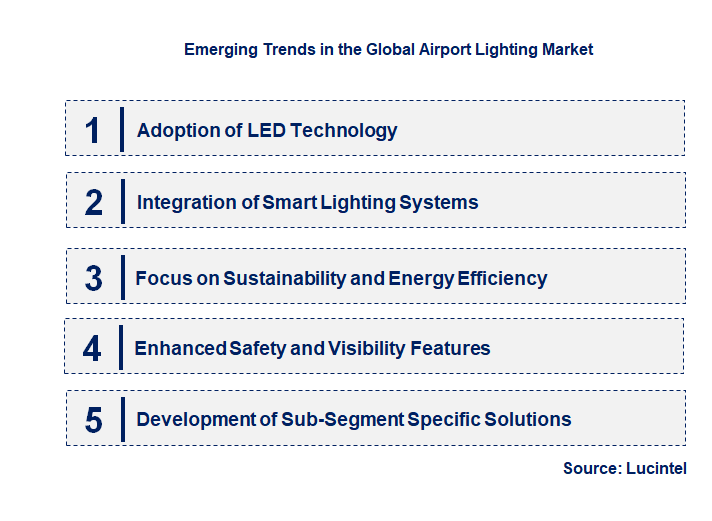
• Adoption of LED Technology: The shift from traditional lighting to LED technology is transforming airport lighting. LEDs offer significant energy savings, longer lifespan, and lower maintenance costs, making them ideal for large-scale airport applications. They also provide better illumination quality, which enhances safety and visibility for both passengers and staff. As governments and airport authorities focus on sustainability, LED adoption is expected to accelerate, reducing carbon footprints and operational costs. This trend is particularly prominent in runway, taxiway, and apron lighting, where durability and energy efficiency are crucial.
• Integration of Smart Lighting Systems: Smart lighting solutions are increasingly being integrated into airport infrastructure. These systems utilize IoT (Internet of Things) technology to enable real-time monitoring, control, and automation of lighting. This integration allows for dynamic lighting adjustments based on traffic, weather conditions, and operational needs, improving energy efficiency and safety. Smart systems also facilitate maintenance by providing predictive analytics, reducing downtime and costs. The adoption of such intelligent lighting solutions is expected to grow, especially in terminal areas and security zones, enhancing overall airport management.
• Focus on Sustainability and Energy Efficiency: Sustainability is a key driver in the airport lighting market. Airports are adopting eco-friendly lighting solutions that minimize energy consumption and environmental impact. This includes the use of solar-powered lighting, energy-efficient fixtures, and adaptive lighting controls that reduce unnecessary energy use. Governments and regulatory bodies are setting stricter standards for environmental performance, pushing airports to innovate. These sustainable practices not only reduce operational costs but also improve the airport’s environmental reputation, aligning with global efforts to combat climate change.
• Enhanced Safety and Visibility Features: Safety remains a primary concern in airport lighting. Emerging trends include the development of lighting systems with enhanced visibility features such as high-intensity lighting, color-coded signals, and glare reduction technologies. These improvements help in better navigation for aircraft and ground vehicles, especially during adverse weather conditions or nighttime operations. Additionally, innovative lighting solutions are being designed to improve passenger safety within terminals, such as illuminated signage and emergency lighting. These advancements significantly reduce the risk of accidents and improve overall operational safety.
• Development of Sub-Segment Specific Solutions: The market is witnessing the emergence of specialized lighting solutions tailored for different airport segments. For example, runway and taxiway lighting focus on durability and high visibility, while terminal lighting emphasizes passenger comfort and aesthetic appeal. Security lighting is designed for enhanced surveillance and safety, and apron lighting caters to aircraft servicing needs. These sub-segment-specific solutions allow for more targeted and efficient lighting strategies, improving operational efficiency and passenger experience. Customization and technological innovation in these areas are expected to drive growth and meet the diverse needs of modern airports. These emerging trends are collectively reshaping the airport lighting market by promoting energy efficiency, safety, sustainability, and technological integration. They are enabling airports to operate more efficiently, reduce costs, and enhance passenger experience, ultimately leading to a more sustainable and technologically advanced aviation infrastructure.
• Technological Innovations in LED Lighting: The adoption of LED technology in airport lighting systems offers energy efficiency, longer lifespan, and reduced maintenance costs. These advancements enable airports to implement smarter, more adaptable lighting solutions that improve visibility and safety. LED lighting also supports integration with IoT systems for real-time monitoring and control, enhancing operational efficiency. This shift is driving market growth by providing sustainable and cost-effective lighting options for airports worldwide.
• Integration of Smart Lighting Systems: Smart lighting solutions incorporate sensors, automation, and connectivity to optimize airport lighting operations. These systems enable dynamic lighting adjustments based on real-time conditions, such as passenger flow and weather. They improve energy management, reduce operational costs, and enhance passenger safety and comfort. The integration of IoT and AI technologies is creating more responsive and efficient lighting environments, making airports more sustainable and user-friendly, thus expanding market opportunities.
• Focus on Safety and Compliance Standards: Enhanced safety regulations and standards are prompting airports to upgrade their lighting infrastructure. Innovations include precision runway and taxiway lighting, improved approach lighting systems, and enhanced emergency lighting. These developments ensure better visibility during adverse weather and emergencies, reducing accidents and improving overall safety. Compliance with international standards like ICAO and FAA is driving demand for advanced lighting solutions, fostering growth in the market.
• Development of Eco-Friendly and Energy-Efficient Solutions: Growing environmental concerns are pushing airports to adopt eco-friendly lighting options. Solar-powered lighting systems, energy-efficient LEDs, and automated controls reduce carbon footprints and operational costs. These sustainable solutions align with global efforts to minimize environmental impact and promote green airport initiatives. The shift towards eco-conscious lighting is opening new market segments and encouraging investments in renewable energy-powered infrastructure.
• Expansion of Runway and Taxiway Lighting Systems: Modernization projects focus on upgrading runway and taxiway lighting to improve safety and operational efficiency. Innovations include high-intensity LED lights, precision approach systems, and enhanced control mechanisms. These improvements facilitate better navigation during low visibility conditions and support increased air traffic volumes. The expansion of these systems is critical for accommodating future airport growth, attracting investments, and ensuring compliance with international safety standards, thereby boosting market prospects. The overall impact of these developments is a more efficient, safe, and sustainable airport lighting market. Technological advancements and regulatory compliance are driving growth, while eco-friendly solutions and smart systems are enhancing operational efficiency. These trends are positioning the market for continued expansion, supporting the global aviation industrys growth and modernization efforts.
• Runway Lighting Innovations Enhance Safety and Efficiency: The development of advanced runway lighting systems, including LED-based and solar-powered options, improves visibility during adverse weather conditions and reduces energy consumption. Smart control systems enable real-time adjustments, minimizing operational costs. These innovations support larger aircraft operations and facilitate night landings, making airports safer and more reliable. Growing demand for retrofit projects and new airport constructions accelerates the adoption of these technologies across global markets.
• Taxiway and Apron Lighting Modernization Drives Market Expansion: Upgrading taxiway and apron lighting with energy-efficient LED fixtures and intelligent controls enhances operational safety and reduces maintenance costs. These systems provide better illumination for ground handling and aircraft movement, minimizing accidents and delays. The increasing number of airport expansions and new terminal projects fuels demand for integrated lighting solutions. Emphasis on sustainability encourages the adoption of eco-friendly lighting options, further expanding market opportunities in this segment.
• Terminal and Indoor Lighting Enhances Passenger Experience: Modern airport terminals are integrating innovative lighting designs to improve aesthetics, comfort, and wayfinding. LED lighting systems with customizable color schemes and dynamic controls create inviting environments. Energy-efficient solutions reduce operational costs and support green building certifications. As passenger volumes grow, airports prioritize lighting upgrades to enhance overall experience, driving demand for smart, adaptable indoor lighting systems in terminal areas and passenger lounges.
• Emergency and Safety Lighting Systems Strengthen Security Measures: Emergency lighting ensures safe evacuation during power outages or emergencies, requiring reliable, compliant solutions. Advances in battery-backed LED emergency lights and automated testing systems improve safety standards. Airports are investing in integrated safety lighting that complies with international regulations, supporting rapid response and evacuation procedures. The focus on safety and regulatory compliance propels growth in this segment, especially in expanding and upgrading airport facilities worldwide.
• Smart and IoT-Enabled Lighting Solutions Enable Operational Optimization: The integration of IoT and smart controls in airport lighting systems allows real-time monitoring, remote management, and predictive maintenance. These solutions optimize energy use, reduce downtime, and improve overall operational efficiency. Data analytics enable airports to plan maintenance proactively, minimizing disruptions. The adoption of connected lighting systems aligns with broader digital transformation initiatives, creating opportunities for innovative, scalable solutions that meet evolving safety, efficiency, and sustainability standards. These growth opportunities collectively drive the evolution of the airport lighting market, fostering safer, more efficient, and environmentally sustainable airport operations. Technological advancements and infrastructure investments are expected to propel market expansion, offering significant benefits for stakeholders worldwide. The integration of smart, energy-efficient, and safety-focused lighting solutions will shape the future landscape of airport infrastructure development.
• Technological Advancements: The development of energy-efficient LED lighting systems has revolutionized airport lighting by reducing energy consumption and maintenance costs. Smart lighting solutions with automation and IoT integration enhance operational efficiency and safety. These innovations enable airports to implement adaptive lighting based on real-time conditions, improving passenger experience and security. As technology continues to evolve, airports are increasingly adopting advanced lighting systems, which significantly contribute to market growth.
• Increasing Air Traffic and Infrastructure Development: The surge in global air travel has led to a heightened demand for modernized airport infrastructure. Governments and private entities are investing heavily in expanding and upgrading airports to accommodate rising passenger numbers. This expansion includes installing sophisticated lighting systems for runways, taxiways, and terminal areas, ensuring safety and compliance with international standards. The growing need for new airports and modernization projects directly fuels the demand for advanced lighting solutions.
• Regulatory and Safety Standards: Stringent safety regulations imposed by aviation authorities worldwide necessitate the deployment of reliable and compliant lighting systems. These standards mandate specific lighting configurations for runways, taxiways, and aprons to prevent accidents and ensure smooth operations. Compliance with environmental regulations also encourages the adoption of energy-efficient lighting options. These regulatory requirements drive innovation and investment in high-quality, compliant airport lighting solutions.
• Focus on Sustainability and Energy Efficiency: Environmental concerns and rising energy costs are prompting airports to adopt sustainable lighting solutions. LED technology, with its lower energy consumption and longer lifespan, aligns with global sustainability goals. Governments and organizations are incentivizing eco-friendly practices, which boost the adoption of energy-efficient lighting systems. This shift not only reduces operational costs but also enhances the airport’s environmental reputation, further propelling market growth.
• Technological Integration and Smart Systems: The integration of smart technologies into airport lighting systems offers enhanced control, monitoring, and maintenance capabilities. IoT-enabled lighting allows for real-time data collection and remote management, leading to improved safety and operational efficiency. These systems facilitate adaptive lighting based on weather, traffic, and operational needs, reducing energy waste. The increasing adoption of such intelligent solutions is a key driver, as airports seek to modernize and optimize their infrastructure. The challenges in the airport lighting market are:
• High Installation and Maintenance Costs: Implementing advanced lighting systems, especially LED and smart solutions, involves significant capital expenditure. The costs associated with procurement, installation, and ongoing maintenance can be prohibitive for smaller airports or those with limited budgets. Additionally, specialized labor and equipment are required for installation and repairs, which can further escalate expenses. These financial barriers may slow down the adoption of new technologies, impacting overall market growth.
• Regulatory Compliance and Certification Complexities: Navigating the complex landscape of international and local safety standards poses a significant challenge. Ensuring that lighting systems meet stringent regulatory requirements involves extensive testing, certification, and documentation processes. Delays and costs associated with compliance can hinder timely deployment and upgrade of airport lighting infrastructure. Variations in regulations across regions also complicate standardization efforts, affecting global market expansion.
• Rapid Technological Obsolescence: The fast-paced evolution of lighting technologies can render existing systems outdated quickly. Airports investing in current solutions may face challenges in upgrading or replacing systems to stay aligned with the latest standards and innovations. This rapid obsolescence increases the risk of sunk costs and discourages long-term investments. It also necessitates continuous research and development, which can strain budgets and resources. The airport lighting market is shaped by technological innovations, increasing infrastructure investments, and regulatory demands that promote growth. However, high costs, compliance complexities, and rapid technological changes pose significant challenges. These factors collectively influence market dynamics, requiring stakeholders to balance innovation with cost-effectiveness and regulatory adherence. Overall, the markets future depends on how effectively these drivers are leveraged and challenges managed to ensure safe, sustainable, and efficient airport operations worldwide.
• ADB Airfield Solutions
• Honeywell
• Hella
• Eaton
• OSRAM
• Philips Lighting Holding
• Cree
• OCEM Airfield Technology
• Astronics
• Youyang
• Approach Lights
• Runway Lights
• Taxiway & Apron Lights
• Stop Bars
• Others
• Civilian & Commercial Airport
• Military Airport
• North America
• Europe
• Asia Pacific
• The Rest of the World
• United States: The U.S. airport lighting market has seen substantial growth due to modernization initiatives at major airports. Innovations include LED lighting systems that improve energy efficiency and reduce maintenance costs. The Federal Aviation Administration (FAA) has implemented new standards for runway and taxiway lighting, emphasizing safety and sustainability. Several airports are adopting smart lighting solutions integrated with airport management systems, enhancing operational control. The rise of green technologies and government incentives further boost market expansion, with a focus on reducing carbon footprints and operational costs.
• China: China’s airport lighting market is rapidly expanding, driven by massive infrastructure investments and the construction of new airports. The country is adopting advanced LED lighting and intelligent control systems to improve safety and energy efficiency. Major projects like the Beijing Daxing International Airport showcase state-of-the-art lighting technology, including adaptive lighting systems that adjust based on weather and traffic conditions. Government policies promote sustainable development, encouraging the use of eco-friendly lighting solutions. The rapid pace of airport development and modernization in China positions it as a key growth driver in the global market.
• Germany: Germany’s airport lighting market is characterized by high standards of safety and energy efficiency. The country is focusing on upgrading existing airport infrastructure with modern LED lighting systems and smart controls. Emphasis is placed on sustainability, with many airports adopting environmentally friendly lighting solutions to meet EU regulations. Germany’s airports are also integrating IoT-enabled lighting systems for better management and maintenance. The focus on innovation and compliance with strict safety standards has driven steady growth in the market, supported by government initiatives promoting green technology and energy conservation.
• India: The Indian airport lighting market is witnessing rapid growth due to the country’s expanding aviation sector. Investments in new airports and terminal upgrades are fueling demand for advanced lighting solutions. The adoption of LED lighting and automated control systems is increasing to enhance safety and reduce operational costs. Government initiatives like the UDAN scheme aim to improve regional connectivity, further boosting infrastructure development. The focus on sustainable and energy-efficient lighting solutions aligns with India’s environmental goals. Market players are increasingly adopting smart lighting technologies to meet the rising passenger traffic and safety standards.
• Japan: Japan’s airport lighting market is evolving with a focus on safety, energy efficiency, and technological innovation. The country is upgrading older airports with modern LED lighting systems and intelligent control solutions. Japan’s emphasis on disaster preparedness influences the adoption of resilient and reliable lighting infrastructure. The integration of IoT and automation technologies enhances operational efficiency and safety. Government policies support sustainable development, encouraging the use of eco-friendly lighting solutions. The market growth is driven by ongoing airport expansions and upgrades, with a strong focus on maintaining high safety standards and environmental sustainability.


• ADB Airfield Solutions
• Honeywell
• Hella
• Eaton
• OSRAM
• Philips Lighting Holding
• Cree
• OCEM Airfield Technology
• Astronics
• Youyang Q6. Which airport lighting market segment will be the largest in future? Answer: Lucintel forecasts that, within the type category, taxiway & apron light is expected to witness the highest growth over the forecast period. Q7. In airport lighting market, which region is expected to be the largest in next 8 years? Answer: In terms of region, APAC is expected to witness the highest growth over the forecast period. Q8. Do we receive customization in this report? Answer: Yes, Lucintel provides 10% customization without any additional cost.


Choose a license that fits your team. Instant PDF delivery.
Prices exclude taxes. Instant delivery. Custom licensing available on request.
Market Report · July 31, 2026
Market Report · July 31, 2026
Market Report · July 31, 2026
Trusted partner for strategic intelligence and business growth


Receive a complimentary market analysis tailored to your industry. Our analysts will identify key growth opportunities and competitive dynamics specific to your business.

Market size, growth rate, and key trend analysis for your specific sector.

Top competitor positioning and market share analysis.

Strategic recommendations backed by data-driven insights.
Get curated market intelligence and competitive moves straight to your inbox.
By subscribing, you agree to receive our monthly insights. Unsubscribe anytime.
Receive a complimentary market analysis tailored to your industry. Our analysts will identify key growth opportunities and competitive dynamics specific to your business.
Market size, growth rate, and key trend analysis for your specific sector.
Top competitor positioning and market share analysis.
Strategic recommendations backed by data-driven insights.
Get curated market intelligence, emerging trends, and competitive moves straight to your inbox each month.
By subscribing, you agree to receive our monthly insights. Unsubscribe anytime.
We'll send your sample report shortly.