
Market Report · July 31, 2026

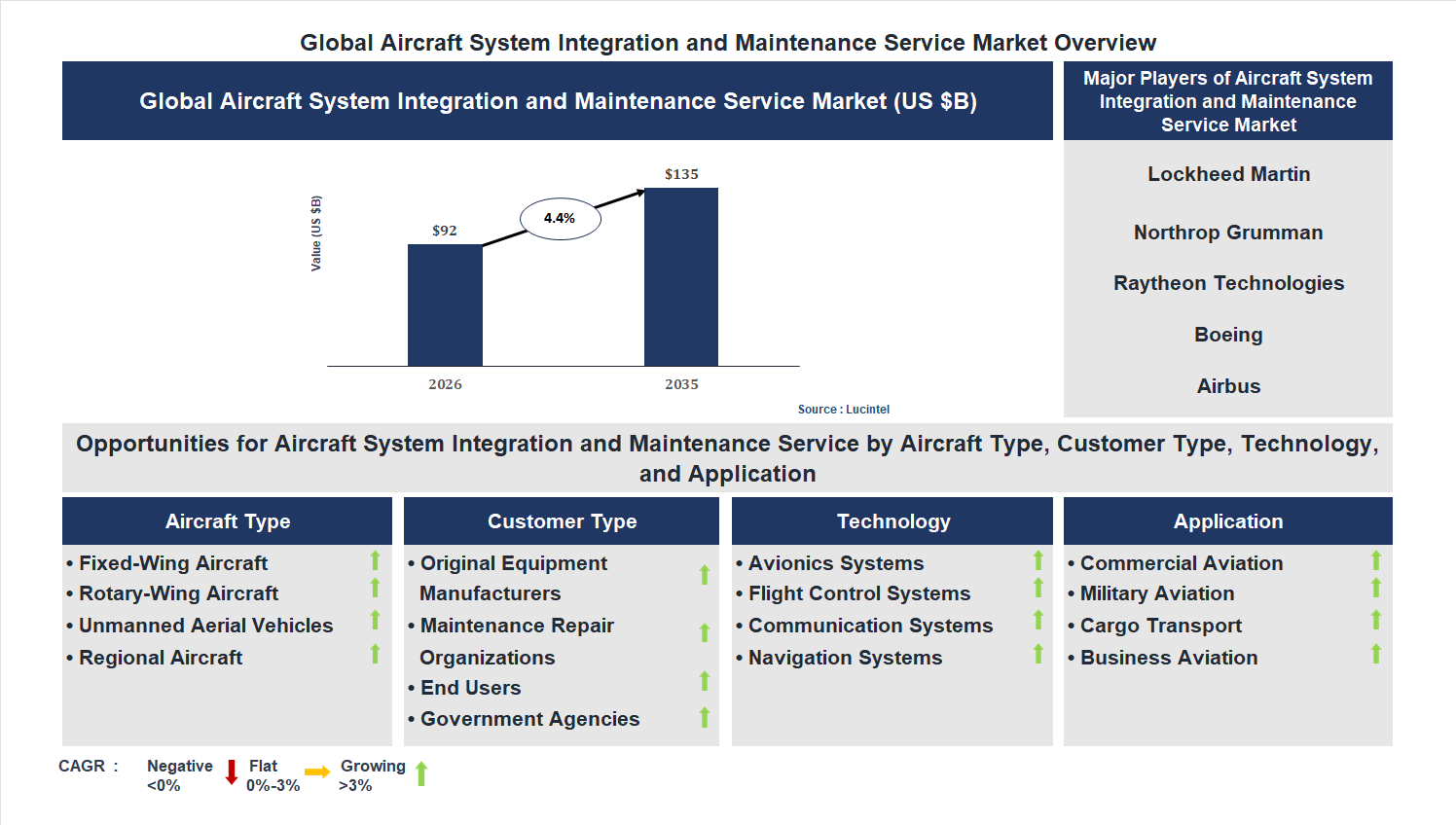
Key data points: The market size in 2035 = $135 billion, growth forecast = 4.4% annually for the next 8 years. Scroll below to get more insights. This market report covers trends, opportunities and forecasts in aircraft system integration and maintenance service market to 2035 by aircraft type (fixed-wing aircraft, rotary-wing aircraft, unmanned aerial vehicles, and regional aircraft), customer type (original equipment manufacturers, maintenance repair organizations, end users, and government agencies), technology (avionics systems, flight control systems, communication systems, and navigation systems), application (commercial aviation, military aviation, cargo transport, and business aviation), and region (North America, Europe, Asia Pacific, and the Rest of the World)
We'll send your sample report shortly.
• Lucintel forecasts that, within the aircraft type category, fixed-wing aircraft is expected to witness the highest growth over the forecast period.
• Within the application category, commercial aviation is expected to witness the highest growth.
• In terms of region, APAC is expected to witness the highest growth over the forecast period. Gain valuable insights for your business decisions with our comprehensive 150+ page report. Sample figures with some insights are shown below.
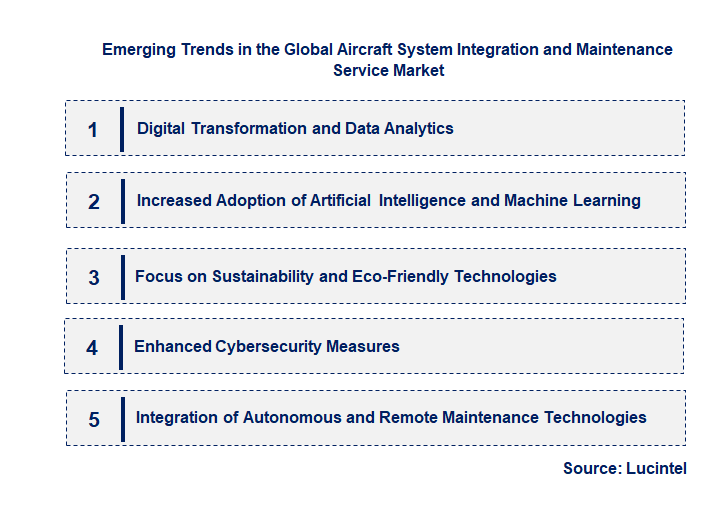
• Digital Transformation and Data Analytics: The integration of digital technologies and data analytics is revolutionizing aircraft maintenance. Predictive maintenance, enabled by IoT sensors and real-time data collection, allows for early detection of potential failures, reducing downtime and maintenance costs. This trend enhances operational efficiency and safety by enabling proactive interventions. Additionally, digital twin technology provides virtual replicas of aircraft systems for simulation and testing, further optimizing maintenance schedules. As data-driven decision-making becomes standard, companies that leverage these tools will gain a competitive edge in reliability and cost management.
• Increased Adoption of Artificial Intelligence (AI) and Machine Learning: AI and machine learning algorithms are increasingly being used to analyze vast amounts of maintenance data. These technologies facilitate anomaly detection, fault diagnosis, and decision support, leading to faster and more accurate maintenance actions. AI-driven systems can predict component failures before they occur, minimizing aircraft downtime and improving safety. The integration of AI also streamlines workflow automation, reducing human error and operational costs. As AI capabilities expand, their role in aircraft system integration and maintenance will become more sophisticated, transforming traditional practices into intelligent, autonomous processes.
• Focus on Sustainability and Eco-Friendly Technologies: Environmental concerns are prompting the aviation industry to adopt greener practices. This includes integrating sustainable materials into aircraft systems and utilizing eco-friendly maintenance procedures. Innovations such as electric and hybrid propulsion systems are influencing system integration strategies, aiming to reduce carbon emissions. Maintenance services are also shifting towards the use of environmentally safe chemicals and waste reduction techniques. These efforts not only comply with stricter regulations but also appeal to environmentally conscious consumers and stakeholders, positioning companies as leaders in sustainable aviation practices.
• Enhanced Cybersecurity Measures: As aircraft systems become more connected and reliant on digital technologies, cybersecurity has become a critical concern. Protecting aircraft systems from cyber threats is essential to ensure safety and operational integrity. Market players are investing in advanced cybersecurity solutions, including encryption, intrusion detection, and secure communication protocols. Regulatory bodies are also imposing stricter cybersecurity standards, prompting airlines and maintenance providers to upgrade their systems. Strengthening cybersecurity measures mitigates risks of system breaches, data theft, and operational disruptions, thereby safeguarding passenger safety and maintaining trust in the aviation industry.
• Integration of Autonomous and Remote Maintenance Technologies: The development of autonomous drones and remote maintenance solutions is transforming aircraft servicing. These technologies enable maintenance tasks to be performed remotely or autonomously, reducing the need for on-site personnel and minimizing downtime. Remote diagnostics and repair capabilities are especially valuable in hard-to-reach or hazardous environments. This trend enhances safety, efficiency, and cost-effectiveness by enabling faster response times and reducing labor costs. As autonomous systems become more reliable, their adoption will expand, leading to more flexible and resilient maintenance operations across the aviation sector. These emerging trends—digital transformation, AI adoption, sustainability efforts, cybersecurity enhancements, and autonomous maintenance—are collectively reshaping the aircraft system integration and maintenance service market. They are driving increased efficiency, safety, and environmental responsibility, ultimately leading to a more innovative and resilient aviation industry. Stakeholders who embrace these developments will be better positioned to meet future challenges and capitalize on new opportunities.
• Digitalization and Automation in Maintenance: This development enhances operational efficiency by integrating IoT, AI, and data analytics into maintenance processes. It allows real-time monitoring, predictive maintenance, and reduced aircraft downtime. Airlines benefit from cost savings, improved safety, and optimized fleet management. The adoption of automated systems also minimizes human error, streamlines workflows, and accelerates turnaround times, making maintenance more reliable and responsive to operational needs.
• Expansion of Predictive Maintenance Technologies: Predictive analytics uses sensor data to forecast potential failures before they occur. This proactive approach reduces unscheduled repairs, minimizes delays, and extends aircraft lifespan. Airlines and maintenance providers gain better control over maintenance schedules, leading to cost efficiencies and increased aircraft availability. The integration of machine learning algorithms enhances accuracy, enabling more precise decision-making and resource allocation, ultimately improving overall fleet reliability.
• Growth in Aftermarket Services and Spare Parts Supply: The demand for comprehensive aftermarket services, including spare parts supply and repair, is rising due to increasing aircraft numbers. This growth supports airline operational efficiency and reduces aircraft downtime. Companies are expanding their spare parts inventories and establishing global supply chains to meet urgent maintenance needs. Enhanced logistics and inventory management ensure timely availability of parts, boosting customer satisfaction and strengthening market competitiveness.
• Strategic Collaborations and Partnerships: Industry players are forming alliances to develop innovative maintenance solutions and expand service offerings. Collaborations between OEMs, MRO providers, and technology firms foster knowledge sharing and resource pooling. These partnerships accelerate the development of advanced maintenance tools, digital platforms, and training programs. Such strategic moves help companies stay competitive, improve service quality, and address evolving customer demands effectively.
• Adoption of Sustainable and Green Maintenance Practices: The focus on sustainability is driving the adoption of eco-friendly maintenance solutions, such as biodegradable lubricants and energy-efficient equipment. This shift reduces environmental impact and aligns with regulatory standards. Airlines and service providers are investing in green technologies to meet carbon reduction targets, which also enhances brand reputation. Sustainable practices are becoming a key differentiator, attracting environmentally conscious clients and fostering long-term industry growth. The overall impact of these developments is a more efficient, reliable, and sustainable aircraft system integration and maintenance market. Enhanced technological capabilities and strategic collaborations are driving cost reductions, safety improvements, and environmental benefits. These trends are fostering innovation, expanding service opportunities, and strengthening the global aviation industrys resilience and competitiveness.
• Enhanced Aircraft System Integration for Improved Operational Efficiency: The integration of advanced avionics, communication, and control systems is crucial for modern aircraft. This opportunity involves developing seamless, lightweight, and reliable integration solutions that reduce weight, improve fuel efficiency, and enhance safety. As aircraft become more complex, the demand for sophisticated system integration services increases, especially in commercial, military, and business jets, creating significant growth potential for service providers.
• Expansion of Maintenance, Repair, and Overhaul (MRO) Services for Aging Fleets: The rising number of aging aircraft necessitates comprehensive maintenance and overhaul services to ensure safety and compliance. This opportunity focuses on providing specialized MRO solutions, including component repairs, system upgrades, and predictive maintenance. The growing need for cost-effective, efficient maintenance extends across regional and international markets, boosting demand for advanced MRO capabilities and technological innovations.
• Adoption of Digital Technologies for Predictive Maintenance: The integration of IoT, AI, and data analytics into maintenance processes offers predictive capabilities that minimize downtime and reduce costs. This opportunity involves deploying digital tools for real-time monitoring, diagnostics, and prognostics of aircraft systems. As airlines and operators seek to optimize operational efficiency, the adoption of digital maintenance solutions is expected to grow rapidly, transforming traditional maintenance practices.
• Development of Customizable and Modular System Solutions: The demand for flexible, scalable, and customizable aircraft systems is increasing to meet diverse operational needs. This opportunity involves designing modular components that can be easily upgraded or replaced, reducing downtime and costs. Such solutions are particularly attractive for military, business, and regional aircraft, enabling operators to adapt quickly to technological advancements and evolving regulations.
• Growing Focus on Sustainable and Eco-Friendly Maintenance Practices: Environmental concerns are prompting the adoption of greener maintenance solutions, including eco-friendly materials and waste management practices. This opportunity emphasizes developing sustainable maintenance procedures that reduce carbon footprint and comply with environmental regulations. The shift towards sustainability is expected to drive innovation in maintenance chemicals, recycling techniques, and energy-efficient processes across the industry. The overall market outlook is positively influenced by these growth opportunities, fostering technological innovation, operational efficiency, and sustainability. As the industry evolves, companies that capitalize on these areas will strengthen their market position, meet regulatory standards, and address the increasing demand for reliable, efficient, and environmentally responsible aircraft system integration and maintenance services.
• Technological Innovation: The integration of advanced avionics, automation, and digital systems enhances aircraft performance and safety. As aircraft become more sophisticated, the demand for specialized maintenance services increases, driving market growth. Innovations such as predictive maintenance powered by AI and IoT enable airlines to reduce downtime and operational costs, making maintenance more efficient and proactive. This technological evolution encourages service providers to develop new capabilities, fostering a competitive edge and expanding market opportunities.
• Rising Air Travel Demand: The global increase in air passenger traffic, driven by economic growth and urbanization, boosts demand for aircraft maintenance and system integration services. Airlines seek to maintain high safety standards and operational efficiency to meet passenger expectations. This surge in demand compels manufacturers and service providers to scale their operations, invest in skilled workforce, and adopt innovative maintenance practices, thereby fueling market expansion.
• Regulatory and Safety Standards: Stringent safety regulations and certification requirements imposed by aviation authorities necessitate comprehensive system integration and maintenance services. Compliance with evolving standards ensures aircraft safety and airworthiness, prompting airlines and manufacturers to invest heavily in maintenance solutions. These regulatory pressures create a steady demand for specialized services, fostering industry growth while also requiring service providers to stay updated with changing compliance norms.
• Economic Growth and Airline Investments: Increased investments by airlines in fleet expansion and modernization directly impact the market. Economic growth in emerging markets leads to higher airline profitability, enabling more spending on maintenance and system upgrades. Additionally, the rise of low-cost carriers and regional airlines expands the customer base for maintenance services, encouraging service providers to develop scalable and cost-effective solutions to meet diverse needs.
• Digital Transformation and Data Analytics: The adoption of digital tools, data analytics, and IoT in aircraft maintenance enhances predictive capabilities and operational efficiency. These technologies enable real-time monitoring and diagnostics, reducing unscheduled repairs and downtime. As digital transformation accelerates, service providers are compelled to adopt innovative solutions, creating new revenue streams and improving service quality, thus driving market growth. The challenges facing the aircraft system integration and maintenance service market include:-
• High Maintenance Costs: The complexity of modern aircraft systems results in elevated maintenance expenses. The need for specialized skills, advanced tools, and spare parts increases operational costs for service providers and airlines. Managing these costs while maintaining safety and compliance standards poses a significant challenge, potentially impacting profitability and pricing strategies within the market.
• Rapid Technological Changes: Continuous technological advancements require service providers to frequently update their skills, tools, and processes. Keeping pace with innovations such as AI, automation, and digital systems demands substantial investment in training and infrastructure. Failure to adapt swiftly can lead to obsolescence, reduced competitiveness, and increased risk of service disruptions.
• Regulatory Compliance and Certification Delays: Navigating complex regulatory environments and obtaining necessary certifications can be time-consuming and costly. Delays in approval processes may hinder the deployment of new systems or maintenance practices, affecting market agility. Ensuring compliance while managing these delays remains a persistent challenge for industry stakeholders. The aircraft system integration and maintenance service market is driven by technological innovation, rising air travel, regulatory standards, economic growth, and digital transformation. However, high costs, rapid technological changes, and regulatory hurdles pose significant challenges. These factors collectively influence the markets trajectory, requiring industry players to innovate, adapt, and strategically manage risks. The overall impact is a dynamic, competitive landscape with substantial growth potential, provided stakeholders effectively navigate the evolving technological and regulatory environment.
• Lockheed Martin
• Northrop Grumman
• Raytheon Technologies
• Boeing
• Airbus
• General Dynamics
• Thales Group
• Fixed-Wing Aircraft
• Rotary-Wing Aircraft
• Unmanned Aerial Vehicles
• Regional Aircraft
• Original Equipment Manufacturers
• Maintenance Repair Organizations
• End Users
• Government Agencies
• Avionics Systems
• Flight Control Systems
• Communication Systems
• Navigation Systems
• Commercial Aviation
• Military Aviation
• Cargo Transport
• Business Aviation
• North America
• Europe
• Asia Pacific
• The Rest of the World
• United States: The US market is witnessing significant advancements in digital maintenance solutions, including predictive analytics and AI-driven diagnostics. Major aerospace companies are expanding their service networks and investing in sustainable maintenance practices. The adoption of automation and robotics in maintenance processes is increasing, improving efficiency and safety standards. Regulatory agencies are also updating guidelines to accommodate new technologies, fostering innovation in aircraft system integration.
• China: China is rapidly expanding its aerospace infrastructure, with a focus on domestic aircraft manufacturing and maintenance capabilities. The government is investing heavily in modernizing maintenance facilities and adopting advanced digital tools for system integration. Chinese companies are forming strategic partnerships with global firms to enhance technological expertise. The market is also driven by increasing air traffic, prompting the development of comprehensive maintenance services to support domestic and international flights.
• Germany: Germany remains a key player in aircraft system integration, emphasizing high-quality maintenance services and technological innovation. The country is leading in the development of eco-friendly maintenance solutions and sustainable aircraft systems. German aerospace firms are integrating Industry 4.0 technologies, such as IoT and big data analytics, to optimize maintenance schedules and reduce downtime. The market benefits from strong regulatory standards and a skilled workforce, ensuring high safety and reliability.
• India: India’s aircraft maintenance market is experiencing rapid growth due to rising air travel and fleet expansion. The government is promoting the development of MRO (Maintenance, Repair, and Overhaul) infrastructure through policy reforms and investments. Indian companies are adopting digital tools and automation to improve service efficiency. The focus is also on skill development and training to meet international standards. The increasing presence of global MRO providers is further boosting the market’s capabilities and competitiveness.
• Japan: Japan is advancing in aircraft system integration with a focus on innovative, lightweight, and energy-efficient systems. The country is investing in research and development to incorporate cutting-edge technologies like AI and IoT into maintenance services. Japanese firms are collaborating with international aerospace companies to enhance system integration and maintenance solutions. The market is also emphasizing sustainability, with efforts to develop environmentally friendly maintenance practices and aircraft systems, aligning with global green initiatives.


• Lockheed Martin
• Northrop Grumman
• Raytheon Technologies
• Boeing
• Airbus
• General Dynamics
• Thales Group Q6. Which aircraft system integration and maintenance service market segment will be the largest in future? Answer: Lucintel forecasts that, within the aircraft type category, fixed-wing aircraft is expected to witness the highest growth over the forecast period. Q7. In aircraft system integration and maintenance service market, which region is expected to be the largest in next 8 years? Answer: In terms of region, APAC is expected to witness the highest growth over the forecast period. Q8. Do we receive customization in this report? Answer: Yes, Lucintel provides 10% customization without any additional cost.


Choose a license that fits your team. Instant PDF delivery.
Prices exclude taxes. Instant delivery. Custom licensing available on request.
Market Report · July 31, 2026
Market Report · July 31, 2026
Market Report · July 22, 2026
Trusted partner for strategic intelligence and business growth


Receive a complimentary market analysis tailored to your industry. Our analysts will identify key growth opportunities and competitive dynamics specific to your business.

Market size, growth rate, and key trend analysis for your specific sector.

Top competitor positioning and market share analysis.

Strategic recommendations backed by data-driven insights.
Get curated market intelligence and competitive moves straight to your inbox.
By subscribing, you agree to receive our monthly insights. Unsubscribe anytime.
Receive a complimentary market analysis tailored to your industry. Our analysts will identify key growth opportunities and competitive dynamics specific to your business.
Market size, growth rate, and key trend analysis for your specific sector.
Top competitor positioning and market share analysis.
Strategic recommendations backed by data-driven insights.
Get curated market intelligence, emerging trends, and competitive moves straight to your inbox each month.
By subscribing, you agree to receive our monthly insights. Unsubscribe anytime.
We'll send your sample report shortly.