
Market Report · July 31, 2026

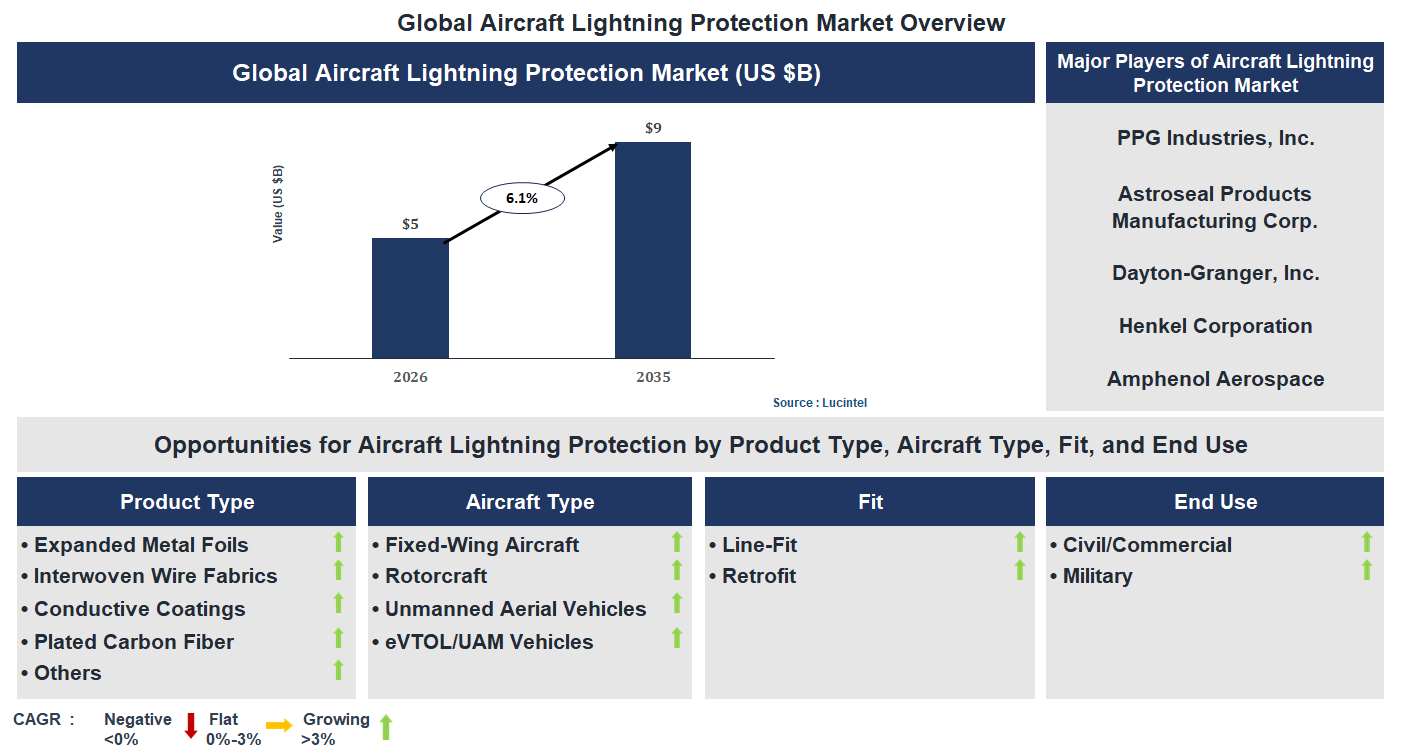
Key data points: The market size in 2035 = $12 billion, growth forecast = 6.1% annually for the next 8 years. Scroll below to get more insights. This market report covers trends, opportunities and forecasts in aircraft lightning protection market to 2035 by aircraft type (fixed-wing aircraft, rotary-wing aircraft, and unmanned aerial vehicles), fit (linefit and retrofit), application (lightning protection, lightning detection & warning, and test service), end use (civil and military), and region (North America, Europe, Asia Pacific, and the Rest of the World)
We'll send your sample report shortly.
• Lucintel forecasts that, within the aircraft type category, unmanned aerial vehicle is expected to witness the highest growth over the forecast period.
• Within the end use category, military is expected to witness higher growth.
• In terms of region, APAC is expected to witness the highest growth over the forecast period. Gain valuable insights for your business decisions with our comprehensive 150+ page report. Sample figures with some insights are shown below.
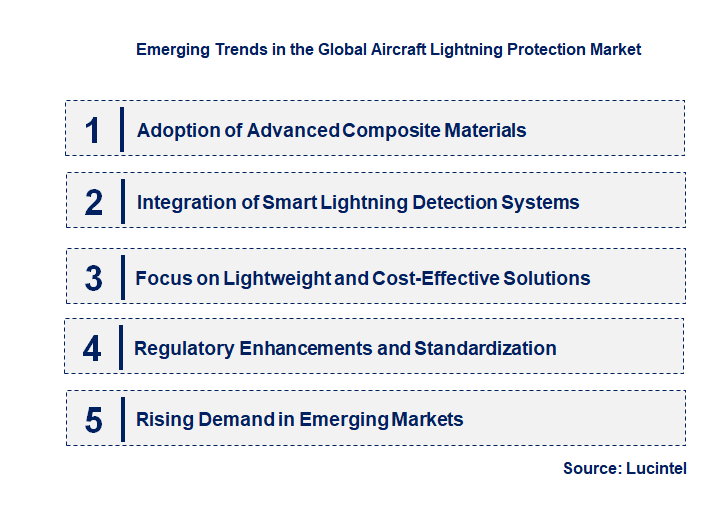
• Adoption of Advanced Composite Materials: The shift towards lightweight composite materials in aircraft construction is prompting the development of specialized lightning protection systems. These materials are more susceptible to lightning strikes, necessitating innovative solutions to ensure safety without adding weight. The trend is encouraging the integration of conductive coatings and embedded lightning protection components, which improve aircraft safety while maintaining fuel efficiency. This evolution is expanding the market for tailored lightning protection solutions and fostering collaboration between material manufacturers and aerospace engineers.
• Integration of Smart Lightning Detection Systems: The deployment of intelligent lightning detection and warning systems is gaining traction. These systems utilize sensors and real-time data analytics to detect lightning activity around aircraft, providing pilots with early warnings and enabling proactive measures. The impact includes enhanced safety, reduced risk of lightning-related damage, and improved maintenance planning. As these systems become more sophisticated, they are increasingly integrated into aircraft avionics, driving demand for advanced electronics and software solutions, and creating new revenue streams for technology providers.
• Focus on Lightweight and Cost-Effective Solutions: Cost efficiency and weight reduction are critical factors influencing market growth. Manufacturers are developing lightweight lightning protection components, such as conductive coatings and miniature lightning diverters, to meet these demands. These solutions help airlines reduce fuel consumption and operational costs while maintaining safety standards. The trend is fostering innovation in material science and manufacturing processes, leading to more affordable and easier-to-install protection systems, which are particularly attractive to budget-conscious airlines and smaller aircraft operators.
• Regulatory Enhancements and Standardization: Governments and aviation authorities are updating safety standards and regulations related to lightning protection. These changes promote the adoption of more rigorous testing, certification, and maintenance protocols. The impact is a more standardized approach across the industry, ensuring higher safety levels and fostering market confidence. Manufacturers are investing in R&D to meet these evolving standards, which also creates opportunities for certification and compliance services, further stimulating market growth.
• Rising Demand in Emerging Markets: Rapid aviation sector growth in regions such as Asia-Pacific and the Middle East is driving increased demand for lightning protection systems. These markets are experiencing a surge in new aircraft orders, including regional jets and business aircraft, which require advanced lightning protection. The trend is opening new opportunities for local manufacturers and international suppliers to expand their footprint. Additionally, infrastructure development and regulatory improvements in these regions are supporting market expansion, making emerging markets key growth drivers for the aircraft lightning protection industry. These trends are collectively reshaping the aircraft lightning protection market by fostering innovation, enhancing safety standards, and expanding market reach. The integration of advanced materials and smart systems, coupled with regulatory support and emerging market growth, is leading to more efficient, reliable, and cost-effective lightning protection solutions. This evolution is not only improving aircraft safety but also creating new opportunities for manufacturers and service providers, ultimately driving the industry toward a more resilient and technologically advanced future.
• Technological Innovations in Lightning Detection: Enhanced detection systems using advanced sensors and real-time data analytics improve aircraft safety by accurately predicting lightning strikes, reducing damage risks, and minimizing maintenance costs. These innovations enable airlines to better assess lightning risks during flights, leading to safer operations and increased passenger confidence. The integration of AI and IoT further refines detection accuracy, supporting proactive safety measures and regulatory compliance.
• Advanced Materials for Lightning Protection: The adoption of lightweight, durable composite materials and conductive coatings enhances aircraft resilience against lightning strikes. These materials reduce weight, improve fuel efficiency, and provide superior protection compared to traditional metal-based systems. The development of such materials is crucial for next-generation aircraft, enabling manufacturers to meet safety standards while optimizing performance, thus expanding market opportunities in commercial and military aviation sectors.
• Regulatory Frameworks and Safety Standards: Governments and aviation authorities are implementing stricter safety regulations requiring comprehensive lightning protection systems. These standards drive demand for advanced solutions and ensure uniform safety practices across the industry. Compliance with these regulations not only mitigates risks but also boosts market confidence, encouraging investments in innovative protection technologies and fostering global market growth.
• Integration of Lightning Protection in Aircraft Design: Incorporating lightning protection systems during the design phase ensures seamless integration, reducing retrofit costs and enhancing overall safety. This proactive approach allows manufacturers to meet regulatory requirements efficiently and improve aircraft reliability. The trend supports the development of lighter, more efficient protection systems, which are critical for modern aircraft, thereby expanding market share for integrated solutions.
• Growing Demand in Military and Business Aircraft: The increasing deployment of lightning protection systems in military and business jets presents significant growth opportunities. These aircraft require specialized, high-performance protection due to their operational environments. The demand is driven by defense budgets and corporate fleet expansions, leading to tailored solutions that enhance safety and durability, ultimately broadening the market scope beyond commercial aviation. The recent developments in aircraft lightning protection are significantly impacting the market by enhancing safety, reducing costs, and ensuring regulatory compliance. Innovations in detection systems, materials, and design integration are driving growth across commercial, military, and business aircraft sectors. As safety standards tighten and technological capabilities advance, the market is poised for sustained expansion, offering lucrative opportunities for industry players and contributing to overall aviation safety improvements worldwide.
• Commercial Aircraft Lightning Protection Systems: The commercial aircraft segment is a major driver, with rising air travel demand prompting airlines to upgrade safety systems. Advanced lightning protection solutions, such as conductive coatings and lightning detection systems, are increasingly integrated into new aircraft models. Regulatory mandates and safety standards further boost adoption, especially in large passenger jets. The focus on lightweight, durable materials enhances fuel efficiency while maintaining safety, creating substantial growth opportunities for manufacturers.
• Military Aircraft Lightning Protection Solutions: Military aircraft require specialized lightning protection to withstand extreme operational environments. The demand for robust, high-performance systems is driven by modernization programs and the need for enhanced survivability. Innovations include advanced lightning detection sensors and lightning-resistant composite materials. The increasing procurement of fighter jets, transport aircraft, and UAVs fuels market expansion. Customizable, lightweight solutions that meet military standards are prioritized, opening avenues for technological development and strategic partnerships.
• General Aviation Lightning Protection Equipment: The general aviation sector, including private jets and small aircraft, is adopting lightning protection systems to meet safety regulations and improve aircraft resilience. Cost-effective and easy-to-install solutions are preferred, with a focus on lightweight materials to avoid impacting aircraft performance. Growing private ownership and regional connectivity projects contribute to market growth. Manufacturers are developing modular systems that cater to diverse aircraft sizes, expanding the reach of lightning protection technology in this segment.
• Innovations in Lightning Detection and Warning Systems: The development of advanced lightning detection and warning systems offers significant growth potential. These systems provide real-time alerts, enabling pilots to take preventive actions and avoid lightning strikes. Integration with onboard avionics enhances safety and operational efficiency. Growing emphasis on predictive maintenance and data analytics further drives innovation. As safety regulations tighten, airlines and military operators increasingly adopt these systems, creating opportunities for technological advancements and new product launches.
• Lightweight and Cost-Effective Lightning Protection Materials: The demand for lightweight, durable, and affordable materials is a key growth driver. Innovations include conductive polymers, composite coatings, and nanomaterials that offer high conductivity and resistance to environmental factors. These materials reduce aircraft weight, improve fuel efficiency, and lower maintenance costs. The focus on sustainable and eco-friendly solutions aligns with industry trends. Manufacturers investing in research and development to produce scalable, cost-effective materials are poised to capture a significant share of the expanding market. These growth opportunities collectively enhance the safety, efficiency, and technological sophistication of aircraft lightning protection systems. As the aviation industry continues to evolve, innovation and strategic investments will be crucial in capturing market share and meeting increasing safety standards. The overall market is set to expand significantly, driven by technological advancements, regulatory requirements, and rising air traffic worldwide.
• Technological Advancements: The development of innovative lightning protection systems, such as advanced conductive materials and lightning detection technologies, enhances aircraft safety. These innovations improve system reliability, reduce weight, and ensure compliance with evolving safety standards. As aerospace companies invest in R&D, the integration of cutting-edge technology becomes more feasible, leading to increased adoption. The continuous evolution of lightning protection solutions also supports the development of next-generation aircraft, boosting market growth and competitiveness.
• Increasing Air Traffic and Fleet Expansion: The global rise in air travel and the expansion of airline fleets significantly contribute to market growth. As airlines modernize and expand their fleets, the demand for reliable lightning protection systems increases to ensure safety and regulatory compliance. This growth is particularly prominent in emerging markets, where air travel is expanding rapidly. The increased frequency of flights and larger aircraft sizes necessitate more sophisticated lightning protection solutions, driving market demand and encouraging manufacturers to innovate.
• Stringent Regulatory Standards: Governments and aviation authorities worldwide impose strict safety regulations requiring aircraft to be equipped with effective lightning protection systems. Compliance with standards such as those set by the FAA, EASA, and ICAO compels aircraft manufacturers and operators to invest in advanced lightning protection solutions. These regulations not only ensure passenger safety but also influence market dynamics by creating consistent demand for certified systems, fostering industry growth and technological development.
• Rising Focus on Passenger and Aircraft Safety: The increasing emphasis on safety in the aviation industry drives the adoption of lightning protection systems. Airlines and manufacturers prioritize passenger safety and aircraft integrity, leading to higher investments in lightning protection technology. This focus is reinforced by high-profile lightning-related incidents, prompting stricter safety measures. As safety remains a top priority, the market experiences sustained growth, with innovations aimed at minimizing lightning-related risks and enhancing overall aircraft resilience. The challenges facing the aircraft lightning protection market include:-
• High Implementation and Maintenance Costs: The installation of advanced lightning protection systems involves significant capital expenditure, which can be a barrier for smaller aircraft operators and emerging markets. Additionally, ongoing maintenance and periodic inspections add to operational costs. These financial burdens may limit widespread adoption, especially in cost-sensitive regions, potentially slowing market growth. Manufacturers must balance technological sophistication with affordability to expand their customer base and ensure long-term market sustainability.
• Technological Complexities and Integration Issues: Developing and integrating lightning protection systems into modern aircraft pose technical challenges. Compatibility with existing aircraft systems, weight considerations, and ensuring minimal impact on aircraft performance require sophisticated engineering solutions. These complexities can delay product development and certification processes, hindering timely market entry. Overcoming these technical hurdles is crucial for manufacturers to deliver reliable, efficient, and compliant lightning protection solutions.
• Regulatory Compliance and Certification Delays: Navigating the complex regulatory landscape can be time-consuming and costly. Achieving certification from aviation authorities involves rigorous testing and documentation, which can delay product launches and increase costs. Variations in standards across regions further complicate global deployment. These regulatory challenges can restrict market expansion and slow the adoption of new technologies, impacting overall industry growth and innovation. The aircraft lightning protection market is shaped by technological innovations, increasing air traffic, regulatory mandates, and safety priorities. While these drivers foster growth and technological progress, challenges such as high costs, technical complexities, and regulatory hurdles pose significant obstacles. The interplay of these factors will determine the pace and direction of market development, requiring stakeholders to innovate strategically and navigate regulatory landscapes effectively. Overall, the markets future hinges on balancing technological advancements with cost-efficiency and compliance to meet the evolving demands of the aviation industry.
• Cobham
• Saab
• Honeywell International
• L3 Technologies
• Microsemi Corporation
• TE Connectivity
• Dayton-Granger
• Dexmet Corporation
• Astroseal Products Manufacturing Corporation
• Pinnacle Lightning Protection
• Fixed-Wing Aircraft
• Rotary-Wing Aircraft
• Unmanned Aerial Vehicles
• Linefit
• Retrofit
• Lightning Protection
• Lightning Detection & Warning
• Test Service
• Civil
• Military
• North America
• Europe
• Asia Pacific
• The Rest of the World
• United States: The US market has seen substantial growth due to advancements in composite materials and integrated lightning protection systems. Major aerospace companies are investing in innovative technologies to improve aircraft safety and compliance with FAA regulations. The focus is on developing lightweight, efficient lightning protection solutions that do not compromise aircraft performance. Additionally, increased research collaborations between government agencies and private firms are fostering new product development. The US also emphasizes the integration of lightning protection with other aircraft safety systems, boosting overall reliability and safety standards.
• China: China’s aircraft lightning protection market is rapidly expanding, driven by the country’s booming aviation industry and government initiatives to modernize its fleet. Chinese aerospace manufacturers are adopting advanced lightning protection technologies to meet international safety standards. The government’s focus on indigenous aircraft development and increasing aircraft production volumes are fueling demand for robust lightning protection systems. Investments in research and development are also increasing, with a focus on lightweight and cost-effective solutions suitable for both commercial and military aircraft. China aims to become a significant player in global aircraft safety technology.
• Germany: Germany remains a key player in the aircraft lightning protection market, leveraging its strong aerospace engineering expertise. The country’s focus is on integrating advanced materials and sensor-based lightning detection systems into aircraft designs. German companies are pioneering innovations in lightweight protection systems that enhance safety without adding weight. The emphasis on sustainability and efficiency is driving the development of eco-friendly lightning protection solutions. Germany’s adherence to strict European aviation safety standards ensures continuous innovation and high-quality product offerings, maintaining its competitive edge in the global market.
• India: India’s aircraft lightning protection market is witnessing rapid growth due to expanding commercial aviation and increasing aircraft manufacturing activities. The government’s push for self-reliance in aerospace technology is encouraging local development of lightning protection systems. Indian companies are adopting advanced materials and technologies to meet international safety standards. The focus is on developing cost-effective, lightweight solutions suitable for the diverse Indian aviation sector. Additionally, collaborations with global aerospace firms are facilitating technology transfer and innovation. The market is expected to grow significantly as India aims to modernize its fleet and expand its aerospace capabilities.
• Japan: Japan’s market is characterized by high technological innovation and stringent safety standards. Japanese aerospace firms are investing in advanced lightning detection and protection systems that integrate seamlessly with aircraft electronics. The focus is on developing highly reliable, lightweight, and durable solutions that enhance aircraft safety and operational efficiency. Japan’s emphasis on research and development, along with collaborations with international aerospace organizations, is driving the adoption of cutting-edge lightning protection technologies. The country’s aerospace industry continues to prioritize safety, sustainability, and technological excellence, maintaining its position as a leader in aircraft safety innovations globally.


• Cobham
• Saab
• Honeywell International
• L3 Technologies
• Microsemi Corporation
• TE Connectivity
• Dayton-Granger
• Dexmet Corporation
• Astroseal Products Manufacturing Corporation
• Pinnacle Lightning Protection Q6. Which aircraft lightning protection market segment will be the largest in future? Answer: Lucintel forecasts that, within the aircraft type category, unmanned aerial vehicle is expected to witness the highest growth over the forecast period. Q7. In aircraft lightning protection market, which region is expected to be the largest in next 8 years? Answer: In terms of region, APAC is expected to witness the highest growth over the forecast period. Q8. Do we receive customization in this report? Answer: Yes, Lucintel provides 10% customization without any additional cost.


Choose a license that fits your team. Instant PDF delivery.
Prices exclude taxes. Instant delivery. Custom licensing available on request.
Market Report · July 31, 2026
Market Report · July 31, 2026
Market Report · July 22, 2026
Trusted partner for strategic intelligence and business growth


Receive a complimentary market analysis tailored to your industry. Our analysts will identify key growth opportunities and competitive dynamics specific to your business.

Market size, growth rate, and key trend analysis for your specific sector.

Top competitor positioning and market share analysis.

Strategic recommendations backed by data-driven insights.
Get curated market intelligence and competitive moves straight to your inbox.
By subscribing, you agree to receive our monthly insights. Unsubscribe anytime.
Receive a complimentary market analysis tailored to your industry. Our analysts will identify key growth opportunities and competitive dynamics specific to your business.
Market size, growth rate, and key trend analysis for your specific sector.
Top competitor positioning and market share analysis.
Strategic recommendations backed by data-driven insights.
Get curated market intelligence, emerging trends, and competitive moves straight to your inbox each month.
By subscribing, you agree to receive our monthly insights. Unsubscribe anytime.
We'll send your sample report shortly.