
Report Feature
Aircraft Lighting Market Trends and Forecast
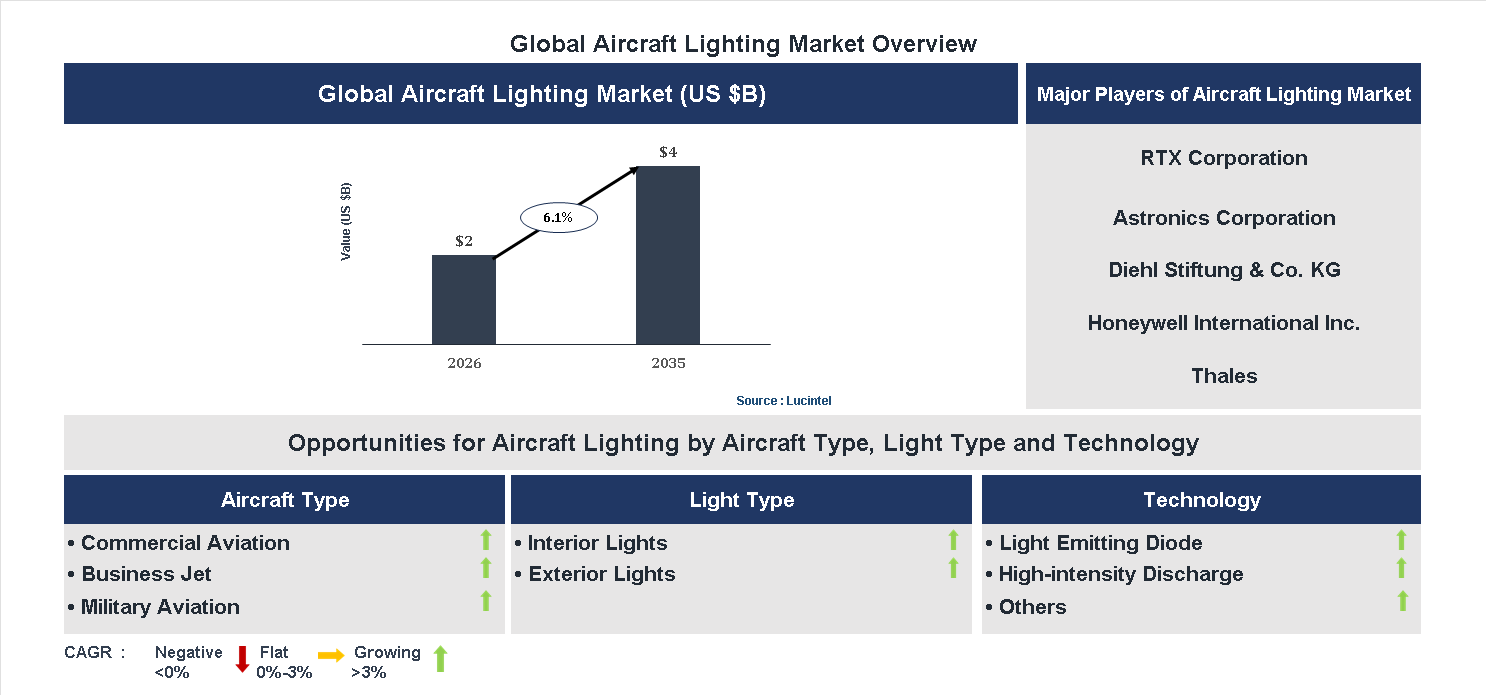
The future of the global aircraft lighting market looks promising with opportunities in the light emitting diode and high-intensity discharge markets. The global aircraft lighting market is expected to reach an estimated $4 billion by 2035 with a CAGR of 6.1% from 2026 to 2035. The major drivers for this market are the increasing focus on passenger safety standards, the rising demand for energy-efficient lighting solutions, and the growing need for advanced aircraft aesthetics.• Lucintel forecasts that, within the aircraft type category, commercial aviation is expected to witness the highest growth over the forecast period.
• Within the technology category, light emitting diode is expected to witness higher growth.
• In terms of region, North America is expected to witness the highest growth over the forecast period. Gain valuable insights for your business decisions with our comprehensive 150+ page report. Sample figures with some insights are shown below.
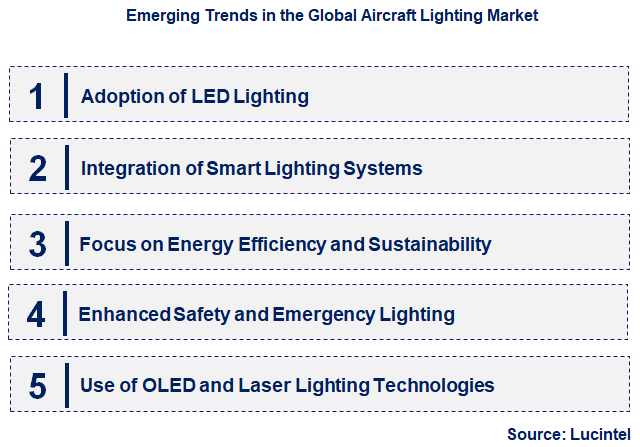
Emerging Trends in the Aircraft Lighting Market
The aircraft lighting market is experiencing rapid evolution driven by technological advancements, regulatory changes, and increasing demand for safety and efficiency in aviation. As airlines and manufacturers seek innovative solutions to enhance passenger experience and operational performance, new trends are emerging that are reshaping the industry landscape. These developments are not only improving safety standards but also contributing to sustainability and cost-effectiveness. The following key trends highlight the direction in which the aircraft lighting sector is heading, reflecting broader shifts in aviation technology and market dynamics.• Adoption of LED Lighting: The shift from traditional incandescent and halogen lights to LED technology is transforming aircraft lighting. LEDs offer significant advantages including lower energy consumption, longer lifespan, and reduced maintenance costs. They also enable more flexible design options and customizable lighting schemes, enhancing passenger comfort and cabin ambiance. This trend is driven by the need for energy efficiency and sustainability, making LED lighting the standard in new aircraft designs and retrofits.
• Integration of Smart Lighting Systems: Smart lighting systems are increasingly being integrated into aircraft cabins, allowing for dynamic control of lighting based on passenger preferences, time of day, or flight phase. These systems can adjust brightness, color, and intensity automatically, improving passenger well-being and reducing fatigue. They also enable airlines to create personalized experiences and optimize energy use, contributing to operational efficiency. The adoption of IoT-enabled lighting systems is a key trend shaping the future of aircraft interior design.
• Focus on Energy Efficiency and Sustainability: Environmental concerns and regulatory pressures are pushing the aircraft lighting market toward more sustainable solutions. Manufacturers are developing energy-efficient lighting options that reduce carbon footprints and comply with stringent environmental standards. The use of LED lighting, along with innovations in power management, supports airlines sustainability goals. This trend aligns with the broader push for greener aviation practices and is expected to continue driving product development and market growth.
• Enhanced Safety and Emergency Lighting: Safety remains a critical aspect of aircraft lighting. Emerging trends include the development of advanced emergency lighting systems that are more reliable, energy-efficient, and capable of providing better visibility during emergencies. These systems are designed to operate independently of the main power supply and incorporate features like photoluminescent materials and automated activation. Improved safety lighting enhances passenger and crew safety, ensuring compliance with evolving aviation safety regulations and standards.
• Use of OLED and Laser Lighting Technologies: Innovations such as Organic Light Emitting Diodes (OLED) and laser lighting are beginning to make their mark in the aircraft lighting market. OLEDs offer ultra-thin, flexible, and highly customizable lighting solutions suitable for cabin and exterior applications. Laser lighting provides high-intensity illumination with lower power consumption and longer lifespan. These cutting-edge technologies promise to further enhance lighting quality, design flexibility, and energy efficiency, opening new avenues for innovation in aircraft lighting systems. These trends are collectively driving the aircraft lighting market toward greater efficiency, safety, and passenger comfort. The adoption of advanced technologies like LED, OLED, and smart systems, coupled with a focus on sustainability and safety, is reshaping the industry landscape. As these developments continue, the market is poised for significant growth, with innovations fostering more environmentally friendly, cost-effective, and passenger-centric aircraft lighting solutions.
Recent Development in the Aircraft Lighting Market
The aircraft lighting market is experiencing rapid innovation driven by technological advancements, safety regulations, and passenger experience enhancements. As airlines and manufacturers seek to improve aircraft aesthetics, safety, and energy efficiency, new lighting solutions are emerging. These developments are transforming the industry, creating new opportunities for growth and competition. Stakeholders are focusing on sustainability, smart lighting systems, and customization to meet evolving demands. The following key developments highlight the current trajectory shaping this dynamic market landscape.• Adoption of LED Lighting: Enhanced energy efficiency and durability drive widespread LED implementation, reducing maintenance costs and improving passenger comfort. LED lighting offers customizable color schemes and better control, aligning with airline branding and passenger preferences. This shift significantly impacts operational costs and environmental sustainability, making aircraft more eco-friendly. The increased adoption of LED technology is expected to continue, fostering innovation in cabin and exterior lighting solutions.
• Integration of Smart Lighting Systems: Smart lighting systems enable dynamic control of cabin ambiance, improving passenger experience and operational efficiency. These systems can adjust lighting based on flight phases, time zones, or passenger preferences, reducing jet lag and enhancing comfort. They also facilitate maintenance alerts and energy management, lowering operational costs. The integration of IoT and automation in lighting systems is revolutionizing aircraft interior design, offering airlines a competitive edge through personalized passenger experiences.
• Focus on Safety and Emergency Lighting: Advances in safety lighting ensure better visibility during emergencies, complying with stringent aviation regulations. Modern emergency lighting systems are more reliable, energy-efficient, and easier to maintain, enhancing overall aircraft safety. Innovations include LED-based exit signs and pathway lighting that improve evacuation procedures. These developments are critical for airline safety standards and passenger confidence, influencing regulatory compliance and market competitiveness.
• Emphasis on Aesthetic and Customization Options: Airlines are increasingly investing in customizable lighting to enhance cabin aesthetics and brand identity. Innovative lighting designs create a more inviting and luxurious environment, influencing passenger satisfaction and loyalty. Customization options include color schemes, mood lighting, and themed cabin lighting, tailored to specific routes or airline branding. This trend supports premium service offerings and differentiates airlines in a competitive market, driving demand for innovative lighting solutions.
• Development of Eco-Friendly and Energy-Efficient Solutions: Sustainability is a key driver, prompting the adoption of environmentally friendly lighting options. Energy-efficient lighting reduces aircraft carbon footprint and operational costs, aligning with global environmental standards. Innovations include lightweight materials, recyclable components, and low-power LED systems. These developments support airlines sustainability goals and regulatory compliance, fostering market growth by appealing to eco-conscious consumers and stakeholders committed to reducing environmental impact. The aircraft lighting market is significantly impacted by these developments, leading to increased efficiency, safety, passenger satisfaction, and sustainability. These innovations are fostering a competitive environment where airlines and manufacturers can differentiate themselves through advanced lighting solutions. As technology continues to evolve, the market is poised for sustained growth, driven by demand for smarter, safer, and more eco-friendly aircraft lighting options.
Strategic Growth Opportunities in the Aircraft Lighting Market
The aircraft lighting market is experiencing significant growth driven by technological advancements, increased safety regulations, and the demand for enhanced passenger experience. Innovations in LED lighting, smart systems, and energy-efficient solutions are transforming aircraft interiors and exteriors. Rising air travel and modernization of existing fleets further propel market expansion. Strategic investments by manufacturers and airlines are creating new opportunities for market players to innovate and capture market share, ensuring safer, more efficient, and aesthetically appealing aircraft lighting solutions worldwide.• Adoption of LED Lighting for Enhanced Energy Efficiency and Durability: The shift from traditional incandescent and halogen lighting to LED technology offers significant benefits, including lower power consumption, longer lifespan, and reduced maintenance costs. LED lighting also provides better color rendering and design flexibility, improving passenger comfort and aircraft aesthetics. As airlines seek sustainable solutions, the adoption of LED lighting is expected to accelerate, driving market growth and innovation in aircraft lighting systems.
• Integration of Smart Lighting Systems for Improved Cabin Experience: The development of intelligent lighting systems allows for customizable lighting scenarios, mood settings, and automated controls, enhancing passenger comfort and cabin ambiance. These systems can be integrated with in-flight entertainment and environmental controls, providing a seamless experience. Airlines are increasingly investing in smart lighting to differentiate their services, improve operational efficiency, and meet passenger expectations, thereby creating new growth avenues in the aircraft lighting market.
• Rising Demand for Exterior Lighting for Safety and Aesthetic Appeal: Exterior aircraft lighting, including navigation, landing, and logo lights, is crucial for safety, visibility, and brand identity. Advances in LED technology and lightweight materials improve energy efficiency and reduce aircraft weight. Regulatory requirements for better visibility and safety standards are also fueling demand. Airlines and manufacturers are focusing on innovative exterior lighting solutions to enhance aircraft appearance and compliance, contributing to overall market expansion.
• Increasing Focus on Cabin Modernization and Retrofit Projects: Many airlines are upgrading aging fleets with modern lighting solutions to improve passenger experience and meet new safety standards. Retrofit projects involve replacing outdated lighting systems with energy-efficient, smart, and customizable options. This trend is driven by the need for cost savings, regulatory compliance, and competitive differentiation. The retrofit market presents substantial growth opportunities for manufacturers specializing in aircraft lighting upgrades, supporting overall industry expansion.
• Expansion of Market in Emerging Economies with Growing Air Traffic: Rapid economic growth and increasing air travel in regions like Asia-Pacific and the Middle East are fueling demand for new aircraft and retrofit solutions. Airlines in these regions are investing in modern lighting systems to enhance safety, efficiency, and passenger comfort. The expansion of airline fleets and infrastructure development in emerging markets create significant opportunities for market players to establish a foothold and expand their global presence. The overall impact of these opportunities is set to significantly accelerate growth, innovation, and competitiveness within the aircraft lighting market, ensuring safer, more efficient, and passenger-centric air travel experiences worldwide.
Aircraft Lighting Market Driver and Challenges
The aircraft lighting market is influenced by a variety of technological, economic, and regulatory factors that shape its growth and development. Advances in lighting technology, such as LED systems, are enhancing safety and energy efficiency, while economic factors like increasing air travel demand drive market expansion. Regulatory standards for safety and environmental compliance also play a crucial role, prompting manufacturers to innovate and adapt. Additionally, the integration of smart lighting systems and the push for lightweight, durable materials are further impacting the market landscape. Navigating these drivers alongside emerging challenges is essential for stakeholders aiming to capitalize on opportunities within this dynamic industry. The factors responsible for driving the aircraft lighting market include:• Technological Innovation: The development of LED lighting systems has revolutionized aircraft lighting by offering energy efficiency, longer lifespan, and better visibility. These advancements improve safety and reduce maintenance costs, making them highly attractive to aircraft manufacturers and operators. The integration of smart lighting controls and adaptive lighting systems further enhances passenger experience and operational efficiency. As technology continues to evolve, the market is expected to see increased adoption of innovative lighting solutions, supporting overall industry growth.
• Regulatory Compliance and Safety Standards: Stringent safety regulations imposed by aviation authorities such as the FAA and EASA require aircraft to meet specific lighting standards for visibility, safety, and environmental impact. These regulations drive manufacturers to develop compliant lighting systems that enhance aircraft safety during takeoff, landing, and in-flight operations. Compliance not only ensures safety but also opens up new market opportunities for companies that can innovate within regulatory frameworks, fostering a competitive environment focused on safety and reliability.
• Increasing Air Travel and Fleet Expansion: The rising global demand for air travel, especially in emerging economies, is fueling the expansion of airline fleets. This growth necessitates the procurement of new aircraft equipped with advanced lighting systems to meet safety and aesthetic standards. As airlines seek to improve passenger experience and operational efficiency, the demand for modern, lightweight, and energy-efficient lighting solutions continues to rise, directly contributing to market expansion.
• Focus on Passenger Experience and Aesthetics: Airlines are increasingly investing in cabin aesthetics to attract passengers and differentiate their services. Innovative lighting systems that offer customizable, mood-enhancing, and ambient lighting options are becoming popular. These enhancements improve passenger comfort and satisfaction, influencing airline purchasing decisions. The demand for aesthetically appealing and functional lighting solutions is thus a significant driver, encouraging manufacturers to develop versatile and innovative products.
• Environmental Sustainability Initiatives: Growing concerns over environmental impact and the push for sustainable aviation practices are influencing the market. The adoption of energy-efficient LED lighting reduces power consumption and carbon footprint, aligning with global sustainability goals. Regulatory pressures and airline commitments to reduce environmental impact are prompting the industry to adopt greener lighting solutions, which in turn stimulates market growth through increased demand for eco-friendly products. The challenges facing the aircraft lighting market include:
• High Development and Certification Costs: Developing advanced lighting systems that meet strict safety and regulatory standards involves significant investment in research, testing, and certification processes. These costs can be prohibitive, especially for smaller manufacturers, potentially limiting innovation and market entry. The lengthy certification procedures also delay product launches, impacting revenue streams and market competitiveness.
• Rapid Technological Obsolescence: The fast pace of technological advancements in lighting solutions can render existing products obsolete quickly. Manufacturers face the challenge of continuously innovating to stay ahead of competitors while managing the costs associated with frequent upgrades. This rapid obsolescence can lead to increased R&D expenses and inventory management issues, complicating long-term planning.
• Regulatory and Certification Delays: The aviation industry is heavily regulated, and obtaining necessary certifications for new lighting products can be a lengthy and complex process. Delays in certification can hinder product deployment and market penetration, affecting revenue and growth prospects. Navigating diverse regulatory environments across different regions adds further complexity, requiring substantial resources and strategic planning. The aircraft lighting market is driven by technological advancements, regulatory compliance, increasing air travel, passenger experience focus, and sustainability initiatives. However, high development costs, rapid technological changes, and regulatory delays pose significant challenges. These factors collectively influence market dynamics, requiring stakeholders to innovate strategically and adapt swiftly. The overall impact is a competitive landscape characterized by opportunities for growth through innovation, balanced by the need to manage costs and regulatory hurdles effectively.
List of Aircraft Lighting Companies
Companies in the market compete on the basis of product quality offered. Major players in this market focus on expanding their manufacturing facilities, R&D investments, infrastructural development, and leverage integration opportunities across the value chain. With these strategies aircraft lighting companies cater increasing demand, ensure competitive effectiveness, develop innovative products & technologies, reduce production costs, and expand their customer base. Some of the aircraft lighting companies profiled in this report include-• RTX Corporation
• Astronics Corporation
• Diehl Stiftung & Co. KG
• Honeywell International Inc.
• Thales
• Luminator Aerospace
• Oxley Group
• STG Aerospace Limited
• Soderberg Manufacturing Company Inc.
• Heads Up Technologies
Aircraft Lighting Market by Segment
The study includes a forecast for the global aircraft lighting market by aircraft type, light type, technology, and region.Aircraft Lighting Market by Aircraft Type [Value from 2019 to 2035]:
• Commercial Aviation
• Business Jet
• Military Aviation
Aircraft Lighting Market by Light Type [Value from 2019 to 2035]:
• Interior Lights
• Exterior Lights
Aircraft Lighting Market by Technology [Value from 2019 to 2035]:
• Light Emitting Diode
• High-intensity Discharge
• Others
Aircraft Lighting Market by Region [Value from 2019 to 2035]:
• North America
• Europe
• Asia Pacific
• The Rest of the World
Country Wise Outlook for the Aircraft Lighting Market
The aircraft lighting market has experienced significant technological advancements and increased demand driven by the growth of the aviation industry worldwide. Innovations in energy-efficient lighting, enhanced safety features, and the integration of smart lighting systems are shaping the future of this sector. Regulatory changes and sustainability initiatives are also influencing market dynamics across different regions. As airlines and manufacturers prioritize passenger comfort and operational efficiency, the market continues to evolve rapidly, with key players investing in research and development to stay competitive. The following summaries highlight recent developments in the United States, China, Germany, India, and Japan.• United States: The U.S. aircraft lighting market has seen increased adoption of LED lighting systems, driven by airline safety regulations and energy efficiency standards. Major manufacturers are focusing on smart lighting solutions that improve cabin ambiance and passenger experience. The Federal Aviation Administration (FAA) has introduced new guidelines promoting the use of advanced lighting for better visibility and safety. Additionally, the rise of retrofit projects for existing aircraft to upgrade lighting systems has contributed to market growth. The U.S. market remains highly competitive, with innovation and regulatory compliance as key drivers.
• China: Chinas aircraft lighting market is expanding rapidly due to the countrys booming aviation sector and government support for technological innovation. Chinese manufacturers are investing heavily in developing lightweight, energy-efficient LED lighting systems that meet international safety standards. The increasing number of new aircraft orders from Chinese airlines is fueling demand for advanced lighting solutions. Moreover, collaborations with global technology firms are enhancing product quality and innovation. The Chinese government’s focus on sustainable aviation practices is also encouraging the adoption of eco-friendly lighting technologies, positioning China as a significant player in this market.
• Germany: Germanys aircraft lighting market benefits from the countrys strong aerospace industry and emphasis on safety and quality standards. Leading companies are innovating in the development of intelligent lighting systems that adapt to different flight phases, enhancing safety and passenger comfort. Germanys adherence to European Union regulations ensures the integration of environmentally friendly and energy-efficient lighting solutions. The focus on lightweight materials and durability has driven R&D efforts. Additionally, Germanys role as a hub for aerospace research and development supports continuous technological advancements in aircraft lighting.
• India: The Indian aircraft lighting market is witnessing rapid growth due to the expanding domestic aviation sector and increasing aircraft fleet modernization. Indian manufacturers are focusing on cost-effective, durable LED lighting solutions that comply with international safety standards. The government’s initiatives to promote regional connectivity and the rise of low-cost carriers are boosting demand for efficient lighting systems. Moreover, collaborations with global aerospace firms are facilitating technology transfer and innovation. The increasing focus on passenger safety and comfort, along with regulatory support, is expected to propel market growth in the coming years.
• Japan: Japans aircraft lighting market is characterized by high technological innovation and stringent safety standards. Japanese companies are developing advanced LED lighting systems with features like adaptive lighting and energy efficiency. The countrys focus on sustainability and eco-friendly solutions aligns with global trends, leading to the adoption of environmentally conscious lighting technologies. Japans aerospace industry emphasizes lightweight, durable materials, and smart lighting systems that enhance operational safety. The integration of IoT and automation in aircraft lighting is also gaining traction, positioning Japan as a leader in innovative aircraft lighting solutions.

Features of the Global Aircraft Lighting Market
Market Size Estimates: Aircraft lighting market size estimation in terms of value ($B). Trend and Forecast Analysis: Market trends (2019 to 2025) and forecast (2026 to 2035) by various segments and regions. Segmentation Analysis: Aircraft lighting market size by aircraft type, light type, technology, and region in terms of value ($B). Regional Analysis: Aircraft lighting market breakdown by North America, Europe, Asia Pacific, and Rest of the World. Growth Opportunities: Analysis of growth opportunities in different aircraft types, light types, technologies, and regions for the aircraft lighting market. Strategic Analysis: This includes M&A, new product development, and competitive landscape of the aircraft lighting market. Analysis of competitive intensity of the industry based on Porter’s Five Forces model.
FAQ
Q1. What is the aircraft lighting market size? Answer: The global aircraft lighting market is expected to reach an estimated $4 billion by 2035. Q2. What is the growth forecast for aircraft lighting market? Answer: The global aircraft lighting market is expected to grow with a CAGR of 6.1% from 2026 to 2035. Q3. What are the major drivers influencing the growth of the aircraft lighting market? Answer: The major drivers for this market are the increasing focus on passenger safety standards, the rising demand for energy-efficient lighting solutions, and the growing need for advanced aircraft aesthetics. Q4. What are the major segments for aircraft lighting market? Answer: The future of the aircraft lighting market looks promising with opportunities in the light emitting diode and high-intensity discharge markets. Q5. Who are the key aircraft lighting market companies? Answer: Some of the key aircraft lighting companies are as follows:• RTX Corporation
• Astronics Corporation
• Diehl Stiftung & Co. KG
• Honeywell International Inc.
• Thales
• Luminator Aerospace
• Oxley Group
• STG Aerospace Limited
• Soderberg Manufacturing Company Inc.
• Heads Up Technologies Q6. Which aircraft lighting market segment will be the largest in future? Answer: Lucintel forecasts that, within the aircraft type category, commercial aviation is expected to witness the highest growth over the forecast period. Q7. In aircraft lighting market, which region is expected to be the largest in next 8 years? Answer: In terms of region, North America is expected to witness the highest growth over the forecast period. Q8. Do we receive customization in this report? Answer: Yes, Lucintel provides 10% customization without any additional cost.
Table of Contents
List of Figures
List of Tables
Methodology
- In-depth interviews of the major players in this market
- Detailed secondary research from competitors’ financial statements and published data
- Extensive searches of published works, market, and database information pertaining to industry news, company press releases, and customer intentions
- A compilation of the experiences, judgments, and insights of Lucintel’s professionals, who have analyzed and tracked this market over the years.


Buy Now
Choose a license that fits your team. Instant PDF delivery.
Prices exclude taxes. Instant delivery. Custom licensing available on request.
Key Questions
- • What are some of the most promising, high-growth opportunities for the aircraft lighting market by aircraft type (commercial aviation, business jet, and military aviation), light type (interior lights and exterior lights), technology (light emitting diode, high-intensity discharge, and others), and region (North America, Europe, Asia Pacific, and the Rest of the World)?
- • Which segments will grow at a faster pace and why?
- • Which region will grow at a faster pace and why?
- • What are the key factors affecting market dynamics? What are the key challenges and business risks in this market?
- • What are the business risks and competitive threats in this market?
- • What are the emerging trends in this market and the reasons behind them?
- • What are some of the changing demands of customers in the market?
- • What are the new developments in the market? Which companies are leading these developments?
- • Who are the major players in this market? What strategic initiatives are key players pursuing for business growth?
- • What are some of the competing products in this market and how big of a threat do they pose for loss of market share by material or product substitution?
- • What M&A activity has occurred in the last 7 years and what has its impact been on the industry? For any questions related to Aircraft Lighting Market, Aircraft Lighting Market Size, Aircraft Lighting Market Growth, Aircraft Lighting Market Analysis, Aircraft Lighting Market Report, Aircraft Lighting Market Share, Aircraft Lighting Market Trends, Aircraft Lighting Market Forecast, Aircraft Lighting Companies, write Lucintel analyst at email: helpdesk@lucintel.com. We will be glad to get back to you soon.


