
Market Report · July 31, 2026

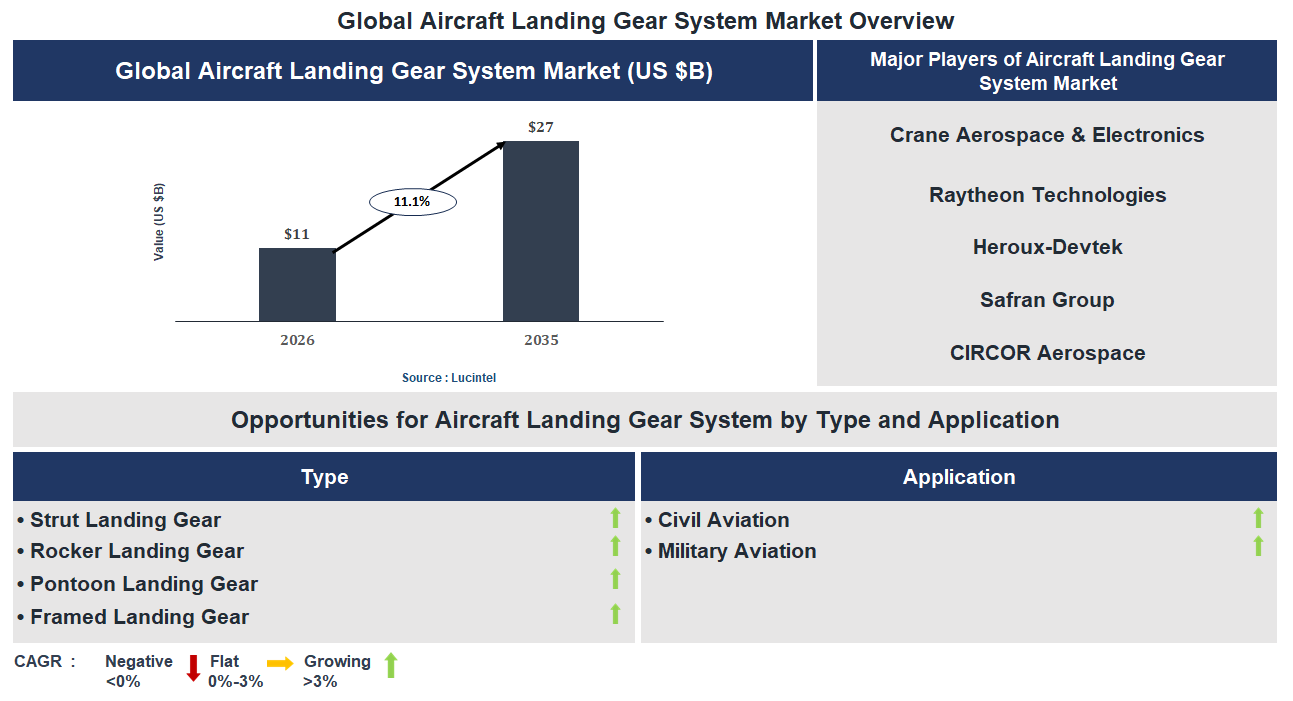
Key data points: The market size in 2035 = $27 billion, growth forecast = 11.1% annually for the next 8 years. Scroll below to get more insights. This market report covers trends, opportunities and forecasts in aircraft landing gear system market to 2035 by type (strut landing gear, rocker landing gear, pontoon landing gear, and framed landing gear), application (civil aviation and military aviation), and region (North America, Europe, Asia Pacific, and the Rest of the World)
We'll send your sample report shortly.
• Lucintel forecasts that, within the type category, strut landing gear is expected to witness the highest growth over the forecast period.
• Within the application category, civil aviation is expected to witness higher growth.
• In terms of region, APAC is expected to witness the highest growth over the forecast period. Gain valuable insights for your business decisions with our comprehensive 150+ page report. Sample figures with some insights are shown below.
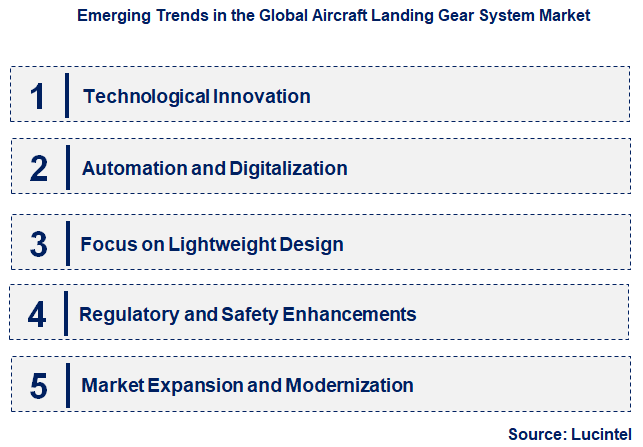
• Technological Innovation: Integration of advanced materials and smart systems is transforming landing gear design. Lightweight composites and high-strength alloys reduce weight, improving fuel efficiency and payload capacity. Additionally, sensors and IoT-enabled systems enable real-time monitoring of landing gear health, facilitating predictive maintenance and reducing downtime. These innovations enhance safety, operational efficiency, and cost-effectiveness, making aircraft more reliable and environmentally friendly.
• Automation and Digitalization: The adoption of automation in landing gear systems is increasing, with features like automatic extension and retraction, and electronic control systems. Digitalization allows for precise control and monitoring, reducing human error and improving safety margins. Automated systems also streamline maintenance procedures through data analytics and remote diagnostics, leading to faster turnaround times and lower operational costs. This trend aligns with the broader digital transformation in aviation, enhancing overall aircraft management.
• Focus on Lightweight Design: The push for lighter landing gear components is driven by the need to improve fuel efficiency and reduce emissions. Manufacturers are exploring innovative materials and design techniques to minimize weight without compromising strength and durability. Lightweight landing gear contributes to lower fuel consumption, extended aircraft range, and compliance with stringent environmental regulations. This trend is critical as airlines seek sustainable solutions and cost savings in their operations.
• Regulatory and Safety Enhancements: Stricter safety standards and regulatory requirements are prompting the development of more robust and reliable landing gear systems. Innovations include enhanced shock absorption, improved braking systems, and better corrosion resistance. Regulatory bodies are also mandating more comprehensive testing and certification processes, which drive technological advancements. These measures ensure higher safety levels, reduce accident risks, and foster greater passenger confidence in air travel.
• Market Expansion and Modernization: The increasing demand for new aircraft and the modernization of existing fleets are fueling market growth. Emerging economies are investing heavily in aviation infrastructure, leading to increased demand for advanced landing gear systems. Additionally, the retrofit of older aircraft with modern landing gear components is a significant market segment. This expansion is creating opportunities for manufacturers to innovate and diversify their product offerings, ensuring they meet evolving customer needs and regulatory standards. These emerging trends are fundamentally reshaping the aircraft landing gear system market by driving innovation, enhancing safety, and promoting sustainability. The integration of new materials, automation, and regulatory compliance is leading to more efficient, reliable, and environmentally friendly landing gear solutions. As these trends continue to evolve, they will significantly influence market dynamics, competitive strategies, and the future landscape of aviation technology.
• Technological Innovations in Landing Gear Design: The integration of advanced materials and smart systems is revolutionizing landing gear design. Innovations such as lightweight composites and sensor-based systems improve durability, reduce weight, and enhance safety. These advancements lead to better fuel efficiency and lower maintenance costs, providing airlines with significant operational savings. The adoption of these technologies is expected to accelerate, opening new avenues for manufacturers and suppliers to develop next-generation landing gear systems.
• Increasing Aircraft Production and Fleet Expansion: The surge in aircraft manufacturing, driven by rising air travel demand, is fueling the need for more landing gear systems. OEMs are expanding their production capacities to meet this demand, creating opportunities for suppliers and aftermarket service providers. The growth in fleet size, especially in emerging markets, boosts demand for reliable, high-performance landing gear components. This trend supports long-term market growth and encourages innovation in manufacturing processes and product offerings.
• Focus on Safety and Regulatory Compliance: Stringent safety standards and regulatory requirements are prompting manufacturers to develop more reliable and compliant landing gear systems. Innovations such as enhanced braking systems and fail-safe mechanisms are being incorporated to meet these standards. Compliance with international regulations ensures market access and customer trust. This focus on safety drives continuous improvement, fostering a competitive environment where companies invest in R&D to develop compliant, high-performance landing gear solutions.
• Adoption of Lightweight and Sustainable Materials: The shift towards lightweight, eco-friendly materials is transforming landing gear manufacturing. Use of composites and advanced alloys reduces weight, improving fuel efficiency and reducing emissions. Sustainability initiatives are also encouraging the development of recyclable and environmentally friendly components. These materials not only enhance aircraft performance but also align with global environmental goals, making them a key focus area for industry players aiming to meet future regulatory and market demands.
• Digitalization and Predictive Maintenance: The integration of digital technologies and IoT in landing gear systems is enabling predictive maintenance and real-time monitoring. Sensors and data analytics help identify potential failures before they occur, reducing downtime and maintenance costs. This digital transformation enhances safety and operational efficiency, providing airlines with better asset management. The adoption of these technologies is expected to grow rapidly, creating new revenue streams for technology providers and improving overall market competitiveness. The overall impact of these developments is a more innovative, efficient, and safety-oriented market. They are driving growth, reducing costs, and improving aircraft performance, which benefits manufacturers, airlines, and passengers alike. The market is poised for sustained expansion, with technological and regulatory advancements shaping its future trajectory.
• Growing Demand for Lightweight and Durable Landing Gear Components: The market is driven by the need for lightweight, high-strength materials such as composites and advanced alloys to improve fuel efficiency and payload capacity. Manufacturers are investing in R&D to develop innovative materials that reduce weight without compromising safety or durability. This trend enhances aircraft performance, reduces operational costs, and aligns with environmental regulations, creating substantial opportunities for material suppliers and component manufacturers to innovate and expand their product portfolios.
• Increasing Adoption of Automation and Smart Technologies in Landing Gear Systems: Automation and smart sensors are revolutionizing landing gear operations by enabling real-time monitoring, predictive maintenance, and enhanced safety features. Integration of IoT and AI technologies allows for early fault detection, reducing downtime and maintenance costs. Airlines and OEMs are increasingly adopting these advanced systems to improve reliability and operational efficiency. This shift toward intelligent landing gear solutions opens avenues for technology providers to develop innovative, connected systems tailored to modern aircraft.
• Expansion of Commercial Aviation and Rise in New Aircraft Orders: The surge in commercial aircraft production, driven by rising passenger traffic and airline fleet expansions, significantly boosts demand for landing gear systems. OEMs are securing large orders from airlines and leasing companies, fueling growth in manufacturing and supply chain activities. Additionally, the development of new aircraft models with advanced landing gear configurations presents opportunities for customization and innovation, supporting market expansion and increased competition among suppliers.
• Focus on Safety Enhancements and Regulatory Compliance: Stringent safety standards and regulatory requirements compel manufacturers to develop advanced landing gear systems with enhanced safety features, such as improved shock absorption and fail-safe mechanisms. Compliance with international aviation safety regulations ensures market access and customer trust. This focus drives innovation in design, materials, and testing procedures, creating opportunities for companies to differentiate through safety innovations and establish a competitive edge in a highly regulated industry.
• Rising Investment in Military and Defense Landing Gear Systems: The increasing modernization of military fleets and the procurement of new aircraft platforms stimulate demand for specialized landing gear systems capable of handling diverse operational conditions. Defense agencies seek robust, reliable, and adaptable landing gear solutions for tactical and strategic aircraft. This sector offers lucrative opportunities for defense contractors and component suppliers to develop advanced, ruggedized systems, fostering innovation and expanding market share in the defense segment. The overall market growth is propelled by technological advancements, increasing aircraft production, and a focus on safety and efficiency. These opportunities collectively enhance the competitiveness and innovation capacity of industry players, ensuring sustained expansion and technological progress in the aircraft landing gear system market.
• Technological Advancements: The continuous development of lightweight, durable materials such as composites and advanced hydraulics improves landing gear performance, safety, and fuel efficiency. Innovations like electric and hybrid landing gear systems are also emerging, reducing maintenance costs and environmental impact. These technological improvements enable manufacturers to meet stringent safety standards and extend aircraft lifespan, thereby boosting market growth.
• Increasing Aircraft Production: Rising demand for commercial and military aircraft, driven by expanding air travel and defense needs, directly increases the need for advanced landing gear systems. Major aircraft manufacturers are investing heavily in new models, which require sophisticated landing gear solutions. This surge in aircraft production fuels market expansion, creating opportunities for suppliers and component manufacturers.
• Regulatory and Safety Standards: Stringent safety regulations imposed by aviation authorities such as FAA and EASA mandate rigorous testing and certification of landing gear systems. Compliance ensures passenger safety and operational reliability, prompting manufacturers to innovate and upgrade their offerings. These standards also influence design complexity and costs, shaping market dynamics.
• Growing Focus on Lightweight and Fuel-Efficient Systems: Environmental concerns and rising fuel prices drive the demand for lightweight landing gear components that reduce aircraft weight and improve fuel efficiency. Use of advanced composites and design optimization plays a crucial role in achieving these goals, influencing market trends toward sustainable aviation solutions.
• Expansion of Maintenance, Repair, and Overhaul Services: The increasing fleet size and aging aircraft necessitate extensive MRO activities for landing gear systems. This growth in aftermarket services creates additional revenue streams for market players and encourages innovations in maintenance technologies, ensuring safety and reducing downtime. The challenges facing the aircraft landing gear system market include:-
• High Development and Certification Costs: Developing advanced landing gear systems involves significant investment in research, testing, and certification processes. Meeting regulatory standards adds complexity and expense, which can hinder entry for smaller players and slow innovation cycles, impacting overall market growth.
• Supply Chain Disruptions: The market relies heavily on specialized materials and components sourced globally. Disruptions due to geopolitical tensions, pandemics, or logistical issues can delay production and increase costs. These uncertainties threaten timely delivery and competitiveness, especially during periods of high demand.
• Environmental Regulations and Sustainability Pressures: Increasing environmental regulations require manufacturers to develop eco-friendly landing gear solutions with lower emissions and noise levels. Achieving these standards demands substantial R&D investment and may limit design options, posing challenges to innovation and cost management within the market. The aircraft landing gear system market is shaped by rapid technological innovations, expanding aircraft production, and strict safety standards, which collectively drive growth. However, high development costs, supply chain vulnerabilities, and environmental regulations present significant hurdles. Navigating these drivers and challenges requires strategic investments and adaptive approaches from industry stakeholders. Overall, the markets future hinges on balancing innovation with sustainability and resilience, ensuring continued safety, efficiency, and competitiveness in a dynamic aerospace landscape.
• Crane Aerospace & Electronics
• Raytheon Technologies
• Heroux-Devtek
• Safran Group
• CIRCOR Aerospace
• Magellan Aerospace Corporation
• Triumph Group
• GKN Aerospace
• SPP Canada Aircraft
• Swire
• Strut Landing Gear
• Rocker Landing Gear
• Pontoon Landing Gear
• Framed Landing Gear
• Civil Aviation
• Military Aviation
• North America
• Europe
• Asia Pacific
• The Rest of the World
• United States: The US market has seen substantial investments in lightweight composite materials and smart landing gear systems with integrated sensors for real-time monitoring, improving safety and maintenance efficiency. Major aerospace firms are developing electric and hybrid landing gear solutions to reduce emissions and weight, aligning with sustainability goals. The Federal Aviation Administration (FAA) has also introduced stricter safety standards, encouraging innovation in design and testing. Additionally, US companies are expanding their global footprint through strategic partnerships and acquisitions, strengthening their market position.
• China: China has rapidly advanced its aircraft landing gear technology, focusing on indigenous development to reduce reliance on imports. The country has launched several initiatives to enhance manufacturing capabilities, including automation and robotics, to increase production efficiency. Chinese firms are investing heavily in research to develop high-performance, durable landing gear systems suitable for both commercial and military aircraft. The government’s support through policies and funding has accelerated innovation, with a focus on lightweight and cost-effective solutions to cater to the expanding domestic aviation market.
• Germany: Germany remains a leader in aerospace engineering, with a strong emphasis on high-precision manufacturing and innovative materials such as titanium and composites. The country has made significant progress in developing environmentally friendly landing gear systems that reduce weight and fuel consumption. German companies are also pioneering the integration of digital technologies, including predictive maintenance and IoT-enabled sensors, to enhance operational reliability. Collaborations between industry and research institutions continue to drive advancements, positioning Germany as a key innovator in the global market.
• India: India’s aircraft landing gear market is witnessing rapid growth driven by expanding domestic airlines and increasing aircraft orders. The focus is on developing cost-effective, lightweight, and durable landing gear systems tailored for regional and commercial aircraft. Indian aerospace companies are collaborating with global players to adopt advanced manufacturing techniques and materials. The government’s push for self-reliance under the Make in India initiative has spurred local innovation and manufacturing capabilities. Additionally, India is investing in research to improve maintenance practices and extend the lifespan of landing gear components.
• Japan: Japan is emphasizing the development of advanced, reliable landing gear systems with a focus on safety and efficiency. The country is investing in research on new materials and innovative designs to reduce weight and improve performance. Japanese firms are also exploring automation and robotics for manufacturing and maintenance processes. The integration of digital technologies, such as sensors and data analytics, is enhancing predictive maintenance and operational safety. Japan’s aerospace industry continues to collaborate with international partners to incorporate cutting-edge technologies, maintaining its competitive edge in the global market.


• Crane Aerospace & Electronics
• Raytheon Technologies
• Heroux-Devtek
• Safran Group
• CIRCOR Aerospace
• Magellan Aerospace Corporation
• Triumph Group
• GKN Aerospace
• SPP Canada Aircraft
• Swire Q6. Which aircraft landing gear system market segment will be the largest in future? Answer: Lucintel forecasts that, within the type category, strut landing gear is expected to witness the highest growth over the forecast period. Q7. In aircraft landing gear system market, which region is expected to be the largest in next 8 years? Answer: In terms of region, APAC is expected to witness the highest growth over the forecast period. Q8. Do we receive customization in this report? Answer: Yes, Lucintel provides 10% customization without any additional cost.


Choose a license that fits your team. Instant PDF delivery.
Prices exclude taxes. Instant delivery. Custom licensing available on request.
Market Report · July 31, 2026
Market Report · July 31, 2026
Market Report · July 22, 2026
Trusted partner for strategic intelligence and business growth


Receive a complimentary market analysis tailored to your industry. Our analysts will identify key growth opportunities and competitive dynamics specific to your business.

Market size, growth rate, and key trend analysis for your specific sector.

Top competitor positioning and market share analysis.

Strategic recommendations backed by data-driven insights.
Get curated market intelligence and competitive moves straight to your inbox.
By subscribing, you agree to receive our monthly insights. Unsubscribe anytime.
Receive a complimentary market analysis tailored to your industry. Our analysts will identify key growth opportunities and competitive dynamics specific to your business.
Market size, growth rate, and key trend analysis for your specific sector.
Top competitor positioning and market share analysis.
Strategic recommendations backed by data-driven insights.
Get curated market intelligence, emerging trends, and competitive moves straight to your inbox each month.
By subscribing, you agree to receive our monthly insights. Unsubscribe anytime.
We'll send your sample report shortly.