
Market Report · July 31, 2026

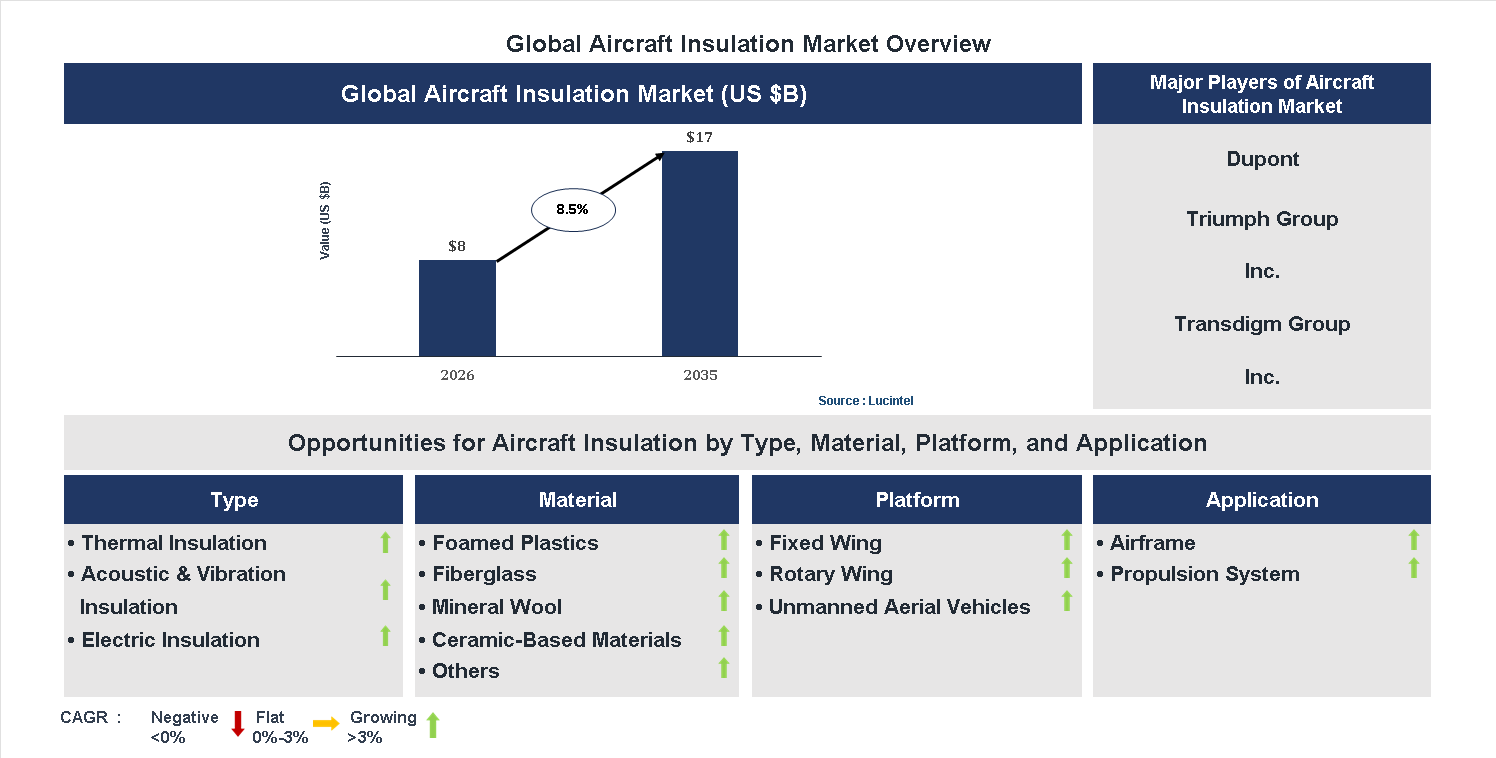
Key data points: The market size in 2035 = $17 billion, growth forecast = 8.5% annually for the next 8 years. Scroll below to get more insights. This market report covers trends, opportunities and forecasts in aircraft insulation market to 2035 by type (thermal insulation, acoustic & vibration insulation, and electric insulation), material (foamed plastics, fiberglass, mineral wool, ceramic-based materials, and others), platform (fixed wing, rotary wing, and unmanned aerial vehicles), application (airframe and propulsion system), and region (North America, Europe, Asia Pacific, and the Rest of the World)
We'll send your sample report shortly.
• Lucintel forecasts that, within the type category, acoustic & vibration insulation is expected to witness the highest growth over the forecast period.
• Within the application category, propulsion system is expected to witness higher growth.
• In terms of region, APAC is expected to witness the highest growth over the forecast period. Gain valuable insights for your business decisions with our comprehensive 150+ page report. Sample figures with some insights are shown below.
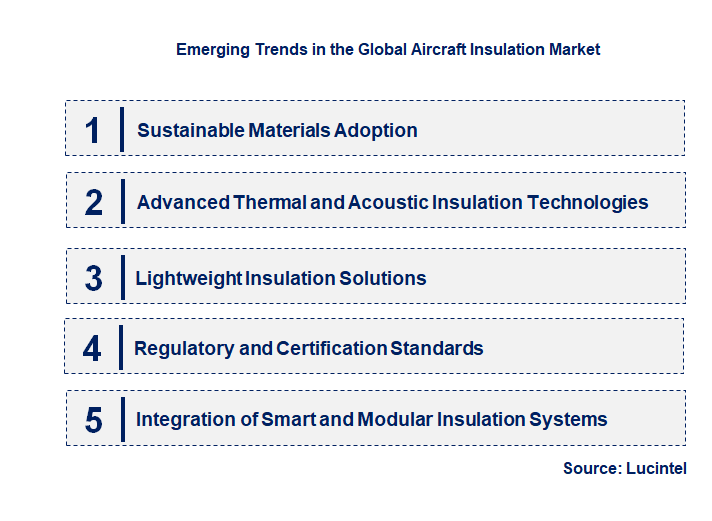
• Sustainable Materials Adoption: The shift towards eco-friendly insulation materials is gaining momentum. Manufacturers are increasingly using sustainable, recyclable, and low-emission materials such as bio-based foams and natural fibers. This trend is driven by stringent environmental regulations and airline commitments to reduce carbon footprints. Sustainable insulation not only helps airlines meet regulatory standards but also appeals to environmentally conscious consumers. The adoption of green materials is expected to boost market growth and innovation, leading to more sustainable aircraft designs and operations.
• Advanced Thermal and Acoustic Insulation Technologies: Innovations in thermal and acoustic insulation are enhancing passenger comfort and aircraft efficiency. New materials with superior heat resistance and soundproofing capabilities are being developed using nanotechnology and advanced composites. These materials improve fuel efficiency by reducing the need for additional climate control systems and enhance passenger experience by minimizing noise pollution. The integration of smart insulation systems that adapt to changing conditions is also emerging, offering tailored solutions for different aircraft zones, thereby expanding market opportunities.
• Lightweight Insulation Solutions: The demand for lightweight insulation materials is increasing to improve fuel efficiency and reduce emissions. Manufacturers are focusing on developing ultra-lightweight foams, aerogels, and composite-based insulations that maintain performance while reducing weight. These solutions are particularly critical for next-generation aircraft, including electric and hybrid models, where weight savings directly impact range and operational costs. The trend toward lightweight insulation is expected to significantly influence aircraft design and material selection, fostering innovation and competitive advantage in the market.
• Regulatory and Certification Standards: Evolving safety and environmental regulations are shaping the market landscape. Stricter standards for fire safety, emissions, and material recyclability are prompting manufacturers to innovate and comply with new certification processes. The adoption of fire-resistant and non-toxic insulation materials is becoming mandatory, influencing product development and supply chain strategies. Regulatory pressures are also encouraging the industry to adopt more sustainable and safer insulation options, which could lead to increased R&D investments and market consolidation.
• Integration of Smart and Modular Insulation Systems: The trend towards smart, modular insulation systems is transforming aircraft maintenance and customization. These systems incorporate sensors and IoT technology to monitor insulation performance, detect damage, and optimize thermal management in real-time. Modular designs facilitate easier installation, replacement, and upgrades, reducing downtime and maintenance costs. This trend supports the customization of insulation solutions for different aircraft types and routes, offering airlines greater flexibility and efficiency. The integration of smart systems is expected to drive innovation and create new revenue streams within the market. These emerging trends are collectively reshaping the aircraft insulation market by promoting sustainability, enhancing performance, and improving operational efficiency. They are fostering innovation, influencing regulatory compliance, and enabling more customized and lightweight solutions. As these trends continue to evolve, they will significantly impact market dynamics, product development, and competitive strategies, ultimately leading to a more sustainable and technologically advanced aviation industry.
• Growing Demand for Fuel Efficiency: The need to reduce aircraft weight to improve fuel economy is driving innovation in insulation materials, leading to lighter, more effective solutions that lower operational costs and emissions.
• Technological Advancements in Materials: Development of advanced insulation materials such as aerogels and composite fibers enhances thermal and acoustic performance, offering better safety and comfort for passengers and crew.
• Increasing Focus on Noise Reduction: Enhanced insulation solutions are being integrated to minimize cabin noise, improving passenger experience and meeting regulatory noise standards across various regions.
• Expansion in Emerging Markets: Rapid growth in aviation infrastructure in Asia-Pacific and Middle East regions is creating new opportunities for insulation manufacturers to supply expanding fleets and retrofit existing aircraft.
• Stringent Safety and Environmental Regulations: Evolving standards compel manufacturers to develop eco-friendly, fire-resistant insulation materials, fostering innovation and expanding market applications. The overall impact of these developments is a more competitive, innovative market that offers improved safety, efficiency, and passenger comfort. Increased adoption of advanced insulation solutions is driving market growth, encouraging technological innovation, and expanding opportunities across commercial and military aircraft sectors.
• Commercial aircraft insulation market Expanding Due To Passenger Comfort and Fuel Efficiency: The commercial aircraft segment is witnessing rapid growth as airlines seek lightweight insulation materials to reduce weight and improve fuel efficiency. Enhanced passenger comfort through noise reduction and temperature control is also driving demand. Innovations in eco-friendly, fire-resistant, and soundproof insulation materials are further boosting this segment. Increased aircraft production, especially in Asia-Pacific, and modernization of existing fleets are key factors supporting growth in this sector.
• Military aircraft insulation market Driven By Defense Modernization and Upgrades: The military aircraft insulation market is expanding due to ongoing defense modernization programs and the need for upgraded aircraft with improved thermal and acoustic insulation. Military aircraft require specialized insulation to withstand extreme conditions, reduce radar signatures, and enhance operational performance. The focus on lightweight, durable, and fire-resistant materials is critical. Growing defense budgets and procurement of new fighter jets, transport aircraft, and unmanned systems are significant growth drivers.
• Business and Private aircraft insulation market Growing With Luxury and Efficiency Demands: The private and business aircraft segment is experiencing increased demand for premium insulation solutions that enhance comfort, reduce noise, and improve thermal regulation. As the number of high-net-worth individuals owning private jets rises, so does the need for customized, lightweight, and eco-friendly insulation materials. Innovations in soundproofing and fire safety are also key factors. The trend toward greener, more efficient aircraft is encouraging manufacturers to develop advanced insulation options tailored to this niche market.
• Regional Market Opportunities in North America and Asia-Pacific: North America remains a dominant market due to its large fleet of commercial and military aircraft, technological innovation, and stringent safety standards. The Asia-Pacific region presents significant growth potential owing to rising aircraft manufacturing, expanding airline networks, and increasing military procurement. Countries like China and India are investing heavily in aerospace infrastructure. Regional regulations, economic growth, and strategic partnerships are expected to further accelerate insulation market expansion across these key areas.
• Innovation in Eco-Friendly and Lightweight Insulation Materials: The shift toward sustainable aviation fuels and eco-conscious manufacturing is prompting the development of environmentally friendly insulation materials. Lightweight composites, bio-based foams, and recycled materials are gaining traction to meet environmental regulations and reduce aircraft weight. These innovations improve fuel efficiency, lower emissions, and enhance overall aircraft performance. Continuous R&D efforts are focused on creating high-performance, sustainable insulation solutions that align with the industrys push toward greener aviation practices. The aircraft insulation market is poised for substantial growth driven by technological advancements, regional expansion, and increasing demand for lightweight, eco-friendly solutions. Opportunities across commercial, military, and private sectors will enable manufacturers to innovate and diversify their offerings. Strategic investments and product development aligned with safety, efficiency, and sustainability standards will be crucial for capturing market share and supporting the evolving needs of the global aerospace industry.
• Technological Innovation: The development of advanced insulation materials, such as lightweight composites and eco-friendly options, enhances aircraft performance by reducing weight and improving fuel efficiency. Innovations in manufacturing processes also enable better thermal and acoustic insulation, meeting stringent safety standards. These technological advancements attract aircraft manufacturers and airlines seeking cost-effective, sustainable solutions, thereby fueling market growth.
• Rising Air Travel and Fleet Expansion: The global increase in air travel, driven by economic growth and rising disposable incomes, leads to higher demand for new aircraft. Airlines are expanding their fleets to meet passenger needs, which in turn boosts the demand for aircraft insulation materials. The need for lightweight, durable insulation solutions that comply with safety standards further propels market expansion.
• Stringent Regulatory Standards: Governments and aviation authorities impose strict regulations concerning aircraft safety, noise reduction, and environmental impact. These regulations necessitate the use of high-quality insulation materials that meet fire safety, thermal, and acoustic standards. Compliance drives innovation and adoption of advanced insulation solutions, supporting market growth.
• Focus on Fuel Efficiency and Sustainability: The aviation industry’s emphasis on reducing carbon emissions and improving fuel efficiency directly impacts insulation material choices. Lightweight insulation materials contribute to lower aircraft weight, leading to significant fuel savings. The shift towards eco-friendly and recyclable insulation options aligns with sustainability goals, fostering market development. The challenges in the aircraft insulation market are:
• High Material and Manufacturing Costs: Advanced insulation materials often involve complex manufacturing processes and expensive raw materials, leading to elevated costs. These high costs can limit adoption, especially among smaller aircraft manufacturers and budget airlines. Additionally, maintaining quality standards while controlling costs remains a significant challenge for suppliers.
• Strict Regulatory Compliance and Certification: Meeting diverse international safety and environmental standards requires rigorous testing and certification processes, which can be time-consuming and costly. Delays in certification can hinder product launch timelines and increase expenses, impacting overall market growth.
• Technological Complexities and Material Limitations: Developing insulation materials that are lightweight, fire-resistant, durable, and environmentally friendly involves overcoming significant technical challenges. Balancing these properties without compromising safety or performance is complex, and ongoing research is required to innovate effective solutions, which can slow market progress. The aircraft insulation market is driven by technological advancements, increasing air travel, regulatory standards, and sustainability initiatives. However, high costs, regulatory hurdles, and technological challenges pose significant obstacles. The interplay of these factors influences market dynamics, requiring stakeholders to innovate continuously and adapt strategies. Overall, the market’s growth prospects remain promising, provided that industry players effectively address these challenges while leveraging emerging opportunities.
• Dupont
• Triumph Group
• Inc.
• Transdigm Group
• Inc.
• Zotefoams
• Basf Se
• Rogers Corporation
• Safran Group
• Evonik Industries
• Thermal Insulation
• Acoustic & Vibration Insulation
• Electric Insulation
• Foamed Plastics
• Fiberglass
• Mineral Wool
• Ceramic-Based Materials
• Others
• Fixed Wing
• Rotary Wing
• Unmanned Aerial Vehicles
• Airframe
• Propulsion System
• North America
• Europe
• Asia Pacific
• The Rest of the World
• United States: The US market has seen substantial innovation with the adoption of lightweight composite materials, improving fuel efficiency and reducing emissions. Major aerospace companies are investing in advanced insulation technologies, including nanomaterials, to enhance thermal performance. Regulatory agencies are also pushing for stricter standards, encouraging R&D efforts. The US is leading in integrating sustainable insulation solutions, with a focus on reducing aircraft weight and improving passenger comfort through enhanced acoustic insulation.
• China: China’s aircraft insulation market is rapidly expanding due to the growth of its domestic aerospace industry. The country is focusing on developing cost-effective, high-performance insulation materials to support its increasing fleet of commercial aircraft. Chinese companies are investing in research to improve fire resistance and thermal insulation properties. The government’s support for aerospace innovation is driving collaborations between domestic firms and international technology providers, accelerating the adoption of advanced insulation solutions.
• Germany: Germany remains a key player in aerospace insulation technology, emphasizing high-quality, durable materials that meet stringent European safety standards. The country is pioneering the use of eco-friendly insulation materials derived from sustainable sources. German firms are also focusing on reducing the environmental impact of insulation manufacturing processes. Innovations in acoustic insulation are prominent, aimed at enhancing passenger comfort while maintaining compliance with environmental regulations.
• India: India’s aircraft insulation market is witnessing rapid growth driven by expanding airline fleets and increasing domestic air travel. The focus is on developing affordable, lightweight insulation materials that improve fuel efficiency. Indian companies are investing in research to enhance fire safety and thermal insulation properties. The government’s push for self-reliance in aerospace manufacturing is fostering innovation and local production of advanced insulation solutions, supporting the country’s goal of becoming a major aerospace hub.
• Japan: Japan’s market is characterized by advanced research in high-performance insulation materials, including nanotechnology-based solutions. The country is emphasizing the development of insulation that offers superior thermal management and fire resistance. Japanese aerospace firms are collaborating with global technology leaders to incorporate cutting-edge materials into aircraft designs. Sustainability is also a priority, with efforts to reduce the environmental footprint of insulation manufacturing and disposal processes, aligning with Japan’s broader environmental initiatives.


• Dupont
• Triumph Group
• Inc.
• Transdigm Group
• Inc.
• Zotefoams
• Basf Se
• Rogers Corporation
• Safran Group
• Evonik Industries Q6. Which aircraft insulation market segment will be the largest in future? Answer: Lucintel forecasts that, within the type category, acoustic & vibration insulation is expected to witness the highest growth over the forecast period. Q7. In aircraft insulation market, which region is expected to be the largest in next 8 years? Answer: In terms of region, APAC is expected to witness the highest growth over the forecast period. Q8. Do we receive customization in this report? Answer: Yes, Lucintel provides 10% customization without any additional cost.


Choose a license that fits your team. Instant PDF delivery.
Prices exclude taxes. Instant delivery. Custom licensing available on request.
Market Report · July 31, 2026
Market Report · July 31, 2026
Market Report · July 22, 2026
Trusted partner for strategic intelligence and business growth


Receive a complimentary market analysis tailored to your industry. Our analysts will identify key growth opportunities and competitive dynamics specific to your business.

Market size, growth rate, and key trend analysis for your specific sector.

Top competitor positioning and market share analysis.

Strategic recommendations backed by data-driven insights.
Get curated market intelligence and competitive moves straight to your inbox.
By subscribing, you agree to receive our monthly insights. Unsubscribe anytime.
Receive a complimentary market analysis tailored to your industry. Our analysts will identify key growth opportunities and competitive dynamics specific to your business.
Market size, growth rate, and key trend analysis for your specific sector.
Top competitor positioning and market share analysis.
Strategic recommendations backed by data-driven insights.
Get curated market intelligence, emerging trends, and competitive moves straight to your inbox each month.
By subscribing, you agree to receive our monthly insights. Unsubscribe anytime.
We'll send your sample report shortly.