
Market Report · July 31, 2026

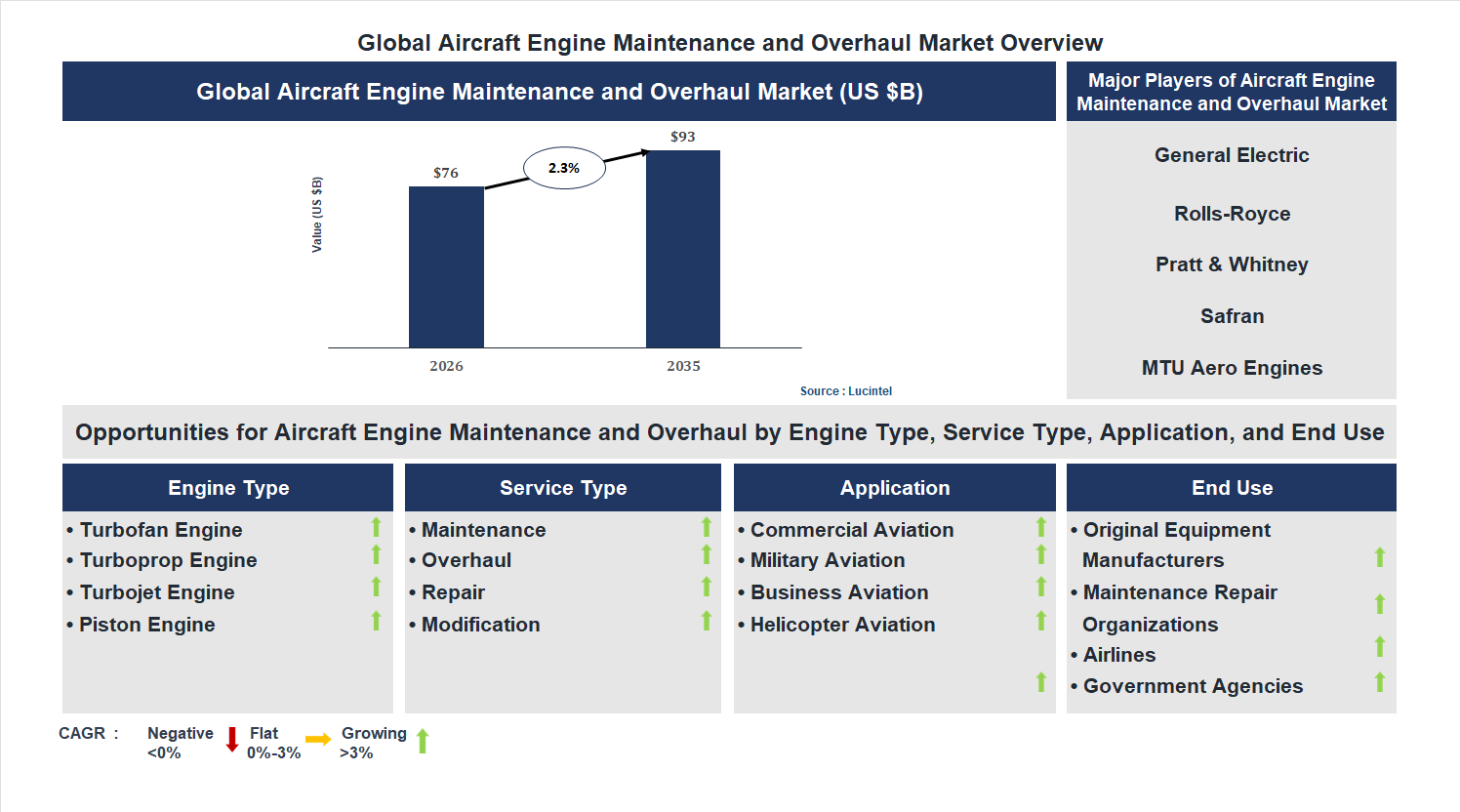
Key data points: The market size in 2035 = $93 billion, growth forecast = 2.3% annually for the next 8 years. Scroll below to get more insights. This market report covers trends, opportunities and forecasts in aircraft engine maintenance and overhaul market to 2035 by engine type (turbofan engine, turboprop engine, turbojet engine, and piston engine), service type (maintenance, overhaul, repair, and modification), application (commercial aviation, military aviation, business aviation, and helicopter aviation), end use (original equipment manufacturers, maintenance repair organizations, airlines, and government agencies), and region (North America, Europe, Asia Pacific, and the Rest of the World)
We'll send your sample report shortly.
• Lucintel forecasts that, within the engine type category, turbofan engine is expected to witness the highest growth over the forecast period.
• Within the application category, commercial aviation is expected to witness the highest growth.
• In terms of region, North America is expected to witness the highest growth over the forecast period. Gain valuable insights for your business decisions with our comprehensive 150+ page report. Sample figures with some insights are shown below.
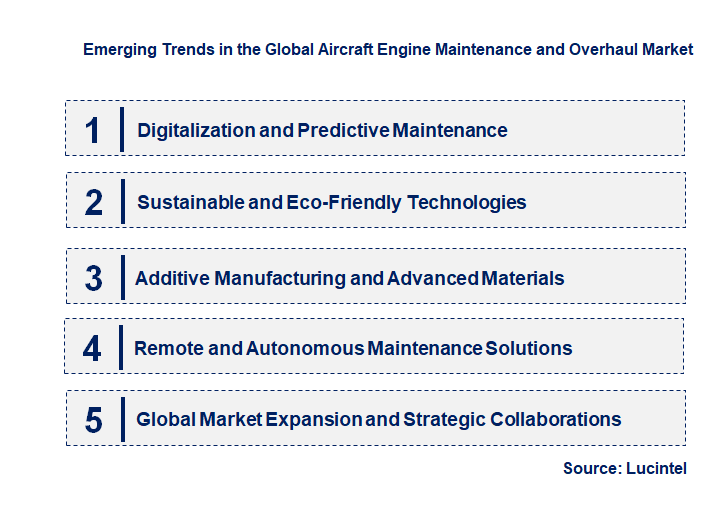
• Digitalization and Predictive Maintenance: This trend involves integrating advanced digital tools, sensors, and data analytics into maintenance processes. Predictive maintenance uses real-time data to forecast engine failures before they occur, reducing downtime and maintenance costs. It enhances safety by enabling proactive interventions and extends engine lifespan. Airlines and maintenance providers are investing in IoT-enabled systems and AI-driven analytics to optimize maintenance schedules, improve turnaround times, and minimize unexpected failures. This shift toward digitalization is transforming traditional maintenance practices into more intelligent, data-driven operations, leading to increased efficiency and reliability.
• Sustainable and Eco-Friendly Technologies: Environmental concerns are prompting the adoption of greener engine technologies and sustainable practices. Manufacturers are developing more fuel-efficient engines with lower emissions, such as geared turbofan engines and hybrid-electric propulsion systems. Maintenance strategies now focus on reducing carbon footprints through the use of eco-friendly materials and waste management practices. Airlines are also exploring alternative fuels and carbon offset programs. These initiatives not only comply with stringent environmental regulations but also appeal to eco-conscious consumers, positioning the market for sustainable growth while addressing global climate change challenges.
• Additive Manufacturing and Advanced Materials: The use of 3D printing and innovative materials is revolutionizing engine component manufacturing and repair. Additive manufacturing allows for rapid prototyping, complex part production, and on-demand spare parts, significantly reducing lead times and inventory costs. Advanced materials like composites and high-temperature alloys improve engine performance and durability. These technologies enable more precise repairs and customized components, enhancing engine efficiency and lifespan. The adoption of additive manufacturing and advanced materials is streamlining maintenance processes, reducing costs, and enabling more innovative engine designs, thus opening new opportunities for market players.
• Remote and Autonomous Maintenance Solutions: The development of remote diagnostics, robotic inspections, and autonomous repair systems is transforming maintenance operations. These solutions enable technicians to perform inspections and repairs with minimal physical presence, reducing labor costs and exposure to hazardous environments. Remote monitoring systems facilitate continuous engine health assessment, allowing for timely interventions. Autonomous systems equipped with AI and machine learning improve accuracy and efficiency in maintenance tasks. This trend enhances safety, reduces turnaround times, and lowers operational costs, making maintenance more scalable and adaptable to the increasing complexity of modern engines.
• Global Market Expansion and Strategic Collaborations: The market is witnessing increased expansion into emerging regions such as Asia-Pacific and the Middle East, driven by rising air travel demand. Strategic collaborations between OEMs, MRO providers, and airlines are fostering innovation and expanding service networks. Joint ventures and partnerships facilitate technology transfer, skill development, and market penetration. Additionally, the rise of low-cost carriers and increased fleet modernization efforts are fueling demand for maintenance and overhaul services. This global expansion and collaboration are creating a more interconnected, competitive, and resilient market landscape, offering new growth opportunities across different regions. These emerging trends—digitalization, sustainability, advanced manufacturing, remote solutions, and global expansion—are collectively reshaping the Aircraft Engine Maintenance and Overhaul Market. They are driving efficiency, safety, and environmental responsibility while fostering innovation and global connectivity. As these trends continue to evolve, stakeholders must adapt strategically to capitalize on new opportunities and meet the future demands of the aviation industry.
• Digital Diagnostics and Predictive Maintenance: Revolutionizing Engine Care : The integration of digital diagnostics and predictive analytics allows for real-time monitoring of engine health, reducing downtime and maintenance costs. This technology enables early fault detection, optimizing maintenance schedules and extending engine lifespan. As a result, airlines benefit from increased operational efficiency, reduced unscheduled repairs, and lower overall costs. The adoption of IoT and AI-driven tools is accelerating, making maintenance more precise and proactive, which significantly impacts market growth and competitiveness.
• Sustainable and Eco-Friendly Maintenance Practices: Promoting Green Aviation : The push for sustainability is leading to the adoption of eco-friendly maintenance practices, such as using biodegradable lubricants and recycling engine parts. These initiatives reduce environmental impact and comply with stringent regulations. Airlines and MRO providers are investing in green technologies to meet carbon reduction targets, which enhances brand reputation and operational efficiency. This shift not only benefits the environment but also opens new market segments focused on sustainable aviation solutions.
• Advanced Materials and Coatings for Engine Longevity: Enhancing Durability and Performance : The development of advanced materials and protective coatings improves engine durability and performance under extreme conditions. These innovations extend engine life, reduce maintenance frequency, and lower replacement costs. Manufacturers are focusing on lightweight composites and heat-resistant coatings to optimize fuel efficiency and reliability. This progress supports longer intervals between overhauls, reduces downtime, and boosts overall market growth by offering more durable and efficient engines.
• Automation and Robotics in Maintenance Processes: Increasing Efficiency and Safety : Automation and robotics are transforming maintenance procedures by enabling precise, faster, and safer operations. Robotic systems assist in inspection, cleaning, and component replacement, minimizing human error and exposure to hazards. This technological shift reduces labor costs and turnaround times, leading to higher productivity. As automation becomes more sophisticated, it enhances safety standards and operational consistency, significantly impacting the market by enabling more efficient and scalable maintenance solutions.
• Global Expansion and Market Penetration: Tapping Emerging Markets : The expansion into emerging markets is driven by rising air travel and increasing fleet sizes. Local MRO facilities are being established to cater to regional airlines, reducing logistics costs and turnaround times. Strategic partnerships and joint ventures are facilitating market entry and technology transfer. This growth enhances market reach, diversifies revenue streams, and accelerates industry development in regions like Asia-Pacific and Africa, creating substantial opportunities for global players and fostering industry resilience. These developments are collectively transforming the aircraft engine maintenance and overhaul market by enhancing efficiency, sustainability, and technological innovation. Digital tools, eco-friendly practices, advanced materials, automation, and global expansion are driving growth, reducing costs, and improving safety standards. As a result, the market is becoming more competitive, resilient, and aligned with environmental goals. These trends are expected to sustain long-term growth, attract new investments, and shape the future landscape of aircraft engine maintenance worldwide.
• Digitalization and Predictive Maintenance: Implementing IoT, AI, and data analytics enables real-time engine monitoring, predictive diagnostics, and maintenance scheduling. This reduces downtime, lowers costs, and enhances safety. Digital twin technology allows virtual engine simulations for proactive repairs, optimizing overhaul cycles. The integration of advanced software solutions improves accuracy and efficiency, providing a competitive edge for MRO providers and OEMs. This trend is transforming traditional maintenance practices into more predictive, data-driven processes.
• Growing Demand for Engine Overhaul Services in Emerging Markets: Rapid aviation sector expansion in Asia-Pacific, Middle East, and Africa drives increased need for engine maintenance and overhaul services. Airlines in these regions seek cost-effective, high-quality solutions to support fleet growth. Local MRO facilities are expanding, and partnerships with global providers are forming to meet demand. This growth offers opportunities for market entrants to establish regional hubs, develop tailored service packages, and leverage local supply chains to capture market share.
• Adoption of Sustainable and Eco-Friendly Maintenance Practices: Environmental regulations and rising fuel costs push the industry toward greener solutions. Use of sustainable materials, waste reduction, and energy-efficient processes are gaining importance. Innovations like bio-based lubricants and eco-friendly cleaning agents are being adopted. Additionally, engine remanufacturing and component recycling reduce environmental impact and costs. Companies investing in sustainable practices can differentiate themselves, meet regulatory standards, and appeal to environmentally conscious clients, fostering long-term growth and compliance.
• Technological Innovations in Engine Design and Materials: Advances in composite materials, additive manufacturing, and engine design improve durability, fuel efficiency, and performance. These innovations extend engine lifespan and reduce overhaul frequency. Lightweight components and modular designs facilitate easier maintenance and quicker repairs. R&D investments in next-generation engines open new revenue streams and market segments. OEMs focusing on innovative materials and design solutions can gain competitive advantages, attract new customers, and meet evolving regulatory and performance standards.
• Strategic Collaborations and Mergers for Market Expansion: Partnerships between OEMs, MRO providers, and technology firms foster innovation and expand service offerings. Mergers and acquisitions enable access to new markets, advanced technologies, and skilled workforce. Collaborative ventures facilitate knowledge sharing, joint R&D, and integrated service solutions. These strategies help companies strengthen their market position, reduce operational costs, and accelerate growth. Such alliances are vital for navigating complex regulatory environments and meeting increasing customer expectations globally. These growth opportunities are shaping the future of the aircraft engine maintenance and overhaul market by fostering innovation, expanding regional presence, and emphasizing sustainability. Companies that strategically leverage digital technologies, form strategic alliances, and adopt eco-friendly practices will be well-positioned to capitalize on emerging demand and maintain competitive advantage in this evolving industry.
• Technological Innovation: The integration of advanced diagnostic tools, predictive maintenance, and digital twin technologies enhances engine reliability and reduces downtime. These innovations enable predictive analytics, allowing maintenance to be scheduled proactively, which minimizes operational disruptions and costs. As engine designs become more complex, the need for sophisticated maintenance solutions grows, fueling market expansion. Continuous R&D investments by OEMs and service providers further accelerate technological progress, making maintenance more efficient and cost-effective.
• Increasing Fleet Size and Age: The global expansion of air travel and aging aircraft fleets significantly boost demand for maintenance and overhaul services. Older engines require more frequent inspections, repairs, and overhauls to ensure safety and compliance. The rising number of aircraft in operation, especially in emerging markets, creates a sustained need for maintenance services, supporting market growth. Fleet renewal programs also influence demand, as newer engines often require specialized maintenance, driving service provider investments and technological upgrades.
• Regulatory Compliance and Safety Standards: Stringent regulations imposed by authorities such as the FAA and EASA mandate regular inspections, safety checks, and environmental compliance. These standards ensure passenger safety but also increase operational costs for airlines and maintenance providers. Compliance requires investment in specialized training, certification, and equipment, which can act as barriers for smaller players but also create opportunities for service providers with advanced capabilities. The evolving regulatory landscape continuously shapes maintenance practices and market opportunities.
• Environmental Regulations and Sustainability Initiatives: Growing emphasis on reducing carbon emissions and environmental impact influences maintenance practices. Airlines and OEMs are adopting greener technologies, such as more efficient engines and sustainable fuels, which require specialized maintenance procedures. Regulatory pressures to meet emission standards drive innovation in engine design and maintenance, creating new market segments. Sustainability initiatives also encourage the development of eco-friendly maintenance practices, influencing market strategies and investments.
• Global Economic Conditions: Economic stability and growth directly impact airline profitability and maintenance budgets. During periods of economic downturn, airlines may delay or reduce maintenance spending, affecting market demand. Conversely, economic growth boosts air travel, fleet expansion, and maintenance activities. Fluctuations in fuel prices and currency exchange rates also influence operational costs and investment decisions. The overall economic environment determines the pace of market growth and the capacity of service providers to innovate and expand their offerings. The challenges in the aircraft engine maintenance and overhaul market are:
• High Capital and Operational Costs: Maintaining and overhauling aircraft engines require significant investment in specialized equipment, skilled labor, and facilities. These costs can be prohibitive for smaller service providers, limiting market competition and innovation. Additionally, the need for continuous training and certification adds to operational expenses. The high costs can also impact pricing strategies, affecting profitability and market accessibility, especially in regions with lower airline profitability or economic instability.
• Rapid Technological Changes: The fast pace of technological advancements in engine design and diagnostics demands continuous adaptation by maintenance providers. Keeping up with new engine models, materials, and diagnostic tools requires substantial investment in training and equipment. Failure to adapt can lead to obsolescence and loss of competitive edge. The evolving technology landscape also complicates standardization and interoperability, posing challenges for global maintenance networks and increasing operational complexity.
• Regulatory and Certification Challenges: Navigating the complex regulatory environment across different regions can be challenging. Certification processes for new maintenance procedures or engine models are often lengthy and costly, delaying market entry and service deployment. Variations in regional standards can create compliance hurdles, increasing operational risks and costs. Additionally, maintaining compliance with evolving safety and environmental regulations requires ongoing investments, which can strain resources and impact profitability, especially for smaller players. The aircraft engine maintenance and overhaul market is shaped by technological innovations, fleet growth, regulatory standards, environmental concerns, and economic conditions. While these drivers present opportunities for growth and efficiency, challenges such as high costs, rapid technological change, and regulatory complexities pose significant hurdles. The markets future trajectory will depend on how stakeholders navigate these factors, balancing innovation with compliance and cost management to sustain competitive advantage and meet evolving industry demands.
• General Electric
• Rolls-Royce
• Pratt & Whitney
• Safran
• MTU Aero Engines
• Honeywell
• Airbus
• Turbofan Engine
• Turboprop Engine
• Turbojet Engine
• Piston Engine
• Maintenance
• Overhaul
• Repair
• Modification
• Commercial Aviation
• Military Aviation
• Business Aviation
• Helicopter Aviation
• Original Equipment Manufacturers
• Maintenance Repair Organizations
• Airlines
• Government Agencies
• North America
• Europe
• Asia Pacific
• The Rest of the World
• United States: The US market has seen substantial investments in digital maintenance solutions, including predictive analytics and AI-driven diagnostics, improving turnaround times and reducing costs. Major OEMs are expanding their service networks, and there is a growing focus on sustainable practices, such as eco-friendly cleaning and recycling methods. The FAAs regulatory updates are encouraging innovation, while airline operators are increasingly outsourcing maintenance to specialized providers to optimize efficiency. Additionally, the adoption of advanced materials and engine technologies is driving the need for specialized overhaul services.
• China: China’s aircraft engine maintenance sector is rapidly expanding, supported by government initiatives to develop a self-sufficient aviation industry. The country is investing heavily in training skilled technicians and establishing modern MRO facilities. Chinese airlines are increasing their fleet sizes, boosting demand for maintenance services. The integration of digital tools and automation is gaining momentum, enhancing service quality and turnaround times. Furthermore, collaborations with international MRO providers are helping transfer technology and expertise, positioning China as a key player in the regional market.
• Germany: Germany remains a hub for high-quality aircraft engine maintenance, leveraging its strong aerospace engineering expertise. The market is witnessing increased adoption of digital twin technology and predictive maintenance systems, which improve reliability and reduce downtime. Several leading MRO providers are expanding their facilities and investing in sustainable practices, such as waste reduction and energy efficiency. The regulatory environment promotes innovation, and partnerships with OEMs are strengthening, enabling the development of customized maintenance solutions. Germany’s focus on precision and quality continues to attract global clients.
• India: India’s aircraft engine maintenance market is experiencing rapid growth due to expanding airline fleets and increasing air travel demand. The government’s push for a robust MRO ecosystem is encouraging local manufacturing and skill development. Digital transformation initiatives are underway, with the adoption of IoT and data analytics to optimize maintenance schedules. The rise of low-cost carriers is also driving demand for cost-effective overhaul services. Several joint ventures and collaborations with international MRO providers are enhancing technological capabilities. The focus remains on building a self-reliant, efficient, and scalable maintenance infrastructure.
• Japan: Japan’s market is characterized by advanced technological integration and a focus on sustainability. The country is investing in eco-friendly maintenance practices, including the use of biodegradable cleaning agents and energy-efficient facilities. Japanese MRO providers are adopting digital tools such as augmented reality for training and maintenance procedures. The market benefits from strong OEM relationships and a reputation for high-quality service. Additionally, Japan is exploring innovations in engine life extension and recycling, aligning with global sustainability goals. The industry continues to evolve with a focus on precision, safety, and environmental responsibility.


• General Electric
• Rolls-Royce
• Pratt & Whitney
• Safran
• MTU Aero Engines
• Honeywell
• Airbus Q6. Which aircraft engine maintenance and overhaul market segment will be the largest in future? Answer: Lucintel forecasts that, within the engine type category, turbofan engine is expected to witness the highest growth over the forecast period. Q7. In aircraft engine maintenance and overhaul market, which region is expected to be the largest in next 8 years? Answer: In terms of region, North America is expected to witness the highest growth over the forecast period. Q8. Do we receive customization in this report? Answer: Yes, Lucintel provides 10% customization without any additional cost.


Choose a license that fits your team. Instant PDF delivery.
Prices exclude taxes. Instant delivery. Custom licensing available on request.
Market Report · July 31, 2026
Market Report · July 31, 2026
Market Report · July 22, 2026
Trusted partner for strategic intelligence and business growth


Receive a complimentary market analysis tailored to your industry. Our analysts will identify key growth opportunities and competitive dynamics specific to your business.

Market size, growth rate, and key trend analysis for your specific sector.

Top competitor positioning and market share analysis.

Strategic recommendations backed by data-driven insights.
Get curated market intelligence and competitive moves straight to your inbox.
By subscribing, you agree to receive our monthly insights. Unsubscribe anytime.
Receive a complimentary market analysis tailored to your industry. Our analysts will identify key growth opportunities and competitive dynamics specific to your business.
Market size, growth rate, and key trend analysis for your specific sector.
Top competitor positioning and market share analysis.
Strategic recommendations backed by data-driven insights.
Get curated market intelligence, emerging trends, and competitive moves straight to your inbox each month.
By subscribing, you agree to receive our monthly insights. Unsubscribe anytime.
We'll send your sample report shortly.