
Market Report · July 31, 2026

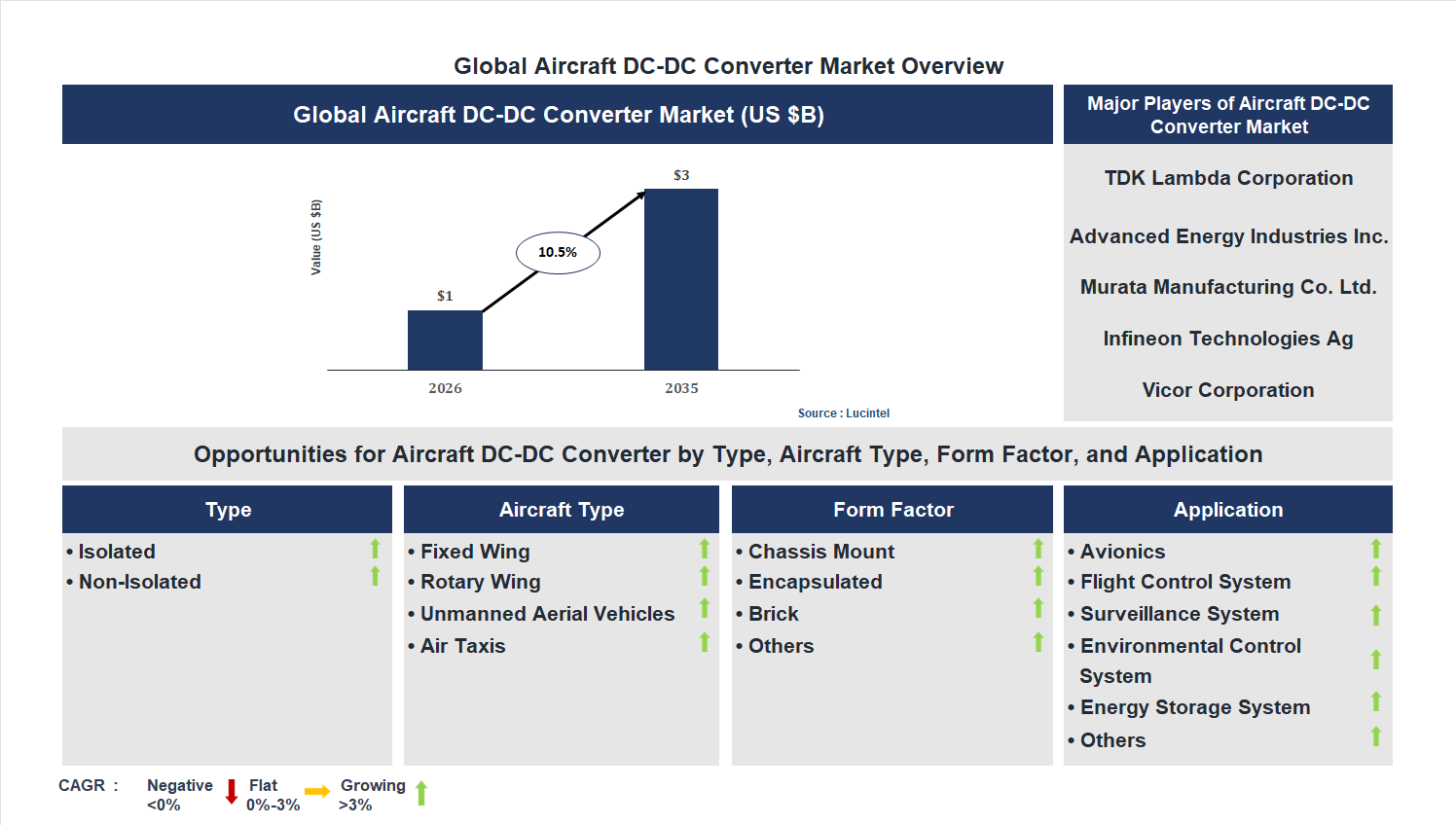
Key data points: The market size in 2035 = $3 billion, growth forecast = 10.5% annually for the next 8 years. Scroll below to get more insights. This market report covers trends, opportunities and forecasts in aircraft DC-DC converter market to 2035 by type (isolated and non-isolated), aircraft type (fixed wing, rotary wing, unmanned aerial vehicles, and air taxis), form factor (chassis mount, encapsulated, brick, and others), application (avionics, flight control system, surveillance system, environmental control system, energy storage system, and others), and region (North America, Europe, Asia Pacific, and the Rest of the World)
We'll send your sample report shortly.
• Lucintel forecasts that, within the type category, isolated is expected to witness higher growth over the forecast period.
• Within the application category, avionic is expected to witness the highest growth.
• In terms of region, APAC is expected to witness the highest growth over the forecast period. Gain valuable insights for your business decisions with our comprehensive 150+ page report. Sample figures with some insights are shown below.
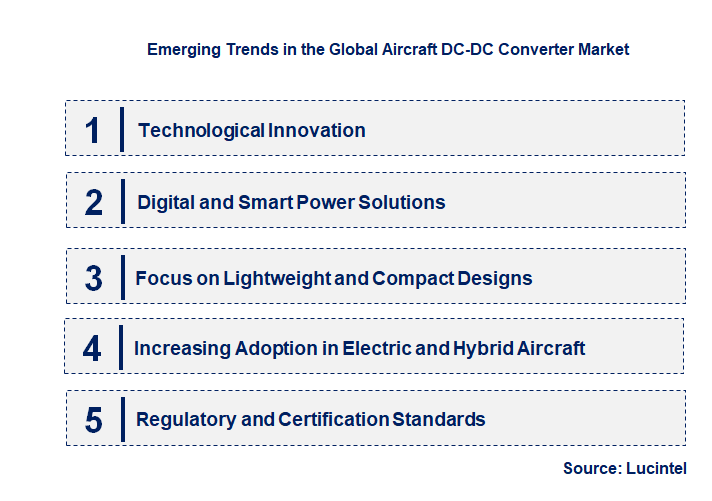
• Technological Innovation: The integration of advanced semiconductor materials such as Silicon Carbide (SiC) and Gallium Nitride (GaN) is revolutionizing aircraft DC-DC converters. These materials enable higher efficiency, reduced size, and better thermal management, which are crucial for aerospace applications. The trend toward miniaturization and increased power density is driven by the need to optimize space and weight in aircraft systems. As a result, manufacturers are investing heavily in R&D to develop next-generation converters that meet stringent aerospace standards, ultimately improving overall aircraft performance and reliability.
• Digital and Smart Power Solutions: The adoption of digital control and smart monitoring systems is transforming aircraft power conversion. These solutions enable real-time diagnostics, predictive maintenance, and enhanced control accuracy, reducing downtime and operational costs. The integration of IoT and AI technologies allows for more intelligent power management, improving safety and efficiency. This trend is particularly prominent in modern commercial and military aircraft, where advanced digital systems are becoming standard. The shift toward smart power solutions is expected to accelerate as aircraft systems become more interconnected and reliant on digital technologies.
• Focus on Lightweight and Compact Designs: The demand for lightweight components is a key driver in the aircraft DC-DC converter market. Innovations in materials and design techniques are leading to smaller, lighter converters without compromising performance. This trend is critical for improving fuel efficiency and payload capacity in aircraft. Manufacturers are exploring new packaging methods and innovative cooling techniques to achieve these goals. As aircraft designs continue to evolve toward more efficient and environmentally friendly models, the importance of compact power conversion solutions will only increase, influencing overall aircraft architecture.
• Increasing Adoption in Electric and Hybrid Aircraft: The shift toward electric and hybrid propulsion systems is significantly impacting the DC-DC converter market. These aircraft require high-capacity, reliable power conversion units capable of handling increased electrical loads. The trend is driven by environmental regulations, fuel savings, and technological advancements. As electric and hybrid aircraft become more prevalent, the demand for specialized converters that can operate efficiently under diverse conditions will grow. This segment offers substantial growth opportunities, especially in regional and urban air mobility sectors, where electric propulsion is gaining traction.
• Regulatory and Certification Standards: Stringent aerospace safety and certification standards are shaping the development of aircraft DC-DC converters. Manufacturers must ensure their products meet rigorous requirements set by agencies such as the FAA and EASA. This trend encourages the adoption of robust testing, quality assurance, and compliance processes, which can increase development costs but ultimately lead to safer, more reliable products. The evolving regulatory landscape also drives innovation, as companies seek to develop converters that not only meet current standards but are adaptable to future regulations, ensuring long-term market viability. These emerging trends are collectively reshaping the aircraft DC-DC Converter market by fostering innovation, enhancing efficiency, and ensuring safety. They are enabling the development of more advanced, lightweight, and reliable power systems that support the evolving needs of modern aircraft, from commercial jets to electric and hybrid propulsion systems. As these trends continue to evolve, they will open new opportunities for manufacturers and stakeholders, driving growth and technological progress in the aerospace industry.
• Growing Demand for Electric Aircraft: The shift towards electric and hybrid aircraft is boosting the need for reliable, high-performance DC-DC converters. These converters are essential for managing power distribution efficiently within aircraft systems, reducing weight, and improving fuel efficiency. As airlines and manufacturers prioritize sustainability, the market for advanced power conversion solutions is expanding rapidly, fostering innovation and competition among industry players.
• Technological Advancements in Converter Efficiency: Recent innovations have led to significant improvements in converter efficiency, minimizing energy loss and enhancing overall system performance. These advancements enable aircraft to operate more reliably and with lower maintenance costs. High-efficiency converters also support the integration of renewable energy sources and energy storage systems, broadening their application scope in aerospace and defense sectors, and driving market growth.
• Increasing Adoption of Lightweight Materials: The use of lightweight materials such as composites and advanced alloys in converter design is reducing overall aircraft weight. Lighter converters contribute to fuel savings and increased payload capacity, which are critical for commercial and military aircraft. This trend encourages manufacturers to develop compact, durable, and lightweight DC-DC converters, fostering innovation and expanding market opportunities.
• Rising Focus on Safety and Reliability Standards: Stringent safety regulations and reliability standards in aerospace are prompting manufacturers to develop more robust DC-DC converters. Enhanced safety features, such as fault tolerance and thermal management, are being integrated into new designs. These improvements ensure compliance with international standards, reduce failure risks, and increase consumer confidence, thereby expanding market penetration and encouraging technological innovation.
• Expansion of Electric and Hybrid Propulsion Systems: The integration of electric and hybrid propulsion systems in aircraft is creating a substantial demand for specialized DC-DC converters capable of handling high power levels. These systems improve fuel efficiency and reduce emissions, aligning with global sustainability goals. The development of converters tailored for these applications is opening new market segments, attracting investments, and accelerating industry growth. The overall impact of these developments is a dynamic, innovative market characterized by increased efficiency, safety, and sustainability. These opportunities are driving technological progress, expanding application areas, and fostering competitive advantages, ultimately shaping the future landscape of the aircraft DC-DC converter industry.
• Increasing Adoption of Electric Aircraft and Hybrid Systems: The shift towards electric and hybrid aircraft is creating significant demand for high-performance DC-DC converters. These systems require efficient power conversion to optimize energy use, improve flight range, and reduce emissions. As the aviation industry emphasizes sustainability, the need for lightweight, reliable converters tailored for electric propulsion systems is expected to surge, opening new avenues for market growth and technological innovation.
• Growing Demand for Lightweight and Compact Converters: Aircraft manufacturers prioritize weight reduction to improve fuel efficiency and payload capacity. This drives the development of compact, lightweight DC-DC converters that do not compromise performance. Innovations in materials and design enable miniaturization, making these converters suitable for space-constrained applications such as avionics, cabin systems, and engine controls, thereby expanding their market presence across various aircraft types.
• Integration of Smart and Digital Power Management Solutions: The integration of IoT and digital technologies into aircraft power systems enhances monitoring, diagnostics, and maintenance. Smart DC-DC converters with embedded sensors and communication capabilities enable real-time performance tracking, predictive maintenance, and improved reliability. This technological advancement supports the development of intelligent power management systems, fostering growth in both commercial and military aviation sectors.
• Expansion of Military and Defense Applications: Military aircraft require robust, high-reliability power conversion solutions capable of operating under extreme conditions. The increasing modernization of defense fleets and the adoption of advanced electronic warfare systems drive demand for specialized DC-DC converters. These converters must meet stringent standards for durability, efficiency, and electromagnetic compatibility, presenting lucrative opportunities for manufacturers to cater to defense-specific needs.
• Rising Focus on Renewable Energy Integration in Aircraft Systems: Incorporating renewable energy sources, such as solar panels, into aircraft systems necessitates efficient power conversion solutions. DC-DC converters play a crucial role in managing energy flow from these sources, supporting sustainable aviation initiatives. As environmental regulations tighten, the development of converters optimized for renewable integration will become increasingly vital, fostering innovation and market expansion in eco-friendly aircraft technologies. These growth opportunities are poised to significantly influence the aircraft DC-DC Converter market by driving technological advancements, expanding application scopes, and fostering sustainable and efficient aircraft systems. Manufacturers that capitalize on these trends can achieve competitive advantages and meet the evolving demands of the aerospace industry.
• Technological Innovation: The continuous development of advanced power electronics and miniaturization techniques enhances the efficiency, reliability, and weight reduction of DC-DC converters. These innovations enable aircraft manufacturers to meet strict safety and performance standards while reducing overall aircraft weight, leading to fuel savings and increased payload capacity. The integration of smart, digital control systems also improves operational efficiency and maintenance, further boosting market growth.
• Rising Demand for Electric and Hybrid Aircraft: The shift towards electric and hybrid propulsion systems in the aerospace industry is a significant growth driver. DC-DC converters are critical components in these systems, managing power distribution between batteries, motors, and other electronic systems. As airlines and manufacturers seek sustainable and energy-efficient solutions, the demand for reliable power conversion components like DC-DC converters is expected to surge, supporting the markets expansion.
• Increasing Focus on Lightweight and Compact Designs: The aerospace industry prioritizes reducing aircraft weight to improve fuel efficiency and reduce emissions. Compact and lightweight DC-DC converters contribute significantly to this goal. Innovations in materials and design techniques allow for smaller, more efficient converters that do not compromise performance, thereby aligning with the industrys sustainability and efficiency objectives.
• Growing Regulatory and Certification Standards: Stringent safety, environmental, and electromagnetic compatibility standards imposed by aviation authorities such as FAA and EASA are driving the development of high-quality, certified DC-DC converters. Manufacturers investing in compliance and certification processes are better positioned to capture market share, although this also increases development costs and time-to-market. The challenges in the aircraft DC-DC Converter market are:
• High Development and Certification Costs: Developing aerospace-grade DC-DC converters involves significant investment in research, testing, and certification processes. Achieving compliance with strict safety and electromagnetic standards is costly and time-consuming, which can hinder new entrants and slow market growth. These expenses also impact pricing strategies and profit margins for manufacturers.
• Rapid Technological Obsolescence: The fast pace of technological advancements in power electronics can render existing converter designs obsolete quickly. Manufacturers face the challenge of balancing innovation with product longevity, requiring continuous R&D investments. This rapid evolution can also lead to increased inventory costs and difficulties in maintaining supply chain stability.
• Stringent Certification and Regulatory Barriers: The certification process for aerospace components is rigorous, involving extensive testing and documentation. Delays or failures in certification can impede product launches and market entry. Additionally, evolving regulatory standards require manufacturers to adapt quickly, increasing operational complexity and costs, which can restrict market expansion, especially for smaller players. The aircraft DC-DC Converter market is driven by technological advancements, the shift towards electric aircraft, and the need for lightweight, efficient power solutions. However, high development costs, rapid technological changes, and strict regulatory requirements pose significant challenges. These factors collectively influence market dynamics, requiring manufacturers to innovate continuously while navigating complex compliance landscapes. Overall, the markets growth prospects remain promising, provided stakeholders effectively manage these drivers and challenges to capitalize on emerging opportunities.
• TDK Lambda Corporation
• Advanced Energy Industries Inc.
• Murata Manufacturing Co. Ltd.
• Infineon Technologies Ag
• Vicor Corporation
• Isolated
• Non-Isolated
• Fixed Wing
• Rotary Wing
• Unmanned Aerial Vehicles
• Air Taxis
• Chassis Mount
• Encapsulated
• Brick
• Others
• Avionics
• Flight Control System
• Surveillance System
• Environmental Control System
• Energy Storage System
• Others
• North America
• Europe
• Asia Pacific
• The Rest of the World
• United States: The US market has seen substantial growth driven by major aerospace manufacturers investing in advanced power conversion technologies. Innovations include high-efficiency, compact converters tailored for commercial and military aircraft. Companies are focusing on integrating smart features like remote monitoring and predictive maintenance, enhancing reliability and operational efficiency. The US government’s defense contracts and aerospace R&D initiatives further propel market expansion, with startups and established firms collaborating to develop next-generation DC-DC converters that meet stringent safety and performance standards.
• China: China is rapidly expanding its aerospace sector, with significant investments in aircraft modernization and indigenous aircraft development. The market has witnessed the adoption of lightweight, high-efficiency DC-DC converters to support electric and hybrid aircraft systems. Chinese firms are focusing on cost-effective manufacturing and local R&D to reduce dependence on foreign technology. The government’s strategic initiatives aim to boost domestic innovation, leading to the development of advanced power conversion solutions that cater to both commercial and military aircraft, fostering a competitive edge in the global market.
• Germany: Germany remains a key player in aerospace technology, emphasizing high-quality, reliable DC-DC converters for commercial aircraft and military applications. The focus is on integrating cutting-edge materials and design techniques to improve efficiency and reduce weight. German companies are also investing in sustainable and eco-friendly power solutions, aligning with European environmental standards. Collaborations with research institutions are driving innovations in miniaturization and thermal management, ensuring that German aerospace power systems remain at the forefront of technological advancements in the market.
• India: India’s aerospace industry is experiencing rapid growth, with increased government and private sector investments in aircraft modernization and defense projects. The market is witnessing the adoption of advanced DC-DC converters that support electric propulsion and avionics systems. Indian companies are focusing on developing cost-effective, durable solutions suitable for regional and military aircraft. The emphasis on indigenous manufacturing and R&D is helping India reduce reliance on imports, fostering innovation in power conversion technology and expanding its footprint in the global aerospace supply chain.
• Japan: Japan’s aerospace sector is characterized by a focus on high-performance, lightweight DC-DC converters for commercial and defense aircraft. The country is investing heavily in research to improve converter efficiency, thermal management, and miniaturization. Japanese firms are also exploring integration with renewable energy sources and hybrid systems to enhance sustainability. Collaborations with international aerospace companies and research institutions are accelerating the development of next-generation power conversion solutions, ensuring Japan maintains a competitive edge in the global aircraft DC-DC converter market.


• TDK Lambda Corporation
• Advanced Energy Industries Inc.
• Murata Manufacturing Co. Ltd.
• Infineon Technologies Ag
• Vicor Corporation Q6. Which aircraft DC-DC converter market segment will be the largest in future? Answer: Lucintel forecasts that, within the type category, isolated is expected to witness higher growth over the forecast period. Q7. In aircraft DC-DC converter market, which region is expected to be the largest in next 8 years? Answer: In terms of region, APAC is expected to witness the highest growth over the forecast period. Q8. Do we receive customization in this report? Answer: Yes, Lucintel provides 10% customization without any additional cost.


Choose a license that fits your team. Instant PDF delivery.
Prices exclude taxes. Instant delivery. Custom licensing available on request.
Market Report · July 31, 2026
Market Report · July 31, 2026
Market Report · July 22, 2026
Trusted partner for strategic intelligence and business growth


Receive a complimentary market analysis tailored to your industry. Our analysts will identify key growth opportunities and competitive dynamics specific to your business.

Market size, growth rate, and key trend analysis for your specific sector.

Top competitor positioning and market share analysis.

Strategic recommendations backed by data-driven insights.
Get curated market intelligence and competitive moves straight to your inbox.
By subscribing, you agree to receive our monthly insights. Unsubscribe anytime.
Receive a complimentary market analysis tailored to your industry. Our analysts will identify key growth opportunities and competitive dynamics specific to your business.
Market size, growth rate, and key trend analysis for your specific sector.
Top competitor positioning and market share analysis.
Strategic recommendations backed by data-driven insights.
Get curated market intelligence, emerging trends, and competitive moves straight to your inbox each month.
By subscribing, you agree to receive our monthly insights. Unsubscribe anytime.
We'll send your sample report shortly.