
Market Report · July 31, 2026

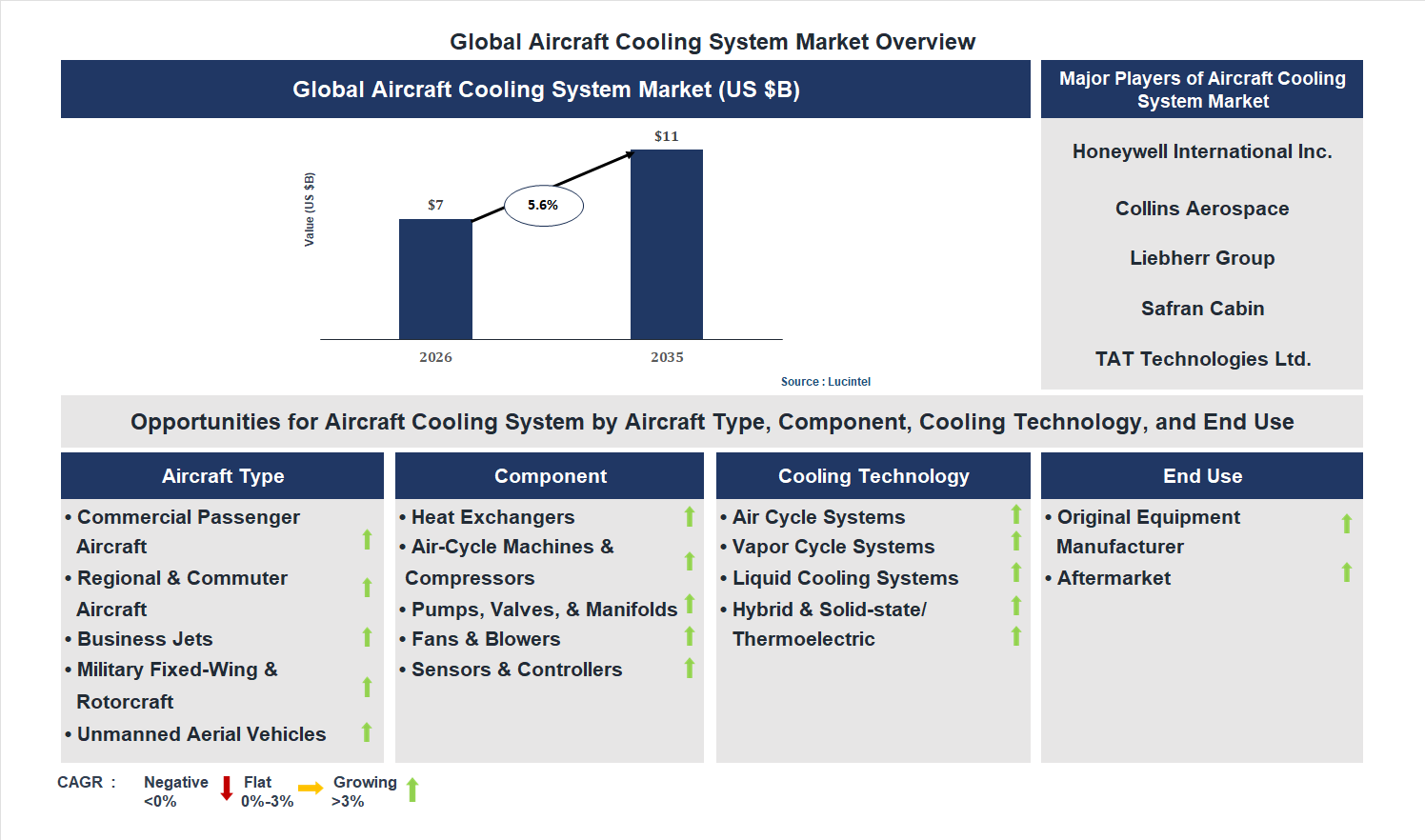
Key data points: The market size in 2035 = $11 billion, growth forecast = 5.6% annually for the next 8 years. Scroll below to get more insights. This market report covers trends, opportunities and forecasts in aircraft cooling system market to 2035 by aircraft type (commercial passenger aircraft, regional & commuter aircraft, business jets, military fixed-wing & rotorcraft, and unmanned aerial vehicles), component (heat exchangers, air-cycle machines & compressors, pumps, valves, & manifolds, fans & blowers, and sensors & controllers), cooling technology (air cycle systems, vapor cycle systems, liquid cooling systems, and hybrid & solid-state/thermoelectric), end use (original equipment manufacturer and aftermarket), and region (North America, Europe, Asia Pacific, and the Rest of the World)
We'll send your sample report shortly.
• Lucintel forecasts that, within the aircraft type category, business jet is expected to witness the highest growth over the forecast period.
• Within the cooling technology category, liquid cooling system is expected to witness the highest growth.
• In terms of region, APAC is expected to witness the highest growth over the forecast period. Gain valuable insights for your business decisions with our comprehensive 150+ page report. Sample figures with some insights are shown below.
• Adoption of Lightweight Materials: The industry is shifting towards lightweight materials such as composites and advanced alloys to reduce aircraft weight. This trend enhances fuel efficiency and overall performance. Lightweight cooling components made from these materials help decrease the aircrafts weight without compromising durability or safety. As airlines and manufacturers prioritize sustainability, the use of lightweight materials in cooling systems is expected to grow, leading to more efficient aircraft operations and lower emissions.
• Integration of Smart Cooling Technologies: The integration of IoT and sensor-based systems is revolutionizing aircraft cooling solutions. Smart cooling systems enable real-time monitoring, predictive maintenance, and automatic adjustments to optimize performance. This reduces downtime and maintenance costs while improving safety. The adoption of these technologies is driven by the need for higher reliability and efficiency in complex aircraft systems, making smart cooling a critical component of modern aerospace engineering.
• Focus on Environmental Sustainability: Increasing environmental regulations and the push for greener aviation are prompting the development of eco-friendly cooling solutions. These include the use of refrigerants with low global warming potential (GWP) and energy-efficient designs. Sustainable cooling systems help airlines reduce their carbon footprint and comply with international standards. This trend is fostering innovation in refrigerant technology and system design, aligning the market with global sustainability goals.
• Expansion of Electric and Hybrid Aircraft: The rise of electric and hybrid propulsion systems is creating new demands for cooling solutions. These aircraft require specialized cooling for batteries, electric motors, and power electronics. The market is witnessing the development of dedicated cooling systems that ensure safety and efficiency of electric components. This trend is expected to open new segments within the aircraft cooling market, supporting the broader shift towards sustainable and innovative aviation technologies.
• Increasing Demand for Military and Business Aircraft: The growth in military and business aircraft segments is driving demand for advanced cooling systems. These aircraft often operate under extreme conditions requiring robust and reliable cooling solutions. Innovations include high-performance heat exchangers and specialized cooling for avionics and weapon systems. The expanding defense budgets and the rise in private jet ownership are further fueling this trend, creating opportunities for specialized cooling technologies tailored to these niche markets. These emerging trends are collectively reshaping the aircraft cooling system market by fostering innovation, enhancing efficiency, and promoting sustainability. The shift towards lightweight materials and smart technologies is making aircraft more reliable and cost-effective. Environmental considerations are driving eco-friendly innovations, while the rise of electric aircraft is opening new avenues for specialized cooling solutions. Additionally, the expanding military and business aircraft sectors are creating diverse opportunities for advanced cooling systems. Overall, these developments are leading to safer, greener, and more efficient aircraft, positioning the market for sustained growth and technological leadership in the aerospace industry.

• Technological Innovations in Cooling Systems: The integration of advanced materials and smart cooling technologies is revolutionizing aircraft cooling systems. These innovations improve energy efficiency, reduce weight, and enhance system reliability. The adoption of digital monitoring and predictive maintenance further optimizes performance, minimizes downtime, and lowers operational costs. As aircraft become more sophisticated, these cutting-edge solutions are critical for meeting safety standards and passenger comfort, driving market growth and opening new opportunities for manufacturers.
• Increasing Aircraft Production and Fleet Expansion: The surge in aircraft manufacturing, especially in emerging markets, is a significant growth driver. Airlines are expanding their fleets to meet rising passenger demand, necessitating more cooling systems. This expansion creates a substantial market opportunity for suppliers of aircraft cooling solutions. Additionally, the demand for retrofit and upgrade of existing aircraft with modern cooling systems is increasing, further boosting market revenues and encouraging innovation in cooling technologies.
• Stringent Regulatory Standards and Safety Norms: Regulatory agencies worldwide are imposing strict safety and environmental standards, compelling manufacturers to develop compliant cooling systems. These standards ensure passenger safety, reduce emissions, and improve fuel efficiency. Companies investing in R&D to meet these regulations gain a competitive edge. The evolving regulatory landscape encourages the adoption of eco-friendly and energy-efficient cooling solutions, fostering innovation and market differentiation.
• Focus on Lightweight and Fuel-Efficient Solutions: The aviation industry’s emphasis on reducing aircraft weight and improving fuel efficiency is propelling the development of lightweight cooling systems. Advanced materials like composites and innovative design techniques contribute to weight reduction. These solutions not only enhance aircraft performance but also lower operational costs and emissions. The demand for such systems is expected to grow as airlines seek sustainable and cost-effective options, influencing market dynamics and product development strategies.
• Growing Demand for Cabin Comfort and Passenger Experience: Enhancing passenger comfort remains a priority, prompting the adoption of advanced cooling systems that ensure optimal cabin temperature and air quality. Innovations such as zoned cooling and personalized climate control improve passenger satisfaction. Airlines recognize that superior comfort can lead to increased loyalty and revenue. This focus drives the development of quieter, more efficient cooling solutions that integrate seamlessly with cabin design, creating new market segments and expanding opportunities for manufacturers. The overall impact of these developments is a dynamic, innovative market characterized by increased competition, technological progress, and a focus on sustainability. The aircraft cooling system market is poised for sustained growth, driven by expanding global fleets, regulatory compliance, and a commitment to passenger comfort. These factors collectively enhance market resilience and open avenues for new product development, ensuring long-term industry advancement.
• Increasing Demand for Lightweight and Energy-Efficient Cooling Systems: The push for fuel efficiency and reduced emissions is driving the development of lightweight, energy-efficient cooling solutions. Advanced materials and innovative designs help reduce aircraft weight and improve thermal management, leading to lower operational costs. The integration of eco-friendly refrigerants and smart cooling technologies further enhances system performance, making them more attractive for commercial and military aircraft manufacturers seeking sustainable solutions.
• Growing Adoption of Advanced Thermal Management Technologies: The integration of cutting-edge technologies such as variable speed fans, smart sensors, and IoT-enabled monitoring systems is transforming aircraft cooling systems. These innovations enable real-time performance tracking, predictive maintenance, and optimized energy consumption. As aircraft become more complex, the demand for intelligent cooling solutions that improve reliability and reduce downtime is increasing, creating new growth avenues for market players.
• Expansion of the Commercial Aircraft Fleet and Aftermarket Opportunities: The global rise in commercial aircraft orders, especially in emerging markets, boosts demand for cooling systems. Additionally, the aging fleet presents significant retrofit and maintenance opportunities. Aftermarket services, including system upgrades and replacements, are expected to generate substantial revenue streams. This expansion supports the development of customized cooling solutions tailored to different aircraft models and operational requirements.
• Increasing Focus on Environmentally Friendly and Sustainable Solutions: Regulatory pressures and environmental concerns are prompting manufacturers to develop eco-friendly cooling systems. The adoption of natural refrigerants, energy-efficient components, and recyclable materials aligns with global sustainability goals. These environmentally conscious solutions not only meet regulatory standards but also appeal to airlines aiming to reduce their carbon footprint, thereby opening new market segments and fostering innovation in cooling system design.
• Rising Demand for Military and Private Aircraft Cooling Solutions: The military sectors need for robust, reliable cooling systems for advanced aircraft and drones is expanding. Similarly, the private and business jet markets are seeking customized, space-saving cooling solutions that enhance comfort and performance. The development of compact, high-performance systems tailored for these niche markets offers lucrative growth opportunities, driven by increased defense budgets and a growing affluent customer base seeking luxury and efficiency. The overall market outlook indicates that these growth opportunities will significantly influence the aircraft cooling system industry, fostering innovation, expanding regional markets, and supporting sustainable development. As technological and regulatory landscapes evolve, companies that adapt swiftly will be well-positioned to capitalize on these emerging trends, ensuring long-term growth and competitiveness.
• Technological Innovation: The continuous development of advanced cooling technologies, such as lightweight materials and energy-efficient systems, enhances aircraft performance and safety. Innovations like smart cooling solutions enable better thermal management, reduce weight, and improve fuel efficiency. As aircraft become more sophisticated, the demand for reliable cooling systems increases, fostering market growth. The integration of IoT and automation further optimizes system performance, making technological innovation a critical driver.
• Rising Aircraft Production: The global increase in aircraft manufacturing, driven by rising air travel demand and fleet modernization, significantly boosts the need for efficient cooling systems. Manufacturers are focusing on producing more aircraft, including commercial, military, and private jets, which directly correlates with higher demand for cooling solutions. This expansion supports economies of scale and encourages investments in research and development, fueling market growth.
• Stringent Safety and Regulatory Standards: Regulatory bodies such as the FAA and EASA impose strict safety and environmental standards that require advanced cooling systems to ensure aircraft safety and compliance. These regulations drive manufacturers to develop more reliable, durable, and environmentally friendly cooling solutions. Compliance with these standards not only enhances safety but also opens up new market opportunities for innovative cooling technologies.
• Growing Focus on Passenger Comfort: Increasing passenger expectations for comfort and cabin environment quality necessitate efficient thermal management systems. Cooling systems play a vital role in maintaining optimal cabin temperatures, especially in modern aircraft with high-density seating and advanced entertainment systems. This focus on passenger experience encourages airlines to invest in superior cooling solutions, thereby expanding the market.
• Expansion of Military and Private Aircraft Markets: The rising procurement of military aircraft and the growing popularity of private jets contribute to market growth. Military applications require specialized cooling systems capable of operating under extreme conditions, while private aircraft demand compact, lightweight solutions. This diversification broadens the market scope and stimulates innovation in cooling technologies. The challenges facing the aircraft cooling system market include:
• High Development and Maintenance Costs: Developing advanced cooling systems involves significant investment in research, testing, and certification processes. These costs can be prohibitive, especially for smaller manufacturers, limiting innovation and market entry. Additionally, maintenance and repair of complex cooling systems incur substantial expenses, impacting overall profitability and operational efficiency.
• Strict Regulatory Compliance: While regulations drive innovation, they also pose challenges due to the complexity and evolving nature of safety standards. Ensuring compliance requires extensive testing and certification, which can delay product launches and increase costs. Navigating diverse regulatory environments across regions adds further complexity, potentially hindering market expansion.
• Technological Complexity and Integration Challenges: Integrating cooling systems into modern aircraft involves overcoming technical complexities related to weight constraints, energy efficiency, and system compatibility. Developing solutions that meet multiple performance criteria without compromising aircraft design is challenging. These technological hurdles can slow down innovation and limit the adoption of new cooling technologies. The aircraft cooling system market is shaped by technological advancements, increasing aircraft production, and regulatory pressures that promote innovation and growth. However, high costs, regulatory complexities, and technological challenges pose significant hurdles. The interplay of these drivers and challenges will determine the markets trajectory, requiring stakeholders to focus on innovation, cost management, and regulatory compliance to capitalize on emerging opportunities and sustain growth in this dynamic industry.
• Honeywell International Inc.
• Collins Aerospace
• Liebherr Group
• Safran Cabin
• TAT Technologies Ltd.
• Parker-Hannifin Corporation
• Diehl Stiftung & Co. KG
• Mitsubishi Heavy Industries, Ltd.
• JAMCO Corporation
• AMETEK Airtechnology Group Limited
• Commercial Passenger Aircraft
• Regional & Commuter Aircraft
• Business Jets
• Military Fixed-Wing & Rotorcraft
• Unmanned Aerial Vehicles
• Heat Exchangers
• Air-Cycle Machines & Compressors
• Pumps, Valves, & Manifolds
• Fans & Blowers
• Sensors & Controllers
• Air Cycle Systems
• Vapor Cycle Systems
• Liquid Cooling Systems
• Hybrid & Solid-state/Thermoelectric
• Original Equipment Manufacturer
• Aftermarket
• North America
• Europe
• Asia Pacific
• The Rest of the World
• United States: The US market has seen significant innovation in aircraft cooling systems, with major aerospace companies investing in lightweight, energy-efficient solutions. Advances in composite materials and digital control systems have improved thermal management, supporting next-generation aircraft. Regulatory agencies are promoting sustainable practices, encouraging the adoption of environmentally friendly cooling technologies. The US also focuses on integrating smart sensors for real-time monitoring, enhancing safety and maintenance efficiency.
• China: China is rapidly expanding its aerospace capabilities, with substantial investments in indigenous aircraft cooling technologies. The government promotes domestic innovation to reduce reliance on imports, leading to the development of advanced cooling systems for commercial and military aircraft. Chinese firms are adopting eco-friendly refrigerants and lightweight materials to meet international standards. The market is also driven by increasing aircraft production and modernization efforts within the country.
• Germany: Germany remains a leader in aerospace engineering, emphasizing high-performance cooling systems for commercial and military aircraft. The focus is on integrating sustainable materials and energy-efficient designs to comply with European environmental regulations. German companies are pioneering in the development of compact, reliable cooling solutions that improve aircraft efficiency. Collaboration with research institutions fosters innovation in thermal management and system integration.
• India: India’s aircraft cooling system market is growing alongside its expanding aviation sector. The country is investing in indigenous R&D to develop cost-effective, reliable cooling solutions suitable for regional and commercial aircraft. Emphasis is placed on lightweight and durable systems to enhance aircraft performance. Government initiatives aim to boost aerospace manufacturing, encouraging local innovation and technology transfer in cooling system development.
• Japan: Japan is advancing in aircraft cooling technology through its focus on miniaturization and energy efficiency. Japanese firms are developing compact cooling systems that support the trend toward smaller, more efficient aircraft. The country emphasizes sustainable materials and environmentally friendly refrigerants to meet global standards. Collaboration with international aerospace companies and research institutions accelerates innovation in thermal management solutions for next-generation aircraft.


• Honeywell International Inc.
• Collins Aerospace
• Liebherr Group
• Safran Cabin
• TAT Technologies Ltd.
• Parker-Hannifin Corporation
• Diehl Stiftung & Co. KG
• Mitsubishi Heavy Industries, Ltd.
• JAMCO Corporation
• AMETEK Airtechnology Group Limited Q6. Which aircraft cooling system market segment will be the largest in future? Answer: Lucintel forecasts that, within the aircraft type category, business jet is expected to witness the highest growth over the forecast period. Q7. In aircraft cooling system market, which region is expected to be the largest in next 8 years? Answer: In terms of region, APAC is expected to witness the highest growth over the forecast period. Q8. Do we receive customization in this report? Answer: Yes, Lucintel provides 10% customization without any additional cost.


Choose a license that fits your team. Instant PDF delivery.
Prices exclude taxes. Instant delivery. Custom licensing available on request.
Market Report · July 31, 2026
Market Report · July 31, 2026
Market Report · July 22, 2026
Trusted partner for strategic intelligence and business growth


Receive a complimentary market analysis tailored to your industry. Our analysts will identify key growth opportunities and competitive dynamics specific to your business.

Market size, growth rate, and key trend analysis for your specific sector.

Top competitor positioning and market share analysis.

Strategic recommendations backed by data-driven insights.
Get curated market intelligence and competitive moves straight to your inbox.
By subscribing, you agree to receive our monthly insights. Unsubscribe anytime.
Receive a complimentary market analysis tailored to your industry. Our analysts will identify key growth opportunities and competitive dynamics specific to your business.
Market size, growth rate, and key trend analysis for your specific sector.
Top competitor positioning and market share analysis.
Strategic recommendations backed by data-driven insights.
Get curated market intelligence, emerging trends, and competitive moves straight to your inbox each month.
By subscribing, you agree to receive our monthly insights. Unsubscribe anytime.
We'll send your sample report shortly.