
Report Feature
Aircraft Altimeter and Pitot Tube Market Trends and Forecast
The future of the global aircraft altimeter and pitot tube market looks promising with opportunities in the commercial aviation, military aviation, and general aviation markets. The global aircraft altimeter and pitot tube market is expected to reach an estimated $3 billion by 2035 with a CAGR of 6.8% from 2026 to 2035. The major drivers for this market are the growing adoption of digital cockpits in next-generation regional jets, the increasing focus on aviation safety regulations, and the rising demand for investments in aircraft modernization.• Lucintel forecasts that, within the component category, altimeter is expected to witness the highest growth over the forecast period.
• Within the platform category, commercial aviation is expected to witness the highest growth.
• In terms of region, APAC is expected to witness the highest growth over the forecast period. Gain valuable insights for your business decisions with our comprehensive 150+ page report. Sample figures with some insights are shown below.
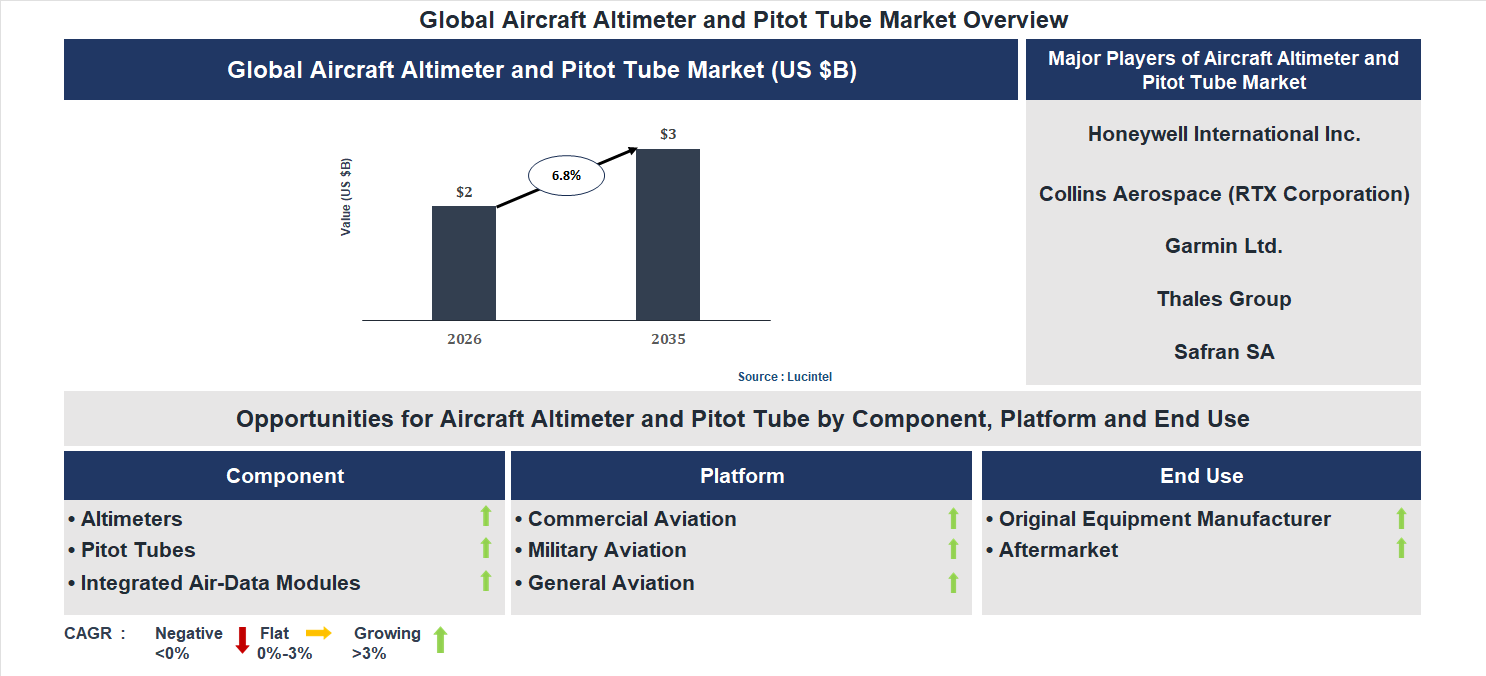
Emerging Trends in the Aircraft Altimeter and Pitot Tube Market
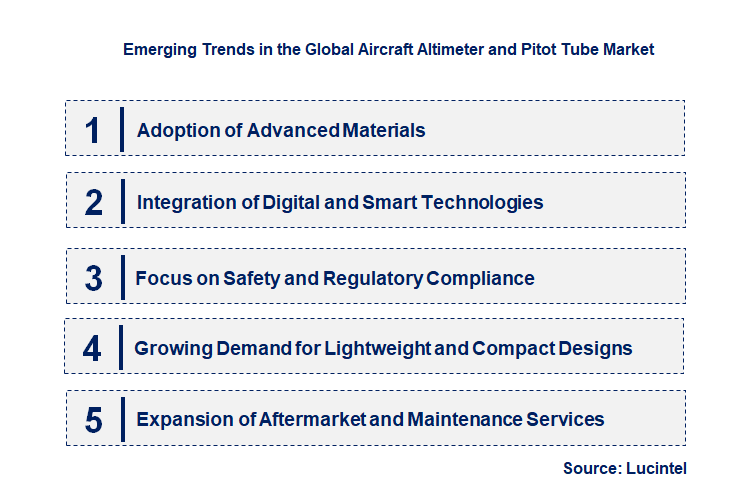
The aircraft altimeter and pitot tube market is experiencing rapid evolution driven by technological advancements, increasing safety standards, and the growing demand for modernized aircraft systems. As the aviation industry seeks to enhance flight safety, efficiency, and reliability, key trends are emerging that are shaping the future of this market. These developments are not only improving aircraft performance but also influencing manufacturing, maintenance, and regulatory practices. Understanding these trends is essential for stakeholders aiming to stay competitive and innovative in a dynamic environment. The following are five key trends currently shaping the aircraft altimeter and pitot tube market.• Adoption of Advanced Materials: The use of lightweight, durable materials such as composites and advanced alloys is increasing in altimeters and pitot tubes. These materials reduce weight, improve fuel efficiency, and enhance resistance to environmental factors like corrosion and extreme temperatures. This trend leads to longer-lasting components, lower maintenance costs, and improved aircraft performance, aligning with the industrys push toward sustainability and operational efficiency.
• Integration of Digital and Smart Technologies: Digitalization is transforming traditional altimeters and pitot tubes into smart, interconnected systems. Incorporating sensors, IoT connectivity, and real-time data processing allows for more accurate readings, predictive maintenance, and enhanced safety features. This integration facilitates better aircraft monitoring, reduces downtime, and supports the development of autonomous flight systems, thereby increasing overall operational reliability.
• Focus on Safety and Regulatory Compliance: Stringent safety standards and regulatory requirements are driving innovation in altimeter and pitot tube design. Manufacturers are developing systems with enhanced redundancy, fail-safe mechanisms, and improved calibration techniques to meet international safety norms. This focus ensures higher reliability, minimizes risks of system failure, and helps airlines comply with evolving aviation regulations, ultimately boosting passenger confidence and industry credibility.
• Growing Demand for Lightweight and Compact Designs: As aircraft designs become more streamlined, there is a rising demand for compact, lightweight altimeters and pitot tubes. These smaller components contribute to weight reduction, which is critical for fuel efficiency and payload capacity. Innovations in miniaturization are enabling integration into a wider range of aircraft, including smaller regional jets and unmanned aerial vehicles, expanding market opportunities.
• Expansion of Aftermarket and Maintenance Services: The increasing complexity of altimeter and pitot tube systems is fueling growth in aftermarket services, including calibration, repair, and replacement. Companies are investing in advanced diagnostic tools and training to provide efficient maintenance solutions. This trend ensures system longevity, reduces downtime, and creates new revenue streams for service providers, supporting the overall lifecycle management of aircraft systems. These trends are collectively reshaping the aircraft altimeter and pitot tube market by fostering innovation, enhancing safety, and improving operational efficiency. They are driving the industry toward more sustainable, reliable, and technologically advanced solutions, ultimately supporting the evolving needs of modern aviation.
Recent Development in the Aircraft Altimeter and Pitot Tube Market
The aircraft altimeter and pitot tube market is experiencing significant advancements driven by technological innovation, increasing air travel demand, and stringent safety regulations. These developments are transforming aircraft navigation and safety systems, offering improved accuracy, reliability, and efficiency. As the aviation industry evolves, stakeholders are investing heavily in research and development to enhance component performance and meet regulatory standards. This dynamic environment presents numerous growth opportunities that are shaping the future of aircraft instrumentation and safety systems.• Technological Innovations in Altimeter and Pitot Tube Design: The integration of advanced materials and sensors is enhancing measurement accuracy and durability. Innovations such as digital altimeters and anti-icing pitot tubes are reducing maintenance costs and improving safety. These advancements enable aircraft to operate reliably in extreme weather conditions, thereby increasing operational efficiency and safety standards. The market benefits from increased demand for high-precision instruments, fostering growth in both commercial and military aviation sectors.
• Rising Demand for Commercial Aircraft: The surge in global air travel, especially in emerging economies, is driving the need for more aircraft equipped with reliable altimeter and pitot tube systems. Manufacturers are focusing on producing lightweight, fuel-efficient components to meet airline requirements. This demand boosts market growth by encouraging innovation and expanding production capacities. Additionally, the increase in new aircraft orders supports long-term market stability and growth prospects for component suppliers.
• Stringent Safety Regulations and Certification Standards: Regulatory bodies like FAA and EASA are enforcing stricter safety standards for aircraft instrumentation. This compels manufacturers to develop more reliable and compliant altimeter and pitot tube systems. Certification processes ensure high safety levels, fostering consumer confidence and airline adoption. Compliance with these standards accelerates market expansion, as manufacturers invest in R&D to meet evolving regulatory requirements, thus driving technological progress and market competitiveness.
• Growing Focus on Maintenance and Replacement Services: The aging fleet and increasing safety concerns are prompting airlines to prioritize maintenance, repair, and replacement of altimeter and pitot tube systems. This trend creates a steady demand for aftermarket services and spare parts. Companies offering efficient maintenance solutions benefit from recurring revenue streams, while technological upgrades improve system longevity and performance. The market sees sustained growth opportunities through service contracts and upgrades, especially in regions with older aircraft fleets.
• Impact of Digitalization and Data Integration: The adoption of digital technologies enables real-time monitoring and data analysis of altimeter and pitot tube performance. This integration improves predictive maintenance, reduces downtime, and enhances safety. Digital solutions also facilitate better integration with aircraft avionics systems, leading to more efficient flight operations. As airlines and manufacturers embrace digitalization, the market experiences increased demand for smart, connected components, fostering innovation and competitive advantage. The overall impact of these developments is a more reliable, efficient, and safety-oriented aircraft instrumentation market. Technological advancements, regulatory compliance, and increased demand for air travel are driving growth, creating opportunities for innovation and expansion. The market is poised for sustained growth, supported by ongoing investments in R&D, maintenance services, and digital integration, shaping the future of aircraft safety and navigation systems.
Strategic Growth Opportunities in the Aircraft Altimeter and Pitot Tube Market
The aircraft altimeter and pitot tube market is experiencing significant growth driven by technological advancements, increasing air travel demand, and the need for enhanced safety and precision in aviation operations. Rising investments in aircraft modernization, regulatory standards, and the expansion of commercial and military fleets are fueling market expansion. Additionally, innovations in sensor technology and materials are improving product reliability and performance, creating new opportunities for manufacturers and suppliers to meet evolving industry requirements.• Integration of Advanced Digital Altimeters and Pitot Tubes: The shift from traditional analog systems to digital solutions offers higher accuracy, real-time data processing, and better integration with aircraft avionics. This transition enhances safety, reduces maintenance costs, and supports automation, making digital systems a key growth driver. Manufacturers are investing in R&D to develop more reliable, lightweight, and energy-efficient components that meet stringent aviation standards.
• Growing Demand for Lightweight and Durable Components: The need for lightweight materials in aircraft design to improve fuel efficiency and payload capacity is boosting demand for advanced altimeters and pitot tubes made from composites and innovative alloys. These materials offer strength, corrosion resistance, and reduced weight, which are critical for modern aircraft. Suppliers focusing on material innovation are poised to capitalize on this trend, especially in the commercial aviation sector.
• Expansion of the Commercial Aviation Sector in Emerging Markets: Rapid economic growth and increasing air travel in regions like Asia-Pacific and the Middle East are driving demand for new aircraft and upgrades. This expansion necessitates a higher volume of reliable altimeter and pitot tube systems to ensure safety and compliance. Local manufacturing and supply chain development are also emerging as strategic opportunities to meet regional market needs efficiently.
• Adoption of sensor fusion and automation technologies: The integration of multiple sensor inputs and automation in aircraft systems enhances altitude accuracy and safety. Advanced pitot tubes equipped with sensor fusion capabilities reduce errors caused by environmental factors like icing or turbulence. This technological evolution supports the development of autonomous and semi-autonomous aircraft, opening new avenues for growth in both commercial and defense markets.
• Focus on maintenance, repair, and overhaul (MRO) services: As aircraft fleets age, the demand for MRO services for altimeters and pitot tubes increases. Upgrading or replacing outdated components ensures continued safety and compliance. Companies offering specialized maintenance solutions, remote diagnostics, and quick turnaround services are gaining market share. This trend underscores the importance of aftermarket services as a significant revenue stream within the overall market. The overall market outlook is positively influenced by these growth opportunities, promising increased innovation, safety, and efficiency. As technological advancements and regional expansions continue, the aircraft altimeter and pitot tube market is set to experience sustained growth, benefiting manufacturers, service providers, and end-users alike.
Aircraft Altimeter and Pitot Tube Market Driver and Challenges
The aircraft altimeter and pitot tube market is influenced by a variety of technological, economic, and regulatory factors. Rapid advancements in avionics technology, increasing air traffic, and stringent safety regulations are key drivers propelling market growth. Conversely, challenges such as high maintenance costs, regulatory compliance complexities, and technological obsolescence pose significant hurdles. The interplay of these drivers and challenges shapes the overall market landscape, impacting manufacturers, airlines, and regulatory bodies. Understanding these factors is essential for stakeholders to navigate the evolving environment effectively and capitalize on emerging opportunities while mitigating risks. The factors responsible for driving the aircraft altimeter and pitot tube market include:-• Technological Innovation: The continuous development of advanced altimeter and pitot tube systems enhances accuracy, reliability, and safety. Integration of digital and electronic systems, such as GPS-based altimeters and smart pitot tubes, improves performance and reduces maintenance needs. These innovations meet increasing safety standards and operational efficiency demands, encouraging airlines and manufacturers to adopt newer technologies. As aircraft become more sophisticated, the demand for cutting-edge altimeter and pitot tube solutions accelerates, fostering market growth.
• Increasing Air Traffic and Fleet Expansion: The global rise in air travel, driven by economic growth and urbanization, results in expanding aircraft fleets. Airlines seek reliable and compliant altimeter and pitot tube systems to ensure safety and efficiency. The surge in regional and low-cost carriers further amplifies demand, especially in emerging markets. This growth necessitates the procurement of advanced components, stimulating market expansion and encouraging manufacturers to innovate and scale production.
• Regulatory and Safety Standards: Stringent aviation safety regulations imposed by authorities such as the FAA and EASA mandate the use of certified altimeter and pitot tube systems. These standards drive the adoption of high-quality, reliable components to ensure compliance and safety. Regulatory updates often require retrofitting or upgrading existing systems, creating ongoing demand. Compliance with these standards not only ensures safety but also enhances brand reputation, influencing purchasing decisions across the industry.
• Growing Focus on Aircraft Safety and Maintenance: The aviation industry’s emphasis on safety and reducing operational risks propels the adoption of durable and precise altimeter and pitot tube systems. Innovations that facilitate easier maintenance, real-time diagnostics, and enhanced durability are highly valued. This focus encourages manufacturers to develop systems that minimize downtime and maintenance costs, ultimately improving fleet availability and operational efficiency, thereby positively impacting market growth.
• Expansion of Military and Business Aircraft Markets: The increasing procurement of military and business aircraft worldwide contributes significantly to the demand for specialized altimeter and pitot tube systems. These aircraft require high-precision, rugged components capable of operating under extreme conditions. Defense budgets and the growth of private aviation further stimulate this segment, providing additional revenue streams for manufacturers and expanding the overall market. The challenges facing the aircraft altimeter and pitot tube market include:-
• High Maintenance and Replacement Costs: Altimeter and pitot tube systems are critical for flight safety but require regular maintenance and periodic replacement due to wear and environmental exposure. The high costs associated with these activities can deter airlines and operators from upgrading or maintaining systems promptly. Additionally, the need for specialized technicians and spare parts increases operational expenses, impacting overall profitability and market growth.
• Regulatory Compliance Complexities: Navigating the complex landscape of international safety standards and certification processes poses a significant challenge. Different regions may have varying requirements, leading to delays in product approval and deployment. Compliance costs can be substantial, especially for manufacturers aiming to serve global markets. These complexities can hinder innovation and slow down the introduction of new technologies, affecting market dynamics.
• Technological Obsolescence and Compatibility Issues: Rapid technological advancements can render existing altimeter and pitot tube systems obsolete quickly. Ensuring compatibility with newer aircraft models and avionics systems requires continuous updates and redesigns. This rapid evolution increases R&D costs and risks of obsolescence, challenging manufacturers to keep pace. Additionally, integrating new systems into older aircraft can be complex and costly, limiting market expansion in certain segments. The aircraft altimeter and pitot tube market is driven by technological advancements, increasing air traffic, regulatory standards, safety focus, and military expansion. However, high maintenance costs, regulatory complexities, and rapid technological obsolescence pose significant challenges. These factors collectively influence market growth, requiring stakeholders to innovate continuously and adapt to evolving safety and regulatory landscapes. The overall impact is a dynamic environment where opportunities for growth coexist with operational and compliance hurdles, shaping the future trajectory of the market.
List of Aircraft Altimeter and Pitot Tube Companies
Companies in the market compete on the basis of product quality offered. Major players in this market focus on expanding their manufacturing facilities, R&D investments, infrastructural development, and leverage integration opportunities across the value chain. With these strategies aircraft altimeter and pitot tube companies cater increasing demand, ensure competitive effectiveness, develop innovative products & technologies, reduce production costs, and expand their customer base. Some of the aircraft altimeter and pitot tube companies profiled in this report include-• Honeywell International Inc.
• Collins Aerospace (RTX Corporation)
• Garmin Ltd.
• Thales Group
• Safran SA
• Meggitt Ltd. (Parker-Hannifin Corporation)
• Curtiss-Wright Corporation
• AMETEK Inc.
• United Instruments, Inc.
• Dynon Avionics
Aircraft Altimeter and Pitot Tube Market by Segment
The study includes a forecast for the global aircraft altimeter and pitot tube market by component, platform, end use, and region.Aircraft Altimeter and Pitot Tube Market by Component [Value from 2019 to 2035]:
• Altimeters
• Pitot Tubes
• Integrated Air-Data Modules
Aircraft Altimeter and Pitot Tube Market by Platform [Value from 2019 to 2035]:
• Commercial Aviation
• Military Aviation
• General Aviation
Aircraft Altimeter and Pitot Tube Market by End Use [Value from 2019 to 2035]:
• Original Equipment Manufacturer
• Aftermarket
Aircraft Altimeter and Pitot Tube Market by Region [Value from 2019 to 2035]:
• North America
• Europe
• Asia Pacific
• The Rest of the World
Country Wise Outlook for the Aircraft Altimeter and Pitot Tube Market
The aircraft altimeter and pitot tube market has experienced significant technological advancements and increased demand driven by the growth of the aviation industry worldwide. Innovations in sensor technology, materials, and manufacturing processes have enhanced the accuracy, reliability, and durability of these critical components. Additionally, the push for modernization of aircraft fleets and the adoption of advanced avionics systems have spurred market growth. Regulatory standards and safety requirements continue to influence product development, while emerging markets present new opportunities. The following summarizes recent developments in this market across key countries, reflecting regional trends and technological progress.• United States: The US market has seen increased adoption of digital and integrated altimeter and pitot tube systems, driven by modernization initiatives in commercial and military aircraft. Leading aerospace companies are investing in R&D to improve sensor accuracy and resistance to environmental factors. Regulatory agencies like the FAA are updating standards to incorporate new technologies, fostering innovation. The US also witnesses a rise in aftermarket services, including maintenance and calibration, supporting aging aircraft fleets.
• China: China’s aviation sector is rapidly expanding, with significant investments in domestic aircraft manufacturing and infrastructure. The market for altimeters and pitot tubes is growing due to increased aircraft deliveries and upgrades. Chinese companies are focusing on developing cost-effective, reliable components tailored for regional and commercial aircraft. The government’s emphasis on self-reliance has spurred local innovation, including advanced sensor technologies and manufacturing capabilities, positioning China as a key player in the market.
• Germany: Germany remains a hub for aerospace innovation within Europe, with a focus on high-precision and lightweight components. Recent developments include the integration of advanced materials such as composites to reduce weight and improve performance. German firms are also working on enhancing the durability and accuracy of altimeters and pitot tubes, especially for next-generation aircraft. Collaboration with European aerospace consortia has facilitated the adoption of standardized, high-quality systems aligned with stringent safety regulations.
• India: The Indian aviation industry is experiencing rapid growth, leading to increased demand for aircraft components, including altimeters and pitot tubes. Domestic manufacturers are expanding their capabilities to meet rising orders from airlines and defense sectors. The government’s push for indigenous manufacturing under initiatives like Make in India has fostered innovation in sensor technology and manufacturing processes. Additionally, the focus on upgrading existing fleets and developing regional aircraft has created new opportunities for advanced altimeter and pitot tube solutions.
• Japan: Japan’s aerospace sector emphasizes technological innovation and safety. Recent developments include the integration of advanced electronic and digital systems into altimeters and pitot tubes, improving accuracy and reliability. Japanese companies are investing in research to develop sensors resistant to extreme environmental conditions, such as icing and turbulence. The country’s focus on sustainable aviation has also led to efforts in lightweight component manufacturing and eco-friendly materials, aligning with global trends toward greener aviation solutions.

Features of the Global Aircraft Altimeter and Pitot Tube Market
Market Size Estimates: Aircraft altimeter and pitot tube market size estimation in terms of value ($B). Trend and Forecast Analysis: Market trends (2019 to 2025) and forecast (2026 to 2035) by various segments and regions. Segmentation Analysis: Aircraft altimeter and pitot tube market size by component, platform, end use, and region in terms of value ($B). Regional Analysis: Aircraft altimeter and pitot tube market breakdown by North America, Europe, Asia Pacific, and Rest of the World. Growth Opportunities: Analysis of growth opportunities in different components, platforms, end uses, and regions for the aircraft altimeter and pitot tube market. Strategic Analysis: This includes M&A, new product development, and competitive landscape of the aircraft altimeter and pitot tube market. Analysis of competitive intensity of the industry based on Porter’s Five Forces model.
FAQ
Q1. What is the aircraft altimeter and pitot tube market size? Answer: The global aircraft altimeter and pitot tube market is expected to reach an estimated $3 billion by 2035. Q2. What is the growth forecast for aircraft altimeter and pitot tube market? Answer: The global aircraft altimeter and pitot tube market is expected to grow with a CAGR of 6.8% from 2026 to 2035. Q3. What are the major drivers influencing the growth of the aircraft altimeter and pitot tube market? Answer: The major drivers for this market are the growing adoption of digital cockpits in next-generation regional jets, the increasing focus on aviation safety regulations, and the rising demand for investments in aircraft modernization. Q4. What are the major segments for aircraft altimeter and pitot tube market? Answer: The future of the aircraft altimeter and pitot tube market looks promising with opportunities in the commercial aviation, military aviation, and general aviation markets. Q5. Who are the key aircraft altimeter and pitot tube market companies? Answer: Some of the key aircraft altimeter and pitot tube companies are as follows:• Honeywell International Inc.
• Collins Aerospace (RTX Corporation)
• Garmin Ltd.
• Thales Group
• Safran SA
• Meggitt Ltd. (Parker-Hannifin Corporation)
• Curtiss-Wright Corporation
• AMETEK Inc.
• United Instruments, Inc.
• Dynon Avionics Q6. Which aircraft altimeter and pitot tube market segment will be the largest in future? Answer: Lucintel forecasts that, within the component category, altimeter is expected to witness the highest growth over the forecast period. Q7. In aircraft altimeter and pitot tube market, which region is expected to be the largest in next 8 years? Answer: In terms of region, APAC is expected to witness the highest growth over the forecast period. Q8. Do we receive customization in this report? Answer: Yes, Lucintel provides 10% customization without any additional cost.
Table of Contents
List of Figures
List of Tables
Methodology
- In-depth interviews of the major players in this market
- Detailed secondary research from competitors’ financial statements and published data
- Extensive searches of published works, market, and database information pertaining to industry news, company press releases, and customer intentions
- A compilation of the experiences, judgments, and insights of Lucintel’s professionals, who have analyzed and tracked this market over the years.


Buy Now
Choose a license that fits your team. Instant PDF delivery.
Prices exclude taxes. Instant delivery. Custom licensing available on request.
Key Questions
- • What are some of the most promising, high-growth opportunities for the aircraft altimeter and pitot tube market by component (altimeters, pitot tubes, and integrated air-data modules), platform (commercial aviation, military aviation, and general aviation), end use (original equipment manufacturer and aftermarket), and region (North America, Europe, Asia Pacific, and the Rest of the World)?
- • Which segments will grow at a faster pace and why?
- • Which region will grow at a faster pace and why?
- • What are the key factors affecting market dynamics? What are the key challenges and business risks in this market?
- • What are the business risks and competitive threats in this market?
- • What are the emerging trends in this market and the reasons behind them?
- • What are some of the changing demands of customers in the market?
- • What are the new developments in the market? Which companies are leading these developments?
- • Who are the major players in this market? What strategic initiatives are key players pursuing for business growth?
- • What are some of the competing products in this market and how big of a threat do they pose for loss of market share by material or product substitution?
- • What M&A activity has occurred in the last 5 years and what has its impact been on the industry? For any questions related to Aircraft Altimeter and Pitot Tube Market, Aircraft Altimeter and Pitot Tube Market Size, Aircraft Altimeter and Pitot Tube Market Growth, Aircraft Altimeter and Pitot Tube Market Analysis, Aircraft Altimeter and Pitot Tube Market Report, Aircraft Altimeter and Pitot Tube Market Share, Aircraft Altimeter and Pitot Tube Market Trends, Aircraft Altimeter and Pitot Tube Market Forecast, Aircraft Altimeter and Pitot Tube Companies, write Lucintel analyst at email: helpdesk@lucintel.com. We will be glad to get back to you soon.


