
Market Report · July 31, 2026

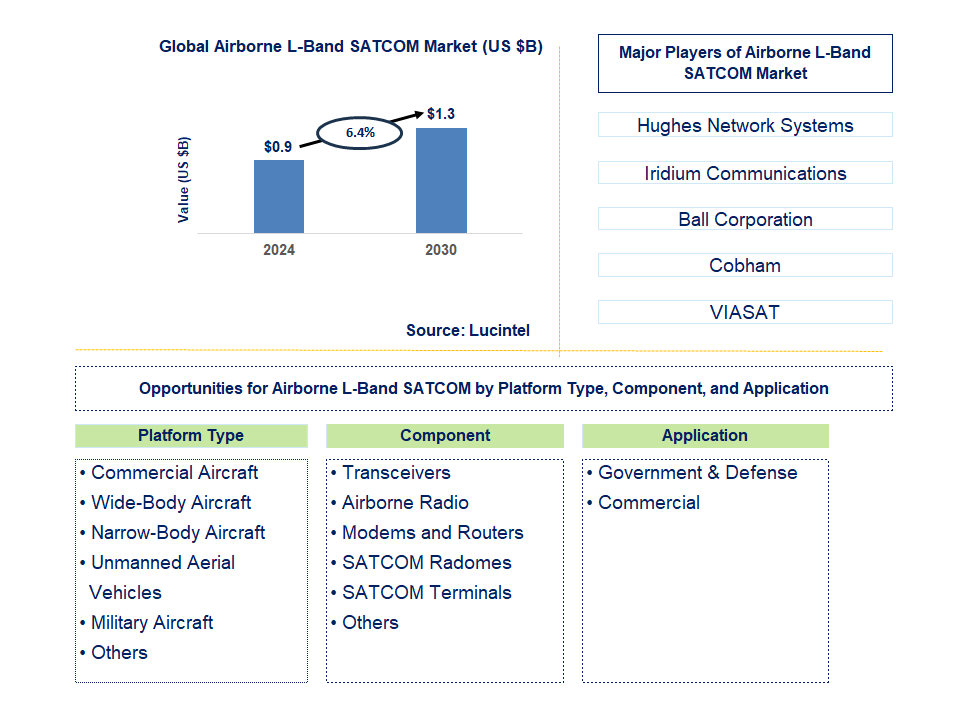
Key data points: The market size in 2030 = $1.3 billion, growth forecast = 6.4% annually for the next 6 years. Scroll below to get more insights. This market report covers trends, opportunities, and forecasts in the global airborne l-band satcom market to 2030 by platform type (commercial aircraft, wide-body aircraft, narrow-body aircraft, unmanned aerial vehicles, military aircraft, and others), component (transceivers, airborne radio, modems and routers, SATCOM radomes, SATCOM terminals, and others), application (government & defense and commercial), and region (North America, Europe, Asia Pacific, and the Rest of the World)
We'll send your sample report shortly.
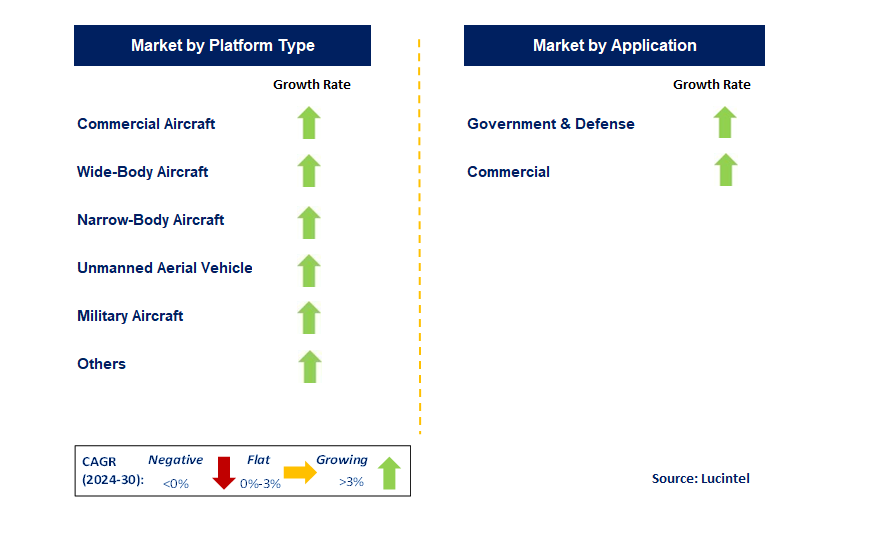
• Lucintel forecasts that, within the platform type category, unmanned aerial vehicles will remain the largest segment over the forecast period.
• Within the application category, commercial will remain the largest segment over the forecast period.
• In terms of regions, APAC is expected to witness the highest growth over the forecast period. Gain valuable insights for your business decisions with our comprehensive 150+ page report.
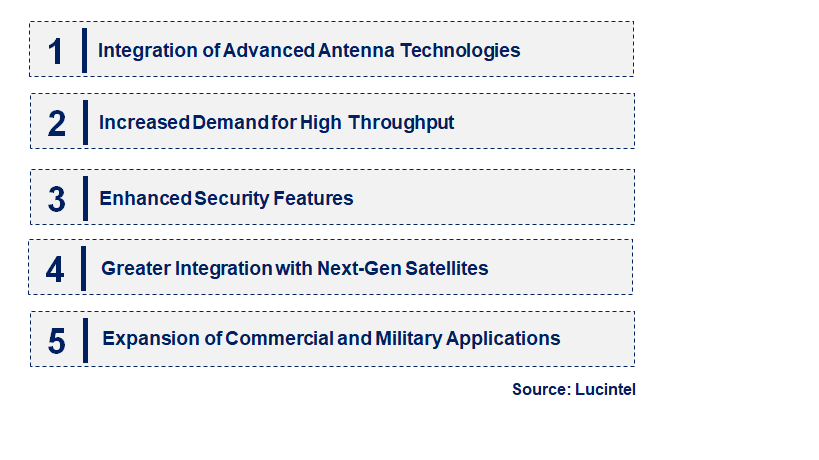
• Integration of Advanced Antenna Technologies: There is a growing trend toward integrating advanced antenna technologies, such as electronically scanned arrays and phased-array antennas, into airborne L-band SATCOM systems. These innovations enhance performance, reliability, and flexibility in satellite communications, allowing for more precise beam steering and reduced signal degradation. This integration supports improved connectivity in challenging environments, such as over oceans or in remote areas.
• Increased Demand for High Throughput: The demand for higher data throughput is driving advancements in airborne L-band SATCOM technologies. Modern systems are increasingly designed to support higher bandwidths and data rates, catering to the needs of both military and commercial aviation for robust, high-speed communication. This trend is crucial for applications requiring real-time data transfer and enhanced situational awareness.
• Enhanced Security Features: With rising concerns over cybersecurity, there is a significant focus on integrating advanced encryption and security features into L-band SATCOM systems. This trend addresses the need for secure communications to protect sensitive information from interception or tampering. Enhanced security protocols ensure that communications remain confidential and secure, particularly for military and intelligence applications.
• Greater Integration with Next-Gen Satellites: The integration of airborne L-band SATCOM systems with next-generation satellite constellations is becoming more prevalent. These new satellites offer improved coverage, reduced latency, and enhanced signal quality. By leveraging these advanced satellite networks, airborne communication systems can achieve better performance and reliability, meeting the evolving demands of modern aviation.
• Expansion of Commercial and Military Applications: There is a noticeable expansion in the applications of airborne L-band SATCOM, spanning both commercial and military sectors. Commercial airlines are adopting L-band SATCOM for in-flight connectivity and operational efficiency, while military applications focus on secure communication and enhanced tactical capabilities. This trend reflects the growing importance of L-band SATCOM in supporting diverse and critical aviation functions. These emerging trends are reshaping the airborne L-band SATCOM market by driving innovation, enhancing performance, and expanding applications. The integration of advanced technologies, increased data throughput, improved security, and alignment with next-generation satellites are all contributing to a more robust and versatile SATCOM landscape. As these trends continue to evolve, they will significantly impact how airborne communications are conducted, offering greater reliability and capability for both commercial and military aviation.
• Enhanced Satellite Infrastructure: Recent investments in satellite infrastructure have bolstered the L-band SATCOM market. Major satellite operators are launching new L-band satellites with improved coverage, capacity, and resilience. This expansion facilitates better connectivity for airborne platforms, ensuring seamless communication across diverse geographic areas. Enhanced satellite constellations also offer reduced latency and higher data rates, which are critical for military and commercial applications. As global demand for air travel and operations increases, this robust infrastructure is essential for maintaining operational efficiency and safety.
• Integration of Advanced Antenna Technology: The integration of advanced antenna technology is revolutionizing airborne L-band SATCOM. New phased-array and electronically steered antennas provide greater flexibility and faster data transmission rates. These antennas can dynamically track satellites and maintain a stable link even during high-speed maneuvers. Additionally, their lightweight design and compact form factor make them ideal for integration into various aircraft types, from small drones to large commercial jets. This technological evolution is crucial for enhancing the user experience and ensuring reliable communications in challenging environments.
• Growing Demand for Manned and Unmanned Systems: The rise of both manned and unmanned aerial systems (UAS) is significantly impacting the airborne L-band SATCOM market. As military and commercial sectors increasingly adopt UAS for surveillance, delivery, and reconnaissance missions, the need for robust SATCOM capabilities has surged. L-band SATCOM provides the essential connectivity required for real-time data exchange and command-and-control operations, particularly in remote or contested areas. This trend is expanding the market and driving innovations tailored to the specific needs of unmanned systems.
• Increased Focus on Cybersecurity: With the growing reliance on satellite communications, cybersecurity has become a critical concern in the airborne L-band SATCOM market. Recent developments emphasize the need for robust encryption and secure transmission protocols to protect sensitive information. Manufacturers and service providers are investing in advanced security measures to safeguard communications from potential cyber threats. This focus on cybersecurity is particularly vital for military applications, where the integrity of data transmission can have significant implications.
• Regulatory Developments and Spectrum Management: Regulatory advancements and improved spectrum management are shaping the landscape of airborne L-band SATCOM. Authorities are working to streamline licensing processes and allocate frequency bands more effectively, minimizing interference and optimizing performance. These regulatory efforts are crucial for accommodating the increasing number of satellites and airborne systems entering the market. Additionally, international collaborations are being fostered to ensure compliance with global standards, enhancing interoperability among different platforms. This collaborative approach is vital for maintaining efficient airspace usage and ensuring reliable SATCOM services. The airborne L-band SATCOM market is experiencing transformative changes driven by advancements in technology, increasing demand from various sectors, and a strong focus on cybersecurity and regulatory compliance. These developments enhance communication capabilities and improve operational efficiency and security. As the market continues to evolve, these key trends will play a crucial role in shaping the future of airborne communications, ensuring that both military and commercial operators can meet their increasingly complex operational requirements.
• Enhanced In-Flight Connectivity: The growing demand for seamless in-flight connectivity is a significant growth opportunity in the airborne L-band SATCOM market. Airlines and operators are increasingly seeking high-performance SATCOM solutions to provide passengers with reliable internet access and onboard services. Enhanced L-band systems offer improved bandwidth and coverage, supporting a more connected passenger experience. This trend drives investments in advanced SATCOM technologies that can deliver high-speed data and consistent connectivity over global air routes.
• Advanced Air Traffic Management: The need for advanced air traffic management (ATM) systems represents a critical growth area for L-band SATCOM. Modern ATM systems require robust communication channels to manage airspace efficiently and ensure flight safety. L-band SATCOM technologies provide reliable, real-time data transmission crucial for air traffic control and flight management. As the complexity of global air traffic increases, investments in L-band SATCOM for ATM systems are expected to grow, enhancing overall operational efficiency and safety.
• Military and Tactical Communications: The military sector presents a substantial growth opportunity for airborne L-band SATCOM, driven by the need for secure and reliable communications in tactical operations. L-band SATCOM systems offer secure, resilient communication channels that are essential for mission-critical military applications. Advances in L-band technology enhance capabilities such as secure data transmission, real-time situational awareness, and interoperability among allied forces. The increasing focus on defense modernization and global security operations is likely to boost investments in these systems.
• Remote and Rural Connectivity: Expanding connectivity to remote and rural areas is a growing opportunity for L-band SATCOM. Aircraft operating in isolated regions or providing services in underdeveloped areas require dependable communication solutions. L-band SATCOM offers wide coverage and penetration, making it ideal for regions with limited terrestrial infrastructure. As governments and organizations work to improve connectivity in underserved locations, the demand for reliable L-band SATCOM solutions to support remote operations is expected to increase.
• Integration with Next-Generation Avionics: The integration of L-band SATCOM with next-generation avionics systems is another key growth opportunity. Modern avionics require advanced communication systems to support new technologies such as automated flight controls and advanced navigation. L-band SATCOM provides the reliable and secure connectivity needed for these sophisticated systems. As the aviation industry embraces digital transformation and advanced avionics, the demand for integrated L-band SATCOM solutions will rise, supporting enhanced aircraft performance and safety. These growth opportunities are significantly impacting the airborne L-band SATCOM market by driving innovation and investment across various applications. Enhanced in-flight connectivity, advanced air traffic management, military communications, remote area connectivity, and integration with next-generation avionics all represent key areas of expansion. As the industry continues to evolve, these opportunities are shaping the future of airborne communications, contributing to more reliable, efficient, and secure satellite communication systems.
• Hughes Network Systems
• Iridium Communications
• Ball Corporation
• Cobham
• VIASAT
• Teledyne Technologies
• Raytheon Technologies
• Honeywell International
• Inmarsat Global
• Thales Group
• Commercial Aircraft
• Wide-Body Aircraft
• Narrow-Body Aircraft
• Unmanned Aerial Vehicles
• Military Aircraft
• Others
• Transceivers
• Airborne Radio
• Modems and Routers
• SATCOM Radomes
• SATCOM Terminals
• Others
• Government & Defense
• Commercial
• North America
• Europe
• Asia Pacific
• The Rest of the World
• United States: The U.S. has made significant strides in airborne L-band SATCOM with the introduction of advanced systems like the U.S. Air Force’s Global Air Traffic Management (GATM) initiative. This program aims to modernize communication networks for better airspace management. Additionally, the U.S. is investing in Next-Generation SATCOM technologies that enhance connectivity and data throughput, crucial for military and commercial aviation. The integration of these technologies supports both enhanced safety and operational efficiency, addressing growing demands for high-capacity, reliable communication systems.
• China: China has accelerated its development of L-band SATCOM capabilities with the deployment of its BeiDou Navigation Satellite System (BDS), which includes L-band frequencies. This system supports both navigation and communication for military and civilian aviation. China's focus on expanding its SATCOM infrastructure reflects its strategic interests in ensuring robust and secure communication channels for its growing fleet of aircraft. The emphasis on L-band solutions enhances China’s ability to maintain communication reliability in diverse operational environments.
• Germany: Germany has been active in upgrading its airborne L-band SATCOM systems through collaborations with European defense and aerospace companies. The country is focusing on enhancing interoperability within NATO and EU frameworks, ensuring its systems are compatible with allied technologies. Germany's advancements also include integrating advanced encryption and data security measures into its SATCOM solutions, crucial for protecting sensitive communications in both military and commercial applications.
• India: India is developing its airborne L-band SATCOM capabilities as part of its broader defense modernization program. The Indian Space Research Organization (ISRO) is working on improving satellite communications infrastructure, with recent initiatives aimed at expanding the L-band communication bandwidth. India’s focus is on enhancing connectivity for its military aircraft and commercial aviation sectors, ensuring better performance and reliability across its expanding aerospace operations.
• Japan: Japan is investing in the enhancement of its airborne L-band SATCOM systems through technological advancements and partnerships with international firms. The focus is on integrating advanced L-band solutions into both military and commercial aircraft, improving communication reliability and coverage. Japan's efforts are part of a broader strategy to modernize its aerospace industry and enhance its capability to support both domestic and international operations.


• Hughes Network Systems
• Iridium Communications
• Ball Corporation
• Cobham
• VIASAT
• Teledyne Technologies
• Raytheon Technologies
• Honeywell International
• Inmarsat Global
• Thales Group Q6. Which airborne L-band SATCOM market segment will be the largest in future? Answer: Lucintel forecasts that unmanned aerial vehicle will remain the largest segment over the forecast period. Q7. In airborne L-band SATCOM market, which region is expected to be the largest in next 5 years? Answer: In terms of regions, APAC is expected to witness the highest growth over the forecast period. Q.8 Do we receive customization in this report? Answer: Yes, Lucintel provides 10% customization without any additional cost.


Choose a license that fits your team. Instant PDF delivery.
Prices exclude taxes. Instant delivery. Custom licensing available on request.
Market Report · July 31, 2026
Market Report · July 31, 2026
Market Report · July 31, 2026
Trusted partner for strategic intelligence and business growth


Receive a complimentary market analysis tailored to your industry. Our analysts will identify key growth opportunities and competitive dynamics specific to your business.

Market size, growth rate, and key trend analysis for your specific sector.

Top competitor positioning and market share analysis.

Strategic recommendations backed by data-driven insights.
Get curated market intelligence and competitive moves straight to your inbox.
By subscribing, you agree to receive our monthly insights. Unsubscribe anytime.
Receive a complimentary market analysis tailored to your industry. Our analysts will identify key growth opportunities and competitive dynamics specific to your business.
Market size, growth rate, and key trend analysis for your specific sector.
Top competitor positioning and market share analysis.
Strategic recommendations backed by data-driven insights.
Get curated market intelligence, emerging trends, and competitive moves straight to your inbox each month.
By subscribing, you agree to receive our monthly insights. Unsubscribe anytime.
We'll send your sample report shortly.