
Market Report · July 22, 2026

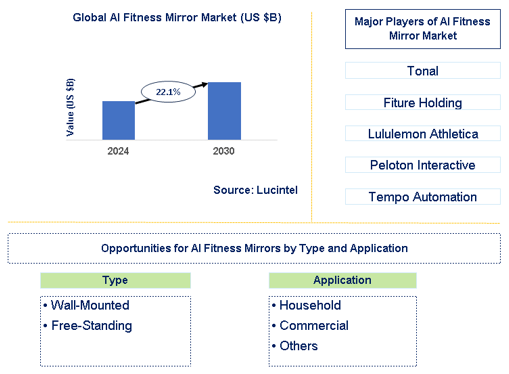
Key data points: The growth forecast = 22.1% annually for the next 6 years. Scroll below to get more insights. This market report covers trends, opportunities, and forecast in the global AI fitness mirror market to 2030 by type (wall-mounted and free-standing), application (household, commercial, and others), and region (North America, Europe, Asia Pacific, and the Rest of the World)
We'll send your sample report shortly.
• United States: In the U.S., the AI fitness mirror market has witnessed significant growth, with leading companies like Mirror (acquired by Lululemon) and Tonal expanding their offerings. These products now feature enhanced AI capabilities for personalized workout recommendations and real-time form correction. Integration with other smart home devices and the introduction of new workout classes, including guided meditation and strength training, are also notable trends. The focus is on creating a comprehensive home fitness ecosystem that caters to diverse fitness levels and preferences.
• China: China has rapidly embraced AI fitness mirrors, with companies like Keep and Supermonkey leading the charge. Chinese fitness mirrors often emphasize integration with local fitness apps and social features, allowing users to compete with friends and share progress. Additionally, there is a focus on affordability and accessibility, with various models available to cater to different budget ranges. The market is also seeing the incorporation of traditional Chinese fitness practices, such as Tai Chi, into the workout programs offered by these mirrors.
• Germany: In Germany, the AI fitness mirror market is evolving with an emphasis on premium, high-quality products that integrate advanced technology with user-centric design. Companies like Fabletics and KICKR have introduced fitness mirrors that offer detailed performance analytics and personalized training plans. German consumers show a preference for features such as multi-language support and extensive workout libraries. The market is also characterized by a strong focus on data privacy and security, reflecting broader European concerns about personal information.
• India: The AI fitness mirror market in India is emerging, with growing interest in home fitness solutions driven by increasing health consciousness and rising disposable incomes. Indian startups are introducing affordable fitness mirrors that offer basic AI functionalities, such as workout guidance and progress tracking. Localization of content, including regional languages and culturally relevant workout programs, is a key trend. Additionally, the integration of fitness mirrors with popular Indian fitness apps and platforms is enhancing their appeal to the local market.
• Japan: Japan is witnessing innovation in AI fitness mirrors, with a focus on integrating advanced robotics and AI technology. Companies like Oisix and Zennoa are developing mirrors that offer personalized fitness guidance with a strong emphasis on post-workout recovery and wellness. There is also interest in combining fitness mirrors with other smart home devices for a holistic health management approach. Japanese consumers are attracted to mirrors that offer precise health metrics and integration with traditional Japanese wellness practices.
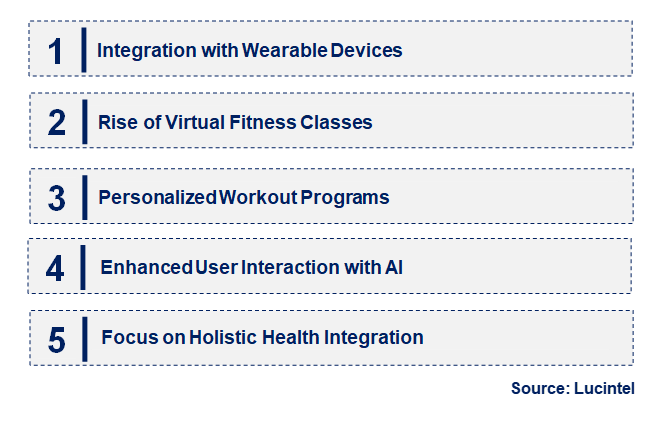
• Integration with Wearable Devices: AI fitness mirrors are increasingly integrating with wearable devices like smartwatches and fitness trackers. This integration allows for seamless data synchronization, enabling more accurate tracking of fitness metrics and personalized workout adjustments. It enhances the overall user experience by providing comprehensive health insights and optimizing workout effectiveness based on real-time data.
• Rise of Virtual Fitness Classes: The popularity of virtual fitness classes is a significant trend, with AI fitness mirrors offering access to a wide range of live and on-demand classes. Users can participate in group workouts, receive guidance from professional trainers, and engage in interactive sessions from the comfort of their homes. This trend caters to the growing demand for flexible and accessible fitness solutions.
• Personalized Workout Programs: AI fitness mirrors utilize advanced algorithms to provide highly personalized workout programs tailored to individual fitness levels, goals, and preferences. These personalized programs adapt in real-time based on user performance and feedback, ensuring more effective and engaging workouts. This trend enhances user motivation and helps achieve fitness goals more efficiently.
• Enhanced User Interaction with AI: AI fitness mirrors incorporate advanced AI features that enable more interactive and intuitive user experiences. Voice commands, gesture recognition, and real-time feedback are becoming common, allowing users to interact with their fitness mirrors more naturally. This trend improves user engagement and makes the workout experience more immersive and responsive.
• Focus on Holistic Health Integration: There is a growing emphasis on integrating AI fitness mirrors with other aspects of holistic health, including mental wellness and recovery. Features such as guided meditation, stress management, and post-workout recovery programs are being incorporated. This trend reflects a broader understanding of health that goes beyond physical fitness to include overall well-being. These trends—integration with wearables, virtual fitness classes, personalized programs, enhanced AI interaction, and holistic health integration—are reshaping the AI fitness mirror market. They drive innovation, improve user experiences, and expand the role of fitness mirrors in overall health management.
• Advanced AI Capabilities: AI fitness mirrors are incorporating more sophisticated AI technologies, such as advanced machine learning algorithms and natural language processing. These improvements enable more accurate form correction, personalized workout recommendations, and interactive feedback. The result is a more tailored and effective fitness experience that adapts to individual needs and performance.
• Expansion of Content Libraries: Fitness mirrors are expanding their content libraries to include a broader range of workout programs and classes. This expansion includes various fitness modalities such as yoga, strength training, and high-intensity interval training (HIIT). Offering diverse content caters to different user preferences and fitness levels, enhancing the appeal of fitness mirrors to a wider audience.
• Integration with Health Platforms: There is a growing trend of integrating AI fitness mirrors with other health and wellness platforms. This includes syncing with popular fitness apps, nutrition trackers, and health management systems. Integration provides users with a comprehensive view of their fitness and health data, facilitating better tracking and management of their overall well-being.
• Incorporation of Virtual Coaching: AI fitness mirrors are increasingly featuring virtual coaching capabilities, allowing users to receive personalized guidance from virtual trainers. These virtual coaches provide real-time feedback, motivation, and instructional support during workouts. This development enhances user engagement and helps individuals achieve their fitness goals with professional assistance.
• Focus on Aesthetic and Functional Design: The design of AI fitness mirrors is evolving to balance aesthetics with functionality. Modern fitness mirrors feature sleek, stylish designs that blend seamlessly with home decor while incorporating functional elements like touchscreens and adjustable stands. This focus on design enhances the user experience and encourages integration of fitness mirrors into home environments. Recent developments—such as advanced AI capabilities, expanded content libraries, integration with health platforms, virtual coaching, and improved design—are significantly impacting the AI fitness mirror market. These advancements enhance user experiences, broaden the appeal of fitness mirrors, and drive market growth.
• Home Fitness Solutions: AI fitness mirrors present a significant growth opportunity as home fitness solutions. With increasing interest in home-based workouts, fitness mirrors offer a comprehensive solution that combines virtual classes, personalized training, and performance tracking. This opportunity aligns with the trend towards remote and flexible fitness options.
• Corporate Wellness Programs: Integrating AI fitness mirrors into corporate wellness programs is a growing opportunity. Companies can use fitness mirrors to provide employees with access to virtual workouts and health programs, promoting physical activity and overall well-being. This application supports employee health and can enhance productivity and job satisfaction.
• Healthcare Integration: AI fitness mirrors have potential in healthcare settings, particularly for remote patient monitoring and rehabilitation. Fitness mirrors can assist with guided exercise programs for patients recovering from injuries or managing chronic conditions. This opportunity expands the role of fitness mirrors beyond traditional fitness applications into healthcare and rehabilitation.
• Expansion into Emerging Markets: The AI fitness mirror market presents growth opportunities in emerging markets where fitness and wellness are gaining traction. Companies can target these markets with affordable and localized fitness solutions, catering to growing health consciousness and increasing disposable incomes. Expansion into these regions can drive market growth and diversification.
• Partnerships with Fitness Influencers: Collaborating with fitness influencers and trainers offers a strategic growth opportunity. Fitness mirrors can feature exclusive content and programs developed by well-known fitness personalities, attracting their followers and enhancing the mirror's appeal. These partnerships can drive consumer interest and boost market visibility. Strategic growth opportunities in the AI fitness mirror market include home fitness solutions, corporate wellness programs, healthcare integration, expansion into emerging markets, and partnerships with fitness influencers. These opportunities reflect the market's potential for innovation and expansion, addressing diverse consumer needs and driving growth.
• Technological Advancements: The continuous evolution of AI, machine learning, and sensor technologies drives innovation in AI fitness mirrors. Advanced AI capabilities enable personalized workouts, real-time feedback, and interactive experiences. Technological progress enhances the functionality and appeal of fitness mirrors, contributing to market growth.
• Rising Health Consciousness: Increasing health consciousness among consumers is a major driver for the AI fitness mirror market. As people seek more convenient and effective ways to maintain their fitness, AI fitness mirrors offer a comprehensive solution for home workouts, driving demand and adoption.
• Growth in Home Fitness Trends: The growing trend of home fitness and remote workouts, accelerated by the COVID-19 pandemic, boosts the AI fitness mirror market. Consumers are investing in home-based fitness solutions that provide personalized training and virtual classes, supporting the market's expansion.
• Increased Investment in Fitness Technology: Significant investment from venture capital, technology companies, and fitness brands fuels innovation in AI fitness mirrors. This investment supports the development of advanced features, improved user experiences, and expanded market reach, driving overall market growth.
• Customization and Personalization: The demand for customized and personalized fitness experiences drives the development of AI fitness mirrors. These mirrors offer tailored workout programs, performance tracking, and real-time feedback, enhancing user engagement and satisfaction, and contributing to market growth. Challenges in the AI fitness mirror market include:
• High Cost of Development: The development of advanced AI fitness mirrors involves significant costs related to technology, research, and production. High development costs can limit market entry for new players and impact the affordability of fitness mirrors for consumers, potentially affecting market growth.
• Data Privacy and Security Concerns: AI fitness mirrors collect and process personal data, raising concerns about data privacy and security. Ensuring compliance with data protection regulations and addressing privacy concerns are crucial for gaining user trust and avoiding legal issues, impacting market adoption.
• Market Saturation and Competition: The increasing number of competitors and similar products in the AI fitness mirror market leads to saturation. Intense competition can drive down prices and impact profit margins. Companies must differentiate themselves through innovation and unique features to maintain market share. The AI fitness mirror market is influenced by drivers such as technological advancements, rising health consciousness, home fitness trends, investment in fitness technology, and demand for personalization. However, challenges including high development costs, data privacy concerns, and market saturation also impact the market. Balancing these factors is essential for sustaining growth and navigating the evolving landscape of AI fitness mirrors.
• Tonal
• FITURE Holding
• Lululemon Athletica
• Peloton Interactive
• Tempo Automation Holdings
• Keep
• NordicTrack
• ProForm
• KARA
• Echelon Reflect
• Wall-Mounted
• Free-Standing
• Household
• Commercial
• Others
• North America
• Europe
• Asia Pacific
• The Rest of the World
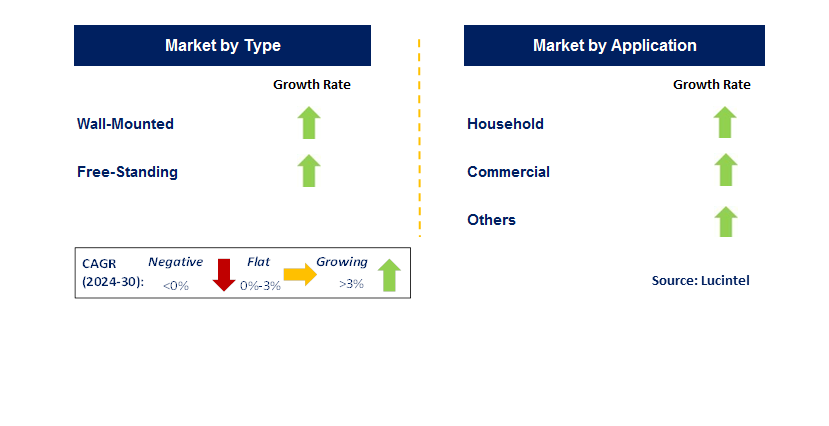
• Lucintel forecasts that, within the type category, wall-mounted is expected to witness a higher growth over the forecast period.
• Within the application category, the commercial is expected to witness a higher growth.
• In terms of regions, APAC is expected to witness the highest growth over the forecast period.


• Tonal
• Fiture Holding
• Lululemon Athletica
• Peloton Interactive
• Tempo Automation Holdings
• Keep
• NordicTrack
• ProForm
• KARA
• Echelon Reflect Q5. Which AI fitness mirror market segment will be the largest in the future? Answer: Lucintel forecasts that wall-mounted is expected to witness higher growth over the forecast period. Q6. In the AI fitness mirror market, which region is expected to be the largest in the next 5 years? Answer: APAC is expected to witness the highest growth over the forecast period. Q7. Do we receive customization in this report? Answer: Yes, Lucintel provides 10% customization without any additional cost.


Choose a license that fits your team. Instant PDF delivery.
Prices exclude taxes. Instant delivery. Custom licensing available on request.
Market Report · July 22, 2026
Market Report · July 16, 2026
Market Report · May 18, 2026
Trusted partner for strategic intelligence and business growth


Receive a complimentary market analysis tailored to your industry. Our analysts will identify key growth opportunities and competitive dynamics specific to your business.

Market size, growth rate, and key trend analysis for your specific sector.

Top competitor positioning and market share analysis.

Strategic recommendations backed by data-driven insights.
Get curated market intelligence and competitive moves straight to your inbox.
By subscribing, you agree to receive our monthly insights. Unsubscribe anytime.
Receive a complimentary market analysis tailored to your industry. Our analysts will identify key growth opportunities and competitive dynamics specific to your business.
Market size, growth rate, and key trend analysis for your specific sector.
Top competitor positioning and market share analysis.
Strategic recommendations backed by data-driven insights.
Get curated market intelligence, emerging trends, and competitive moves straight to your inbox each month.
By subscribing, you agree to receive our monthly insights. Unsubscribe anytime.
We'll send your sample report shortly.