
Market Report · July 31, 2026

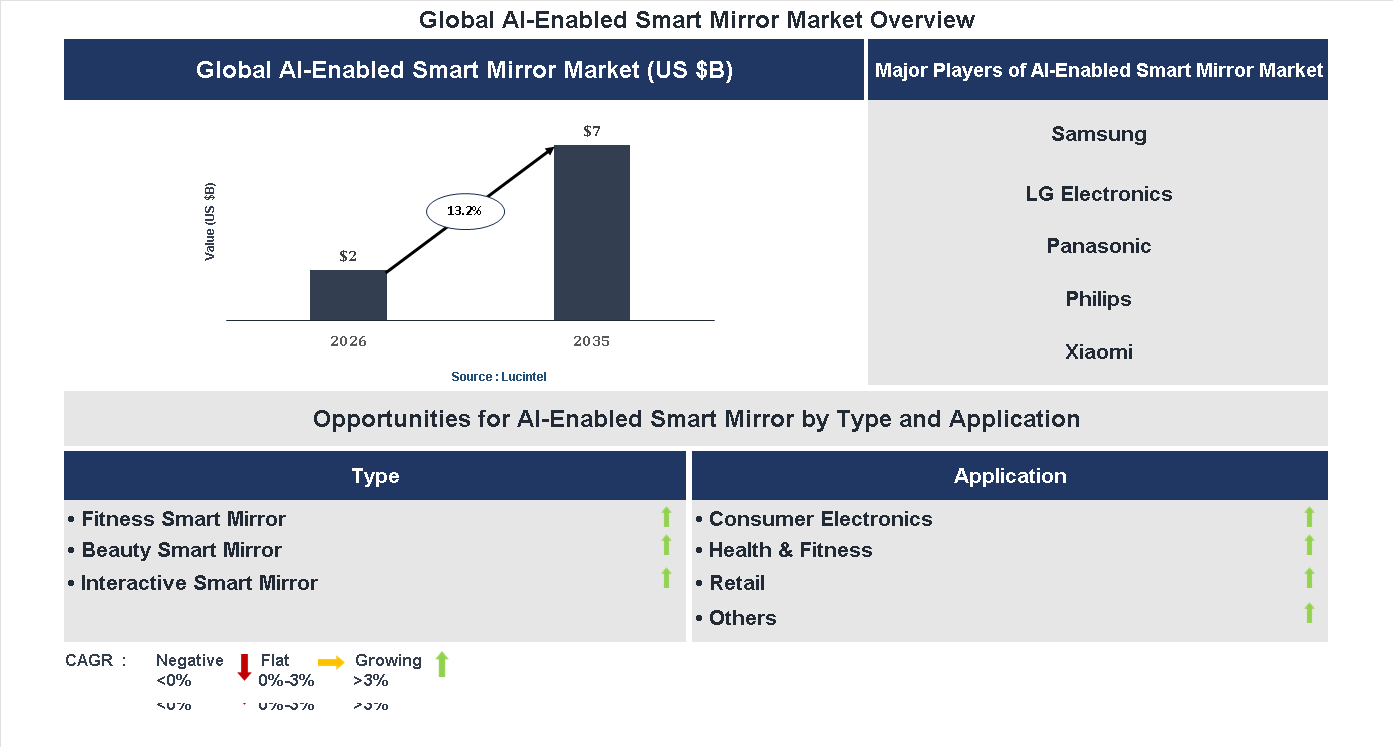
Key data points: The market size in 2035 = $7 billion, growth forecast = 13.2% annually for the next 8 years. Scroll below to get more insights. This market report covers trends, opportunities and forecasts in AI-enabled smart mirror market to 2035 by type (fitness smart mirror, beauty smart mirror, and interactive smart mirror), application (consumer electronics, health & fitness, retail, and others), and region (North America, Europe, Asia Pacific, and the Rest of the World)
We'll send your sample report shortly.
• Lucintel forecasts that, within the type category, fitness smart mirror is expected to witness the highest growth over the forecast period.
• Within the application category, health & fitness is expected to witness the highest growth.
• In terms of region, APAC is expected to witness the highest growth over the forecast period. Gain valuable insights for your business decisions with our comprehensive 150+ page report. Sample figures with some insights are shown below.
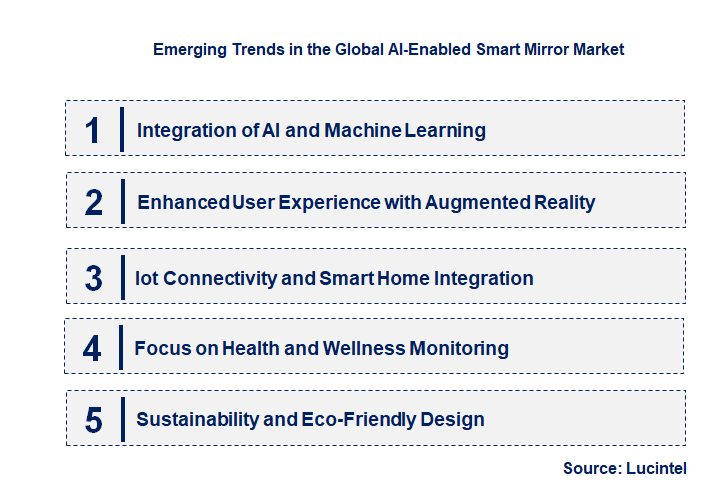
• Integration of AI and Machine Learning: The market is witnessing a surge in smart mirrors equipped with AI and machine learning capabilities. These features enable personalized user experiences, such as tailored skincare advice, real-time health monitoring, and adaptive lighting. AI algorithms analyze user data to provide customized recommendations, improving overall satisfaction and engagement. This trend enhances the functionality of smart mirrors beyond simple reflection, positioning them as essential personal health and beauty assistants. The integration of AI also facilitates continuous learning, making devices smarter over time and increasing their value proposition.
• Enhanced User Experience with Augmented Reality (AR): Augmented reality technology is increasingly incorporated into smart mirrors to offer virtual try-ons for makeup, hairstyles, and accessories. This immersive experience allows users to visualize products without physical application, saving time and reducing waste. AR-enabled smart mirrors improve decision-making and boost consumer confidence in purchasing. The technology also supports interactive tutorials and virtual consultations, making grooming routines more engaging. As AR becomes more sophisticated and affordable, its adoption is expected to expand, significantly elevating the user experience and driving market growth.
• IoT Connectivity and Smart Home Integration: The proliferation of Internet of Things (IoT) devices is enabling smart mirrors to seamlessly connect with other smart home systems. This integration allows for synchronized control of lighting, temperature, and entertainment systems through the mirror interface. Users can receive notifications, control smart appliances, or access information directly from their mirrors. This interconnected ecosystem enhances convenience and creates a unified smart home environment. As IoT adoption accelerates, smart mirrors are becoming central hubs for personal and home automation, increasing their utility and appeal to tech-savvy consumers.
• Focus on Health and Wellness Monitoring: The market is shifting towards smart mirrors that incorporate health and wellness features, such as heart rate monitoring, skin analysis, and posture assessment. These devices serve as personal health assistants, encouraging proactive wellness management. The integration of sensors and AI enables real-time health insights, motivating users to adopt healthier lifestyles. This trend aligns with the growing consumer focus on health, fitness, and self-care, expanding the market beyond traditional beauty applications. The ability to track and analyze health metrics positions smart mirrors as vital tools in personal health monitoring.
• Sustainability and Eco-Friendly Design: Increasing environmental awareness is influencing the design and manufacturing of smart mirrors. Companies are adopting sustainable materials, energy-efficient components, and eco-friendly packaging to reduce their carbon footprint. Additionally, smart mirrors are being designed to optimize energy consumption, such as automatic brightness adjustment and power-saving modes. This focus on sustainability appeals to environmentally conscious consumers and aligns with global efforts to promote eco-friendly products. As sustainability becomes a key purchasing criterion, it is shaping product development and marketing strategies within the market. These emerging trends are fundamentally reshaping the AI-enabled smart mirror market by enhancing personalization, user engagement, connectivity, health monitoring, and sustainability. These developments are driving innovation, expanding application areas, and increasing consumer adoption, ultimately transforming smart mirrors into essential, multifunctional devices in modern lifestyles.
• Integration of AI for Personalized Beauty and Skincare: AI-powered smart mirrors analyze skin conditions, recommend products, and provide tailored skincare routines, revolutionizing beauty routines. This personalization enhances customer satisfaction, boosts sales for beauty brands, and encourages adoption across salons and homes. The technologys ability to deliver real-time feedback and customized solutions is a key driver, making it a significant growth segment in the beauty industry.
• Expansion in Fitness and Wellness Monitoring: Smart mirrors equipped with AI track physical activity, posture, and health metrics, offering real-time coaching and feedback. This integration supports at-home fitness, reduces gym visits, and promotes healthier lifestyles. The convenience and accuracy of these devices attract fitness enthusiasts and wellness centers, expanding the market. The segments growth is further supported by partnerships with fitness brands and health organizations.
• Adoption in Retail and Fashion Industries: Retailers utilize AI-enabled smart mirrors for virtual try-ons, personalized shopping experiences, and inventory management. These mirrors improve customer engagement, reduce return rates, and streamline operations. Fashion brands leverage this technology to showcase collections interactively, enhancing brand loyalty. The retail sectors adoption accelerates digital transformation, creating new revenue streams and competitive advantages.
• Integration with Smart Home Ecosystems: Smart mirrors are increasingly integrated with home automation systems, voice assistants, and IoT devices. This connectivity offers seamless control over lighting, climate, and security, elevating user convenience. The integration supports the trend toward fully connected homes, attracting tech-savvy consumers. It also opens avenues for cross-platform services, expanding the market reach and fostering innovation in smart living solutions.
• Advancements in Augmented Reality for Enhanced User Experience: AR technology in smart mirrors enables virtual makeup application, fashion styling, and interactive tutorials. These features provide immersive experiences, attracting consumers seeking entertainment and practical utility. The enhanced visualization capabilities boost engagement and drive sales in beauty, fashion, and home decor sectors. Continuous innovation in AR is expected to further expand applications and market penetration. These developments are significantly transforming the AI-enabled smart mirror market by enhancing personalization, expanding application areas, and integrating with broader smart home ecosystems. The innovations foster increased consumer engagement, operational efficiencies, and new revenue opportunities. As these trends continue, the market is poised for sustained growth, driven by technological advancements and rising demand for intelligent, connected devices across multiple sectors.
• Integration with Healthcare Monitoring Devices: AI-enabled smart mirrors can revolutionize health management by integrating with wearable health devices, providing real-time health analytics, skin condition assessments, and early disease detection. This integration allows users to monitor vital signs, hydration levels, and skin health conveniently at home, promoting preventive healthcare. The technology also supports telemedicine, enabling remote consultations with healthcare professionals, thus expanding its application in medical diagnostics and wellness programs.
• Expansion in Retail and Fashion Industries: Smart mirrors are transforming retail by offering virtual try-on experiences, personalized styling advice, and augmented reality features. Retailers can enhance customer engagement through interactive displays that suggest outfits based on user preferences and body measurements. This application reduces return rates and improves shopping efficiency. Luxury brands and department stores are increasingly adopting these solutions to provide immersive, customized shopping experiences, driving sales and brand loyalty.
• Adoption in Fitness and Wellness Centers: The fitness industry benefits from AI-enabled smart mirrors by offering interactive workout sessions, real-time feedback, and personalized training programs. These mirrors can track user performance, suggest modifications, and motivate users through gamification. Fitness centers and home gyms leverage this technology to deliver engaging, data-driven exercise routines, improving user adherence and results. The integration of AI enhances the overall wellness experience, making workouts more effective and enjoyable.
• Growth in Residential Smart Home Automation: Smart mirrors are becoming integral to connected home ecosystems, offering seamless integration with lighting, climate control, and security systems. They serve as control hubs, providing users with real-time updates and voice-activated commands. The personalization capabilities enable tailored user experiences, such as morning routines or security alerts. As smart home adoption accelerates, AI-enabled mirrors will play a vital role in creating more intuitive, efficient, and secure living environments.
• Development of Sub-segments for Niche Markets: Specialized smart mirrors targeting niche markets like beauty salons, dermatology clinics, and luxury hotels are emerging. These devices offer advanced skin analysis, virtual consultations, and personalized treatments, enhancing service quality and customer satisfaction. For instance, beauty professionals can use AI-driven diagnostics to recommend skincare products, while hotels can provide guests with personalized grooming experiences. This segmentation opens new revenue streams and enhances customer loyalty through tailored, high-end solutions. These strategic growth opportunities will significantly influence the AI-enabled smart mirror market by expanding its applications across healthcare, retail, fitness, residential, and niche sectors. Innovation and integration with other smart technologies will drive adoption, improve user experiences, and create new revenue streams. As the market evolves, companies that focus on personalized, seamless solutions will be well-positioned to capitalize on the increasing demand for intelligent, connected mirrors in diverse environments.
• Technological Innovation: The continuous evolution of AI, machine learning, and IoT technologies enables the development of highly interactive and personalized smart mirrors. These devices can analyze user data, provide tailored beauty or health recommendations, and integrate seamlessly with other smart home systems. As technology becomes more affordable and sophisticated, consumer adoption increases, fueling market growth. Companies investing in R&D are pushing the boundaries of what smart mirrors can do, making them more appealing and functional, thus expanding their market reach.
• Rising Consumer Demand for Personalization: Consumers increasingly seek personalized experiences in beauty, health, and retail sectors. AI-enabled smart mirrors can offer customized skincare routines, fitness advice, and virtual try-ons, enhancing user engagement. This demand for tailored solutions is driven by a desire for convenience, efficiency, and improved results. As consumers become more tech-savvy, their expectations for personalized products grow, prompting manufacturers to innovate and expand their offerings, which significantly propels market growth.
• Growing Adoption in Healthcare and Wellness: The healthcare industry is adopting AI-enabled smart mirrors for remote diagnostics, health monitoring, and wellness management. These devices facilitate early detection of skin conditions, monitor vital signs, and support telemedicine initiatives. The integration of AI enhances diagnostic accuracy and patient engagement. The increasing focus on preventive healthcare and wellness trends globally is expanding the application scope of smart mirrors, creating new revenue streams and market opportunities for manufacturers.
• Expansion in Retail and Hospitality Sectors: Retailers and hospitality providers are leveraging AI-enabled smart mirrors for immersive shopping experiences and customer engagement. Virtual try-ons, personalized recommendations, and interactive displays attract consumers and enhance brand loyalty. The integration of AI helps retailers gather valuable consumer data, optimize inventory, and improve service delivery. As these sectors seek innovative ways to differentiate themselves, the adoption of smart mirrors is expected to grow, further driving market expansion. The challenges in the AI-enabled smart mirror market are:
• High Development and Implementation Costs: Developing advanced AI-enabled smart mirrors requires significant investment in R&D, hardware, and software integration. These costs can be prohibitive for smaller companies and may slow down innovation. Additionally, the expenses associated with deploying these devices at scale, including installation and maintenance, can limit market penetration, especially in price-sensitive regions. This financial barrier could hinder widespread adoption and slow overall market growth.
• Data Security and Privacy Concerns: Smart mirrors collect sensitive personal data, including biometric, health, and cosmetic information. Ensuring data security and compliance with privacy regulations such as GDPR is a major challenge. Breaches or mishandling of data can lead to legal repercussions and loss of consumer trust. As data privacy becomes a top priority globally, manufacturers must invest heavily in cybersecurity measures, which can increase costs and complicate product development.
• Regulatory and Standardization Issues: The lack of clear regulatory frameworks for AI-enabled devices creates uncertainty in the market. Different regions have varying standards for safety, data privacy, and AI ethics, complicating international expansion. Navigating these complex regulatory landscapes can delay product launches and increase compliance costs. Moreover, evolving regulations may require ongoing modifications to products, impacting profitability and innovation timelines. The AI-enabled smart mirror market is driven by technological advancements, consumer demand for personalization, healthcare applications, and retail innovations. However, high costs, data security issues, and regulatory challenges pose significant hurdles. These factors collectively influence the pace and scope of market growth. While opportunities for expansion are substantial, addressing these challenges is crucial for sustainable development. The markets future will depend on how effectively companies can innovate within regulatory frameworks, manage costs, and ensure data security, ultimately shaping a dynamic and competitive landscape.
• Samsung
• LG Electronics
• Panasonic
• Philips
• Xiaomi
• TCL
• CareOS
• Capstone Connected
• Perseus Mirrors
• Procter & Gamble
• Fitness Smart Mirror
• Beauty Smart Mirror
• Interactive Smart Mirror
• Consumer Electronics
• Health & Fitness
• Retail
• Others
• North America
• Europe
• Asia Pacific
• The Rest of the World
• United States: The US market has seen rapid adoption of AI-enabled smart mirrors, especially in retail and healthcare sectors. Major tech companies are launching advanced models with features like skin analysis, virtual try-ons, and health monitoring. Investments in smart home ecosystems are fueling growth, with increased integration of AI for personalized experiences. Retailers are using these mirrors for immersive shopping, while healthcare providers explore remote diagnostics. The US also witnesses rising consumer interest in wellness and fitness applications, driving innovation and product launches.
• China: China leads in smart mirror innovation, driven by a large consumer base and strong government support for AI and IoT development. Companies are integrating AI with facial recognition and augmented reality to create highly interactive and personalized mirrors. The focus is on smart retail, beauty, and health sectors, with many products offering real-time skin analysis and virtual makeup applications. E-commerce integration is prominent, enabling seamless online-offline experiences. The Chinese market emphasizes affordability and multifunctionality, resulting in rapid adoption and diverse product offerings.
• Germany: Germany’s market emphasizes quality, durability, and integration with existing smart home systems. Leading firms are developing AI-enabled mirrors for luxury and healthcare applications, focusing on privacy and data security. The adoption of smart mirrors in salons, clinics, and wellness centers is increasing, with a focus on advanced diagnostics and personalized treatments. The German market also emphasizes sustainability, with eco-friendly materials and energy-efficient features. Collaborations between tech firms and traditional manufacturers are fostering innovative, high-end products tailored to European consumers.
• India: The Indian market is witnessing growing interest in affordable AI-enabled smart mirrors, especially in urban areas. Startups and local manufacturers are introducing cost-effective models with basic AI features like skin analysis and virtual try-ons. The focus is on enhancing beauty, health, and fitness routines for middle-class consumers. Increasing internet penetration and smartphone usage are facilitating adoption. Retail and beauty sectors are exploring smart mirrors for personalized shopping experiences. The market is expected to expand rapidly as affordability and awareness increase, with government initiatives supporting digital and smart technology adoption.
• Japan: Japan’s market is characterized by a focus on advanced health monitoring and integration with wearable devices. Leading companies are developing smart mirrors with features like posture correction, skin health analysis, and AI-driven beauty advice. The emphasis on precision and quality aligns with Japan’s reputation for technological innovation. The healthcare sector is adopting smart mirrors for remote diagnostics and elderly care. Consumer interest in wellness and beauty remains high, with products emphasizing privacy, security, and seamless integration with other smart devices. The market continues to evolve with a focus on high-end, sophisticated solutions.


• Samsung
• LG Electronics
• Panasonic
• Philips
• Xiaomi
• TCL
• CareOS
• Capstone Connected
• Perseus Mirrors
• Procter & Gamble Q6. Which AI-enabled smart mirror market segment will be the largest in future? Answer: Lucintel forecasts that, within the type category, fitness smart mirror is expected to witness the highest growth over the forecast period. Q7. In AI-enabled smart mirror market, which region is expected to be the largest in next 5 years? Answer: In terms of region, APAC is expected to witness the highest growth over the forecast period. Q8. Do we receive customization in this report? Answer: Yes, Lucintel provides 10% customization without any additional cost.


Choose a license that fits your team. Instant PDF delivery.
Prices exclude taxes. Instant delivery. Custom licensing available on request.
Market Report · July 31, 2026
Market Report · July 31, 2026
Market Report · July 31, 2026
Trusted partner for strategic intelligence and business growth


Receive a complimentary market analysis tailored to your industry. Our analysts will identify key growth opportunities and competitive dynamics specific to your business.

Market size, growth rate, and key trend analysis for your specific sector.

Top competitor positioning and market share analysis.

Strategic recommendations backed by data-driven insights.
Get curated market intelligence and competitive moves straight to your inbox.
By subscribing, you agree to receive our monthly insights. Unsubscribe anytime.
Receive a complimentary market analysis tailored to your industry. Our analysts will identify key growth opportunities and competitive dynamics specific to your business.
Market size, growth rate, and key trend analysis for your specific sector.
Top competitor positioning and market share analysis.
Strategic recommendations backed by data-driven insights.
Get curated market intelligence, emerging trends, and competitive moves straight to your inbox each month.
By subscribing, you agree to receive our monthly insights. Unsubscribe anytime.
We'll send your sample report shortly.