
Market Report · July 22, 2026

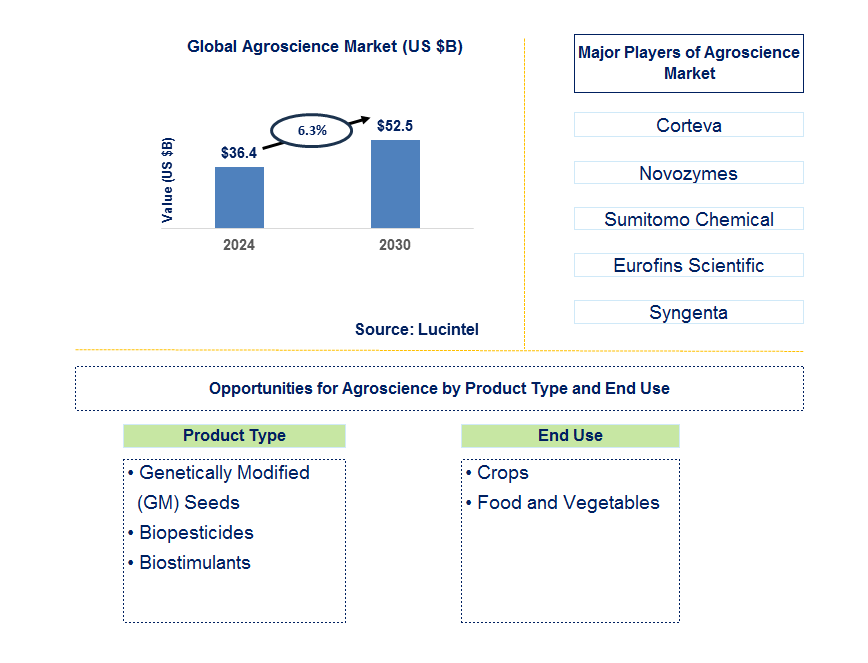
Key data points: The market size in 2030 = $52.5 billion, growth forecast = 6.3% annually for the next 6 years. Scroll below to get more insights. This market report covers trends, opportunities, and forecasts in the global agroscience market to 2030 by product type (genetically modified (GM) seeds, biopesticides, and biostimulants), end use (crops and food and vegetables), and region (North America, Europe, Asia Pacific, and the Rest of the World)
We'll send your sample report shortly.
• United States: In the U.S., the agroscience market is increasingly focused on precision agriculture and biotechnology. Recent developments include the use of drone technology for crop monitoring and the application of artificial intelligence to optimize farming practices. Companies are investing in genetically modified organisms (GMOs) that resist pests and adapt to climate change. Additionally, regulatory support for sustainable farming practices is fostering the growth of eco-friendly products and practices, enhancing both crop yields and environmental health.
• China: China is rapidly evolving its agroscience sector, driven by government initiatives aimed at achieving food security and sustainability. Recent advancements include the development of bio-pesticides and biostimulants derived from natural resources. The country is heavily investing in research to improve crop resilience against climate challenges. As consumer demand for organic products grows, there is an increasing focus on sustainable farming practices, leading to the adoption of innovative agroscience solutions among farmers.
• Germany: Germany’s agroscience market is characterized by a strong emphasis on sustainability and environmental protection. Recent developments include the introduction of organic fertilizers and advanced pest management solutions that minimize chemical use. The German government supports research initiatives aimed at developing eco-friendly agricultural technologies. Moreover, collaborations between universities and agritech companies are fostering innovations that enhance crop efficiency and sustainability, positioning Germany as a leader in sustainable agroscience practices.
• India: In India, the agroscience market is witnessing a surge in the use of technology to boost agricultural productivity. Recent advancements include the integration of mobile apps for crop management and the promotion of sustainable practices among smallholder farmers. The Indian government is supporting initiatives that encourage the use of bio-fertilizers and organic farming methods. Additionally, increased awareness of climate change is prompting farmers to adopt innovative solutions aimed at improving soil health and crop resilience.
• Japan: Japan is making significant strides in the agroscience sector, focusing on precision farming and advanced biotechnology. Recent developments include the use of robotics for crop management and the development of new plant varieties that require fewer resources. There is a growing emphasis on sustainable practices, with increased investment in eco-friendly fertilizers and pest control methods. Collaborations between research institutions and agritech companies are fostering innovations that enhance agricultural productivity while addressing environmental concerns.
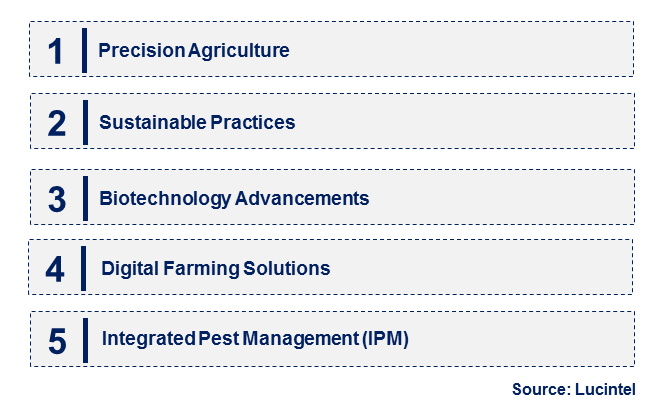
• Precision Agriculture: Precision agriculture utilizes advanced technologies such as GPS, drones, and IoT sensors to optimize farming practices. This trend allows farmers to make data-driven decisions, improving efficiency and productivity while reducing resource wastage.
• Sustainable Practices: There is a strong emphasis on sustainable agricultural practices, including organic farming and eco-friendly pest management. This trend is driven by consumer demand for healthier food options and increasing awareness of environmental impacts.
• Biotechnology Advancements: Innovations in biotechnology are enabling the development of crops that are more resistant to diseases and environmental stress. Genetic engineering and CRISPR technology are facilitating the creation of high-yield, resilient crop varieties.
• Digital Farming Solutions: The adoption of digital tools and platforms for farm management is rising. These solutions enhance communication, data analysis, and decision-making, allowing farmers to optimize operations and improve crop yields.
• Integrated Pest Management (IPM): IPM strategies are gaining traction as they promote the use of biological controls and reduce reliance on chemical pesticides. This trend aligns with sustainability goals and helps manage pest resistance issues. These trends are collectively transforming the agroscience market, promoting innovation and sustainability in agricultural practices worldwide.
• Advancements in Biotechnology: The agroscience sector is seeing significant advancements in biotechnology, with new genetically modified crops designed for enhanced yield and resilience against climate change. These innovations help address global food security concerns.
• Rise of Biopesticides: There is a growing focus on biopesticides as an alternative to chemical pesticides. Recent developments include the commercialization of microbial and plant-based solutions that target specific pests while minimizing environmental impact.
• Precision Farming Technologies: The integration of precision farming technologies, such as satellite imagery and IoT sensors, is revolutionizing crop management. These tools provide real-time data, allowing farmers to make informed decisions and optimize resource use.
• Sustainable Fertilizer Solutions: New formulations of organic and eco-friendly fertilizers are being developed to improve soil health and crop productivity. These products align with sustainable farming practices and help reduce environmental degradation.
• Increased R&D Investments: There is a notable increase in research and development investments in agroscience. Collaborations between agritech companies and research institutions are fostering innovation, leading to the development of cutting-edge agricultural technologies. These developments are significantly impacting the agroscience market, enhancing productivity, sustainability, and resilience in agricultural practices.
• Sustainable Crop Protection: The demand for sustainable crop protection solutions is increasing as farmers seek eco-friendly alternatives to chemical pesticides. Developing biopesticides and natural pest control methods offers significant growth potential.
• Organic Fertilizers: The rising consumer preference for organic products creates opportunities for organic fertilizers. Companies can capitalize on this trend by developing innovative formulations that enhance soil health and crop productivity.
• Digital Agriculture Solutions: The integration of digital tools in agriculture presents opportunities for growth. Companies offering software and technology solutions that improve farm management and decision-making can thrive in this evolving landscape.
• Climate-Resilient Crops: The need for crops that can withstand climate challenges creates opportunities for research and development in climate-resilient varieties. Investing in biotechnology to enhance crop adaptability can address food security issues.
• Water Management Technologies: The development of technologies for efficient water management is crucial as water scarcity becomes a pressing concern. Solutions that improve irrigation efficiency and water conservation can gain traction in the market. These strategic growth opportunities highlight the evolving nature of the agroscience market, emphasizing the importance of sustainability and innovation in meeting the challenges of modern agriculture.
• Growing Food Demand: The increasing global population and changing dietary preferences are driving demand for higher agricultural productivity. Agroscience solutions play a crucial role in meeting these needs by enhancing crop yield and quality.
• Technological Innovations: Advances in agricultural technology, such as precision farming and biotechnology, are enabling more efficient and sustainable practices. These innovations help optimize resource use and improve overall farm productivity.
• Sustainability Focus: There is a growing emphasis on sustainable farming practices, driven by consumer preferences and environmental concerns. This trend encourages the adoption of eco-friendly solutions in agriculture, including organic farming and biopesticides.
• Government Support: Supportive government policies and funding for agricultural research and development are facilitating market growth. Initiatives aimed at promoting sustainable practices and food security enhance the attractiveness of agroscience solutions.
• Consumer Awareness: Increasing consumer awareness of health and environmental issues is driving demand for organic and sustainably produced food. This trend encourages farmers to adopt innovative agroscience solutions that align with consumer preferences. Challenges in the agroscience market are:
• Regulatory Hurdles: Navigating complex regulatory frameworks can pose challenges for agroscience companies. Compliance with safety and environmental regulations may slow product development and market entry.
• Market Competition: The agroscience market is highly competitive, with numerous players vying for market share. Companies must continually innovate and differentiate their products to maintain a competitive edge.
• Limited Access to Technology: In some regions, particularly in developing countries, limited access to advanced agricultural technologies can hinder the adoption of innovative agroscience solutions. Addressing this gap is essential for market growth. These drivers and challenges shape the dynamics of the agroscience market, influencing strategic decisions and the direction of industry growth.
• Corteva
• Novozymes
• Sumitomo Chemical
• Eurofins Scientific
• Syngenta
• Nutrien
• BASF
• Genetically Modified (GM) Seeds
• Biopesticides
• Biostimulants
• Crops
• Food and Vegetables
• North America
• Europe
• Asia Pacific
• The Rest of the World
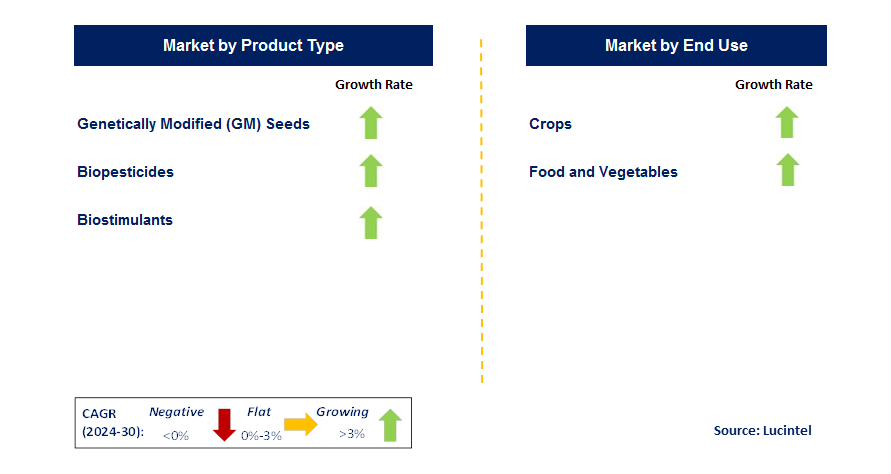
• Lucintel forecasts that, within the product type category, genetically modified (GM) seed is expected to witness higher growth over the forecast period.
• Within the end use category, crops is expected to witness higher growth.
• In terms of regions, APAC is expected to witness the highest growth over the forecast period.


• Corteva
• Novozymes
• Sumitomo Chemical
• Eurofins Scientific
• Syngenta
• Nutrien
• BASF Q6. Which agroscience market segment will be the largest in future? Answer: Lucintel forecasts that genetically modified (GM) seed is expected to witness higher growth over the forecast period. Q7. In agroscience market, which region is expected to be the largest in next 5 years? Answer: APAC is expected to witness the highest growth over the forecast period. Q.8 Do we receive customization in this report? Answer: Yes, Lucintel provides 10% customization without any additional cost.


Choose a license that fits your team. Instant PDF delivery.
Prices exclude taxes. Instant delivery. Custom licensing available on request.
Market Report · July 22, 2026
Market Report · July 20, 2026
Market Report · July 20, 2026
Trusted partner for strategic intelligence and business growth


Receive a complimentary market analysis tailored to your industry. Our analysts will identify key growth opportunities and competitive dynamics specific to your business.

Market size, growth rate, and key trend analysis for your specific sector.

Top competitor positioning and market share analysis.

Strategic recommendations backed by data-driven insights.
Get curated market intelligence and competitive moves straight to your inbox.
By subscribing, you agree to receive our monthly insights. Unsubscribe anytime.
Receive a complimentary market analysis tailored to your industry. Our analysts will identify key growth opportunities and competitive dynamics specific to your business.
Market size, growth rate, and key trend analysis for your specific sector.
Top competitor positioning and market share analysis.
Strategic recommendations backed by data-driven insights.
Get curated market intelligence, emerging trends, and competitive moves straight to your inbox each month.
By subscribing, you agree to receive our monthly insights. Unsubscribe anytime.
We'll send your sample report shortly.