
Market Report · July 22, 2026

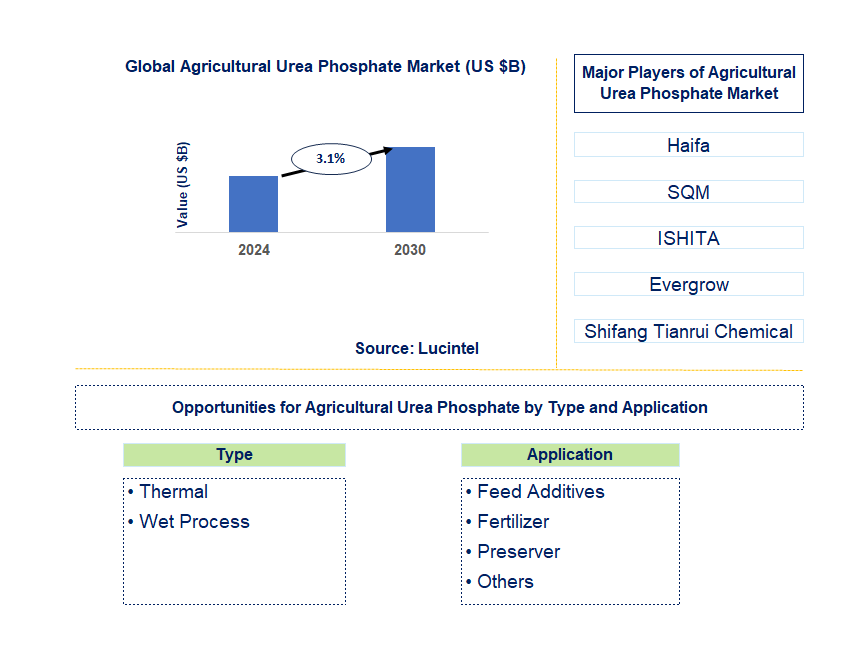
Key data points: The growth forecast = 3.1% annually for the next 6 years. Scroll below to get more insights. This market report covers trends, opportunities, and forecasts in the global agricultural urea phosphate market to 2030 by type (thermal and wet process), application (feed additives, fertilizer, preserver, and others), and region (North America, Europe, Asia Pacific, and the Rest of the World)
We'll send your sample report shortly.
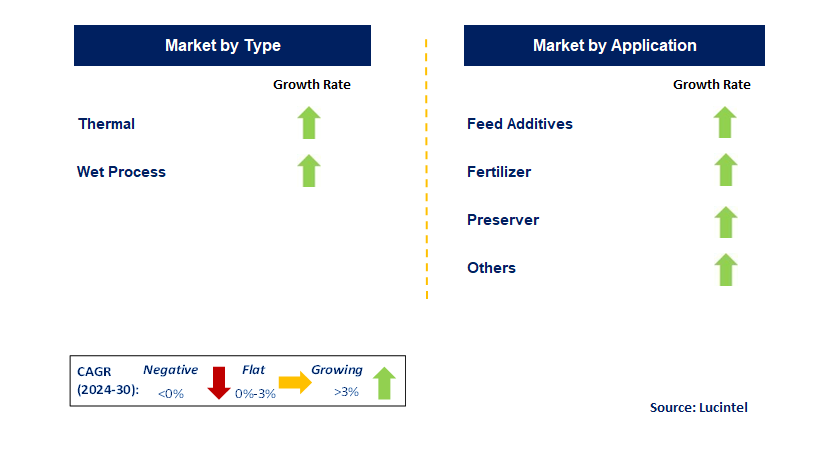
• Lucintel forecasts that, within the type category, the thermal is expected to witness higher growth over the forecast period.
• Within the application category, fertilizer will remain the largest segment.
• In terms of regions, APAC is expected to witness highest growth over the forecast period. Gain valuable insights for your business decisions with our comprehensive 150+ page report.
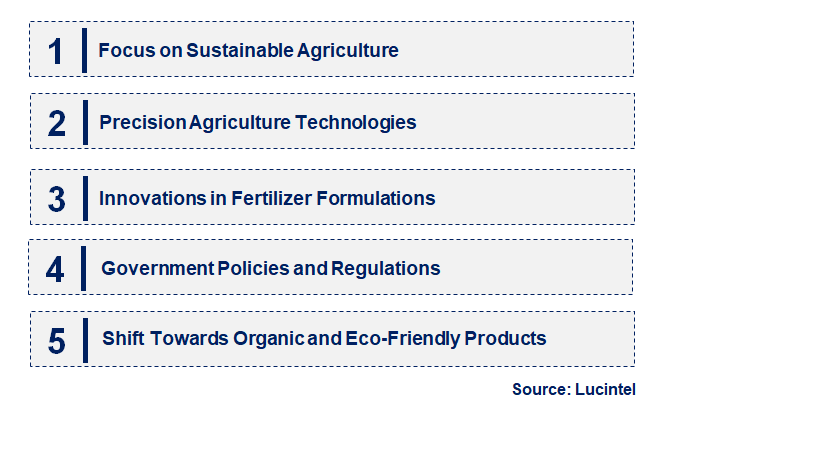
• Focus on Sustainable Agriculture: There is a growing emphasis on sustainable agricultural practices that minimize environmental impact while maximizing productivity. Farmers are increasingly turning to urea phosphate as it offers balanced nutrition for crops while being more eco-friendly than traditional fertilizers. The push for sustainability is driving innovation in fertilizer formulations and production processes. This trend is likely to lead to the development of more eco-friendly products and practices, aligning with global efforts to promote responsible agriculture.
• Precision Agriculture Technologies: The adoption of precision agriculture technologies is on the rise, enabling farmers to optimize the application of fertilizers, including urea phosphate. Tools such as soil sensors and data analytics help determine the precise nutrient needs of crops. This trend enhances nutrient efficiency, reduces waste, and minimizes environmental impact. As precision agriculture becomes more mainstream, the demand for targeted fertilizer applications will likely increase, benefiting the urea phosphate market.
• Innovations in Fertilizer Formulations: Ongoing research and development are leading to innovations in urea phosphate formulations, including slow-release and coated fertilizers. These products provide nutrients over an extended period, improving crop uptake and minimizing leaching. Such innovations are crucial for enhancing the efficiency of nutrient delivery systems. As farmers seek to maximize yields while reducing environmental harm, these advanced formulations will gain traction in the market.
• Government Policies and Regulations: Governments across various countries are implementing policies aimed at promoting balanced fertilization and sustainable agricultural practices. These regulations often encourage the use of urea phosphate as a means to enhance soil health and crop productivity. Supportive policies can stimulate demand for urea phosphate fertilizers, driving market growth. Compliance with these regulations will also motivate manufacturers to invest in more sustainable production methods.
• Shift Towards Organic and Eco-Friendly Products: There is a notable shift among consumers and farmers toward organic and eco-friendly products, influencing the agricultural sector. Urea phosphate is increasingly viewed as a suitable option for organic farming due to its balanced nutrient profile and reduced environmental impact. This trend will likely lead to increased demand for certified organic urea phosphate products, prompting manufacturers to develop offerings that meet organic certification standards. This alignment with consumer preferences for sustainability will drive market growth. The agricultural urea phosphate market is experiencing significant developments across various countries, driven by technological advancements, sustainability initiatives, and government policies. Emerging trends such as a focus on sustainable agriculture, precision farming, innovations in formulations, supportive regulations, and a shift toward organic products are reshaping the market landscape. As these trends continue to evolve, they will create opportunities for stakeholders to develop more efficient and eco-friendly solutions that meet the growing demands of the agricultural sector.
• Enhanced Production Technologies: Advancements in production technologies are improving the efficiency and quality of urea phosphate fertilizers. New manufacturing processes are enabling the creation of high-purity urea phosphate, which enhances nutrient availability for crops. Innovations such as granulation and coating techniques allow for controlled-release formulations, reducing nutrient leaching and improving soil health. These technological improvements not only boost crop productivity but also contribute to sustainable agricultural practices by minimizing environmental impact and optimizing resource use.
• Growing Demand for Balanced Fertilization: There is a rising recognition among farmers of the importance of balanced fertilization for crop health. Urea phosphate provides a well-rounded nutrient profile, supplying both nitrogen and phosphorus essential for plant growth. As farmers adopt integrated nutrient management practices, the demand for urea phosphate is expected to increase. This trend is particularly strong in regions experiencing soil nutrient deficiencies, where targeted fertilizers like urea phosphate can enhance soil fertility and crop yields, ensuring food security.
• Government Initiatives and Support: Governments across various countries are implementing initiatives to promote sustainable agriculture and efficient fertilizer use. Policies encouraging balanced fertilization and environmentally friendly practices are driving the adoption of urea phosphate in many regions. For example, subsidies for the use of specific fertilizers and educational programs aimed at farmers are helping to increase awareness of the benefits of urea phosphate. These initiatives not only support agricultural productivity but also align with broader environmental goals.
• Shift Towards Organic Farming: The global trend toward organic farming is influencing the agricultural urea phosphate market. As consumers demand organic produce, farmers are seeking fertilizers that comply with organic standards while still providing essential nutrients. Urea phosphate is gaining popularity in organic farming due to its efficiency and lower environmental footprint compared to conventional fertilizers. This shift presents opportunities for manufacturers to develop organic-certified urea phosphate products, catering to the growing market for sustainable agricultural solutions.
• Technological Integration and Precision Agriculture: The integration of digital technologies and precision agriculture is reshaping how urea phosphate is applied. Technologies such as soil sensors and data analytics enable farmers to optimize fertilizer application based on real-time soil nutrient levels. This precision reduces waste, enhances nutrient uptake, and minimizes environmental impact. As farmers increasingly adopt precision agriculture practices, the demand for urea phosphate and similar fertilizers is expected to rise, driving market growth. The agricultural urea phosphate market is evolving rapidly, influenced by technological advancements, changing farming practices, and supportive government policies. Key developments such as enhanced production technologies, the growing emphasis on balanced fertilization, government initiatives, the shift toward organic farming, and the integration of precision agriculture are shaping the future of this market. As the demand for efficient and sustainable agricultural solutions continues to grow, urea phosphate is poised to play a vital role in addressing global food security challenges while promoting environmentally responsible farming practices.
• Crop Fertilization: Crop fertilization is the primary use of agricultural urea phosphate. The desire for maximum yield among farmers keeps balanced nutrient solutions in demand. Urea phosphate provides all the nutrients necessary for healthy plant growth, significantly enhancing crop productivity overall. Its suitability for simultaneous fertilizer application also enables tailored nutrient management practices.
• Specialty Crop Production: Specialty crop production, including fruits, vegetables, and ornamental plants, is gaining momentum due to the use of urea phosphate since such crops generally have sensitive nutrient requirements to produce the desired quality. With a balanced nutrient profile, urea phosphate is an ideal solution for growers interested in developing high-value crops.
• Sustainable Agriculture Practices: Recently, with increasing global pressure for sustainable agriculture, the market for urea phosphate is expanding as a "greener" fertilizer option. Urea phosphate fulfills this demand. In the next few years, there will be a greater focus on sustainability in agricultural policy, leading to increased demand for urea phosphate and other eco-friendly fertilizers. Thus, the market has opportunities for growth.
• Integration of Nutrient Management: Integrated nutrient management is on a positive trajectory as farmers shift towards holistic practices of soil health and fertility. Urea phosphate is an essential component of INM strategies by providing required nutrients and enhancing fertilizer efficiency. This synergistic effect increases net uptake and minimizes losses.
• Developing Markets: Developing markets in Asia and Africa afford substantial opportunities for growth within the agricultural urea phosphate market. With population growth and urbanization, the demand for food increases, leading to a rise in agricultural activities. The agricultural urea phosphate market presents opportunities to expand in strategic areas such as crop fertilization, specialty crop production, sustainable agriculture, integrated nutrient management, and emerging markets. As farmers seek resources with efficient fertilizers that are environmentally friendly amid the ever-increasing need for food, there are valuable solutions from urea phosphate that align with modern agriculture. There is potential for growth opportunities that help enhance stakeholder market positions while contributing to more sustainable agriculture worldwide.
• Rising Food Demand: The global population is projected to reach nearly 10 billion by 2050, leading to an increased demand for food. This necessitates higher agricultural productivity, prompting farmers to seek effective fertilizers like urea phosphate that provide essential nutrients. With its dual nitrogen and phosphorus content, urea phosphate supports healthy crop growth and enhances yields, making it a critical component of modern agriculture. This rising food demand drives investment in urea phosphate fertilizers as a means to ensure food security worldwide.
• Sustainability Initiatives: There is a growing emphasis on sustainable agricultural practices aimed at minimizing environmental impact while maximizing productivity. Urea phosphate aligns with these initiatives due to its ability to enhance nutrient efficiency and reduce runoff. As governments and organizations promote sustainable farming through regulations and incentives, the adoption of environmentally friendly fertilizers like urea phosphate is likely to rise. This trend supports both ecological balance and agricultural productivity, driving demand in the market. Technological Advancements: Innovations in fertilizer production technologies are improving the quality and efficiency of urea phosphate. Enhanced manufacturing processes, such as controlled-release formulations and coating techniques, allow for better nutrient management and reduced waste. These advancements enable farmers to apply fertilizers more effectively, optimizing crop uptake. As the agricultural sector increasingly adopts precision agriculture practices, the demand for advanced fertilizers, including urea phosphate, is expected to grow, further propelling market expansion.
• Integrated Nutrient Management: The adoption of integrated nutrient management (INM) practices is becoming more prevalent as farmers recognize the importance of a holistic approach to soil health. Urea phosphate plays a significant role in INM strategies by providing essential nutrients while enhancing the effectiveness of other fertilizers. As awareness of the benefits of INM increases, demand for urea phosphate will likely rise, positioning it as a key player in nutrient management solutions that improve overall agricultural sustainability.
• Government Support and Policies: Government initiatives promoting agricultural productivity and efficiency significantly impact the urea phosphate market. Policies aimed at encouraging balanced fertilization and sustainable practices often include subsidies or incentives for using efficient fertilizers like urea phosphate. Such support fosters adoption among farmers and aligns with national goals for food security and environmental sustainability. As governments continue to prioritize agricultural growth, urea phosphate will likely benefit from increased investments and favorable regulations. Challenges in the agricultural urea phosphate market are:
• Fluctuating Raw Material Prices: One of the significant challenges facing the agricultural urea phosphate market is the volatility in raw material prices, particularly those for phosphorus and nitrogen. Price fluctuations can directly affect production costs and profitability for manufacturers, making it challenging to maintain competitive pricing. When raw material costs rise unexpectedly, it can lead to higher fertilizer prices for farmers, potentially limiting their purchasing power and hindering market growth. Addressing this challenge requires effective supply chain management and strategic sourcing.
• Regulatory Compliance: As environmental regulations become stricter, manufacturers of agricultural fertilizers must navigate complex compliance requirements. These regulations often mandate specific nutrient management practices, product formulations, and safety standards. Ensuring compliance can be resource-intensive and costly for manufacturers, particularly smaller firms. Non-compliance can result in fines, product recalls, or reputational damage, creating additional challenges in maintaining market presence. Staying abreast of regulatory changes is essential for manufacturers to avoid potential pitfalls.
• Environmental Concerns: Growing awareness of environmental issues associated with fertilizer use poses challenges for the urea phosphate market. Concerns over nutrient runoff, soil degradation, and greenhouse gas emissions have led to increased scrutiny of conventional fertilizers. While urea phosphate offers certain advantages, it is not immune to criticism. Manufacturers must demonstrate the environmental benefits of their products and invest in research to develop more sustainable alternatives. Balancing agricultural productivity with ecological responsibility is crucial for long-term market viability. The agricultural urea phosphate market is shaped by various drivers, including rising food demand, sustainability initiatives, technological advancements, integrated nutrient management, and government support. However, challenges such as fluctuating raw material prices, regulatory compliance, and environmental concerns must also be addressed. Understanding these dynamics is essential for stakeholders to navigate the complexities of the market effectively and capitalize on emerging opportunities while mitigating risks.
• Haifa
• SQM
• ISHITA
• Evergrow
• Shifang Tianrui Chemical
• Thermal
• Wet Process
• Feed Additives
• Fertilizer
• Preserver
• Others
• North America
• Europe
• Asia Pacific
• The Rest of the World
• United States: The agricultural urea phosphate market in the United States is shifting toward more sustainable farming. Tightening environmental regulations require farmers to increasingly rely on precision agriculture techniques for fertilizers to optimize nutrient use and lessen runoff. Technological advancements in the production process have improved the quality and availability of urea phosphate products. This trend follows the overall push toward sustainable and responsible farming in the U.S.
• China: China is one of the largest consumers of urea phosphate due to its agricultural sector. Government initiatives in recent years have targeted optimizing fertilizer consumption efficiency and promoting balanced fertilization practices. Recently, innovations in the production process have grown as companies invest more to create high-quality urea phosphate to meet modern agricultural demands.
• Germany: The market for agricultural urea phosphate in Germany is on a growth path as more people seek sustainable farming methods. To this end, the German government has implemented policies that increase the uptake of environmentally friendly fertilizers, resulting in increased use of urea phosphate as a primary nutrient source. Additionally, innovative technology that allows for more efficient production with minimal waste or energy usage fuels further growth in the market.
• India: Farming in India is rapidly adopting urea phosphate fertilizers to enhance crop yields and address deficiencies in soil nutrient levels. Government programs favor balanced fertilization, which employs both nitrogen and phosphorus for optimal crop growth. Innovations in formulations are also being driven by pressure to adopt sustainable agriculture, such as slow-release and coated urea phosphates that promote nutrient efficiency and minimize negative environmental effects. This trend is crucial for meeting the increasing food needs in India.
• Japan: The market for agricultural urea phosphate in Japan is shifting, with more farmers focusing on developing soil health and crop yields. Recent trends include government incentives for research and development of sustainable fertilizers that encourage the use of urea phosphate in integrated nutrient management. These trends are moving Japan's agricultural landscape closer to sustainability.


• Haifa
• SQM
• ISHITA
• Evergrow
• Shifang Tianrui Chemical Q5. Which agricultural urea phosphate market segment will be the largest in future? Answer: Lucintel forecasts that, within the type category, the thermal is expected to witness higher growth over the forecast period. Q6. In agricultural urea phosphate market, which region is expected to be the largest in next 5 years? Answer: In terms of regions, APAC is expected to witness highest growth over the forecast period. Q.7 Do we receive customization in this report? Answer: Yes, Lucintel provides 10% customization without any additional cost.


Choose a license that fits your team. Instant PDF delivery.
Prices exclude taxes. Instant delivery. Custom licensing available on request.
Market Report · July 22, 2026
Market Report · July 20, 2026
Market Report · July 20, 2026
Trusted partner for strategic intelligence and business growth


Receive a complimentary market analysis tailored to your industry. Our analysts will identify key growth opportunities and competitive dynamics specific to your business.

Market size, growth rate, and key trend analysis for your specific sector.

Top competitor positioning and market share analysis.

Strategic recommendations backed by data-driven insights.
Get curated market intelligence and competitive moves straight to your inbox.
By subscribing, you agree to receive our monthly insights. Unsubscribe anytime.
Receive a complimentary market analysis tailored to your industry. Our analysts will identify key growth opportunities and competitive dynamics specific to your business.
Market size, growth rate, and key trend analysis for your specific sector.
Top competitor positioning and market share analysis.
Strategic recommendations backed by data-driven insights.
Get curated market intelligence, emerging trends, and competitive moves straight to your inbox each month.
By subscribing, you agree to receive our monthly insights. Unsubscribe anytime.
We'll send your sample report shortly.