
Market Report · July 22, 2026

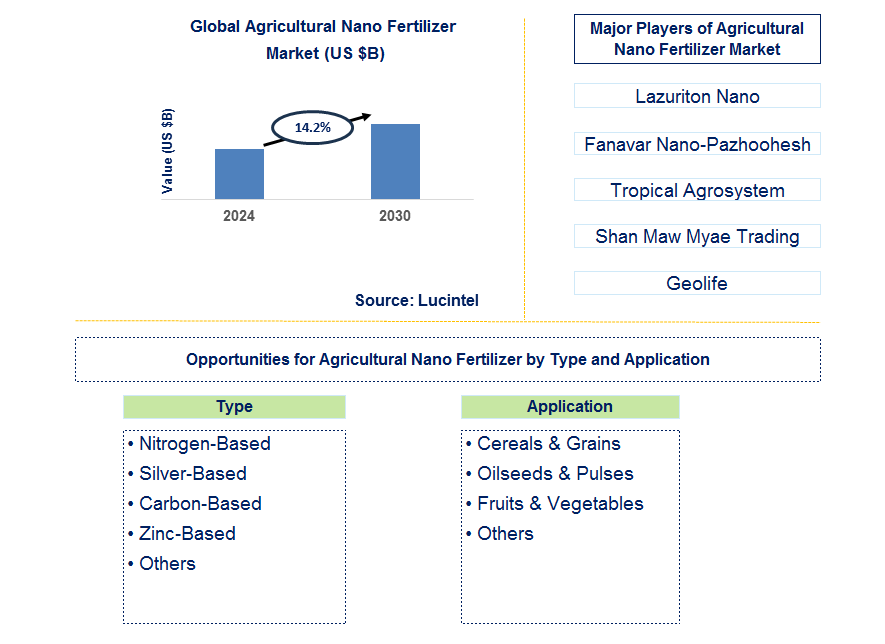
Key data points: The growth forecast = 14.2% annually for the next 6 years. Scroll below to get more insights. This market report covers trends, opportunities, and forecasts in the global agricultural nano fertilizer market to 2030 by type (nitrogen-based, silver-based, carbon-based, zinc-based, and others), application (cereals & grains, oilseeds & pulses, fruits & vegetables, and others), and region (North America, Europe, Asia Pacific, and the Rest of the World)
We'll send your sample report shortly.
• United States: In the U.S., agricultural research institutions are actively exploring the benefits of nano fertilizers for various crops. Recent advancements include the development of nano-emulsions that enhance nutrient absorption and reduce runoff. Moreover, collaborations between universities and agricultural firms are accelerating the commercialization of these technologies, aiming to improve food security and sustainability.
• China: China has become a major player in the agriculture nano fertilizer market, focusing on the integration of nanotechnology in traditional farming practices. Recent developments involve the production of nano-fertilizers that increase nutrient efficiency and reduce chemical inputs. The government is also supporting research initiatives to promote sustainable agriculture, further driving the adoption of these innovative fertilizers.
• Germany: Germany is emphasizing precision agriculture through the use of nano fertilizers. Recent advancements include formulations that optimize nutrient release based on soil conditions, enhancing crop growth and minimizing waste. German companies are also collaborating with agricultural tech firms to develop smart fertilization systems, aligning with the country's commitment to sustainability and efficient resource use.
• India: In India, the agriculture sector is increasingly adopting nano fertilizers to address soil health and productivity challenges. Recent developments include pilot projects demonstrating the effectiveness of nano fertilizers in boosting yields for key crops like rice and wheat. Government support and research initiatives are fostering innovation in this sector, aiming to improve food security.
• Japan: Japan is leveraging advanced technology in its agriculture sector, with recent developments focusing on the use of nano fertilizers for high-value crops. Research institutions are exploring formulations that enhance nutrient uptake and plant resilience. The country's emphasis on sustainable practices is driving the adoption of nano fertilizers, aligning with its agricultural policies aimed at reducing environmental impact.
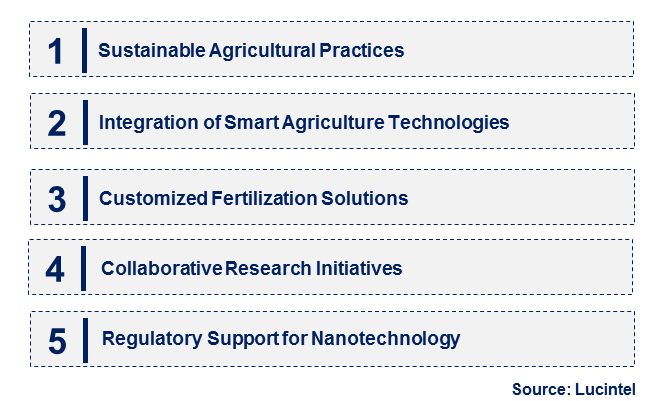
• Sustainable Agricultural Practices: There is a growing emphasis on sustainable farming methods, leading to increased adoption of nano fertilizers. These fertilizers improve nutrient efficiency and reduce environmental impact, aligning with global efforts to promote eco-friendly agriculture.
• Integration of Smart Agriculture Technologies: The incorporation of smart technologies, such as IoT and AI, is transforming fertilizer application methods. This integration allows for real-time monitoring and precision application of nano fertilizers, optimizing their effectiveness and minimizing waste.
• Customized Fertilization Solutions: The demand for tailored fertilization solutions is rising, with manufacturers developing nano fertilizers that meet specific crop and soil requirements. Customization enhances nutrient delivery, improving crop yields and promoting sustainable practices.
• Collaborative Research Initiatives: Partnerships between research institutions and agricultural companies are driving innovation in nano fertilizer development. Collaborative efforts are leading to the commercialization of new formulations that enhance performance and address specific agricultural challenges.
• Regulatory Support for Nanotechnology: Increasing regulatory support for the use of nanotechnology in agriculture is facilitating the approval and adoption of nano fertilizers. Governments are recognizing the potential benefits of these technologies in improving food security and environmental sustainability. These trends are reshaping the agriculture nano fertilizer market by promoting innovation, enhancing efficiency, and fostering sustainable agricultural practices.
• Development of Nano-Encapsulated Fertilizers: Companies are introducing nano-encapsulated fertilizers that control the release of nutrients based on plant needs. This technology enhances nutrient availability and reduces environmental runoff, leading to more efficient use of fertilizers.
• Research on Biodegradable Nano Fertilizers: There has been a focus on developing biodegradable nano fertilizers that minimize environmental impact. These formulations break down naturally, reducing the long-term effects of chemical fertilizers on soil health.
• Field Trials Demonstrating Efficacy: Numerous field trials are being conducted globally to demonstrate the effectiveness of nano fertilizers in boosting crop yields. Results from these trials are helping to build credibility and promote adoption among farmers.
• Partnerships for Technology Transfer: Collaborations between research institutions and agricultural firms are facilitating the transfer of nano fertilizer technologies to the market. These partnerships are crucial for accelerating commercialization and improving farmers' access to innovative solutions.
• Government Support for Sustainable Practices: Various governments are implementing policies that support the research and development of nano fertilizers. This regulatory backing is encouraging investment and fostering innovation in sustainable agricultural practices. These developments are significantly impacting the agriculture nano fertilizer market by enhancing product effectiveness, promoting sustainability, and increasing farmer adoption.
• Precision Agriculture Applications: The rise of precision agriculture creates opportunities for nano fertilizers that enhance nutrient delivery based on specific soil and crop needs. Companies can develop solutions tailored for precision farming, optimizing resource use and improving yields.
• Organic Farming Integration: As organic farming gains traction, there is a growing demand for eco-friendly fertilizers. Nano fertilizers that meet organic standards can capture this market, providing farmers with sustainable options for improving soil health.
• High-Value Crop Markets: Targeting high-value crops, such as fruits and vegetables, presents significant opportunities. Nano fertilizers can enhance growth and quality, appealing to farmers seeking to maximize profitability in these segments.
• Emerging Market Penetration: Expanding into emerging markets with high agricultural potential offers substantial growth opportunities. Companies can introduce affordable nano fertilizer solutions that address the specific challenges faced by farmers in these regions.
• Research and Development Collaborations: Collaborating with research institutions to develop innovative nano fertilizer solutions can drive market growth. These partnerships can accelerate product development and enhance credibility, attracting more customers. These strategic growth opportunities are influencing the agriculture nano fertilizer market, driving innovation and expanding application areas.
• Increasing Global Food Demand: The rising global population and demand for food are driving the need for more efficient agricultural practices. Nano fertilizers enhance nutrient delivery and improve crop yields, addressing food security concerns.
• Advancements in Nanotechnology: Ongoing advancements in nanotechnology are improving the formulation and effectiveness of fertilizers. These innovations enable better nutrient absorption and controlled release, attracting interest from farmers.
• Focus on Sustainability: Growing awareness of environmental issues is pushing farmers to adopt sustainable practices. Nano fertilizers offer eco-friendly alternatives that reduce chemical usage and promote soil health, aligning with sustainability goals.
• Government Initiatives and Support: Many governments are promoting the use of innovative agricultural technologies, including nano fertilizers. Regulatory support and funding for research are facilitating the development and adoption of these solutions.
• Increased Research Investments: Higher investments in agricultural research are driving innovation in nano fertilizers. Collaborations between industry and academia are leading to new formulations and applications, expanding the market. Challenges in the agricultural nano fertilizer market are:
• High Production Costs: The production of nano fertilizers can be expensive, which may limit accessibility for smallholder farmers. Reducing manufacturing costs is essential for broader market adoption.
• Lack of Awareness and Education: Many farmers are unaware of the benefits and applications of nano fertilizers. Educational initiatives are needed to inform farmers and encourage the adoption of these technologies.
• Regulatory Hurdles: Navigating regulatory frameworks can be complex and time-consuming. Ensuring compliance with safety and environmental regulations is crucial for market entry and acceptance. The interplay of these drivers and challenges significantly influences the agriculture nano fertilizer market, shaping its future trajectory and potential for innovation.
• Lazuriton Nano Biotechnology
• Fanavar Nano-Pazhoohesh Markazi
• Tropical Agrosystem
• Shan Maw Myae Trading
• Geolife
• Ag Chemi
• Eurochem
• Nitrogen-Based
• Silver-Based
• Carbon-Based
• Zinc-Based
• Others
• Cereals & Grains
• Oilseeds & Pulses
• Fruits & Vegetables
• Others
• North America
• Europe
• Asia Pacific
• The Rest of the World
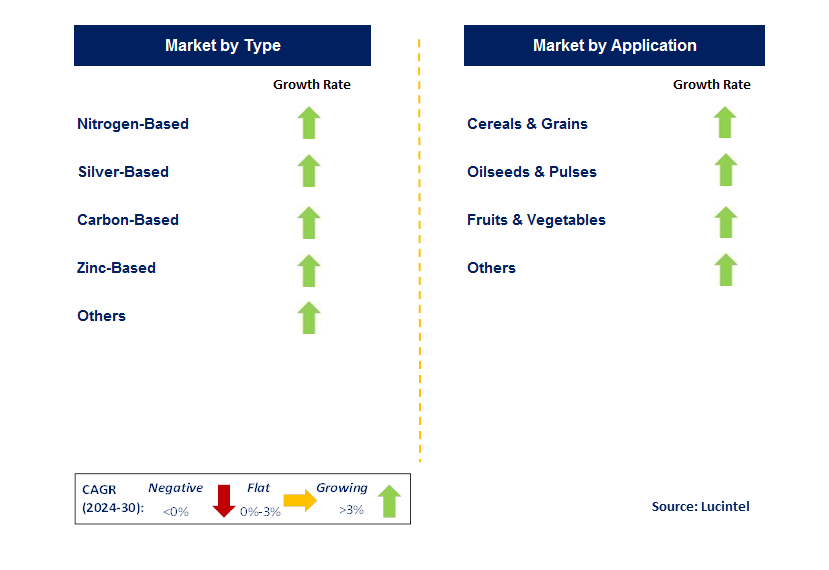
• Lucintel forecasts that, within the type category, nitrogen-based is expected to witness the highest growth over the forecast period.
• Within the application category, cereal & grain is expected to witness the highest growth.
• In terms of regions, APAC is expected to witness the highest growth over the forecast period.


• Lazuriton Nano Biotechnology
• Fanavar Nano-Pazhoohesh Markazi
• Tropical Agrosystem
• Shan Maw Myae Trading
• Geolife
• Ag Chemi
• Eurochem Q5. Which agricultural nano fertilizer market segment will be the largest in future? Answer: Lucintel forecasts that nitrogen-based is expected to witness the highest growth over the forecast period. Q6. In agricultural nano fertilizer market, which region is expected to be the largest in next 5 years? Answer: APAC is expected to witness the highest growth over the forecast period. Q.7 Do we receive customization in this report? Answer: Yes, Lucintel provides 10% customization without any additional cost.


Choose a license that fits your team. Instant PDF delivery.
Prices exclude taxes. Instant delivery. Custom licensing available on request.
Market Report · July 22, 2026
Market Report · July 20, 2026
Market Report · July 20, 2026
Trusted partner for strategic intelligence and business growth


Receive a complimentary market analysis tailored to your industry. Our analysts will identify key growth opportunities and competitive dynamics specific to your business.

Market size, growth rate, and key trend analysis for your specific sector.

Top competitor positioning and market share analysis.

Strategic recommendations backed by data-driven insights.
Get curated market intelligence and competitive moves straight to your inbox.
By subscribing, you agree to receive our monthly insights. Unsubscribe anytime.
Receive a complimentary market analysis tailored to your industry. Our analysts will identify key growth opportunities and competitive dynamics specific to your business.
Market size, growth rate, and key trend analysis for your specific sector.
Top competitor positioning and market share analysis.
Strategic recommendations backed by data-driven insights.
Get curated market intelligence, emerging trends, and competitive moves straight to your inbox each month.
By subscribing, you agree to receive our monthly insights. Unsubscribe anytime.
We'll send your sample report shortly.