
Market Report · July 22, 2026

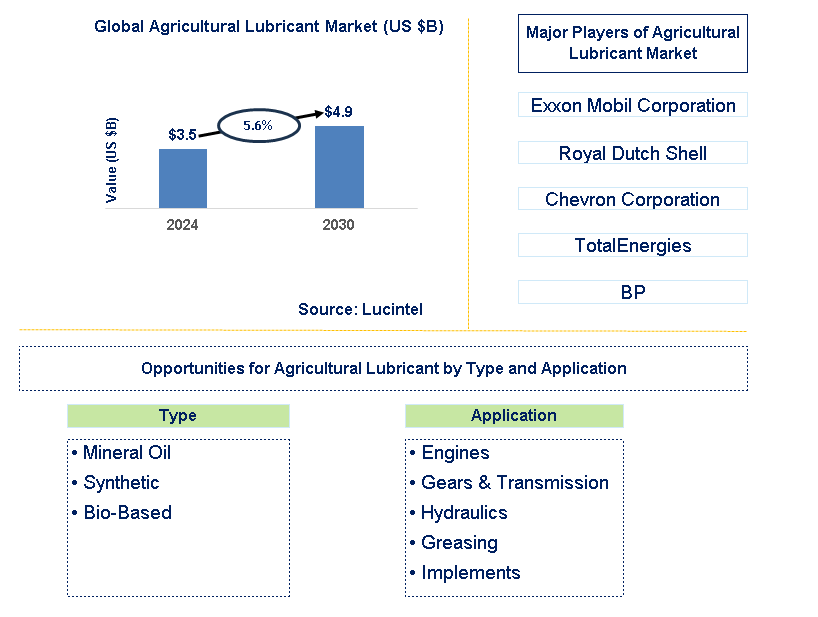
Key data points: The market size in 2030 = $4.9 billion, growth forecast = 5.6% annually for the next 6 years. Scroll below to get more insights. This market report covers trends, opportunities, and forecasts in the global agricultural lubricant market to 2030 by type (mineral oil, synthetic, and bio-based), application (engines, gears & transmission, hydraulics, greasing, and implements), and region (North America, Europe, Asia Pacific, and the Rest of the World)
We'll send your sample report shortly.
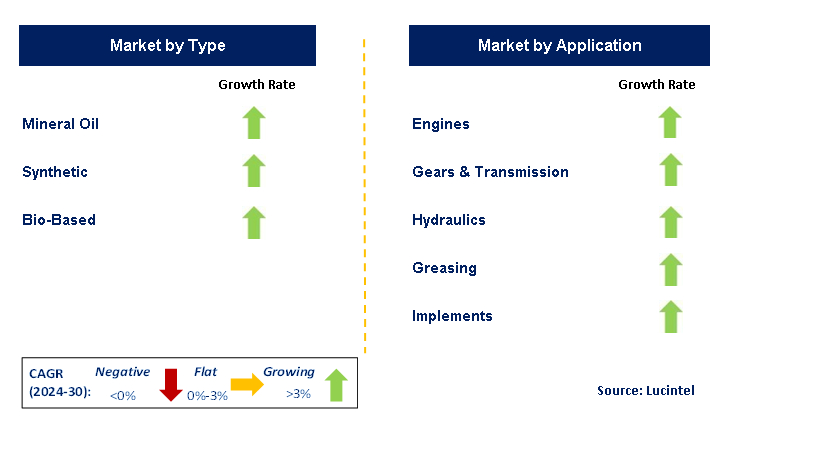
• Lucintel forecasts that, within the type category, bio-based is expected to witness the highest growth over the forecast period because the bio-based lubricants are excellent lubrication, low friction coefficients, low evaporation rate, higher flash point, and high viscosity index.
• Within the application category, engines will remain the largest segment due to increasing number of farm tractor market globally.
• In terms of regions, APAC will remain the largest region over the forecast period due to the region's growing awareness of bio-based products and the presence of large agricultural lubricant manufacturers pushing their products in the market. A more than 150-page report is developed to help in your business decisions.
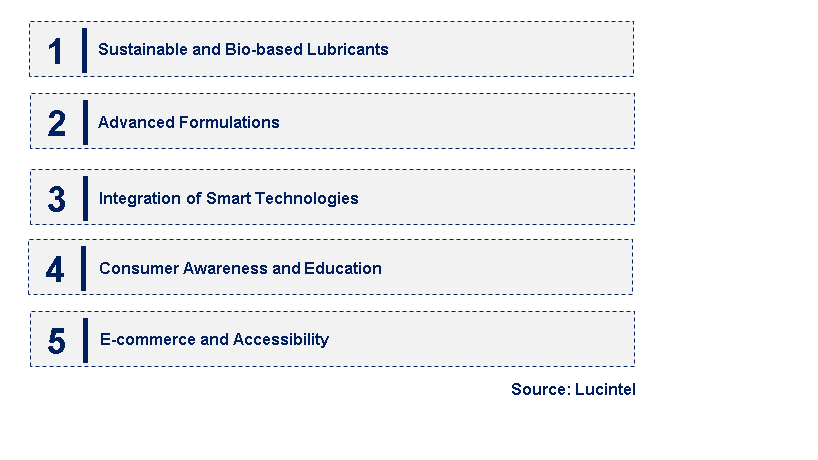
• Rise of Eco-Friendly Lubricants: There is a growing emphasis on eco-friendly lubricants, including biodegradable and bio-based options. These lubricants are designed to minimize environmental impact and comply with stringent regulations. They often feature renewable ingredients and reduced toxicity, aligning with global sustainability goals and addressing concerns about soil and water contamination.
• Technological Integration and Smart Lubricants: Smart lubricants equipped with sensors and data analytics are becoming more prevalent. These technologies help monitor lubricant conditions in real-time, optimize performance, and predict maintenance needs. This integration enhances machinery efficiency and extends equipment life, reflecting a trend towards precision agriculture and digitalization.
• Advancements in Synthetic Lubricants: Synthetic lubricants are gaining popularity due to their superior performance in extreme conditions. They offer enhanced stability, longer service life, and better protection against wear and tear. The development of advanced synthetic formulations is driven by the need for high-performance solutions in modern agricultural machinery.
• Focus on Cost-Effective Solutions: There is a growing demand for cost-effective lubricants that provide reliable performance without high expenses. This trend is particularly evident in developing markets where affordability is a key concern. Manufacturers are responding with innovative formulations that balance performance and cost, making high-quality lubricants accessible to a broader audience.
• Regulatory and Environmental Pressures: Increasing regulatory pressures and environmental concerns are shaping the agricultural lubricant market. Governments worldwide are enforcing stricter regulations to reduce the environmental impact of lubricants. This trend is driving the development of products that meet new standards and contribute to overall sustainability in agriculture. These emerging trends are reshaping the agricultural lubricant market by emphasizing sustainability, technological advancement, and cost efficiency. As the sector evolves, stakeholders must adapt to these trends to meet market demands and regulatory requirements. The shift towards eco-friendly and smart lubricants reflects a broader movement towards innovation and environmental responsibility in agriculture.
• Introduction of Bio-Based Lubricants: The development and adoption of bio-based lubricants have increased significantly. These lubricants are derived from renewable sources and offer environmental benefits such as reduced carbon footprint and lower toxicity. This shift aligns with global sustainability initiatives and meets growing consumer demand for greener products.
• Enhanced Formulations for Extreme Conditions: Advances in lubricant formulations have led to products that perform better under extreme temperatures and pressures. These enhanced formulations improve machinery efficiency and reliability, making them suitable for a wide range of agricultural environments and operational conditions.
• Expansion of Distribution Networks: There has been a notable expansion in distribution networks, particularly in emerging markets. This development aims to improve access to high-quality lubricants in rural and remote areas, ensuring that modern agricultural solutions reach a broader audience and support the growing mechanization of agriculture.
• Integration of Smart Technologies: The integration of smart technologies, such as sensors and real-time monitoring systems, has become more prevalent. These technologies allow for better management of lubricants, optimize machinery performance, and predict maintenance needs, reflecting a trend towards increased efficiency and data-driven decision-making.
• Adoption of Regulatory-Compliant Products: Manufacturers are increasingly focusing on developing products that comply with stringent regulatory standards. This includes creating lubricants that meet new environmental regulations and sustainability criteria. Compliance not only addresses regulatory pressures but also enhances the marketability of products in regions with strict environmental policies. These recent developments are significantly impacting the agricultural lubricant market by driving innovation, improving accessibility, and meeting evolving regulatory requirements. The focus on bio-based products, enhanced formulations, smart technologies, and regulatory compliance reflects a broader trend towards efficiency and sustainability in agriculture. As the market continues to evolve, these developments will play a crucial role in shaping the future of agricultural lubrication.
• Precision Agriculture: Precision agriculture involves the use of advanced technologies to optimize field-level management in crop farming. The demand for precision farming equipment is increasing, which in turn drives the need for specialized lubricants that enhance machinery performance and longevity. Opportunities exist in developing lubricants that are compatible with GPS-guided systems and other high-tech equipment, improving efficiency and reducing maintenance costs.
• Organic Farming: As organic farming practices grow, there is a rising demand for lubricants that align with organic standards. This includes bio-based and non-toxic lubricants that meet the rigorous environmental and safety requirements of organic agriculture. Companies can capitalize on this trend by developing lubricants that support organic farming while addressing sustainability concerns and regulatory compliance.
• High-Performance Machinery: The development of high-performance agricultural machinery, such as combine harvesters and tractors, creates a demand for advanced lubricants that can operate under extreme conditions. Opportunities lie in creating high-temperature and high-pressure-resistant lubricants that improve machinery efficiency and durability. This can help extend the life of expensive equipment and reduce operational downtime.
• Rural and Emerging Markets: Expanding distribution networks in rural and emerging markets presents a significant growth opportunity. As mechanization increases in these regions, there is a growing need for reliable and cost-effective lubricants. Developing tailored solutions for diverse environmental conditions and improving distribution channels can help capture this expanding market segment.
• Sustainability and Regulatory Compliance: As regulations around environmental sustainability tighten, there is an opportunity to develop lubricants that comply with new standards. This includes creating biodegradable and eco-friendly lubricants that reduce environmental impact. Companies that proactively adapt to these regulations can gain a competitive edge and enhance their market position by appealing to environmentally conscious consumers. These growth opportunities are reshaping the agricultural lubricant market by driving innovation and expanding market reach. The focus on precision agriculture, organic farming, high-performance machinery, rural markets, and regulatory compliance highlights a trend toward enhanced efficiency, sustainability, and inclusivity. Companies that strategically address these opportunities will be well-positioned to thrive in the evolving landscape of agricultural lubricants.
• Technological Advancements: Innovations in machinery and equipment are a key driver of the agricultural lubricant market. Advanced technologies, such as precision farming and automated machinery, require high-performance lubricants that enhance efficiency and reliability. These advancements increase the demand for specialized lubricants that can handle extreme conditions and provide extended protection, fostering market growth.
• Rising Mechanization: The increasing mechanization of agriculture, particularly in developing countries, drives demand for reliable lubricants. As more farmers adopt advanced machinery, there is a growing need for lubricants that ensure optimal performance and longevity of equipment. This trend expands the market for agricultural lubricants and creates opportunities for product development and innovation.
• Environmental Regulations: Stringent environmental regulations are pushing the market toward eco-friendly and biodegradable lubricants. Compliance with these regulations not only helps reduce environmental impact but also aligns with consumer preferences for sustainable products. Companies that develop lubricants meeting these standards can gain a competitive advantage and access new market segments.
• Increased Focus on Sustainability: The growing emphasis on sustainability in agriculture is driving the demand for green and sustainable lubricants. Farmers and manufacturers are seeking products that minimize environmental impact and align with broader sustainability goals. This shift creates opportunities for developing innovative, eco-friendly lubricants that meet the industry's evolving needs.
• Economic Growth in Emerging Markets: Economic development in emerging markets is leading to increased investment in agricultural infrastructure and machinery. This growth boosts the demand for agricultural lubricants as mechanization becomes more prevalent. Companies can capitalize on this trend by expanding their presence in these regions and offering cost-effective, high-quality lubricant solutions. Challenges in the agricultural lubricant market are:
• Fluctuating Raw Material Prices: The volatility in raw material prices, such as base oils and additives, poses a challenge for the agricultural lubricant market. Fluctuations in these prices can affect production costs and profit margins. Companies must navigate these uncertainties by optimizing their supply chains and exploring cost-effective alternatives.
• Competition from Alternative Products: The market faces competition from alternative products, such as hydraulic fluids and non-lubricant-based technologies. These alternatives can sometimes offer comparable performance at lower costs or with fewer environmental impacts. To remain competitive, lubricant manufacturers need to differentiate their products through innovation and demonstrate superior benefits.
• Regulatory Compliance Costs: Compliance with stringent environmental and safety regulations can increase production costs and complexity. Meeting these regulations requires investment in research and development, testing, and certification processes. Manufacturers must manage these costs while ensuring their products remain competitive in the market. The agricultural lubricant market is shaped by several drivers and challenges that impact its growth and evolution. Technological advancements, rising mechanization, and environmental regulations are key drivers, while fluctuating raw material prices, competition from alternatives, and regulatory compliance costs represent significant challenges. Navigating these factors effectively is crucial for stakeholders aiming to leverage market opportunities and address potential obstacles.
• Exxon Mobil Corporation
• Royal Dutch Shell
• Chevron Corporation
• TotalEnergies
• BP
• FUCHS PETROLUB
• Phillips 66
• Exol Lubricants
• Witham Oil & Paint
• Rymax Lubricants
• Mineral Oil
• Synthetic
• Bio-Based
• Engines
• Gears & Transmission
• Hydraulics
• Greasing
• Implements
• North America
• Europe
• Asia Pacific
• The Rest of the World
• United States: In the United States, advancements in agricultural lubricants are focused on enhancing performance and sustainability. There has been a growing shift towards synthetic and bio-based lubricants that offer improved efficiency and reduced environmental impact. Additionally, major lubricant manufacturers are investing in research to develop high-temperature and high-pressure-resistant formulations. Regulations are also evolving to support these green alternatives, driven by increasing environmental awareness and agricultural policies promoting sustainable practices.
• China: The China agricultural lubricant market is experiencing rapid growth due to the country's large agricultural sector and modernization efforts. Key developments include increased adoption of advanced lubricants that improve machinery efficiency and reduce maintenance costs. The government is also promoting the use of eco-friendly lubricants as part of broader environmental regulations. As China pushes for greater mechanization and technological upgrades in agriculture, there is a strong focus on enhancing lubricant performance and extending equipment life.
• Germany: In Germany, the agricultural lubricant market is seeing advancements in high-performance and biodegradable products. Driven by stringent environmental regulations and a strong emphasis on sustainability, German manufacturers are developing lubricants that not only meet high-performance standards but also minimize environmental impact. There is also an increasing focus on integrating lubricants with smart technologies to optimize machinery performance and maintenance schedules, reflecting Germany's broader commitment to precision agriculture and sustainable practices.
• India: The India agricultural lubricant market is evolving with a focus on cost-effective and reliable solutions suited to diverse farming conditions. The growing mechanization of agriculture in India is driving demand for lubricants that can handle varying temperatures and operational stresses. Recent developments include the introduction of affordable, high-quality lubricants that improve engine performance and reduce downtime.
• Japan: In Japan, advancements in agricultural lubricants are driven by a focus on innovation and efficiency. Japanese manufacturers are leading the development of high-tech lubricants that offer superior performance under extreme conditions. There is also a strong push towards eco-friendly formulations as part of Japan's commitment to reducing its environmental footprint. Technological integration, such as smart sensors and data analytics for lubricant management, is becoming more common, reflecting Japan's emphasis on precision agriculture and optimized machinery performance.


• Exxon Mobil Corporation
• Royal Dutch Shell
• Chevron Corporation
• TotalEnergies
• BP
• FUCHS PETROLUB
• Phillips 66
• Exol Lubricants
• Witham Oil & Paint
• Rymax Lubricants Q6. Which agricultural lubricant market segment will be the largest in future? Answer: Lucintel forecasts that bio-based is expected to witness the highest growth over the forecast period because the bio-based lubricants are excellent lubrication, low friction coefficients, low evaporation rate, higher flash point, and high viscosity index. Q7. In agricultural lubricant market, which region is expected to be the largest in next 5 years? Answer: APAC will remain the largest region over the forecast period due to the region's growing awareness of bio-based products and the presence of large agricultural lubricant manufacturers pushing their products in the market. Q.8 Do we receive customization in this report? Answer: Yes, Lucintel provides 10% customization without any additional cost.


Choose a license that fits your team. Instant PDF delivery.
Prices exclude taxes. Instant delivery. Custom licensing available on request.
Market Report · July 22, 2026
Market Report · July 20, 2026
Market Report · July 20, 2026
Trusted partner for strategic intelligence and business growth


Receive a complimentary market analysis tailored to your industry. Our analysts will identify key growth opportunities and competitive dynamics specific to your business.

Market size, growth rate, and key trend analysis for your specific sector.

Top competitor positioning and market share analysis.

Strategic recommendations backed by data-driven insights.
Get curated market intelligence and competitive moves straight to your inbox.
By subscribing, you agree to receive our monthly insights. Unsubscribe anytime.
Receive a complimentary market analysis tailored to your industry. Our analysts will identify key growth opportunities and competitive dynamics specific to your business.
Market size, growth rate, and key trend analysis for your specific sector.
Top competitor positioning and market share analysis.
Strategic recommendations backed by data-driven insights.
Get curated market intelligence, emerging trends, and competitive moves straight to your inbox each month.
By subscribing, you agree to receive our monthly insights. Unsubscribe anytime.
We'll send your sample report shortly.