
Market Report · July 22, 2026

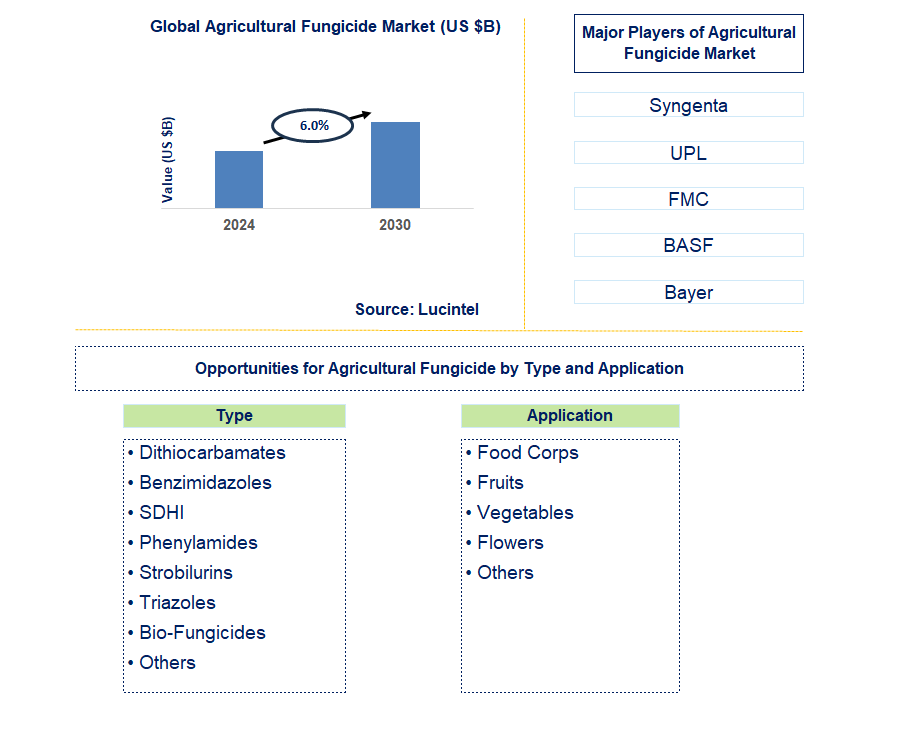
Key data points: The growth forecast = 6.0% annually for the next 6 years. Scroll below to get more insights. This market report covers trends, opportunities, and forecasts in the global agricultural fungicide market to 2030 by type (dithiocarbamates, benzimidazoles, SDHI, phenylamides, strobilurins, triazoles, bio-fungicides, and others), application (food corps, fruits, vegetables, flowers, and others), and region (North America, Europe, Asia Pacific, and the Rest of the World)
We'll send your sample report shortly.
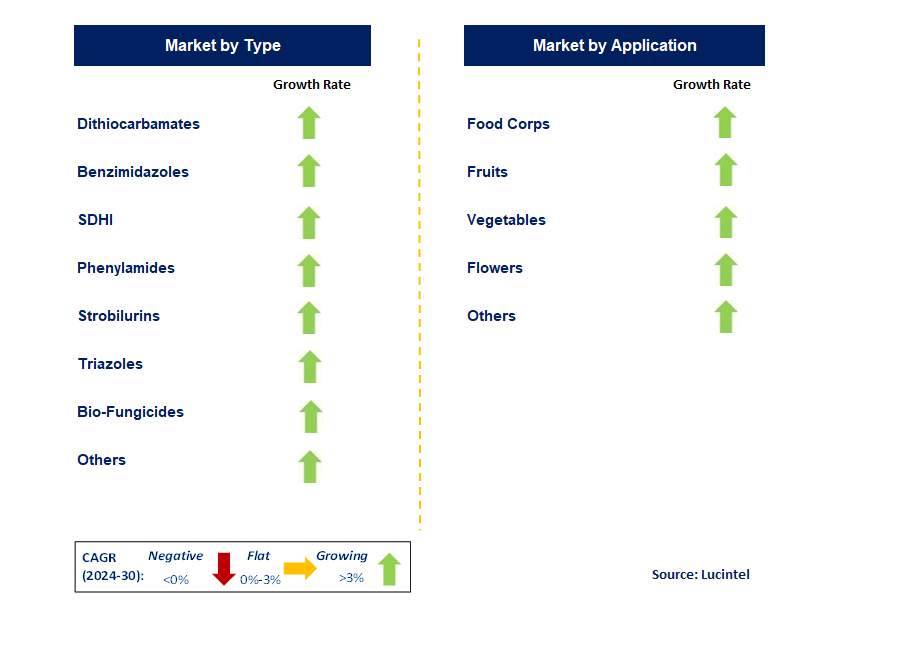
• Lucintel forecasts that, within the type category, bio-fungicides is expected to witness the highest growth over the forecast period.
• Within the application category, food crop is expected to witness the highest growth.
• In terms of regions, APAC is expected to witness the highest growth over the forecast period. Gain valuable insight for your business decisions with our comprehensive 150+ page report
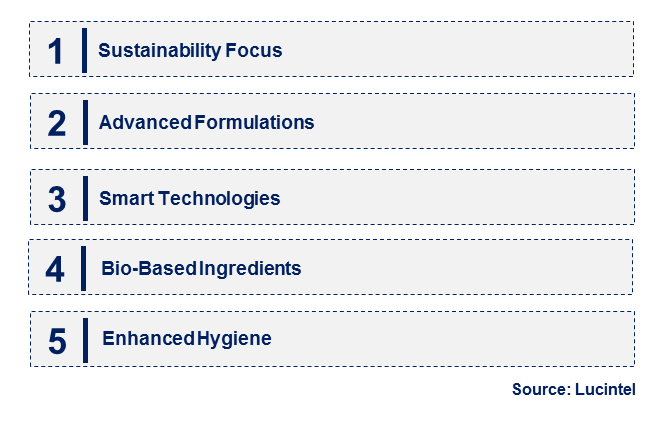
• Sustainability Approach: The rise in the use and development of fungicides that are more ecologically safe and easily degraded, in line with existing guidelines.
• Enhanced Formulations: The creation of new-generation fungal preparations with several active components, targeting a wide range of infections and with much higher efficacy.
• Fungi Biocontrol Agents: Growing focus on fungicides based on biorational methods and integrated pest management strategies as an alternative to chemicals.
• Precision Agriculture: The use of precision agriculture technologies for fungicides, such as sensors and drones, to apply the product more efficiently with less waste.
• Integrated Solutions: An increase in the combination of insecticide and fungicide sprays with other IPM components for maximum impact.
• Specific Applications: Expansion of fungicides and related products based on structure for specific diseases and geographies. Emerging trends in the agricultural fungicide market include sustainability-oriented advanced formulations, biological fungicides, precision agriculture, integrated solutions, specific applications, and regulatory compliance. These trends point toward the development of more efficient and environmentally sound crop protection systems.
• New Fungicide Shells: The emergence of new pesticide chemical formulations for controlling fungal infections with superior efficiency and a wider spectrum of activity.
• Healthy Solutions: Distribution of fungal infection management products that are biodegradable and bridge gaps to sustainable development goals.
• Fungal Diseases Management Strategy: The application of precision farming technologies for the effective application of fungicides with high levels of accuracy.
• Fungal Inoculum Research Products: Research into new preparations that contain at least two fungicides to enhance efficacy as well as resistance strategies.
• Technological Conformity: Changes made mainly to meet product and operational regulations and requirements.
• Technological Convergence: The combination of fungicides with smart agricultural practices, including intelligent water distribution and monitoring of plant growth.
• Growth Opportunities: The expansion of claims for various fungicides based on the geography and diseases of crops, thereby broadening the market scope and efficacy. Recent developments in the agricultural fungicide market include new formulations, new healthy products, precision farming, combined formulations, adjustments to regulatory requirements, merging with modern agricultural practices, and the extension of markets. These changes are turning the market toward offering more effective and sustainable ways of protecting crops from natural enemies.
• Crop Protection: Increasing the use of fungicides in disease management of key crops to increase crop yields and quality in some important sectors of agriculture.
• Integrated Pest Management: Exploring possibilities of formulating fungicides as part of integrated pest management approaches, using various other control measures.
• Precision Agriculture: The potential for enhancing efficiency by improving the use of fungicides along with all precision agricultural technologies.
• Biological Solutions: Taking advantage of the trend toward increasing biological fungicides and other natural solutions for sustainable agriculture.
• Regional Adaptation: Creating fungicides for certain geographical areas and disease-specific levels to meet local demand more efficiently.
• Technological Advancements: Exploiting newer technologies in the formulation and application of fungicides to offer enhanced value to customers.
• Educational Initiatives: Educating and training farmers on the benefits of advanced technologies, as well as how to use them properly, to improve the benefits of such technologies. Strategic growth opportunities for the agricultural fungicide market include crop protection, integrated pest management, precision agriculture, biological solutions, geographical concerns, technological progress, and the education of other stakeholders. These possibilities offer wide-ranging potential for market growth and innovation opportunities for players in the market.
• Growing Agricultural Demand: The harvesting of crops is crucial due to the growing population, which increases the demand for food. Fungicides will be necessary to protect the harvest and secure food.
• Technology Development: The development and evolution of fungicides and their application methods bring efficiency and thorough performance.
• Sustainability Trends: The rise in demand for sustainable and greener methods that are safe for farming increases the need for green fungicides.
• Regulatory Support: The regulatory approval processes for products related to crop protection and safety support the creation and use of modern fungicides.
• Universality: Using fungicides together with other pest management procedures results in functional pest control through integrated pest management approaches. Challenges in the agricultural fungicide market are:
• Resistance Management: Dealing with fungal resistance to fungicides remains a management challenge that requires new and continuous advancements in resistance strategies.
• Regulatory Compliance: Companies can be easily overwhelmed by understanding regulatory requirements from different regulatory authorities and meeting them, which may affect the delivery and accessibility of the product in the market.
• Environmental Impact: Residue management and the effectiveness of fungicides in destroying fungal pathogens come with a high environmental cost, especially in more sensitive areas.
• Cost Conundrums: There are constraints in terms of the cost of research and development, as well as the production of state-of-the-art fungicides.
• Market Competition: Competition in the pharmaceutical industry, especially in the manufacture of fungicides, is very high. This may result in lower product prices and manufacturers struggling to make their products distinctive. The agricultural fungicide market is fueled by increased agricultural usage, technological progress, the sustainability movement, supportive statutes, and bundled offerings. Nevertheless, it is confronting challenges such as stewardship, compliance, environmental concerns, budget constraints, and competition. All these issues need to be addressed to ensure growth and promote creativity in the market.
• Syngenta
• UPL
• FMC
• BASF
• Bayer
• Nufarm
• Corteva (DuPont)
• Sumitomo Chemical
• Qian Jiang Biochemical
• Indofil
• Dithiocarbamates
• Benzimidazoles
• SDHI
• Phenylamides
• Strobilurins
• Triazoles
• Bio-Fungicides
• Others
• Food Corps
• Fruits
• Vegetables
• Flowers
• Others
• North America
• Europe
• Asia Pacific
• The Rest of the World
• USA: In the USA, the agricultural fungicide market is booming, owing to the increasing emphasis on crop protection and integrated pest management at further levels of agriculture. Recent advancements include bringing novel active ingredients together in one fungicide formulation to target a wider range of fungal disorders. Also, changes in agricultural practices, especially precision agriculture, are altering fungicide use patterns. Technologies such as imaging using drones and satellites make it possible to apply pesticides at specific locations. There are also more regulations about the washout effects of these chemicals, leading to the pursuit of more water-soluble and non-toxic fungicides. Revisions in the law are being complied with by introducing new products made in accordance with pollution control and safety laws.
• China: The agricultural fungicides market in China is growing rapidly due to the vast farming baseline and rising opportunities for crop protection agents. New changes include the emergence of low-cost fungicides made for smallholder farmers as well as large agribusinesses. Most of these Chinese companies are focusing on combining innovative products to combat active and emerging mycotic illnesses efficiently. There is also a movement toward combining fungicides with modern agricultural practices and automation systems for irrigation and other targeted application methods. The government is actively supporting the improvement and development of fungicide technologies to increase crop production and enhance food sufficiency.
• India: With the rise of pests and other diseases, growers need to rely on fungicides for better crop yield, thus expanding the scope of this market. Recent events include the launch of low-cost/custom-made fungicides to tackle certain strains of fungi commonly found in Indian crops. Indian stakeholders are engaged in the development of formulations that can be used under any climatic conditions and align with the region’s agricultural practices. There is also a growing trend toward the sequential application of fungicides with other crop protection products to achieve better treatment outcomes. Moreover, awareness programs concerning advanced fungicide technologies for farmers have started.
• Japan: In Japan, the agricultural fungicides market is competitive due to technical innovations and high-quality fulfillment requirements. Other recent developments include the creation of potent fungicides with improved formulation technologies, enhancing application efficiency. Japanese firms are currently developing fungicides aimed at specific fungi for high-value crops such as grapes to increase their market share. There is also a trend toward the application of fungicides embedded in precision farming technologies to limit usage and minimize environmental impact. Additionally, Japan is focusing on the development of safe and effective fungicides to meet regulatory requirements for achieving environmental targets.


• Syngenta
• UPL
• FMC
• BASF
• Bayer
• Nufarm
• Corteva (DuPont)
• Sumitomo Chemical
• Qian Jiang Biochemical
• Indofil Q5. Which agricultural fungicide market segment will be the largest in future? Answer: Lucintel forecasts that, bio-fungicides is expected to witness the highest growth over the forecast period. Q6. In agricultural fungicide market, which region is expected to be the largest in next 5 years? Answer: APAC is expected to witness the highest growth over the forecast period. Q.7 Do we receive customization in this report? Answer: Yes, Lucintel provides 10% customization without any additional cost.


Choose a license that fits your team. Instant PDF delivery.
Prices exclude taxes. Instant delivery. Custom licensing available on request.
Market Report · July 22, 2026
Market Report · July 20, 2026
Market Report · July 20, 2026
Trusted partner for strategic intelligence and business growth


Receive a complimentary market analysis tailored to your industry. Our analysts will identify key growth opportunities and competitive dynamics specific to your business.

Market size, growth rate, and key trend analysis for your specific sector.

Top competitor positioning and market share analysis.

Strategic recommendations backed by data-driven insights.
Get curated market intelligence and competitive moves straight to your inbox.
By subscribing, you agree to receive our monthly insights. Unsubscribe anytime.
Receive a complimentary market analysis tailored to your industry. Our analysts will identify key growth opportunities and competitive dynamics specific to your business.
Market size, growth rate, and key trend analysis for your specific sector.
Top competitor positioning and market share analysis.
Strategic recommendations backed by data-driven insights.
Get curated market intelligence, emerging trends, and competitive moves straight to your inbox each month.
By subscribing, you agree to receive our monthly insights. Unsubscribe anytime.
We'll send your sample report shortly.