
Market Report · July 22, 2026

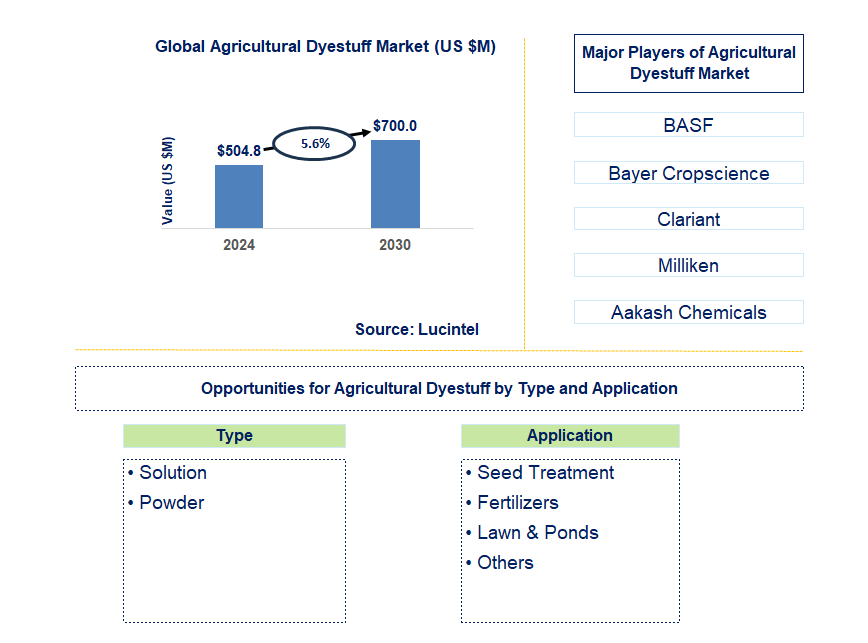
Key data points: The market size in 2030 = $700 million, growth forecast = 5.6% annually for the next 6 years. Scroll below to get more insights. This market report covers trends, opportunities, and forecasts in the global agricultural dyestuff market to 2030 by type (solution and powder), application (seed treatment, fertilizers, lawn & ponds, and others), and region (North America, Europe, Asia Pacific, and the Rest of the World)
We'll send your sample report shortly.
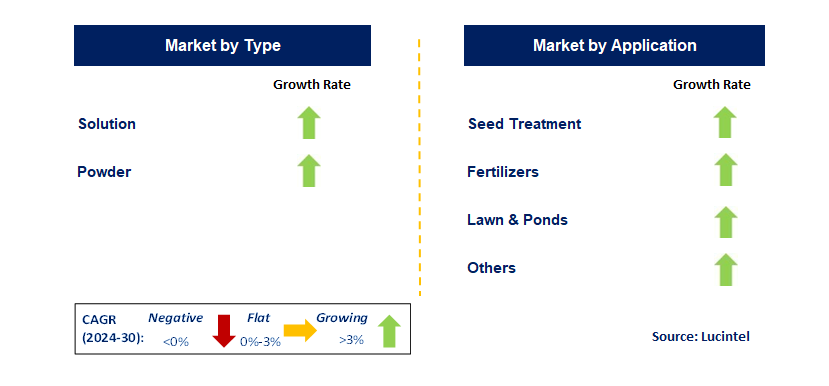
• Lucintel forecasts that, within the type category, the solution is expected to witness higher growth over the forecast period.
• Within the application category, the seed treatment is expected to witness the highest growth.
• In terms of region, In terms of region, APAC is expected to witness the highest growth over the forecast period. A more than 150-page report is developed to help in your business decisions.
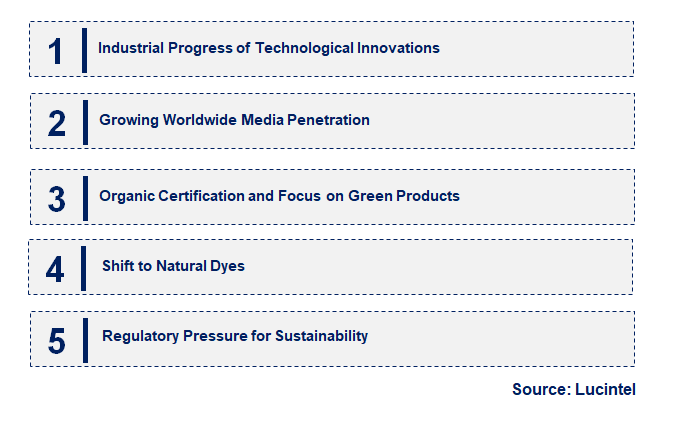
• Industrial Progress of Technological Innovations: Improvements in the composition and methods of delivering the dye enhance the quality of the products. New techniques enable better penetration and more sustained impact, resulting in more effective agricultural procedures.
• Growing Worldwide Media Penetration: Trade liberalization is increasing opportunities for marketing agricultural dyestuffs. Economically developed countries are actively entering new markets, leading to increased product diversification and improved competitive advantages.
• Organic Certification and Focus on Green Products: The rising consumption of organic food products generates a need for organic-approved textile dyes. The number of companies attaining organic certification is increasing, satisfying market demands and government regulations.
• Shift to Natural Dyes: There is an increasing preference for natural dyes sourced from plants and minerals. This trend is driven by consumer demand for environmentally friendly products, leading manufacturers to explore sustainable alternatives, which can enhance brand loyalty and market appeal.
• Regulatory Pressure for Sustainability: Stricter environmental regulations are pushing companies to adopt sustainable practices. Compliance with these regulations fosters innovation in biodegradable and low-impact dyestuffs, making sustainability a key competitive advantage in the market. Such emerging trends are shaping the landscape of the agricultural dyestuff industry while enhancing the welfare agenda, innovation, and the importance of collaboration on a global scale to address issues. As the market evolves with these changes, it will be ready for growth and broader diversification.
• Growth of Natural Dyes: The trend of shifting towards natural dyes is on the rise as manufacturers engage in research aimed at extracting dyes from plants. This development positively responds to current trends in sustainable agriculture.
• Investment in Technology: Resources are being directed toward superior production technologies to improve agricultural dyestuffs, making them more efficient and effective. New application techniques are changing how dyes are applied, resulting in improved visibility of crops and reduced waste.
• Strengthening Regulations: Stricter regulations from authorities regarding the use of chemical dyes in agriculture have emerged. This has led most companies to focus on updating their products and processes to meet the increasing demand for less toxic and biodegradable options.
• Market Expansion Initiatives: Manufacturers are venturing into new territories, especially in developing nations. Companies are introducing customized products aimed at the local agricultural market to exploit growth opportunities and expand their market share.
• Research Collaborations: Innovation in the dyestuffs industry is also being boosted by university-industry research partnerships. These projects focus on creating new products and improving existing ones for continuous enhancement. These changes are expected to positively impact the agricultural dyestuff market by supporting regulatory compliance, improving product performance, and increasing market scope. People anticipate these changes as the industry evolves, encouraging future improvements and growth.
• Organic Agriculture: There is increasing demand for certified organic dyestuffs due to the growing organic farming trend. This expanding consumer market can be exploited by manufacturers producing organic products in accordance with sustainability ideals.
• Biodegradable Products: The development of biodegradable agricultural dyestuffs has considerable potential. As competition increases, companies can distinguish themselves in the market by creating green products in response to escalating regulatory demands.
• Technological Integration: The deployment of precision farming technologies in dyestuff applications can enhance product performance. This leads to better resource management and improved agricultural returns for technology-oriented producers.
• Regional Market Penetration: There are significant growth opportunities in emerging markets, particularly in Asia and Africa. Adapting products to the demands of these new markets is essential.
• Collaborative Research: Partnerships with research organizations can serve as a catalyst for creating new products. These collaborations may help in discovering new formulations and application approaches that contribute to competitiveness. These strategic growth opportunities indicate potential for development and innovation in the agricultural dyestuff market. To gain a competitive advantage in this growing market, manufacturers need to focus on sustainability and technology to promote future growth.
• Increasing Demand for Sustainability: The transition toward more environmentally friendly practices and the use of eco-friendly dyestuffs has spurred demand for natural dyes. Many consumers today are value-based and prefer products that align with their views, creating opportunities for manufacturers to innovate.
• Regulatory Compliance: Bans on chemical agricultural inputs have compelled companies to shift toward sustainable practices. Such compliance encourages creativity, leading to the development of green designs that can replace existing products in the market.
• Technological Advancements: Evolutionary advancements in dye composition and application methods have enhanced product performance. Improved efficiency in dyestuff application positively influences agricultural productivity, fostering demand in the market.
• Global Market Expansion: The globalization of trade allows industries to explore new markets, particularly in underdeveloped regions. This expansion provides avenues for growth and diversification of product portfolios.
• Consumer Awareness: An increasing number of consumers are becoming active in environmental concerns, influencing their purchasing decisions. These changes encourage producers to develop eco-friendly products as consumer preferences evolve. Challenges in the agricultural dyestuff market include:
• High Production Costs: Developing eco-friendly and natural dye materials can be costly, presenting challenges for manufacturers in competing effectively and achieving profitability.
• Competition from Alternatives: The presence of synthetic dyes and other alternatives creates market competition. Manufacturers must continually improve their products to enhance competitive advantages and secure favorable market positions.
• Supply Chain Vulnerabilities: The availability and pricing of products like natural dyes may be affected by supply chain disruptions or availability risks. Companies must manage these risks to consistently deliver on their product promises. These drivers and challenges are fundamental to the growth structure of the agricultural dyestuff industry, determining the potential for growth and strategic decisions. Understanding these dynamics is essential for stakeholders navigating a competitive and changing market.
• BASF
• Bayer Cropscience
• Clariant
• Milliken
• Aakash Chemicals
• Sensient Technologies
• Chromatech Incorporated
• Organic Dyes and Pigments
• Retort Chemicals
• Agricoatings
• Solution
• Powder
• Seed Treatment
• Fertilizers
• Lawn & Ponds
• Others
• North America
• Europe
• Asia Pacific
• The Rest of the World
• United States: In the U.S., there is considerable interest in non-synthetic dyes, particularly those derived from plants. Research organizations are collaborating with agricultural firms to create greener dyes, aligning with consumer trends favoring healthy products, leading to expanding market sales.
• China: China is increasing production of synthetic agricultural dyestuffs to meet local and export market demands. Investments in high-end production equipment have enhanced product quality while reducing environmental pollution risks. This performance positions China as a significant contributor to the global agricultural dyestuff market.
• Germany: The agricultural dyestuff industry in Germany is shifting toward a low-impact and regulatory-compliant orientation. With the advent of strict environmental laws, many firms are turning to low-impact and biodegradable dyes. This policy shift reinforces Germany's position as a hub for sustainable agricultural practices.
• India: In India, there is a surge in demand for natural and organic dyestuffs due to increasing preferences for sustainable farming. Local manufacturers are exploring traditional dyeing methods, promoting regional biodiversity while serving both domestic and international markets.
• Japan: Japan is integrating advanced technologies into agricultural dyestuff production. Innovations in dye formulations and application techniques are improving efficiency and effectiveness. This technological push is expected to enhance crop yield monitoring and contribute to sustainable farming practices.


• BASF
• Bayer Cropscience
• Clariant
• Milliken
• Aakash Chemicals
• Sensient Technologies
• Chromatech Incorporated
• Organic Dyes and Pigments
• Retort Chemicals
• Agricoatings Q6. Which agricultural dyestuff market segment will be the largest in future? Answer: Lucintel forecasts that solution is expected to witness higher growth over the forecast period. Q7. In agricultural dyestuff market, which region is expected to be the largest in next 5 years? Answer: APAC is expected to witness the highest growth over the forecast period. Q.8 Do we receive customization in this report? Answer: Yes, Lucintel provides 10% customization without any additional cost.


Choose a license that fits your team. Instant PDF delivery.
Prices exclude taxes. Instant delivery. Custom licensing available on request.
Market Report · July 22, 2026
Market Report · July 20, 2026
Market Report · July 20, 2026
Trusted partner for strategic intelligence and business growth


Receive a complimentary market analysis tailored to your industry. Our analysts will identify key growth opportunities and competitive dynamics specific to your business.

Market size, growth rate, and key trend analysis for your specific sector.

Top competitor positioning and market share analysis.

Strategic recommendations backed by data-driven insights.
Get curated market intelligence and competitive moves straight to your inbox.
By subscribing, you agree to receive our monthly insights. Unsubscribe anytime.
Receive a complimentary market analysis tailored to your industry. Our analysts will identify key growth opportunities and competitive dynamics specific to your business.
Market size, growth rate, and key trend analysis for your specific sector.
Top competitor positioning and market share analysis.
Strategic recommendations backed by data-driven insights.
Get curated market intelligence, emerging trends, and competitive moves straight to your inbox each month.
By subscribing, you agree to receive our monthly insights. Unsubscribe anytime.
We'll send your sample report shortly.