
Market Report · July 22, 2026

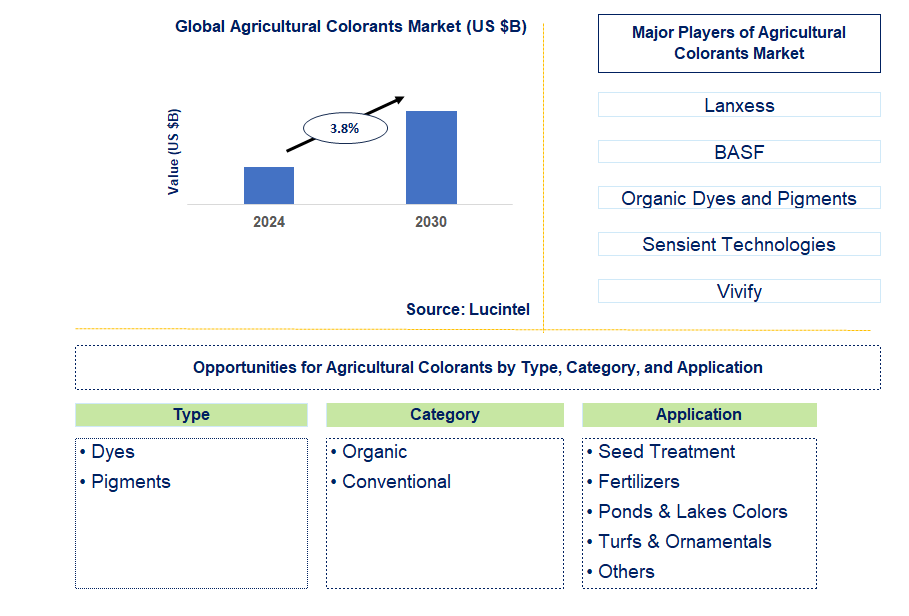
Key data points: The growth forecast = 3.8% annually for the next 6 years. Scroll below to get more insights. This market report covers trends, opportunities, and forecast in the global agricultural colorants market to 2030 by type (dyes and pigments), category (organic and conventional), application (seed treatment, fertilizers, ponds & lakes colors, turfs & ornamentals, and others), and region (North America, Europe, Asia Pacific, and the Rest of the World)
We'll send your sample report shortly.
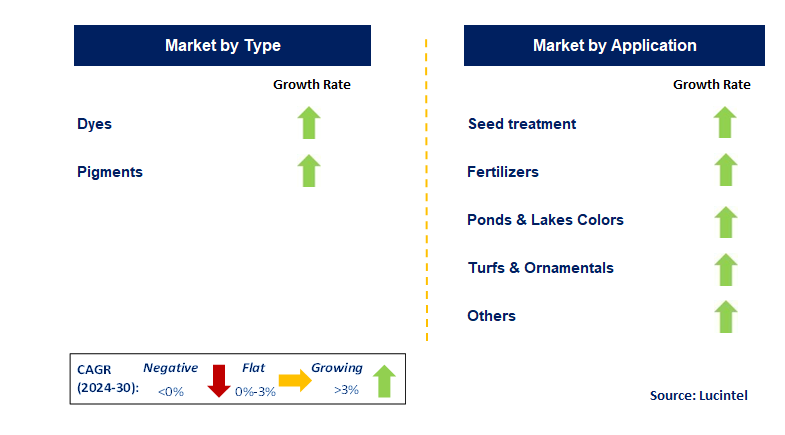
• Lucintel forecasts that, within the type category, pigments will remain the larger segment over the forecast period.
• Within the application category, seed treatment will remain the larger segment.
• In terms of regions, APAC will remain the largest region over the forecast period due to a surge in population and growing per capita income in the region. A more than 150-page report is developed to help in your business decisions.
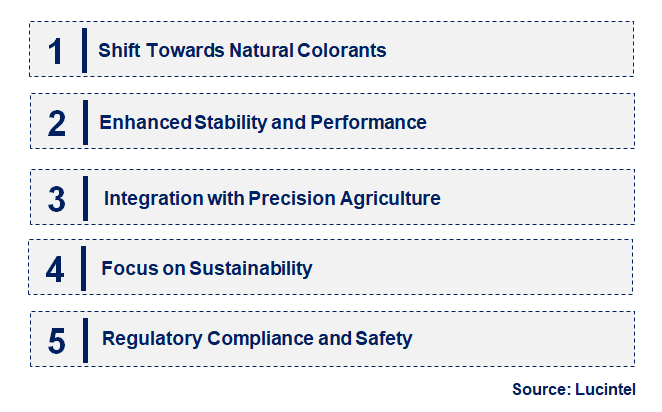
• Shift Towards Natural Colorants: There is a growing preference for natural colorants derived from plant and mineral sources. These colorants are favored for their environmental benefits and consumer health considerations. This trend is leading to increased R&D in plant-based and organic colorant solutions.
• Enhanced Stability and Performance: Advances in technology are improving the stability and performance of agricultural colorants. Innovations include the development of colorants that are more resistant to environmental factors and have a longer-lasting effect on crops.
• Integration with Precision Agriculture: Agricultural colorants are being integrated with precision agriculture technologies to optimize their application. This integration allows for targeted and efficient use of colorants, improving their effectiveness and reducing waste.
• Focus on Sustainability: The industry is placing greater emphasis on sustainability, with developments aimed at reducing the environmental impact of colorant production. This includes using renewable resources and minimizing waste during manufacturing processes.
• Regulatory Compliance and Safety: Increasing regulatory scrutiny is driving the need for colorants that meet stringent safety and environmental standards. This trend is leading to more investments in ensuring compliance and improving the safety profile of colorants. These emerging trends are driving innovation and transformation in the agricultural colorants market. By focusing on natural ingredients, performance, precision, sustainability, and regulatory compliance, the industry is evolving to meet modern agricultural and environmental demands.
• Natural and Organic Colorants: There is a growing trend towards using natural and organic colorants. This shift is driven by consumer demand for eco-friendly products and stricter regulations on synthetic chemicals. Natural colorants from plant extracts and minerals are gaining popularity.
• Improved Stability and Longevity: Advances in technology have led to the development of colorants with enhanced stability and longevity. These improvements ensure that colorants maintain their effectiveness and vibrancy over time, even under varying environmental conditions.
• Integration with Smart Agriculture: Agricultural colorants are increasingly being integrated with smart agriculture technologies. This integration allows for precise application and monitoring, optimizing the use of colorants and improving overall agricultural practices.
• Focus on Sustainable Production: The industry is placing greater emphasis on sustainability, with developments aimed at reducing the environmental impact of colorant production. Innovations include using renewable resources and implementing waste reduction measures in manufacturing.
• Enhanced Regulatory Compliance: There is a heightened focus on ensuring that agricultural colorants comply with stringent safety and environmental regulations. This includes investing in R&D to meet international standards and improve the safety profile of colorants. These developments are driving growth and innovation in the agricultural colorants market. By focusing on natural ingredients, performance, technology integration, sustainability, and regulatory compliance, the industry is advancing to meet modern agricultural needs and consumer expectations.
• Expansion of Natural Colorant Market: There is significant growth potential in expanding the use of natural colorants. As consumer demand for eco-friendly and organic products increases, companies can capitalize on this trend by developing and marketing natural colorant solutions.
• Development of High-Performance Colorants: Investing in the development of high-performance colorants that offer better stability and longer-lasting effects can provide a competitive edge. These colorants can meet the needs of precision agriculture and enhance crop productivity.
• Integration with Advanced Agricultural Technologies: Leveraging advanced agricultural technologies, such as smart sensors and data analytics, to optimize the use of colorants presents growth opportunities. This integration can improve application efficiency and reduce waste.
• Focus on Sustainable Manufacturing Practices: Emphasizing sustainable manufacturing practices, such as using renewable resources and minimizing waste, can attract environmentally conscious consumers and meet regulatory requirements. This focus aligns with global sustainability goals.
• Expansion into Emerging Markets: Expanding into emerging markets where agricultural practices are evolving and demand for colorants is increasing presents growth opportunities. Tailoring products to meet the specific needs of these regions can drive market penetration. These strategic growth opportunities highlight key areas for expansion and innovation in the agricultural colorants market. By focusing on natural ingredients, performance, technology integration, sustainability, and emerging markets, companies can drive growth and capitalize on evolving trends.
• Increasing Demand for Natural Products: The rising consumer preference for natural and eco-friendly products is driving the demand for natural agricultural colorants. This trend reflects broader shifts towards sustainability and health-conscious choices.
• Technological Advancements: Innovations in technology are enhancing the performance and stability of agricultural colorants. Advances such as improved formulation techniques and integration with smart agriculture technologies are driving market growth.
• Growing Focus on Sustainability: There is an increasing emphasis on sustainable manufacturing practices within the industry. Companies are investing in renewable resources and reducing waste, which aligns with global sustainability goals and attracts environmentally conscious consumers.
• Expanding Applications: The diverse applications of agricultural colorants, including precision agriculture and crop management, are driving market expansion. Enhanced performance and functionality are broadening the scope of colorant use in various agricultural practices.
• Regulatory Support: Supportive regulatory frameworks that promote the development and use of safe and effective colorants contribute to market growth. Streamlined approval processes and clear guidelines facilitate innovation and market entry. Challenges in the agricultural colorants market are:
• High Production Costs: The production of agricultural colorants can be costly, particularly for natural and high-performance products. High production costs can impact pricing and market competitiveness.
• Regulatory Compliance: Navigating complex and varying regulatory requirements can be challenging. Ensuring compliance with safety and environmental standards requires significant investment and can delay product development and market entry.
• Market Competition: The agricultural colorants market is competitive, with numerous players offering similar products. Differentiating products and maintaining a competitive edge requires continuous innovation and effective marketing strategies. The drivers and challenges impacting the agricultural colorants market shape its growth and development. Addressing these factors effectively is crucial for companies to capitalize on opportunities and overcome obstacles in a dynamic market.
• LANXESS
• BASF
• Organic Dyes and Pigments
• Sensient Technologies
• Vivify
• Sun Chemical
• Milliken
• Arrmaz Products
• Heubach
• Chromatech
• Dyes
• Pigments
• Organic
• Conventional
• Seed Treatment
• Fertilizers
• Ponds & Lakes Colors
• Turfs & Ornamentals
• Others
• North America
• Europe
• Asia Pacific
• The Rest of the World
• United States: In the U.S., there is a growing trend toward natural and organic agricultural colorants. This shift is driven by consumer demand for environmentally friendly products and stricter regulations on synthetic chemicals. Innovations include plant-based dyes and colorants with improved stability and performance.
• China: China is focusing on enhancing the production efficiency of agricultural colorants. Recent developments include advancements in the synthesis of synthetic dyes to improve cost-effectiveness and performance. Additionally, there is increased investment in research to develop eco-friendly colorants.
• Germany: Germany is leading in the development of sustainable agricultural colorants. Recent advancements include the use of renewable resources for colorant production and stricter environmental regulations guiding the industry. Innovations are centered around reducing the ecological footprint of colorant production.
• India: In India, there is a rise in the use of natural colorants due to increasing awareness about health and environmental impacts. Developments include the use of local plant sources for colorant extraction and improvements in production processes to enhance quality and reduce costs.
• Japan: Japan is advancing in high-performance colorants that offer longer-lasting and more vibrant hues. Recent developments focus on integrating colorants with advanced agricultural technologies and ensuring compliance with international environmental standards.


• LANXESS
• BASF
• Organic Dyes and Pigments
• Sensient Technologies
• Vivify
• Sun Chemical
• Milliken
• Arrmaz Products
• Heubach
• Chromatech Q5. Which agricultural colorants market segment will be the largest in the future? Answer: Lucintel forecasts that pigments will remain the larger segment over the forecast period. Q6. In the agricultural colorants market, which region is expected to be the largest in the next 5 years? Answer: APAC will remain the largest region over the forecast period due to a surge in population and growing per capita income in the region. Q7. Do we receive customization in this report? Answer: Yes, Lucintel provides 10% customization without any additional cost.


Choose a license that fits your team. Instant PDF delivery.
Prices exclude taxes. Instant delivery. Custom licensing available on request.
Market Report · July 22, 2026
Market Report · July 20, 2026
Market Report · July 20, 2026
Trusted partner for strategic intelligence and business growth


Receive a complimentary market analysis tailored to your industry. Our analysts will identify key growth opportunities and competitive dynamics specific to your business.

Market size, growth rate, and key trend analysis for your specific sector.

Top competitor positioning and market share analysis.

Strategic recommendations backed by data-driven insights.
Get curated market intelligence and competitive moves straight to your inbox.
By subscribing, you agree to receive our monthly insights. Unsubscribe anytime.
Receive a complimentary market analysis tailored to your industry. Our analysts will identify key growth opportunities and competitive dynamics specific to your business.
Market size, growth rate, and key trend analysis for your specific sector.
Top competitor positioning and market share analysis.
Strategic recommendations backed by data-driven insights.
Get curated market intelligence, emerging trends, and competitive moves straight to your inbox each month.
By subscribing, you agree to receive our monthly insights. Unsubscribe anytime.
We'll send your sample report shortly.