
Market Report · July 22, 2026

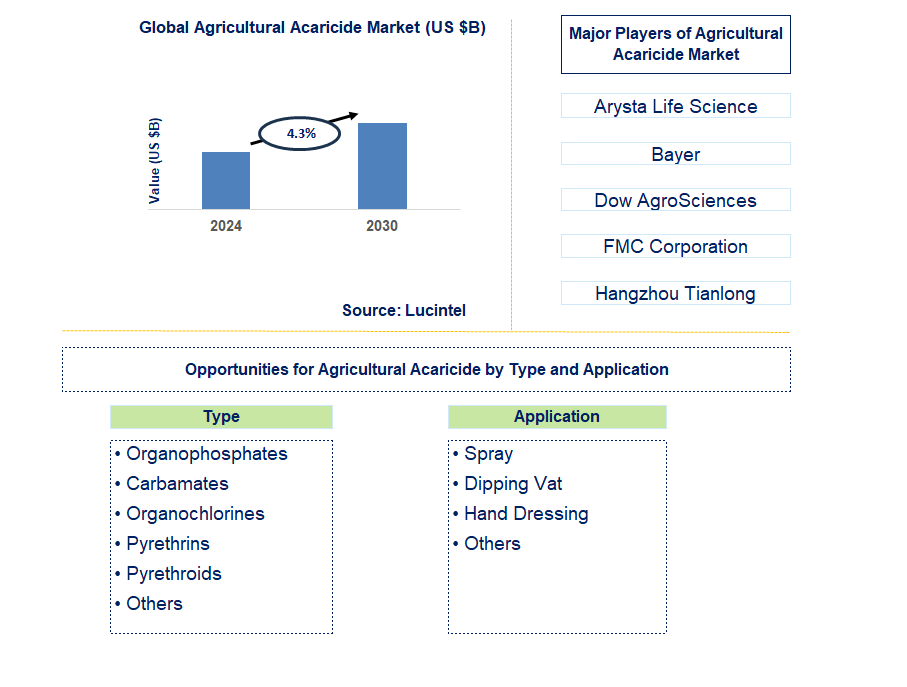
Key data points: The growth forecast = 4.3% annually next 6 years. Scroll below to get more insights. This market report covers trends, opportunities, and forecast in the global agricultural acaricide market to 2030 by type (organophosphates, carbamates, organochlorines, pyrethrins, pyrethroids, and others), application (spray, dipping vat, hand dressing, and others), and region (North America, Europe, Asia Pacific, and the Rest of the World)
We'll send your sample report shortly.
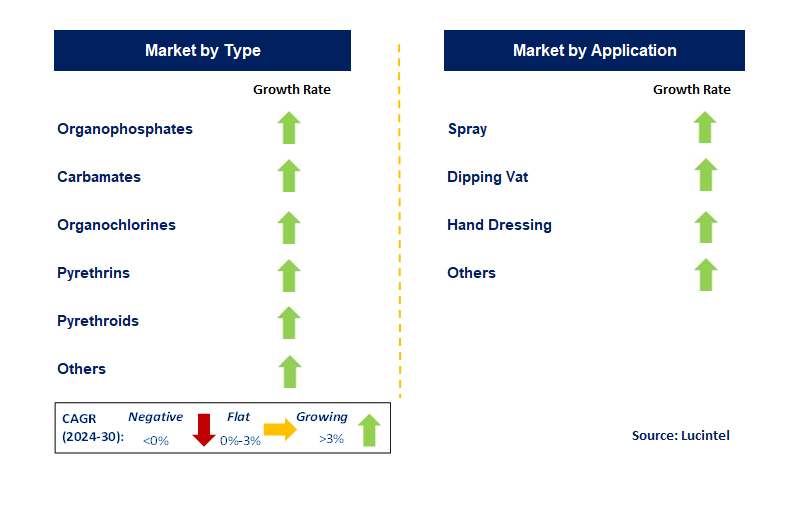
• Lucintel forecasts that pyrethroids segment is expected to witness the highest growth over the forecast period.
• Through this market, spray will remain the largest segment.
• APAC will remain the largest region over the forecast period. A more than 150-page report is developed to help in your business decisions.
• Biological Acaricides: There is a growing shift towards biological acaricides derived from natural sources such as fungi and plant extracts. This trend addresses concerns over chemical residues in crops and aligns with the demand for more sustainable pest control methods in organic farming.
• Precision Agriculture: The integration of precision agriculture technologies, including drones and GPS-enabled sprayers, is becoming more prevalent. This trend improves the accuracy of acaricide application, reducing overuse and minimizing environmental impact while ensuring effective pest control.
• Resistance Management: As pest resistance to chemical acaricides grows, farmers are adopting integrated pest management (IPM) strategies that combine acaricides with biological controls and crop rotation. This trend helps prolong the effectiveness of acaricides and reduces the risk of resistance.
• Regulatory Compliance: Stricter environmental and health regulations are driving the development of safer, more environmentally friendly acaricides. This trend is particularly strong in regions like Europe, where regulatory bodies are imposing limits on harmful chemical residues in agricultural products.
• Organic Farming Growth: The rise of organic farming is increasing the demand for acaricides that are certified for use in organic agriculture. This trend is prompting manufacturers to innovate new formulations that meet organic certification requirements while remaining effective against pests. These trends are reshaping the agricultural acaricide market by fostering sustainable, precise, and resistance-managed approaches to pest control, catering to both conventional and organic farming practices.
• Development of Eco-Friendly Formulations: The creation of eco-friendly acaricides with reduced environmental impact is a major development. These products use natural ingredients or lower-risk chemicals, providing effective pest control while complying with increasingly stringent regulations.
• Increased Use of Drones for Application: The adoption of drone technology for applying acaricides is gaining traction, particularly in high-tech farming regions like Japan. This development enhances the precision and efficiency of acaricide application, reducing costs and minimizing wastage.
• Launch of Resistance-Management Programs: Several countries are implementing resistance-management programs to combat the growing issue of pest resistance. These programs promote the use of alternating acaricides and integrating biological pest control methods to maintain acaricide effectiveness.
• Advanced Formulation Technologies: New formulation technologies, such as microencapsulation, are being introduced to improve the controlled release of acaricides. This development enhances the longevity and efficacy of acaricides in the field, reducing the frequency of applications.
• Focus on Organic Certified Acaricides: With the growth of organic farming, manufacturers are increasingly developing acaricides that are certified for organic use. These products are designed to meet the strict requirements of organic certification bodies while providing effective mite control. These developments are shaping the agricultural acaricide market by advancing eco-friendly solutions, precision applications, and resistance-management strategies, ensuring sustainable and effective pest control.
• Fruit and Vegetable Farming: Acaricides play a crucial role in protecting fruit and vegetable crops from mite infestations. The growing demand for high-quality produce offers significant growth opportunities for acaricide applications, particularly in regions with large agricultural outputs like India and China.
• Greenhouse Farming: The controlled environment of greenhouses presents an opportunity for targeted acaricide applications. The rise of greenhouse farming, especially in regions with limited arable land, is driving demand for acaricides that can be used efficiently in enclosed settings.
• Organic Agriculture: As organic farming continues to expand globally, there is a significant opportunity for the development and application of organic-certified acaricides. These products meet the increasing consumer demand for chemical-free produce and align with organic certification standards.
• Precision Agriculture: The use of precision agriculture technologies, such as drones and GPS-enabled equipment, provides a growth opportunity by improving the accuracy and efficiency of acaricide applications. This technology is particularly beneficial for large-scale farms, where precise application is critical.
• Integrated Pest Management (IPM): The growing adoption of integrated pest management strategies offers opportunities for acaricide manufacturers to position their products as part of a broader pest control solution. Acaricides used in conjunction with biological controls and crop rotation enhance effectiveness and sustainability. These strategic growth opportunities are expanding the agricultural acaricide market by promoting sustainable, efficient, and targeted applications across a wide range of agricultural settings.
• Technological Advancements: Innovations in precision agriculture, such as drones and smart sprayers, are driving the efficient and targeted application of acaricides. These technologies reduce overuse and minimize environmental damage, enhancing the market's appeal.
• Increasing Demand for Sustainable Farming: The rising demand for eco-friendly and organic farming solutions is a key driver. Acaricide products that are certified for organic use or have lower environmental impact are in high demand as farmers seek to meet consumer and regulatory expectations.
• Growth in Agricultural Output: The increasing global demand for food, particularly in developing countries, is driving the need for effective pest control solutions like acaricides. This driver is particularly strong in regions with high agricultural activity, such as India and China.
• Regulatory Compliance: Stricter regulations on pesticide residues in crops are pushing manufacturers to develop safer, low-toxicity acaricides. This driver is particularly strong in Europe and North America, where regulatory bodies impose stringent limits on pesticide use.
• Emerging Pest Resistance: The growing issue of pest resistance to chemical acaricides is driving demand for new formulations and integrated pest management solutions. This driver is prompting innovation in acaricide development and application techniques. Challenges in the agricultural acaricide market are:
• High Development Costs: The cost of developing new acaricide formulations, especially those that comply with environmental regulations, can be prohibitively high. This challenge limits innovation for smaller manufacturers and can slow the introduction of new products.
• Resistance to Chemical Acaricides: The development of resistance among pest species to common acaricides presents a major challenge, reducing the efficacy of these products and prompting the need for alternative solutions or combination treatments.
• Regulatory Hurdles: Navigating the complex regulatory landscape for pesticide approval, particularly in regions with stringent environmental laws, can be challenging. Compliance costs and delays in approval processes can hinder market entry for new products.
• Lack of Awareness in Emerging Markets: In some emerging markets, farmers may lack awareness of the benefits of using acaricides or the proper techniques for their application. This challenge limits market growth and reduces product adoption rates.
• Environmental Concerns: The environmental impact of chemical acaricides, particularly in terms of water contamination and non-target effects, remains a challenge. This concern is pushing the industry toward more sustainable solutions, but it also limits the use of traditional acaricides. The agricultural acaricide market is shaped by drivers that promote technological innovation and sustainability, while challenges such as regulatory hurdles and pest resistance present obstacles that must be addressed to ensure continued market growth.
• Arysta Life Science
• Bayer
• Dow AgroSciences
• FMC Corporation
• Hangzhou Tianlong Biotechnology
• HEFEI LONGBIN CHEMISTRY
• Indofil Industrie Limited
• Organophosphates
• Carbamates
• Organochlorines
• Pyrethrins
• Pyrethroids
• Others
• Spray
• Dipping Vat
• Hand Dressing
• Others
• North America
• Europe
• Asia Pacific
• The Rest of the World
• United States: In the U.S., there is a growing demand for organic and eco-friendly acaricides due to increased regulatory pressure and consumer demand for sustainable farming practices. Recent advancements focus on biological acaricides, which reduce chemical residues in crops and ensure compliance with environmental standards.
• China: China has increased its production capacity for acaricides due to the rising threat of pest infestations in key agricultural sectors. Recent developments include the promotion of integrated pest management (IPM) techniques, encouraging the use of acaricides in combination with other pest control methods to minimize resistance.
• Germany: In Germany, stringent EU regulations on pesticide usage are driving innovation in sustainable acaricide solutions. The country is investing in research and development to produce more efficient, environmentally friendly acaricides that reduce non-target effects and improve crop safety.
• India: India is seeing a rise in the use of acaricides, particularly in fruit and vegetable farming. Recent developments include the introduction of novel formulations aimed at controlling resistant mite species while improving the cost-effectiveness of products for smallholder farmers.
• Japan: Japan is focusing on high-tech innovations in acaricide delivery systems. Recent advancements include the use of drones and automated sprayers for precision application, which reduces wastage and ensures targeted pest control, improving the efficiency of acaricide use.


• Arysta Life Science
• Bayer
• Dow AgroSciences
• FMC Corporation
• Hangzhou Tianlong Biotechnology
• HEFEI LONGBIN CHEMISTRY
• Indofil Industrie Limited Q5. Which agricultural acaricide market segment will be the largest in future? Answer: Lucintel forecasts that pyrethroids segment is expected to witness the highest growth over the forecast period. Q6. In agricultural acaricide market, which region is expected to be the largest in next 5 years? Answer: APAC will remain the largest region over the forecast period. Q.7 Do we receive customization in this report? Answer: Yes, Lucintel provides 10% customization without any additional cost.


Choose a license that fits your team. Instant PDF delivery.
Prices exclude taxes. Instant delivery. Custom licensing available on request.
Market Report · July 22, 2026
Market Report · July 20, 2026
Market Report · July 20, 2026
Trusted partner for strategic intelligence and business growth


Receive a complimentary market analysis tailored to your industry. Our analysts will identify key growth opportunities and competitive dynamics specific to your business.

Market size, growth rate, and key trend analysis for your specific sector.

Top competitor positioning and market share analysis.

Strategic recommendations backed by data-driven insights.
Get curated market intelligence and competitive moves straight to your inbox.
By subscribing, you agree to receive our monthly insights. Unsubscribe anytime.
Receive a complimentary market analysis tailored to your industry. Our analysts will identify key growth opportunities and competitive dynamics specific to your business.
Market size, growth rate, and key trend analysis for your specific sector.
Top competitor positioning and market share analysis.
Strategic recommendations backed by data-driven insights.
Get curated market intelligence, emerging trends, and competitive moves straight to your inbox each month.
By subscribing, you agree to receive our monthly insights. Unsubscribe anytime.
We'll send your sample report shortly.