
Market Report · July 17, 2026

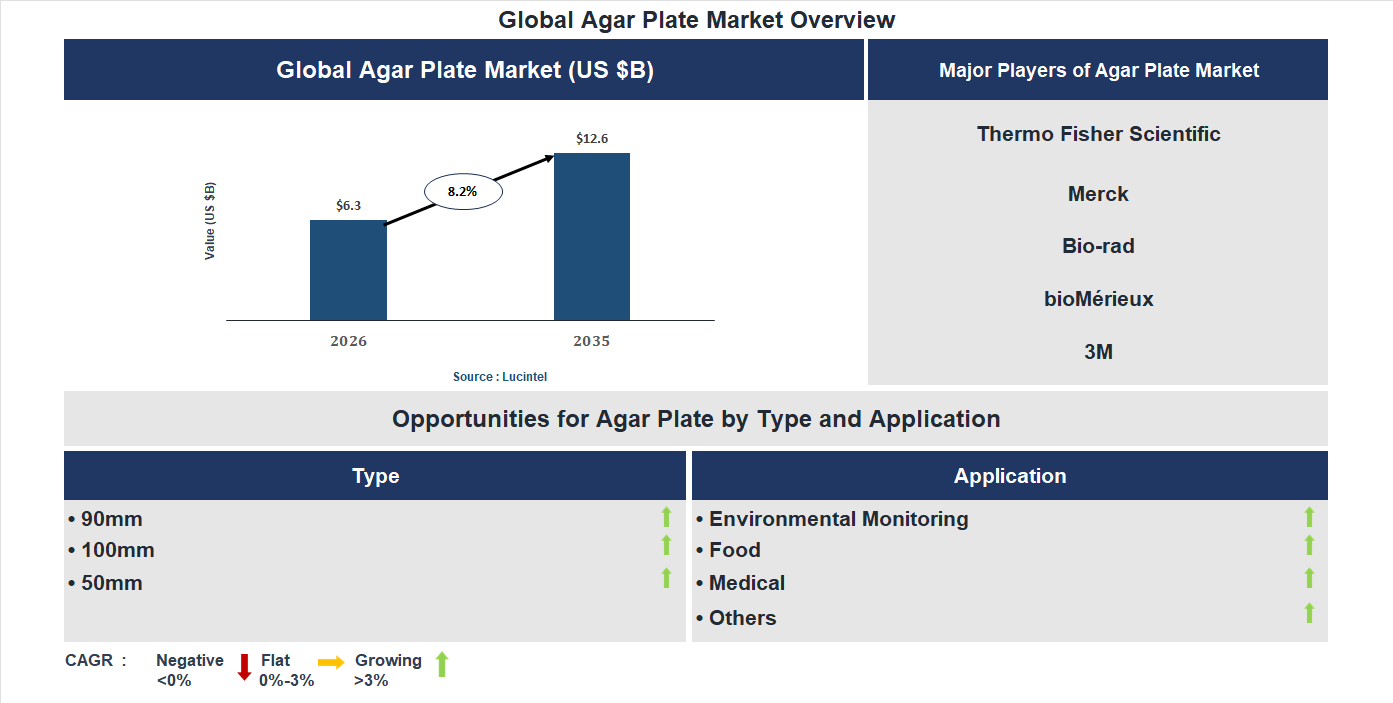
Key data points: The market size in 2035 = $12.6 billion, growth forecast = 8.2% annually for the next 8 years. Scroll below to get more insights. This market report covers trends, opportunities and forecasts in agar plate market to 2035 by type (90mm, 100mm, and 50mm), application (environmental monitoring, food, medical, and others), and region (North America, Europe, Asia Pacific, and the Rest of the World)
We'll send your sample report shortly.
• Lucintel forecasts that, within the type category, 90mm is expected to witness the highest growth over the forecast period.
• Within the application category, medical is expected to witness the highest growth.
• In terms of region, APAC is expected to witness the highest growth over the forecast period. Gain valuable insights for your business decisions with our comprehensive 150+ page report. Sample figures with some insights are shown below.
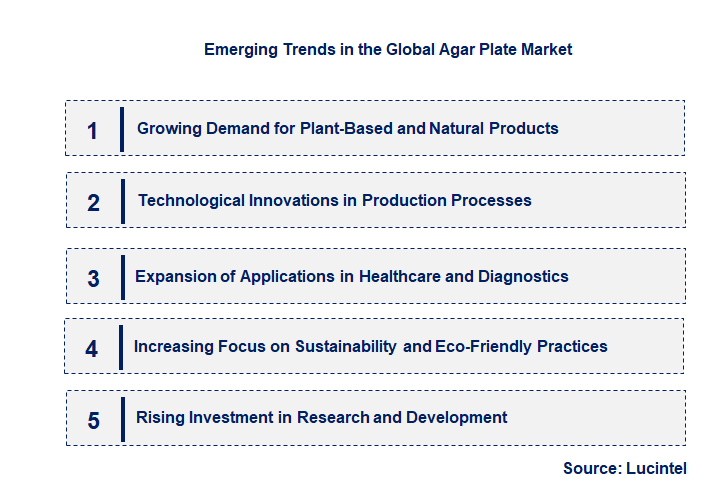
• Growing Demand for Plant-Based and Natural Products: Consumers are increasingly seeking plant-based, organic, and natural products due to health consciousness and environmental concerns. This trend is driving manufacturers to develop agar plates derived from sustainable sources, reducing reliance on synthetic additives. The demand for natural agar plates is particularly prominent in the food industry for microbiological testing and in research settings, emphasizing eco-friendly practices. This shift enhances product safety, appeals to eco-conscious consumers, and supports sustainable development goals, thereby expanding market reach and fostering innovation in product formulations.
• Technological Innovations in Production Processes: Advances in fermentation technology, automation, and quality control are transforming agar plate manufacturing. These innovations improve production efficiency, reduce costs, and enhance product consistency and purity. Automated systems enable large-scale production with minimal contamination risks, while new fermentation techniques allow for the extraction of high-quality agar from diverse sources. These technological improvements facilitate faster product development cycles, meet increasing demand, and enable customization for specific applications, ultimately strengthening the market’s competitiveness and supporting the development of specialized agar plates.
• Expansion of Applications in Healthcare and Diagnostics: The use of agar plates in clinical microbiology, pathogen detection, and antimicrobial susceptibility testing is expanding rapidly. Innovations in selective and differential media enhance diagnostic accuracy and speed, crucial for disease control and treatment. The rise of personalized medicine and infectious disease management further fuels demand for specialized agar plates. Additionally, the development of ready-to-use, pre-prepared plates simplifies laboratory workflows, increasing adoption. This trend significantly impacts healthcare by improving diagnostic capabilities, reducing turnaround times, and supporting public health initiatives, thereby broadening the market’s scope and importance.
• Increasing Focus on Sustainability and Eco-Friendly Practices: Environmental concerns are prompting manufacturers to adopt sustainable sourcing, biodegradable packaging, and eco-friendly production methods. The shift towards sustainable agar extraction from renewable sources reduces ecological footprints and aligns with global sustainability goals. Companies are also investing in recycling and waste reduction initiatives. This focus on sustainability not only appeals to environmentally conscious consumers but also complies with regulatory standards, fostering brand loyalty and market differentiation. As sustainability becomes a key purchasing criterion, this trend is reshaping supply chains and product development strategies within the agar plate industry.
• Rising Investment in Research and Development: Significant R&D investments are driving innovation in agar formulations, media customization, and application-specific products. Research efforts focus on improving agar’s physical and chemical properties, enhancing its compatibility with various testing methods, and developing novel applications, such as in biotechnology and food safety. Increased collaboration between academia, industry, and government agencies accelerates product innovation and market expansion. This trend ensures continuous product improvement, diversification, and adaptation to emerging needs, ultimately fostering a more dynamic and competitive market landscape that can better serve diverse industry requirements. These trends are collectively transforming the agar plate market by promoting sustainability, technological advancement, and application diversification. They are enabling manufacturers to meet evolving consumer and industry demands, improve product efficacy, and expand into new markets. As a result, the market is becoming more innovative, sustainable, and responsive to global health and environmental challenges, ensuring its growth and relevance in the future.
• Growing Demand for Diagnostic Testing: The increasing prevalence of infectious diseases and the need for rapid, reliable diagnostic tools are boosting the demand for agar plates. Laboratories and healthcare providers rely on agar media for pathogen identification, leading to expanded production and innovation in agar formulations. This trend enhances testing accuracy, reduces turnaround times, and supports early diagnosis, ultimately improving patient outcomes and public health responses.
• Innovations in Agar Formulations: Advances in agar media, including selective and differential types, are improving microbial detection and identification. These innovations enable more precise testing for specific pathogens, reducing false positives and negatives. Enhanced formulations also support automation and high-throughput testing, increasing laboratory efficiency. As a result, the market benefits from broader application scopes, including environmental monitoring, food safety, and clinical diagnostics, fostering growth and technological progress.
• Expansion of Food Safety Testing: The rising global focus on food safety standards is driving demand for agar plates in microbial testing of food products. Regulatory agencies and food manufacturers utilize agar media to detect contamination and ensure compliance. This expansion supports safer food supply chains, reduces outbreaks of foodborne illnesses, and encourages innovation in testing protocols. The markets growth is further supported by increasing consumer awareness and stricter safety regulations worldwide.
• Adoption of Automation and Digital Technologies: Automation in microbiology labs, including robotic systems and digital imaging, is transforming agar plate testing. These technologies improve accuracy, reduce human error, and increase throughput. Digital data management facilitates better analysis and reporting, streamlining workflows. The integration of automation is making microbial testing more efficient and scalable, attracting investments and expanding market reach, especially in large-scale industrial and clinical settings.
• Rising Investments in Research and Development: Increased funding from governments, private sectors, and academic institutions is accelerating innovation in agar media and testing methods. R&D efforts focus on developing faster, more sensitive, and cost-effective solutions. These investments lead to new product launches, improved testing protocols, and expanded applications. The ongoing research enhances the overall quality and scope of agar plate testing, fostering market growth and technological leadership. The overall impact of these developments is a robust, innovative market characterized by increased efficiency, broader application areas, and improved diagnostic capabilities. This growth benefits stakeholders through enhanced product offerings, expanded customer bases, and stronger industry competitiveness, ultimately supporting global health, safety, and research initiatives.
• Expanding Use in Clinical Diagnostics: The increasing prevalence of infectious diseases and the need for rapid pathogen detection are driving the adoption of agar plates in clinical laboratories. Advances in selective and differential media improve diagnostic accuracy, supporting early treatment decisions. Growing investments in healthcare infrastructure and research further boost demand. Additionally, the development of specialized agar formulations for specific pathogens enhances diagnostic capabilities, making agar plates indispensable in modern clinical microbiology.
• Rising Demand in Food Safety Testing: Food safety regulations worldwide are becoming more stringent, necessitating reliable microbial testing methods. Agar plates are widely used for detecting contamination in food products, ensuring consumer safety. The increasing focus on quality control in food manufacturing and import/export activities fuels market growth. Innovations such as chromogenic agar enhance detection sensitivity and ease of use. As food industries expand globally, the demand for agar-based testing solutions is expected to grow substantially.
• Growth in Pharmaceutical and Biotech Research: The pharmaceutical and biotech sectors rely heavily on agar plates for microbial screening, strain isolation, and research purposes. The expanding pipeline of new drugs and biologics necessitates robust microbiological testing. Advances in agar media formulations support high-throughput screening and automation, increasing efficiency. Growing research activities in microbiology and biotechnology further propel demand. The integration of agar plates into laboratory workflows enhances research productivity, making them vital tools in innovation-driven markets.
• Technological Innovations and Automation: The development of automated microbiology systems incorporating agar plates improves efficiency, accuracy, and throughput. Innovations such as digital imaging and robotic handling reduce manual errors and labor costs. These advancements facilitate large-scale testing in clinical, food, and industrial settings. Automation also enables real-time data analysis and reporting, supporting regulatory compliance. As laboratories seek to optimize operations, the adoption of automated agar plate systems is expected to accelerate, expanding market opportunities.
• Geographic Expansion into Emerging Markets: Rapid economic growth and increasing healthcare and food safety awareness in emerging regions present significant opportunities. Countries in the Asia-Pacific, Latin America, and Africa are witnessing rising investments in healthcare infrastructure and food industry modernization. Local manufacturing and distribution channels are improving market accessibility. Tailored products for regional needs and regulatory compliance are enhancing acceptance. This geographic expansion is crucial for global market growth, offering manufacturers new revenue streams and competitive advantages in untapped markets. The overall impact of these opportunities is a robust expansion of the agar plate market, driven by technological advancements, regulatory demands, and regional growth. Companies that innovate and adapt to emerging needs will strengthen their market positions. The convergence of healthcare, food safety, and research sectors ensures sustained demand, fostering long-term growth prospects. Strategic focus on innovation, automation, and regional expansion will be key to capitalizing on these opportunities.
• Technological Advancements: The development of innovative microbiological techniques and automation in laboratories has significantly increased the efficiency and accuracy of microbial testing. These technological improvements enable faster diagnosis, reduce human error, and support high-throughput screening, which boosts demand for agar plates. Additionally, innovations such as pre-poured, ready-to-use agar plates enhance convenience for laboratories, further driving market growth. As research methodologies evolve, the need for specialized agar formulations tailored to specific applications also expands, creating new opportunities within the market.
• Growing Healthcare and Diagnostic Sector: The rising prevalence of infectious diseases and the increasing focus on early diagnosis have led to a surge in microbiological testing. Hospitals, diagnostic laboratories, and research institutions require agar plates for culturing and identifying pathogens, which directly fuels market demand. The expanding healthcare infrastructure, especially in emerging economies, and government initiatives to improve diagnostic capabilities contribute to sustained growth. Moreover, the COVID-19 pandemic underscored the importance of microbiological testing, further emphasizing the critical role of agar plates in disease detection and research.
• Expansion of Biotechnology and Pharmaceutical Industries: The biotechnology sectors growth, driven by innovations in drug development, vaccine production, and genetic research, significantly impacts the agar plate market. Agar plates are essential tools in microbial cultivation, genetic engineering, and fermentation processes. As these industries expand globally, especially in developing regions, the demand for high-quality agar media increases. The pharmaceutical industrys focus on biopharmaceuticals and personalized medicine also necessitates reliable microbiological testing, thereby supporting market expansion and encouraging manufacturers to develop specialized agar products.
• Increasing Research and Development Activities: The surge in R&D activities across academia, government agencies, and private companies is a major driver. Researchers rely heavily on agar plates for microbiological studies, antimicrobial testing, and environmental monitoring. The growing emphasis on understanding microbial behavior, antibiotic resistance, and pathogen identification propels demand for diverse agar formulations. Additionally, investments in research infrastructure and collaborations between industry and academia foster innovation, leading to the development of new agar-based products tailored for specific scientific applications, thus expanding the market.
• Rising Awareness and Adoption of Quality Standards: Increasing awareness regarding the importance of quality control in food safety, pharmaceuticals, and clinical diagnostics has led to higher adoption of standardized microbiological testing methods. Regulatory agencies mandate rigorous testing protocols, which often require the use of specific agar media. This regulatory environment encourages manufacturers to produce high-quality, compliant agar plates, thereby boosting market growth. Furthermore, certifications and quality standards such as ISO and GLP ensure reliability, fostering trust among end-users and expanding the market reach. The challenges in the agar plate market are:
• High Production Costs: Manufacturing agar plates involves sourcing raw materials like agar, nutrients, and other additives, which can be expensive and subject to supply chain fluctuations. The costs associated with quality control, sterilization, and packaging further add to the overall expenses. These high production costs can limit profit margins for manufacturers and lead to higher prices for end-users, potentially restricting market growth, especially in price-sensitive regions. Additionally, maintaining consistency and quality across batches remains a challenge, impacting product reliability and customer satisfaction.
• Stringent Regulatory Requirements: The market faces complex regulatory frameworks governing the safety, quality, and labeling of microbiological media. Compliance with international standards such as ISO, GLP, and FDA regulations necessitates significant investments in quality assurance and documentation processes. Navigating these regulatory landscapes can delay product launches and increase operational costs. Small and medium-sized manufacturers may find it difficult to meet these standards, which could hinder market entry and limit innovation. Moreover, evolving regulations require continuous adaptation, adding to the compliance burden.
• Environmental Concerns and Sustainability Issues: The sourcing of agar, primarily derived from seaweed, raises environmental sustainability concerns due to overharvesting and habitat disruption. Additionally, the production process involves energy consumption and waste generation, contributing to environmental degradation. Growing awareness of ecological impacts prompts regulatory bodies and consumers to demand eco-friendly alternatives and sustainable sourcing practices. Manufacturers face pressure to adopt environmentally sustainable methods, which may involve significant investments and technological changes. Failure to address these concerns could lead to reputational damage and restrict market growth in environmentally conscious regions. The agar plate market is driven by technological innovations, expanding healthcare and biotech sectors, increased R&D activities, and regulatory standards emphasizing quality. However, high production costs, regulatory complexities, and environmental sustainability challenges pose significant hurdles. These factors collectively influence market dynamics, requiring stakeholders to innovate and adapt strategically. The overall impact suggests a robust growth trajectory, provided that challenges are effectively managed through technological advancements, sustainable practices, and regulatory compliance, ensuring long-term market stability and expansion.
• Thermo Fisher Scientific
• Merck
• Bio-rad
• bioMérieux
• 3M
• Liofilchem
• Cherwell Laboratories
• Teknova
• HiMedia Laboratories
• Autobio
• 90mm
• 100mm
• 50mm
• Environmental Monitoring
• Food
• Medical
• Others
• North America
• Europe
• Asia Pacific
• The Rest of the World
• United States: The US market has seen substantial growth due to increased investments in biotech research and healthcare diagnostics. Innovations in agar formulations have improved sensitivity and specificity for pathogen detection. The rise of personalized medicine and rapid testing methods has further boosted demand. Regulatory agencies like the FDA are supporting the development of new agar-based products, fostering innovation. Additionally, collaborations between academic institutions and biotech firms are accelerating product development, making the US a leader in agar plate technology.
• China: China’s agar plate market is rapidly expanding, driven by government initiatives to enhance healthcare infrastructure and biotechnology capabilities. The country is investing heavily in research to develop cost-effective and locally produced agar media. The food safety sector is a major consumer, with increased regulatory scrutiny leading to higher demand for reliable testing methods. Domestic companies are increasingly competing with international players, focusing on product quality and affordability. The growth is also supported by expanding pharmaceutical and diagnostic industries, making China a key emerging market.
• Germany: Germany remains a significant player in the agar plate market within Europe, emphasizing quality and innovation. The country’s strong pharmaceutical and biotech sectors are adopting advanced agar media for research and diagnostics. Germany’s focus on sustainable and environmentally friendly production processes is influencing market trends. Regulatory compliance with European standards ensures high-quality products, and collaborations with research institutions are fostering new developments. The market benefits from Germany’s reputation for precision and scientific rigor, supporting steady growth and technological advancements.
• India: India’s agar plate market is witnessing rapid expansion due to increasing healthcare awareness and a growing biotechnology sector. The government’s initiatives to promote research and innovation are encouraging local production of agar media. The food safety and pharmaceutical sectors are primary drivers, with rising demand for reliable diagnostic tools. Cost-effective solutions are prioritized to cater to the large population and emerging markets. The presence of numerous startups and research institutions is further propelling market growth, positioning India as a promising emerging hub for agar plate technology.
• Japan: Japan’s market is characterized by high-quality standards and technological innovation. The country’s advanced healthcare system and focus on precision diagnostics are fueling demand for sophisticated agar media. Japan invests heavily in R&D to develop new formulations that improve detection accuracy and support personalized medicine. The aging population also increases the need for diagnostic testing, boosting market growth. Regulatory frameworks ensure product safety and efficacy, fostering innovation. Collaborations between industry and academia are common, driving continuous improvements and maintaining Japan’s position as a leader in the agar plate market.


• Thermo Fisher Scientific
• Merck
• Bio-rad
• bioMérieux
• 3M
• Liofilchem
• Cherwell Laboratories
• Teknova
• HiMedia Laboratories
• Autobio Q5. Which agar plate market segment will be the largest in future? Answer: Lucintel forecasts that, within the type category, 90mm is expected to witness the highest growth over the forecast period. Q6. In agar plate market, which region is expected to be the largest in next 5 years? Answer: In terms of region, APAC is expected to witness the highest growth over the forecast period. Q7. Do we receive customization in this report? Answer: Yes, Lucintel provides 10% customization without any additional cost.


Choose a license that fits your team. Instant PDF delivery.
Prices exclude taxes. Instant delivery. Custom licensing available on request.
Market Report · July 17, 2026
Market Report · July 16, 2026
Market Report · July 10, 2026
Trusted partner for strategic intelligence and business growth


Receive a complimentary market analysis tailored to your industry. Our analysts will identify key growth opportunities and competitive dynamics specific to your business.

Market size, growth rate, and key trend analysis for your specific sector.

Top competitor positioning and market share analysis.

Strategic recommendations backed by data-driven insights.
Get curated market intelligence and competitive moves straight to your inbox.
By subscribing, you agree to receive our monthly insights. Unsubscribe anytime.
Receive a complimentary market analysis tailored to your industry. Our analysts will identify key growth opportunities and competitive dynamics specific to your business.
Market size, growth rate, and key trend analysis for your specific sector.
Top competitor positioning and market share analysis.
Strategic recommendations backed by data-driven insights.
Get curated market intelligence, emerging trends, and competitive moves straight to your inbox each month.
By subscribing, you agree to receive our monthly insights. Unsubscribe anytime.
We'll send your sample report shortly.