
Market Report · July 22, 2026

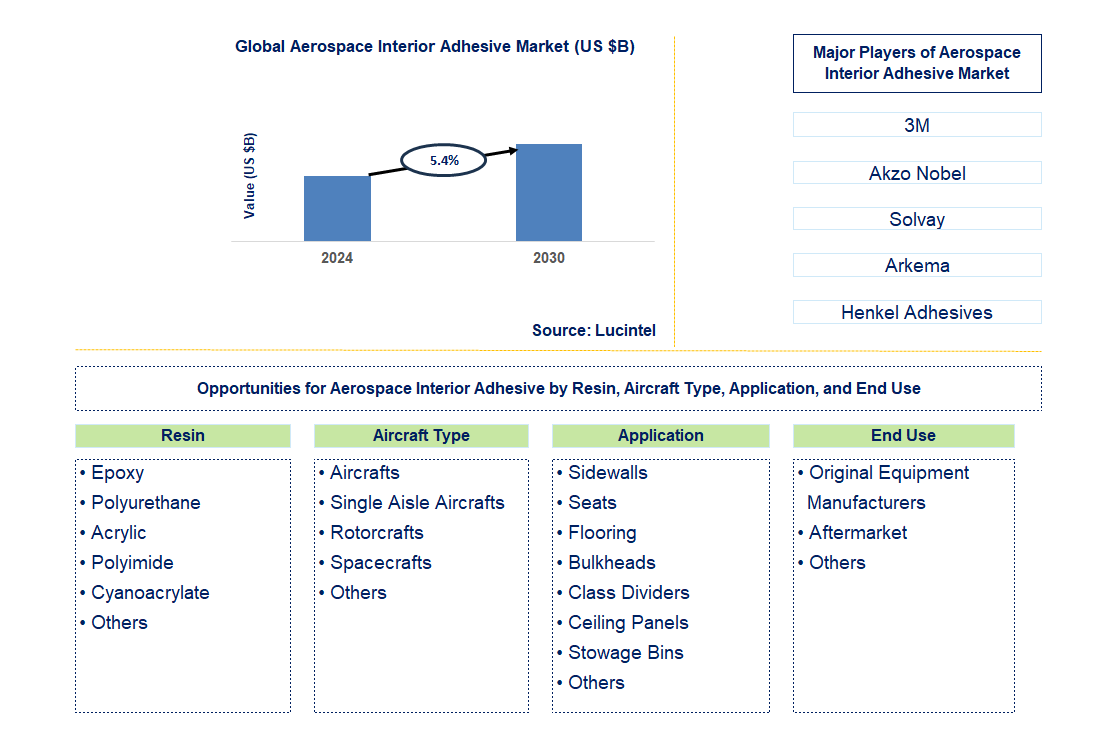
Key data points: The growth forecasts = 5.4% annually for the for the next 6 years. Scroll below to get more insights. This market report covers trends, opportunities, and forecastss in the global aerospace interior adhesive market to 2030 by resin (epoxy, polyurethane, acrylic, polyimide, cyanoacrylate, and others), aircraft type (aircrafts, single aisle aircrafts, rotorcrafts, spacecrafts, and others), application (sidewalls, seats, flooring, ducting, bulkheads, class dividers, ceiling panels, stowage bins, and others), end use (original equipment manufacturers, aftermarket, and others), and region (North America, Europe, Asia Pacific, and the Rest of the World)
We'll send your sample report shortly.
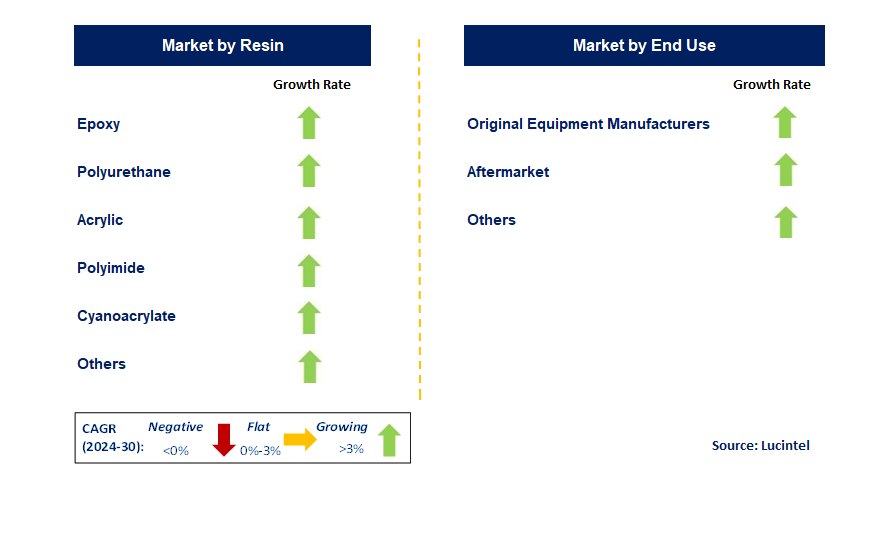
• Lucintel forecasts that, within the resin category, epoxy is expected to witness the highest growth over the forecast period due to high resistance to physical and chemical influences, and high level of long-term stability.
• Within the aircraft type category, aircrafts is expected to witness the largest growth due to more impact resistance and superior structural performance.
• In terms of regions, North America is expected to witness the highest growth over the forecast period due to growing technological advancement, new aerospace manufacturing facilities. Gain Valuable insights for your business decisions with our comprehensive 150+ page report.
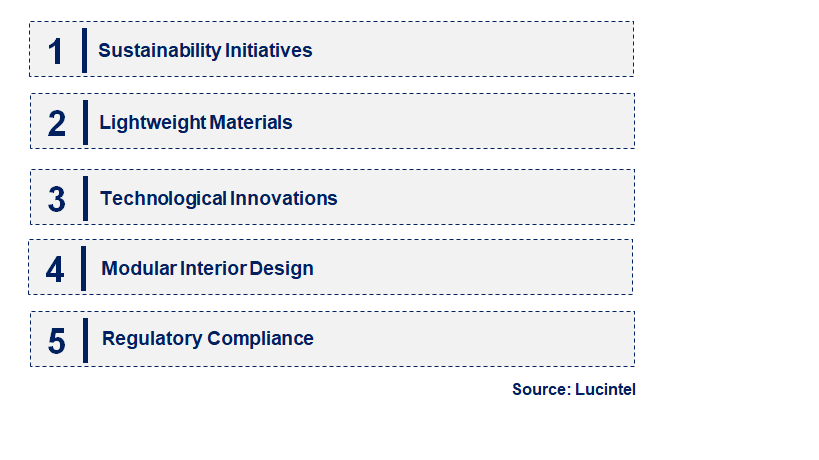
• Sustainability Initiatives: The shift toward sustainability is a primary trend, with manufacturers increasingly focusing on bio-based and eco-friendly adhesives. This change is driven by both regulatory pressures and consumer demand for greener products. Sustainable adhesives not only reduce environmental impact but also enhance brand reputation. Companies are investing in research to develop formulations that meet performance standards while minimizing carbon footprints, thus aligning with global sustainability goals.
• Lightweight Materials: As fuel efficiency becomes a critical factor in aerospace design, the use of lightweight materials is on the rise. Adhesives are being formulated to bond advanced composites and lightweight substrates effectively. This trend reduces overall aircraft weight, leading to lower fuel consumption and operational costs. Manufacturers are continuously innovating to produce adhesives that can perform under the demanding conditions typical of aerospace environments, ensuring reliability without adding weight.
• Technological Innovations: Emerging technologies, such as nanotechnology and smart materials, are transforming the adhesives landscape. These innovations enhance adhesive performance, offering improved strength, flexibility, and resistance to environmental factors. Manufacturers are exploring the integration of smart adhesives that can respond to changes in temperature and pressure, ensuring optimal performance in various conditions. Such advancements are critical for meeting the stringent requirements of modern aerospace applications.
• Modular Interior Design: The trend toward modular aircraft interiors is influencing adhesive formulations. These designs allow for easier reconfiguration and maintenance, necessitating versatile adhesives that can bond different materials seamlessly. This flexibility enhances the overall passenger experience and operational efficiency. Manufacturers are responding by developing adhesives that facilitate quick installations and modifications, aligning with the growing demand for customizable aircraft interiors.
• Regulatory Compliance: Stringent regulatory standards are shaping the development of aerospace interior adhesives. Manufacturers must ensure that their products meet safety and performance requirements set by authorities like the FAA and EASA. This compliance drives innovation, as companies seek to develop adhesives that not only meet these standards but also provide superior performance in terms of durability and safety. Staying ahead of regulatory changes is crucial for maintaining market competitiveness. In conclusion, the evolving trends in sustainability, technological innovation, and regulatory compliance are significantly reshaping the aerospace interior adhesives market. As manufacturers increasingly prioritize eco-friendly materials and processes, there is a growing demand for adhesives that meet stringent environmental standards while maintaining high performance. Additionally, advancements in adhesive formulations and application techniques are enhancing the efficiency and durability of aerospace interiors, leading to improved passenger experiences and reduced maintenance costs.
• Bio-Based Adhesives: Recent advancements in bio-based adhesive technology have gained traction in the aerospace industry. These adhesives, derived from renewable resources, provide a sustainable alternative to traditional petroleum-based products. They meet stringent safety standards while offering comparable performance. Manufacturers are increasingly adopting bio-based adhesives to align with global sustainability initiatives and meet the demands of environmentally conscious consumers, positively impacting brand image.
• High-Temperature Resistance: Developments in high-temperature resistant adhesives are becoming essential due to the extreme conditions faced in aerospace applications. New formulations are being engineered to withstand elevated temperatures while maintaining strong bonding capabilities. This innovation is crucial for enhancing the durability of aircraft interiors, particularly in areas exposed to heat. As a result, manufacturers are ensuring greater reliability and safety for passengers and crew.
• Adhesive Systems for Composites: With the increasing use of composite materials in aircraft construction, adhesive systems designed specifically for these materials are emerging. These adhesives are formulated to optimize adhesion between composite layers, ensuring structural integrity and performance. The introduction of these specialized systems allows manufacturers to leverage the benefits of composites, such as reduced weight and enhanced fuel efficiency while maintaining safety and compliance.
• Automation in Adhesive Application: The trend toward automation in adhesive application processes is transforming production efficiency. Automated systems improve precision and reduce waste, leading to more consistent quality in adhesive bonding. This shift not only enhances operational efficiency but also minimizes labor costs. As manufacturers adopt these technologies, they can streamline production processes and improve overall productivity in the aerospace interior adhesives market.
• Collaborative Research Initiatives: Collaborative research initiatives between industry stakeholders and academic institutions are driving innovation in aerospace interior adhesives. These partnerships focus on developing next-generation adhesives that meet emerging challenges in the industry. By pooling resources and expertise, participants can accelerate the development of advanced adhesive solutions that enhance performance and sustainability, ultimately benefiting the entire aerospace supply chain. Recent developments in the aerospace interior adhesives market are significantly influenced by trends toward sustainability, technological innovation, and compliance with regulatory standards. The introduction of bio-based adhesives, advancements in high-temperature resistance, and the focus on modular interior design illustrate the industry's commitment to meeting modern demands. These developments not only enhance product performance but also contribute to a more sustainable and efficient aerospace sector, reshaping the landscape for manufacturers and consumers alike.
• Aircraft Interior Panels: The demand for lightweight and durable adhesive solutions for aircraft interior panels is on the rise. These adhesives enhance structural integrity while minimizing weight, contributing to improved fuel efficiency. As airlines increasingly invest in upgrading cabin interiors to enhance passenger experience, manufacturers have the opportunity to innovate formulations that offer superior bonding strength and environmental resistance. This focus on aesthetic and functional enhancements in interior panels positions adhesive manufacturers favorably in a competitive market.
• Cabin Insulation: The growth of cabin insulation applications presents a strategic opportunity for adhesive manufacturers. Advanced adhesive technologies can enhance the performance of insulation materials, ensuring effective soundproofing and temperature regulation. As airlines seek to provide a more comfortable environment for passengers, the demand for effective insulation solutions will increase. Innovative adhesives that support lightweight and energy-efficient insulation will be crucial for compliance with evolving environmental regulations, making this application a key area for growth.
• Modular Cabin Components: The shift toward modular cabin designs is transforming the aerospace interiors landscape. Adhesives that facilitate easy assembly and disassembly of modular components are essential for this trend. This flexibility not only improves maintenance efficiency but also allows airlines to customize interiors based on passenger needs. Manufacturers can capitalize on this trend by developing versatile adhesive solutions that accommodate diverse materials and configurations, thus enhancing the adaptability of aircraft interiors.
• Seating Systems: Seating systems in aircraft represent a significant growth opportunity for aerospace interior adhesives. As airlines invest in ergonomic and customizable seating options, the need for adhesives that ensure comfort, durability, and safety becomes critical. High-performance adhesives that bond various materials, such as foams and fabrics, will be in high demand. By focusing on innovations that enhance passenger experience while maintaining safety standards, manufacturers can strengthen their market position in this application.
• Decorative Finishes: The trend toward aesthetic enhancements in aircraft interiors opens up opportunities for decorative finishes that require specialized adhesive solutions. As airlines strive to differentiate their offerings, the demand for visually appealing and durable interiors is rising. Adhesives that can effectively bond decorative materials, such as laminates and films, while ensuring longevity and resistance to wear and tear will be increasingly sought after. This application allows adhesive manufacturers to innovate and expand their product portfolios, meeting the growing expectations of airlines and passengers alike. The aerospace interior adhesives market is witnessing strategic growth opportunities across various applications, driven by trends in passenger comfort, modularity, and aesthetics. As manufacturers innovate to meet the specific needs of each application, they can enhance their competitive advantage while contributing to overall improvements in the aerospace sector.
• Technological Advancements: Innovations in adhesive technology are significant drivers in the aerospace sector. New formulations, such as bio-based and high-temperature-resistant adhesives, enhance performance and sustainability. These advancements allow manufacturers to meet stringent regulatory requirements while improving operational efficiency. As airlines increasingly demand lightweight and durable materials, adhesive technology will continue to evolve, providing opportunities for growth and differentiation in the market.
• Growing Demand for Lightweight Materials: The aerospace industry is increasingly focused on reducing weight to improve fuel efficiency and reduce emissions. This trend drives demand for lightweight adhesive solutions that can bond advanced composite materials. As aircraft manufacturers strive to optimize their designs, the need for innovative adhesives that maintain structural integrity while minimizing weight becomes crucial. This demand will fuel market growth as manufacturers adapt to meet these specifications.
• Sustainability Initiatives: With a global push toward sustainability, the aerospace sector is prioritizing eco-friendly materials and processes. Adhesives derived from renewable resources are gaining traction as manufacturers seek to reduce their environmental impact. This trend aligns with regulatory requirements and consumer preferences for greener solutions, driving the development of sustainable adhesive technologies. Companies that can offer eco-friendly adhesive options will likely find significant growth opportunities.
• Increasing Passenger Comfort and Experience: As airlines compete for customer loyalty, enhancing passenger comfort is a top priority. This focus drives demand for high-quality interior solutions, including adhesives that provide durability and aesthetic appeal. Innovations in seating, cabin layouts, and insulation materials require advanced adhesive solutions to ensure performance and safety. The emphasis on passenger experience will continue to propel the growth of the aerospace interior adhesives market. 5. Regulatory Compliance: Stringent regulatory standards in the aerospace industry are significant drivers for adhesive innovation. Compliance with safety and environmental regulations necessitates the development of advanced adhesive formulations. Manufacturers that prioritize compliance can gain a competitive edge by ensuring their products meet or exceed regulatory requirements. This focus on compliance drives continuous improvement and fosters trust among stakeholders. Challenges in the aerospace interior adhesive market are:
• Supply Chain Disruptions: The aerospace industry often faces supply chain disruptions due to geopolitical tensions, natural disasters, and other unforeseen events. These disruptions can hinder the availability of raw materials required for adhesive production, impacting manufacturers' ability to meet demand. The resulting uncertainty can lead to increased costs and delays, affecting overall market performance. Companies must develop resilient supply chains to mitigate these challenges and ensure consistent product availability.
• Intense Competition: The aerospace interior adhesives market is characterized by intense competition among established players and new entrants. This competition can drive down prices, impacting profit margins for manufacturers. To succeed, companies must differentiate their products through innovation, quality, and customer service. Failing to do so may result in losing market share to competitors, challenging overall growth prospects.
• Technological Complexity: The increasing complexity of adhesive technologies presents a challenge for manufacturers. As materials and applications evolve, the need for specialized adhesive solutions becomes paramount. However, developing these advanced formulations requires significant investment in research and development. Smaller manufacturers may struggle to keep pace with these technological advancements, creating a barrier to entry and limiting market participation. The aerospace interior adhesives market is shaped by a complex interplay of drivers and challenges, including technological advancements, regulatory pressures, and competitive dynamics. While opportunities for growth abound, stakeholders must navigate the hurdles presented by supply chain issues and intense competition. By leveraging technological innovation and focusing on sustainability, manufacturers can enhance their market position and address the evolving needs of the aerospace industry.
• 3M
• Akzo Nobel
• Solvay
• Arkema
• Henkel Adhesives Technologies
• Huntsman International
• Hexcel
• Epoxy
• Polyurethane
• Acrylic
• Polyimide
• Cyanoacrylate
• Others
• Aircrafts
• Single Aisle Aircrafts
• Rotorcrafts
• Spacecrafts
• Others
• Sidewalls
• Seats
• Flooring
• Bulkheads
• Class Dividers
• Ceiling Panels
• Others
• Original Equipment Manufacturers
• Aftermarket
• Others
• North America
• Europe
• Asia Pacific
• The Rest of the World
• United States: In the U.S., advancements in aerospace interior adhesives are centered around developing high-performance, lightweight materials that enhance fuel efficiency. Companies are investing in bio-based adhesives that reduce environmental impact while maintaining strength and durability. The Federal Aviation Administration (FAA) is updating regulations to ensure compliance with safety standards, encouraging manufacturers to adopt innovative adhesive technologies. Additionally, there is a growing trend toward modular interiors, which require versatile adhesive solutions that allow for easy modification and maintenance.
• China: Chinese aerospace sector is rapidly expanding, leading to increased demand for advanced adhesive solutions. Domestic manufacturers are focusing on producing adhesives that meet international standards while also catering to local needs. The government is investing in research and development to enhance the performance of adhesives, especially for composite materials used in aircraft interiors. Furthermore, sustainability is becoming a priority, with a push toward developing eco-friendly adhesives that align with global environmental goals.
• Germany: Germany remains a leader in aerospace technology, with a strong emphasis on innovation in adhesive formulations. Recent developments include the integration of smart materials that respond to environmental conditions, enhancing the durability of aerospace interiors. German manufacturers are also focusing on high-temperature-resistant adhesives that ensure performance under extreme conditions. Collaborative projects between industry and research institutions aim to develop next-generation adhesives, promoting sustainable practices and reducing waste in production processes.
• India: Indian aerospace industry is growing rapidly, leading to a surge in demand for advanced adhesive solutions. Recent developments include the localization of adhesive production to reduce dependency on imports and improve supply chain resilience. Companies are increasingly adopting eco-friendly adhesives to comply with international standards and cater to a more environmentally conscious market. Additionally, collaborations with global aerospace firms are facilitating knowledge transfer and the introduction of innovative adhesive technologies tailored to local needs.
• Japan: In Japan, advancements in aerospace interior adhesives focus on enhancing passenger comfort and safety. The market is witnessing the introduction of lightweight, high-strength adhesives that comply with stringent safety regulations. Japanese manufacturers are also exploring the use of nanotechnology to improve adhesive properties, making them more effective in diverse applications. Furthermore, there is a growing emphasis on sustainability, with companies developing bio-based adhesives that align with Japan's commitment to reducing carbon emissions in the aerospace sector.


• 3M
• Akzo Nobel
• Solvay
• Arkema
• Henkel Adhesives Technologies
• Huntsman International
• Hexcel Q5. Which aerospace interior adhesive market segment will be the largest in future? Answer: Lucintel forecasts that epoxy is expected to witness the highest growth over the forecast period due to high resistance to physical and chemical influences, and high level of long-term stability. Q6. In aerospace interior adhesive market, which region is expected to be the largest in next 5 years? Answer: North America is expected to witness highest growth over the forecast period due to growing technological advancement, new aerospace manufacturing facilities. Q.7 Do we receive customization in this report? Answer: Yes, Lucintel provides 10% customization without any additional cost.


Choose a license that fits your team. Instant PDF delivery.
Prices exclude taxes. Instant delivery. Custom licensing available on request.
Market Report · July 22, 2026
Market Report · July 7, 2026
Market Report · May 18, 2026
Trusted partner for strategic intelligence and business growth


Receive a complimentary market analysis tailored to your industry. Our analysts will identify key growth opportunities and competitive dynamics specific to your business.

Market size, growth rate, and key trend analysis for your specific sector.

Top competitor positioning and market share analysis.

Strategic recommendations backed by data-driven insights.
Get curated market intelligence and competitive moves straight to your inbox.
By subscribing, you agree to receive our monthly insights. Unsubscribe anytime.
Receive a complimentary market analysis tailored to your industry. Our analysts will identify key growth opportunities and competitive dynamics specific to your business.
Market size, growth rate, and key trend analysis for your specific sector.
Top competitor positioning and market share analysis.
Strategic recommendations backed by data-driven insights.
Get curated market intelligence, emerging trends, and competitive moves straight to your inbox each month.
By subscribing, you agree to receive our monthly insights. Unsubscribe anytime.
We'll send your sample report shortly.