
Market Report · July 17, 2026

Key data points: The market size in 2035 = $19,558 million, growth forecast = 5.3% annually for the next 8 years. Scroll below to get more insights. This market report covers trends, opportunities and forecasts in adhesives in construction market to 2035 by resin type (acrylic, polyvinyl acetate, polyurethanes, epoxy, and others), technology (water based, reactive, solvent based, and others), application (residential, commercial, industrial, and others), and region (North America, Europe, Asia Pacific, and the Rest of the World)
We'll send your sample report shortly.
• Lucintel forecasts that, within the resin type category, acrylic is expected to witness the highest growth over the forecast period.
• Within the application category, residential is expected to witness the highest growth.
• In terms of region, APAC is expected to witness the highest growth over the forecast period.
Gain valuable insights for your business decisions with our comprehensive 150+ page report. Sample figures with some insights are shown below.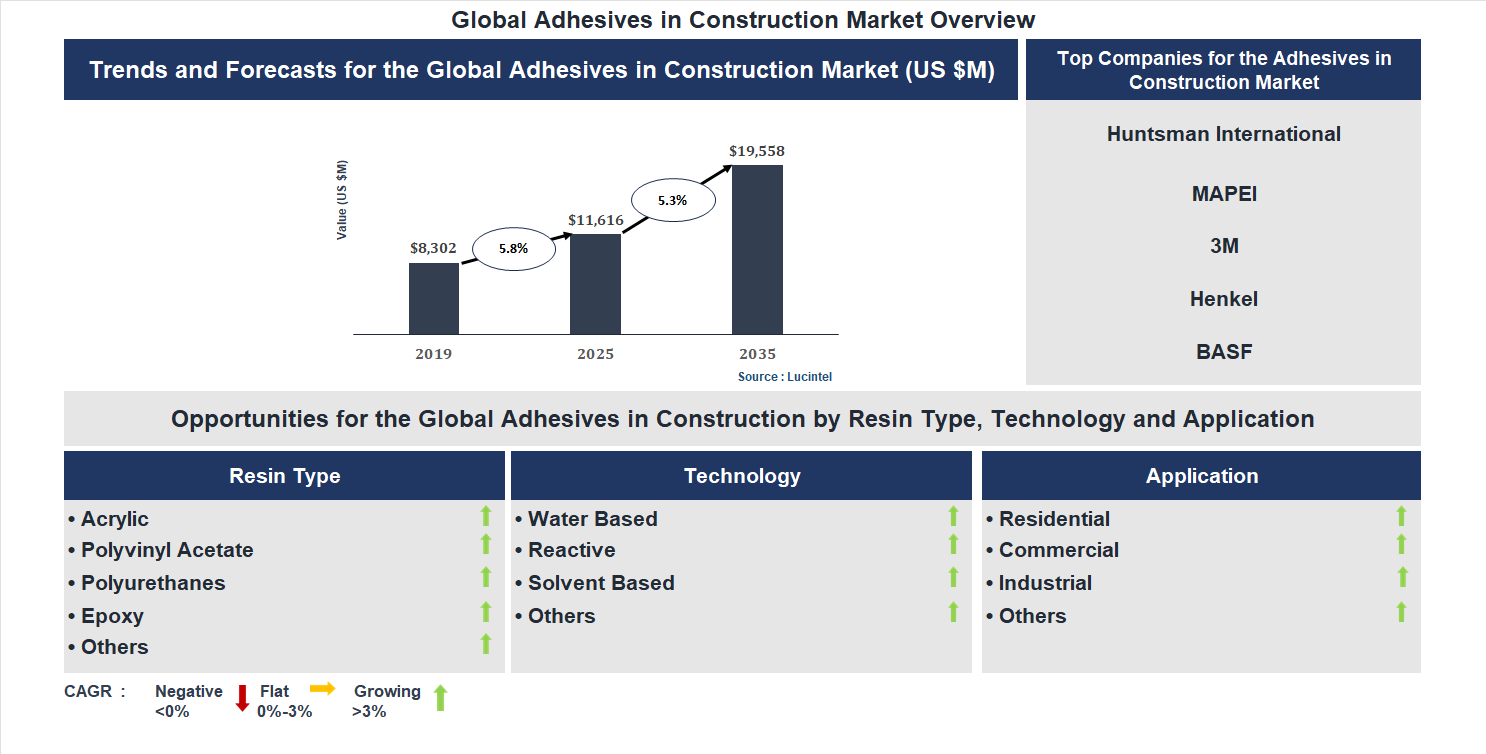
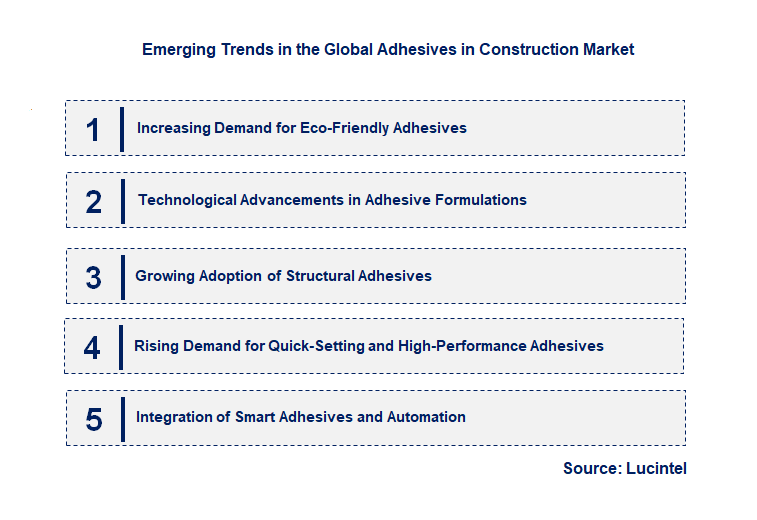
• Increasing Demand for Eco-Friendly Adhesives: Growing environmental awareness and stricter regulations are driving the adoption of sustainable adhesives. These products are formulated with low volatile organic compounds (VOCs), renewable materials, and reduced environmental impact. The market is witnessing a shift towards bio-based and water-based adhesives, which offer comparable performance to traditional options while minimizing ecological footprints. This trend not only aligns with global sustainability goals but also appeals to environmentally conscious consumers and builders. As a result, manufacturers are investing in research and development to create innovative, eco-friendly adhesive solutions that meet industry standards and consumer preferences.
• Technological Advancements in Adhesive Formulations: Innovation in adhesive chemistry is leading to the development of high-performance, specialized products. These include fast-curing, high-strength, and flexible adhesives designed for specific construction applications such as bonding heavy materials or accommodating structural movements. Advanced formulations also offer improved durability, weather resistance, and ease of application, reducing labor costs and project timelines. The integration of nanotechnology and other cutting-edge materials enhances adhesive properties further. These technological improvements are expanding the scope of adhesive applications in construction, enabling more complex and demanding projects to be completed efficiently and reliably.
• Growing Adoption of Structural Adhesives: Structural adhesives are increasingly replacing traditional mechanical fasteners and welds due to their superior load distribution and aesthetic benefits. They enable seamless bonding of various materials like concrete, steel, and composites, which is essential for modern architectural designs. The use of structural adhesives enhances the strength, durability, and safety of construction elements while reducing material usage and construction time. This trend is particularly prominent in high-rise buildings, bridges, and prefabricated structures. As building codes evolve and the demand for innovative construction techniques rises, structural adhesives are becoming a critical component in modern construction practices.
• Rising Demand for Quick-Setting and High-Performance Adhesives: Construction projects are under constant pressure to reduce timelines and improve efficiency. Quick-setting adhesives facilitate faster assembly and curing, enabling faster project completion and minimizing delays. High-performance adhesives offer superior bonding strength, flexibility, and resistance to environmental factors such as moisture, temperature fluctuations, and chemical exposure. These qualities are vital for ensuring long-term structural integrity. The demand for such adhesives is driven by the need for rapid construction, especially in commercial, industrial, and infrastructure projects. Manufacturers are focusing on developing products that meet these performance criteria to cater to this growing market segment.
• Integration of Smart Adhesives and Automation: The advent of smart adhesives with properties like self-healing, sensor integration, and adaptability is transforming construction bonding processes. These adhesives can monitor structural health, respond to environmental changes, or facilitate easier application through automation. Automation in adhesive application, including robotic dispensing and digital control systems, enhances precision, reduces waste, and improves safety. This integration supports the trend towards Industry 4.0 in construction, promoting efficiency and innovation. As technology advances, the adoption of smart adhesives and automated processes is expected to accelerate, leading to smarter, more resilient, and sustainable construction practices.
• Growing Demand for Sustainable Adhesives: The construction industry is shifting towards eco-friendly solutions, prompting manufacturers to develop biodegradable and low-VOC adhesives. This trend reduces environmental impact and aligns with green building standards, increasing market adoption. The demand for sustainable adhesives is expected to drive innovation, expand market share, and meet stricter regulations, ultimately fostering a more environmentally responsible construction sector.
• Technological Advancements in Adhesive Formulations: Innovations such as high-performance, fast-curing, and weather-resistant adhesives are transforming construction practices. These advanced formulations improve efficiency, durability, and safety on-site, reducing labor costs and project timelines. The integration of nanotechnology and bio-based materials further enhances adhesive properties, opening new applications and markets. This technological progress is crucial for meeting the increasing complexity of modern construction projects.
• Expansion in Emerging Markets: Rapid urbanization and infrastructure development in regions like Asia-Pacific and Africa are fueling demand for construction adhesives. Local manufacturers are expanding their product portfolios and establishing distribution networks to capture market share. This growth offers significant opportunities for global companies to penetrate new markets, adapt products to regional needs, and benefit from rising construction activities, thereby boosting overall market revenue.
• Increasing Adoption of Construction Adhesives in Residential and Commercial Sectors: The rising need for quick, durable, and versatile bonding solutions is driving adhesive use in residential and commercial buildings. Innovations in adhesive technology enable seamless, aesthetic finishes and reduce construction time. This trend is supported by increasing investments in real estate and infrastructure, leading to higher demand for adhesives that meet safety and quality standards, ultimately expanding market size and scope.
• Focus on Product Innovation and Customization: Companies are investing in R&D to develop tailored adhesive solutions for specific construction applications, such as flooring, roofing, and insulation. Customization enhances performance and compatibility with various materials, improving overall project quality. This focus on innovation helps manufacturers differentiate their offerings, meet diverse customer needs, and gain competitive advantage, fostering a more resilient and versatile market environment.
• Expansion of Adhesives in Residential Construction: The rising demand for durable, quick-setting adhesives in residential buildings is a significant growth driver. These adhesives improve construction efficiency, reduce labor costs, and enhance structural integrity. Innovations in eco-friendly formulations are attracting environmentally conscious consumers. As urbanization accelerates globally, especially in developing regions, the need for reliable bonding solutions in housing projects is expected to surge, creating substantial opportunities for market players.
• Growing use of Adhesives in Commercial Infrastructure Projects: The commercial sector‘s expansion, including offices, malls, and hospitals, is boosting adhesive demand. These adhesives facilitate faster construction timelines, improve aesthetic finishes, and provide long-lasting bonds. The adoption of high-performance, fire-resistant, and low-VOC adhesives aligns with safety and environmental standards. Increased investments in infrastructure modernization and green building initiatives are further propelling this segment, offering lucrative prospects for manufacturers and suppliers.
• Adoption of Advanced Adhesive Technologies in Industrial Applications: Industrial construction, including factories and warehouses, requires specialized adhesives for heavy-duty bonding and structural stability. Innovations such as hybrid adhesives and moisture-resistant formulations are meeting these needs. The trend toward automation and prefabrication in construction also favors advanced adhesives that enable faster assembly. Growing industrialization in emerging markets and the need for resilient, high-strength bonding solutions are expected to significantly expand this segment.
• Rising Demand for Sustainable and Eco-Friendly Adhesives: Environmental regulations and consumer preferences are driving the shift toward sustainable adhesives with low VOC emissions and biodegradable components. These eco-friendly solutions are increasingly used in green building projects, LEED-certified constructions, and renovation activities. The development of bio-based adhesives and reduction of hazardous chemicals are creating new market opportunities. This trend aligns with global sustainability goals, encouraging manufacturers to innovate and expand their eco-conscious product portfolios.
• Increasing Application of Adhesives in Flooring and Wall Coverings: The construction of modern interiors relies heavily on adhesives for flooring, tiles, and wall coverings. These adhesives offer benefits such as improved durability, ease of installation, and aesthetic appeal. The demand for decorative and resilient surfaces in commercial and residential spaces is driving growth. Innovations in adhesive formulations that enhance flexibility, moisture resistance, and ease of removal are further expanding their use, making adhesives a vital component in interior finishing solutions.
• Technological Innovation: The development of advanced adhesive formulations, such as eco-friendly and high-performance adhesives, enhances application efficiency and durability. Innovations like UV-curable and hybrid adhesives enable faster installation and better bonding in diverse construction environments. These technological advancements meet the increasing demand for sustainable and high-quality construction materials, thereby expanding market opportunities. Companies investing in R&D to improve adhesive properties are likely to gain competitive advantages, fostering market growth.
• Urbanization and Infrastructure Development: Rapid urbanization worldwide, especially in emerging economies, fuels the need for extensive construction activities. Infrastructure projects such as roads, bridges, commercial buildings, and residential complexes require reliable bonding solutions. Governments‘ focus on smart cities and sustainable infrastructure further accelerates demand for innovative adhesives that meet safety and durability standards. This trend ensures a steady growth trajectory for the market, driven by large-scale projects and increased construction activities.
• Regulatory and Environmental Standards: Stringent regulations aimed at reducing volatile organic compounds (VOCs) and promoting environmentally friendly products influence market dynamics. Governments and industry bodies are imposing standards that require adhesives to be low in emissions and safe for indoor air quality. These regulations push manufacturers to develop compliant products, which can be more costly but open new market segments. Adapting to these standards is crucial for market players to maintain competitiveness and access global markets.
• Economic Growth and Investment: Economic stability and growth in key regions lead to increased investment in construction projects. Rising disposable incomes and government spending on infrastructure stimulate demand for adhesives that offer quick curing times and strong bonding capabilities. Additionally, the expansion of the construction sector in developing countries presents significant opportunities for market players to capture new markets and diversify their portfolios.
• Supply Chain and Raw Material Availability: The availability and cost of raw materials such as polymers, resins, and chemicals directly impact adhesive manufacturing. Disruptions in supply chains, geopolitical tensions, or fluctuations in raw material prices can hinder production and increase costs. Ensuring a stable supply chain and sourcing sustainable raw materials are vital for maintaining market growth and competitiveness.
• Fluctuating Raw Material Costs: The adhesives industry heavily depends on petrochemical-based raw materials, which are subject to volatile prices due to geopolitical tensions, supply-demand imbalances, and environmental policies. Rising costs can squeeze profit margins and lead to increased product prices, potentially reducing demand. Manufacturers must find ways to optimize sourcing and develop alternative formulations to mitigate these impacts, which can be resource-intensive and time-consuming.
• Stringent Environmental Regulations: Increasingly strict regulations aimed at reducing VOC emissions and promoting sustainable products pose significant challenges. Compliance often requires reformulating adhesives, investing in new manufacturing processes, and obtaining certifications, all of which increase costs and time-to-market. Non-compliance can result in legal penalties and loss of market access, making regulatory navigation a critical aspect for industry players.
• Technological Barriers and Market Penetration: Despite advancements, certain applications still face technological challenges, such as achieving optimal bonding in complex or high-moisture environments. Developing adhesives that meet diverse construction needs while maintaining cost-effectiveness remains difficult. Additionally, market penetration in developing regions can be hindered by lack of awareness, technical expertise, and infrastructure, limiting growth potential in these areas.
• Huntsman International
• MAPEI
• 3M
• Henkel
• BASF
• H.B. Fuller Company
• DAP Global
• Permabond
• Sika
• ARDEX AMERICAS
• Acrylic
• Polyvinyl Acetate
• Polyurethanes
• Epoxy
• Others
• Water Based
• Reactive
• Solvent Based
• Others
• Residential
• Commercial
• Industrial
• Others
• North America
• Europe
• Asia Pacific
• The Rest of the World
• United States: The U.S. construction adhesives market has seen a surge in demand for eco-friendly and low-VOC products, driven by stricter environmental regulations. Innovations include the adoption of water-based adhesives and advancements in structural bonding solutions for commercial and residential projects. The growth of green building initiatives and infrastructure investments has further propelled market expansion. Additionally, technological improvements in adhesive formulations have enhanced durability and application efficiency, supporting large-scale construction projects across the country.
• China: China remains the largest market for construction adhesives, fueled by rapid urbanization and infrastructure development. Recent developments include the increased use of high-performance, fast-curing adhesives suitable for large-scale projects. The government’s focus on sustainable construction has led to a rise in the adoption of environmentally friendly adhesives. Local manufacturers are investing in R&D to develop innovative products that meet international standards, while foreign companies are expanding their presence to capitalize on the growing demand.
• Germany: The German market emphasizes sustainability and high-quality standards in construction adhesives. Recent advancements include the development of bio-based and solvent-free adhesives that align with strict EU environmental regulations. Germany is also witnessing increased use of adhesives in renovation and retrofit projects, driven by energy efficiency initiatives. Technological innovations focus on improving adhesive strength, flexibility, and ease of application, supporting Germany’s reputation for precision engineering and sustainable construction practices.
• India: The Indian construction adhesives market is experiencing rapid growth due to urbanization, infrastructure projects, and government initiatives like Smart Cities. Recent developments include the introduction of cost-effective, versatile adhesives suitable for diverse construction materials. There is a rising demand for environmentally friendly and quick-setting adhesives to meet project deadlines. Local manufacturers are expanding their product portfolios, and international players are entering the market to cater to the increasing demand for innovative adhesive solutions in residential, commercial, and industrial sectors.
• Japan: Japan’s construction adhesives market is characterized by technological innovation and a focus on earthquake-resistant solutions. Recent developments include the use of high-performance adhesives that provide enhanced bonding strength and flexibility for seismic retrofitting and new constructions. Japan is also investing in eco-friendly adhesives with low emissions and high durability. The market benefits from advanced R&D efforts aimed at developing adhesives suitable for complex architectural designs and sustainable building practices, aligning with Japan’s emphasis on resilience and environmental responsibility.


• Huntsman International
• MAPEI
• 3M
• Henkel
• BASF
• H.B. Fuller Company
• DAP Global
• Permabond
• Sika
• ARDEX AMERICAS
Q6. Which adhesives in construction market segment will be the largest in future?

Choose a license that fits your team. Instant PDF delivery.
Prices exclude taxes. Instant delivery. Custom licensing available on request.
Market Report · July 17, 2026
Market Report · July 17, 2026
Market Report · May 18, 2026
Trusted partner for strategic intelligence and business growth


Receive a complimentary market analysis tailored to your industry. Our analysts will identify key growth opportunities and competitive dynamics specific to your business.

Market size, growth rate, and key trend analysis for your specific sector.

Top competitor positioning and market share analysis.

Strategic recommendations backed by data-driven insights.
Get curated market intelligence and competitive moves straight to your inbox.
By subscribing, you agree to receive our monthly insights. Unsubscribe anytime.
Receive a complimentary market analysis tailored to your industry. Our analysts will identify key growth opportunities and competitive dynamics specific to your business.
Market size, growth rate, and key trend analysis for your specific sector.
Top competitor positioning and market share analysis.
Strategic recommendations backed by data-driven insights.
Get curated market intelligence, emerging trends, and competitive moves straight to your inbox each month.
By subscribing, you agree to receive our monthly insights. Unsubscribe anytime.
We'll send your sample report shortly.