
Report Feature
Acute Viral Rhinosinusitis Treatment Market Trends and Forecast
The future of the global acute viral rhinosinusitis treatment market looks promising with opportunities in the offline pharmacy, e-commerce markets. The global acute viral rhinosinusitis treatment market is expected to grow with a CAGR of 6.2% from 2025 to 2031. The major drivers for this market are increasing incidences of sinusitis to boost the market growth, rise in funding from both private and government organizations, and the growing prevalence of chronic diseases. Lucintel forecasts that, within the type category, nasal corticosteroids is expected to witness the highest growth over the forecast period due to targeted action and effectiveness in reducing inflammation and managing symptoms. Within the application category, offline pharmacy will remain the larger segment due to because traditional brick-and-mortar pharmacies are the primary source. In terms of region, North America will remain the largest region over the forecast period due to easy access to over-the-counter treatments,strong pharmaceutical market growth. Gain valuable insights for your business decisions with our comprehensive 150+ page report. Sample figures with some insights are shown below.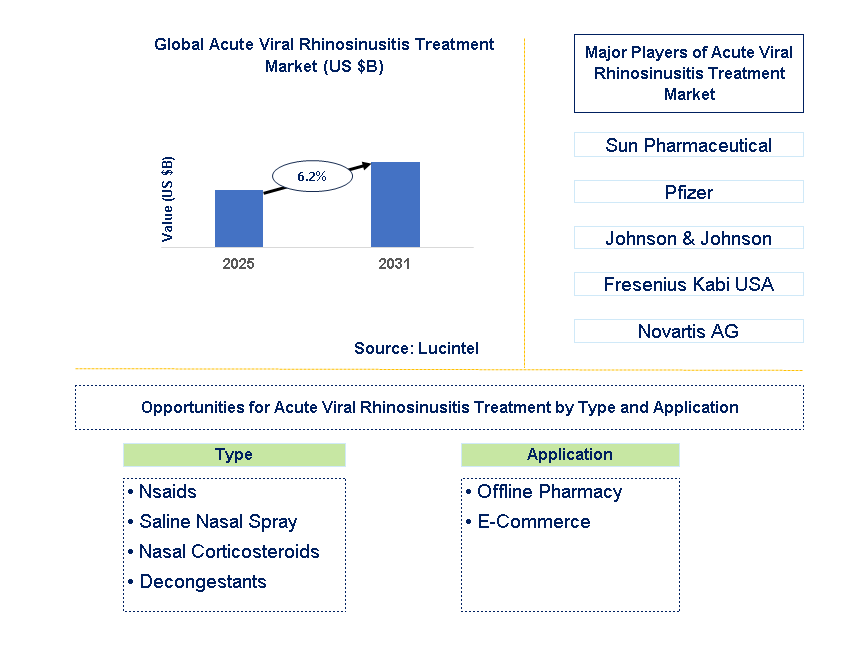
Acute Viral Rhinosinusitis Treatment Market by Segment
• Telemedicine for Early Diagnosis and Management: With the rise of telehealth platforms, telemedicine has become a key tool for diagnosing and managing AVRS. Patients can consult doctors remotely, receive prescriptions, and avoid unnecessary visits to healthcare facilities. This trend is especially beneficial in remote or rural areas where access to care is limited.
• Advancements in Antiviral Treatments: Research into antiviral drugs that can reduce the severity and duration of AVRS symptoms is gaining traction. The development of new medications targeting rhinovirus and influenza is expected to offer more effective treatment options, reducing reliance on symptomatic treatments and potentially preventing complications.
• Personalized Treatment Approaches: Personalized medicine is increasingly being used to tailor treatments to individual patients based on their genetic makeup, symptoms, and underlying conditions. This approach ensures more effective and targeted therapy, particularly in patients with comorbidities or severe symptoms of AVRS.
• Prevention and Public Awareness: Increasing public awareness of AVRS and preventive measures such as proper hand hygiene, vaccinations (especially for influenza), and the importance of avoiding unnecessary antibiotic use is a growing trend. These efforts are expected to reduce the incidence of AVRS and mitigate the spread of viral infections. These emerging trends are fundamentally reshaping the AVRS treatment market by improving patient outcomes, reducing the burden on healthcare systems, and promoting more sustainable and evidence-based approaches. As new antiviral treatments and preventive measures become available, patients will benefit from faster recovery times and fewer complications, making AVRS management more efficient and effective." src="Emerging Trends in the Acute Viral Rhinosinusitis Treatment Market" style="height: auto;width: auto;" title="The treatment landscape for acute viral rhinosinusitis treatment is rapidly evolving, driven by emerging trends in medical research, digital health, and patient-centered care. These trends include an increasing focus on the avoidance of unnecessary antibiotics, greater use of telemedicine, a rise in preventative measures, advancements in antiviral treatments, and the integration of complementary therapies. Each of these trends is contributing to improved patient outcomes and the development of more effective treatment options.
• Antibiotic Stewardship: Efforts to reduce the overuse of antibiotics are a major trend in AVRS treatment. Given that AVRS is caused by viruses, antibiotics are ineffective and can contribute to antibiotic resistance. Medical guidelines are increasingly recommending symptomatic treatments like decongestants, nasal sprays, and saline irrigation instead of antibiotics.
• Telemedicine for Early Diagnosis and Management: With the rise of telehealth platforms, telemedicine has become a key tool for diagnosing and managing AVRS. Patients can consult doctors remotely, receive prescriptions, and avoid unnecessary visits to healthcare facilities. This trend is especially beneficial in remote or rural areas where access to care is limited.
• Advancements in Antiviral Treatments: Research into antiviral drugs that can reduce the severity and duration of AVRS symptoms is gaining traction. The development of new medications targeting rhinovirus and influenza is expected to offer more effective treatment options, reducing reliance on symptomatic treatments and potentially preventing complications.
• Personalized Treatment Approaches: Personalized medicine is increasingly being used to tailor treatments to individual patients based on their genetic makeup, symptoms, and underlying conditions. This approach ensures more effective and targeted therapy, particularly in patients with comorbidities or severe symptoms of AVRS.
• Prevention and Public Awareness: Increasing public awareness of AVRS and preventive measures such as proper hand hygiene, vaccinations (especially for influenza), and the importance of avoiding unnecessary antibiotic use is a growing trend. These efforts are expected to reduce the incidence of AVRS and mitigate the spread of viral infections. These emerging trends are fundamentally reshaping the AVRS treatment market by improving patient outcomes, reducing the burden on healthcare systems, and promoting more sustainable and evidence-based approaches. As new antiviral treatments and preventive measures become available, patients will benefit from faster recovery times and fewer complications, making AVRS management more efficient and effective." />
Emerging Trends in the Acute Viral Rhinosinusitis Treatment Market
Recent Development in the Acute Viral Rhinosinusitis Treatment Market
In recent years, there have been several key developments in the treatment of acute viral rhinosinusitis (AVRS). These developments have been driven by advancements in pharmaceutical research, telemedicine, and a shift towards more patient-centric approaches. The growing understanding of viral mechanisms, the rise of antiviral drugs, and the expansion of public health initiatives are all contributing to better treatment outcomes for AVRS patients.• Research in Antiviral Drugs: The development of antiviral medications aimed at shortening the duration of AVRS symptoms has been a key focus. Although no specific antiviral drug for AVRS has yet been universally accepted, ongoing research into rhinovirus inhibitors and other antivirals holds promise for the future treatment of viral sinus infections.
• Telemedicine Integration: The integration of telemedicine into the management of AVRS has been one of the most significant developments in recent years. Patients can now access healthcare providers remotely, enabling quicker diagnosis and treatment, particularly in regions where healthcare facilities are scarce. This trend has helped reduce the burden on healthcare systems and improved patient satisfaction.
• Public Health Campaigns on Antibiotic Resistance: Governments and health organizations have focused on promoting the appropriate use of antibiotics. These campaigns educate the public about the ineffectiveness of antibiotics for viral infections and encourage the use of supportive treatments such as decongestants and nasal sprays, significantly reducing antibiotic misuse.
• Expanded Access to Over-the-Counter Treatments: Over-the-counter (OTC) treatments for AVRS symptoms, including nasal decongestants, antihistamines, and saline sprays, have become more widely available and better marketed. This enables patients to self-manage their condition more effectively, reducing unnecessary visits to healthcare providers.
• Focus on Preventive Measures: Governments and health organizations have increased efforts around preventive measures, such as the promotion of flu vaccinations, better hygiene practices, and public awareness campaigns. These initiatives aim to reduce the incidence of AVRS and prevent its spread. These developments are positively impacting the AVRS treatment market by improving the overall management of the disease, reducing healthcare costs, and promoting more effective use of medical resources. The shift toward telemedicine and better preventive care is reducing the strain on healthcare systems, while the growing use of antiviral treatments is expected to make a significant difference in patient outcomes.
Strategic Growth Opportunities in the Acute Viral Rhinosinusitis Treatment Market
The treatment market for acute viral rhinosinusitis presents significant growth opportunities, particularly in the areas of prevention, over-the-counter medications, digital health, and more effective antiviral therapies. By focusing on patient-centered approaches, the market can further optimize care delivery while reducing the burden on healthcare systems.• Telehealth Solutions: With the rise of telemedicine, there is a growing opportunity to integrate virtual care platforms for the diagnosis and treatment of AVRS. Patients can access remote consultations, receive prescriptions, and monitor their symptoms at home, improving access to care, especially in underserved regions.
• Antiviral Drug Development: The development of antiviral treatments that target the underlying viral cause of AVRS holds considerable potential. This market opportunity is supported by the growing recognition of the need for specific treatments that reduce the duration of symptoms and prevent complications from viral infections.
• Increased Availability of OTC Treatments: The expanding range of over-the-counter treatments for AVRS, such as nasal decongestants, antihistamines, and saline sprays, presents a growth opportunity. These treatments enable patients to manage their symptoms more effectively without the need for prescription medications or visits to healthcare providers.
• Preventive Vaccines and Public Health Initiatives: Vaccines, particularly those targeting influenza, which can mimic AVRS symptoms, present growth opportunities in the market. Public health campaigns focused on prevention through vaccination and hygiene practices can reduce the overall burden of AVRS.
• Personalized Medicine: As the understanding of individual responses to treatments improves, the opportunity for personalized treatment plans for AVRS patients is increasing. Tailoring treatments to specific patients based on genetic and environmental factors can lead to more effective outcomes and reduced healthcare costs. These growth opportunities are reshaping the AVRS treatment market by promoting more accessible, effective, and personalized care. The rise of telemedicine, along with advancements in antiviral drugs and preventive measures, is driving innovation, improving patient outcomes, and expanding treatment options. As these opportunities are realized, the treatment landscape for AVRS will become more patient-centered and efficient.
Acute Viral Rhinosinusitis Treatment Market Driver and Challenges
The acute viral rhinosinusitis treatment market is influenced by various drivers and challenges that shape its development. Technological advancements, economic considerations, and regulatory factors contribute to growth, while challenges like patient self-medication and the overuse of antibiotics persist. The factors responsible for driving the Acute Viral Rhinosinusitis Treatmentmarket include: 1. Growing Focus on Antibiotic Resistance: As awareness of antibiotic resistance increases, healthcare providers are increasingly opting for non-antibiotic treatments, driving growth in AVRS management options. This shift promotes the use of decongestants, nasal sprays, and other supportive therapies over unnecessary antibiotic prescriptions. 2. Telemedicine Expansion: The rise of telemedicine enables healthcare professionals to diagnose and manage AVRS remotely, improving accessibility and reducing the burden on in-person consultations. This trend also helps streamline care, especially in underserved areas. 3. Increased Research in Antiviral Treatments: Continued investment in antiviral drugs and research to combat viral infections is driving the development of more effective treatments for AVRS. This trend holds promise for reducing symptom duration and improving patient recovery rates. 4. Prevention and Public Awareness Campaigns: With a focus on prevention through vaccination and hygiene, public health campaigns are reducing the incidence of AVRS and improving early intervention. This helps mitigate the burden on healthcare systems and promotes healthier populations. 5. Patient Demand for Convenient Care: With patients increasingly seeking convenient, non-invasive treatment options, there is rising demand for OTC treatments, telemedicine, and symptom management solutions, leading to growth in these areas. Challenges in the Acute Viral Rhinosinusitis Treatmentmarket are: 1. Antibiotic Overuse: Despite efforts to curb antibiotic prescriptions for viral infections, patient self-medication remains a significant challenge, contributing to antibiotic resistance and inefficiencies in treatment. 2. Lack of Specific Antiviral Drugs: Although research is progressing, the absence of widely accepted antiviral treatments for AVRS remains a challenge. Effective antiviral therapies would allow for more targeted treatments and improved patient outcomes. 3. Access and Affordability: In many regions, especially in developing countries, access to advanced treatments, vaccines, and telemedicine services remains limited, hindering progress in managing AVRS on a global scale. These drivers and challenges are shaping the AVRS treatment market by highlighting the importance of reducing unnecessary antibiotic use, expanding access to innovative treatment options like telemedicine and antiviral drugs, and promoting prevention efforts. Addressing these challenges will be crucial to optimizing AVRS management globally, improving patient outcomes, and reducing healthcare costs.List of Acute Viral Rhinosinusitis Treatment Companies
Companies in the market compete on the basis of product quality offered. Major players in this market focus on expanding their manufacturing facilities, R&D investments, infrastructural development, and leverage integration opportunities across the value chain. With these strategies acute viral rhinosinusitis treatment companies cater increasing demand, ensure competitive effectiveness, develop innovative products & technologies, reduce production costs, and expand their customer base. Some of the acute viral rhinosinusitis treatment companies profiled in this report include-• Sun Pharmaceutical Industries
• Pfizer
• Johnson & Johnson
• Fresenius Kabi USA
• Novartis AG
Acute Viral Rhinosinusitis Treatment Market by Segment
The study includes a forecast for the global acute viral rhinosinusitis treatment market by type, application, and region.Acute Viral Rhinosinusitis Treatment Market by Type [Value from 2019 to 2031]:
• Nsaids
• Saline Nasal Spray
• Nasal Corticosteroids
• Decongestants
Acute Viral Rhinosinusitis Treatment Market by Application [Value from 2019 to 2031]:
• Offline Pharmacy
• E-Commerce
Acute Viral Rhinosinusitis Treatment Market by Region [Value from 2019 to 2031]:
• North America
• Europe
• Asia Pacific
• The Rest of the World
Country Wise Outlook for the Acute Viral Rhinosinusitis Treatment Market
Acute viral rhinosinusitis treatment, commonly known as the common cold, remains one of the most prevalent upper respiratory infections globally. With its high incidence, especially during cold and flu seasons, the treatment landscape for AVRS is evolving. Advances in diagnostic tools, emerging therapies, and preventive measures have shaped the treatment strategies in countries such as the United States, China, Germany, India, and Japan. These nations are addressing the challenges of managing this condition, which often overlaps with bacterial infections, through a combination of symptomatic treatments, antiviral drugs, and improved patient care models.• United States: In the United States, recent developments in the treatment of acute viral rhinosinusitis (AVRS) focus on symptom management and the use of over-the-counter (OTC) medications, as well as emerging antiviral drugs. Research into antiviral therapies, particularly those targeting rhinovirus and influenza, has gained momentum, although antibiotics remain unnecessary and are avoided unless secondary bacterial infections develop. There’s also growing emphasis on integrating telemedicine for early diagnosis and symptom management, especially as healthcare accessibility improves. Public health campaigns continue to highlight preventive strategies such as vaccination against influenza, which shares similar symptoms with AVRS.
• China: China has seen significant advancements in the management of AVRS through a combination of traditional medicine and modern treatment methods. The rise in urbanization has led to better access to healthcare, increasing the use of both pharmaceutical and complementary treatments. Antiviral medications are being explored in China to reduce the duration and severity of symptoms. Acupuncture and herbal remedies are still commonly used for symptom relief, and there is growing interest in their integration with modern medical approaches. Public awareness programs and better diagnostic tools are also playing a key role in improving outcomes for AVRS patients.
• Germany: Germany is focusing on evidence-based treatments for AVRS, with an emphasis on reducing antibiotic overuse. The use of decongestants, antihistamines, and nasal corticosteroids remains common for symptom relief. Recently, Germany has also seen the development and promotion of new antiviral therapies that show promise in reducing the duration of symptoms. There is a growing trend toward personalized treatments, as advancements in genetic testing and patient-specific data may help determine which therapies are most effective for individuals. Additionally, Germany is prioritizing education campaigns to inform the public about the importance of not overusing antibiotics for viral infections.
• India: In India, acute viral rhinosinusitis remains a major healthcare concern, especially in densely populated areas. The use of symptomatic treatments, including nasal decongestants and analgesics, is widespread. However, overuse of antibiotics is a challenge, with many patients self-medicating. There is growing awareness around the need for appropriate antiviral treatments, though affordability and accessibility remain significant barriers. In urban centers, telemedicine is gaining traction, offering patients the ability to consult with doctors remotely. India is also seeing a rise in the availability of newer, more affordable antiviral drugs to address AVRS symptoms effectively and reduce complications.
• Japan: Japan has made significant strides in the treatment of acute viral rhinosinusitis, particularly with regard to the use of advanced diagnostic tools and early intervention strategies. The country’s healthcare system is highly efficient, and treatments such as nasal corticosteroids, decongestants, and saline nasal irrigation are commonly prescribed. Japan is also focusing on reducing antibiotic use, aligning with global efforts to curb antibiotic resistance. There is increased use of preventative measures such as influenza vaccination and public awareness campaigns. Additionally, telemedicine platforms are being explored to improve patient access to healthcare, allowing for more timely diagnoses and interventions.

Features of the Global Acute Viral Rhinosinusitis Treatment Market
Market Size Estimates: Acute viral rhinosinusitis treatment market size estimation in terms of value ($B). Trend and Forecast Analysis: Market trends (2019 to 2024) and forecast (2025 to 2031) by various segments and regions. Segmentation Analysis: Acute viral rhinosinusitis treatment market size by type, application, and region in terms of value ($B). Regional Analysis: Acute viral rhinosinusitis treatment market breakdown by North America, Europe, Asia Pacific, and Rest of the World. Growth Opportunities: Analysis of growth opportunities in different type, application, and regions for the acute viral rhinosinusitis treatment market. Strategic Analysis: This includes M&A, new product development, and competitive landscape of the acute viral rhinosinusitis treatment market. Analysis of competitive intensity of the industry based on Porter’s Five Forces model.
FAQ
Q1. What is the growth forecast for acute viral rhinosinusitis treatment market? Answer: The global acute viral rhinosinusitis treatment market is expected to grow with a CAGR of 6.2% from 2025 to 2031. Q2. What are the major drivers influencing the growth of the acute viral rhinosinusitis treatment market? Answer: The major drivers for this market are increasing incidences of sinusitis to boost the market growth, rise in funding from both private and government organizations, and the growing prevalence of chronic diseases. Q3. What are the major segments for acute viral rhinosinusitis treatment market? Answer: The future of the acute viral rhinosinusitis treatment market looks promising with opportunities in the offline pharmacy, e-commerce markets. Q4. Who are the key acute viral rhinosinusitis treatment market companies? Answer: Some of the key acute viral rhinosinusitis treatment companies are as follows:• Sun Pharmaceutical Industries
• Pfizer
• Johnson & Johnson
• Fresenius Kabi USA
• Novartis AG Q5. Which acute viral rhinosinusitis treatment market segment will be the largest in future? Answer: Lucintel forecasts that nasal corticosteroids is expected to witness the highest growth over the forecast period due to targeted action and effectiveness in reducing inflammation and managing symptoms. Q6. In acute viral rhinosinusitis treatment market, which region is expected to be the largest in next 5 years? Answer: North America will remain the largest region over the forecast period due to easy access to over-the-counter treatments,strong pharmaceutical market growth. Q7. Do we receive customization in this report? Answer: Yes, Lucintel provides 10% customization without any additional cost.
Table of Contents
Methodology
- In-depth interviews of the major players in this market
- Detailed secondary research from competitors’ financial statements and published data
- Extensive searches of published works, market, and database information pertaining to industry news, company press releases, and customer intentions
- A compilation of the experiences, judgments, and insights of Lucintel’s professionals, who have analyzed and tracked this market over the years.


Buy Now
Choose a license that fits your team. Instant PDF delivery.
Prices exclude taxes. Instant delivery. Custom licensing available on request.
Key Questions
- • What are some of the most promising, high-growth opportunities for the acute viral rhinosinusitis treatment market by type (nsaids, saline nasal spray, nasal corticosteroids, and decongestants), application (offline pharmacy and e-commerce), and region (North America, Europe, Asia Pacific, and the Rest of the World)?
- • Which segments will grow at a faster pace and why?
- • Which region will grow at a faster pace and why?
- • What are the key factors affecting market dynamics? What are the key challenges and business risks in this market?
- • What are the business risks and competitive threats in this market?
- • What are the emerging trends in this market and the reasons behind them?
- • What are some of the changing demands of customers in the market?
- • What are the new developments in the market? Which companies are leading these developments?
- • Who are the major players in this market? What strategic initiatives are key players pursuing for business growth?
- • What are some of the competing products in this market and how big of a threat do they pose for loss of market share by material or product substitution?
- • What M&A activity has occurred in the last 5 years and what has its impact been on the industry? For any questions related to Acute Viral Rhinosinusitis Treatment Market, Acute Viral Rhinosinusitis Treatment Market Size, Acute Viral Rhinosinusitis Treatment Market Growth, Acute Viral Rhinosinusitis Treatment Market Analysis, Acute Viral Rhinosinusitis Treatment Market Report, Acute Viral Rhinosinusitis Treatment Market Share, Acute Viral Rhinosinusitis Treatment Market Trends, Acute Viral Rhinosinusitis Treatment Market Forecast, Acute Viral Rhinosinusitis Treatment Companies, write Lucintel analyst at email: helpdesk@lucintel.com. We will be glad to get back to you soon.


