
Report Feature
Acute Care Ventilator Market Trends and Forecast
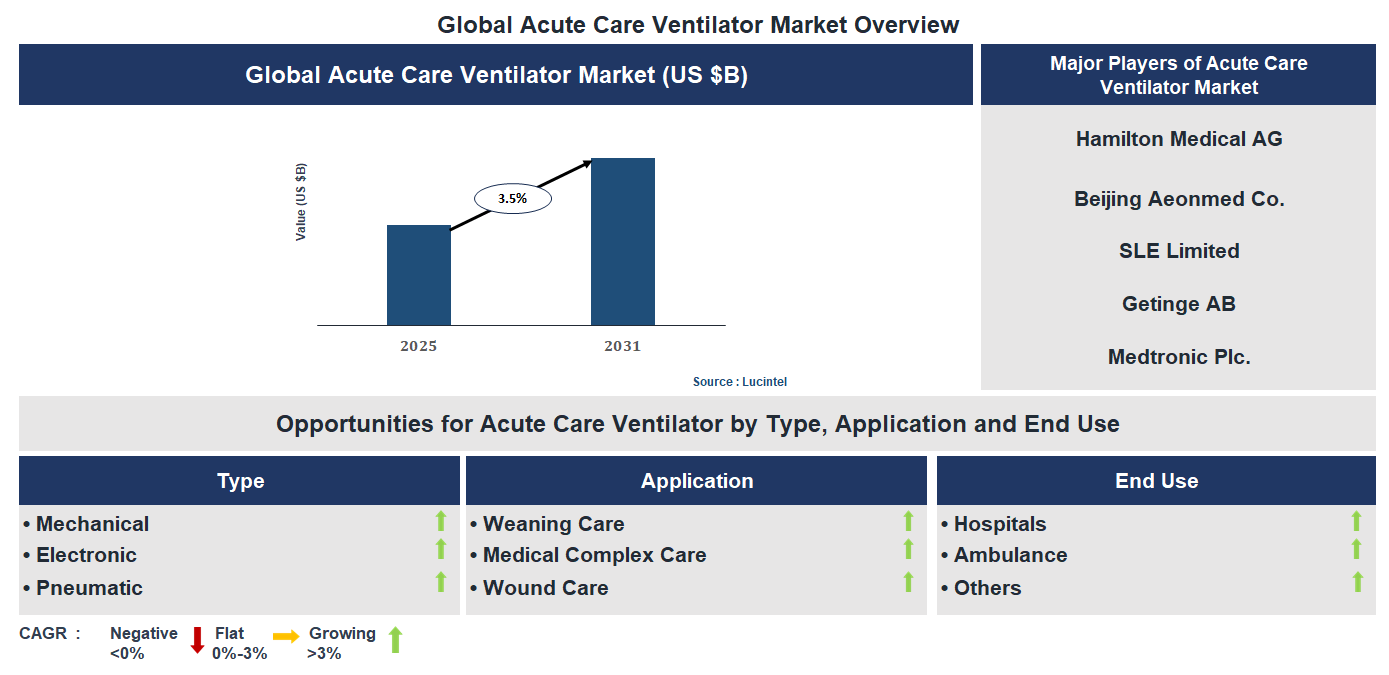
The future of the global acute care ventilator market looks promising with opportunities in the hospital and ambulance markets. The global acute care ventilator market is expected to grow with a CAGR of 3.5% from 2025 to 2031. The major drivers for this market are the increasing prevalence of respiratory diseases, the rising number of intensive care unit admissions, and the growing demand for advanced ventilator technologies.• Lucintel forecasts that, within the type category, electronic is expected to witness the highest growth over the forecast period.
• Within the end use category, hospital is expected to witness higher growth.
• In terms of region, APAC is expected to witness the highest growth over the forecast period. Gain valuable insights for your business decisions with our comprehensive 150+ page report. Sample figures with some insights are shown below.
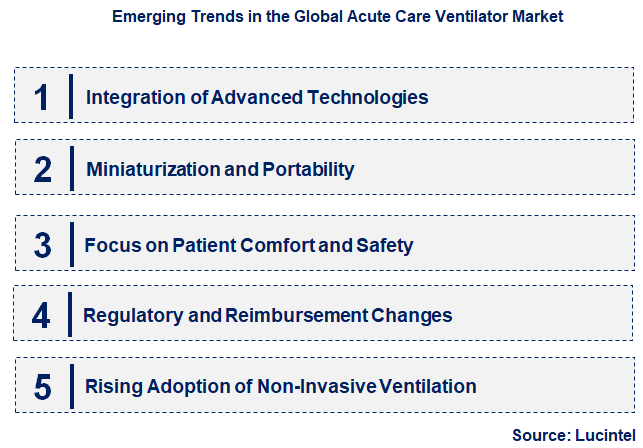
Emerging Trends in the Acute Care Ventilator Market
The acute care ventilator market is experiencing rapid evolution driven by technological advancements, increasing healthcare demands, and shifting patient care paradigms. As hospitals and healthcare providers seek more efficient, reliable, and patient-friendly ventilator solutions, several emerging trends are shaping the future of this market. These developments are not only improving clinical outcomes but also enhancing operational efficiency and patient comfort. Understanding these key trends is essential for stakeholders aiming to stay competitive and innovative in this dynamic landscape.• Integration of Advanced Technologies: The market is witnessing the incorporation of AI, IoT, and machine learning into ventilator systems. These technologies enable real-time monitoring, predictive maintenance, and personalized ventilation settings, leading to improved patient outcomes and reduced downtime. AI-driven algorithms can optimize ventilation parameters based on patient data, enhancing safety and efficiency. IoT connectivity allows seamless data sharing across healthcare networks, facilitating better clinical decision-making. This integration is transforming ventilators from simple devices into intelligent, adaptive systems that support precision medicine.
• Miniaturization and Portability: There is a growing demand for compact, lightweight ventilators that can be used in diverse settings, including ambulances, home care, and emergency situations. Advances in materials and design have led to portable devices that do not compromise on performance. These portable ventilators improve patient mobility, enable early intervention, and support outpatient care, reducing hospital stays and healthcare costs. The trend also caters to the increasing preference for home-based care, especially for chronic respiratory conditions, making ventilator technology more accessible and versatile.
• Focus on Patient Comfort and Safety: Innovations are emphasizing enhanced patient comfort through quieter operation, ergonomic designs, and user-friendly interfaces. Features such as adjustable airflow, humidification, and non-invasive ventilation options are being integrated to reduce discomfort and improve compliance. Safety features like alarms, automatic shut-offs, and real-time monitoring are becoming standard to prevent adverse events. These improvements are crucial for long-term ventilation patients and are driving market growth by addressing patient needs more effectively, ultimately leading to better clinical outcomes and higher satisfaction.
• Regulatory and Reimbursement Changes: Evolving regulatory standards and reimbursement policies are significantly impacting the market. Stricter safety and efficacy standards are prompting manufacturers to innovate and improve product quality. Simultaneously, reimbursement policies that favor advanced, efficient ventilator systems are encouraging healthcare providers to adopt newer technologies. These changes are fostering a competitive environment that promotes innovation while ensuring patient safety. Market players are investing in compliance and demonstrating value through clinical evidence, which influences purchasing decisions and accelerates market growth.
• Rising Adoption of Non-Invasive Ventilation: The shift towards non-invasive ventilation methods is gaining momentum due to their benefits in reducing complications and improving patient comfort. NIV devices are increasingly used in hospitals and home care settings for conditions like COPD and sleep apnea. Technological improvements have made NIV more effective and easier to use, expanding its application scope. This trend reduces the need for invasive procedures, lowers healthcare costs, and enhances patient quality of life. The growing preference for NIV is expected to continue, further expanding the market and encouraging innovation in non-invasive ventilator designs. In summary, these trends are collectively reshaping the acute care ventilator market by fostering innovation, improving patient outcomes, and expanding application settings. The integration of advanced technologies, focus on portability and comfort, regulatory shifts, and the rise of non-invasive methods are driving growth and transforming how respiratory support is delivered across healthcare systems worldwide.
Recent Development in the Acute Care Ventilator Market
The acute care ventilator market has experienced significant advancements driven by technological innovations, increasing healthcare demands, and the ongoing need for improved patient outcomes. The rising prevalence of respiratory diseases, coupled with the COVID-19 pandemic, has accelerated the adoption of advanced ventilator systems. Market players are focusing on developing smarter, more efficient devices to meet the urgent needs of healthcare providers worldwide. These developments are shaping the future landscape of acute care ventilation, emphasizing enhanced patient safety, portability, and integration with digital health solutions. The following key developments highlight the current trajectory and future potential of this vital market.• Integration of AI and IoT in Ventilators: Advanced ventilators now incorporate artificial intelligence and Internet of Things technology, enabling real-time monitoring, predictive analytics, and automated adjustments. This improves patient management, reduces complications, and enhances clinical decision-making, leading to better patient outcomes and operational efficiency.
• Portable Ventilators: Development of lightweight, portable ventilators allows for greater mobility within healthcare settings and for emergency use outside hospitals. These devices facilitate rapid deployment in ambulances, field hospitals, and home care, expanding access to critical respiratory support and improving patient comfort and safety.
• Advanced Safety Mechanisms: Introduction of advanced safety mechanisms, such as automatic alarm systems, improved filtration, and non-invasive ventilation options, reduces risks of ventilator-associated infections and complications. These features ensure higher safety standards, especially crucial during pandemics and in resource-limited settings.
• Focus on Digital Integration: Ventilators now feature seamless integration with electronic health records and remote monitoring systems. This connectivity enables healthcare providers to track patient progress remotely, optimize treatment plans, and facilitate telemedicine, thereby improving overall care quality and resource management.
• Regulatory Approvals and Market Expansion: Increased regulatory approvals for innovative ventilator models and expanding markets in emerging economies are driving growth. Governments and healthcare organizations are investing in advanced ventilator solutions to address rising respiratory illnesses, fostering market expansion and technological dissemination. In summary, these developments are transforming the acute care ventilator market by enhancing device capabilities, safety, portability, and connectivity. They are enabling healthcare providers to deliver more effective, efficient, and patient-centered respiratory care, ultimately driving market growth and innovation.
Strategic Growth Opportunities in the Acute Care Ventilator Market
The acute care ventilator market is experiencing rapid evolution driven by technological advancements, increasing patient demand, and expanding healthcare infrastructure worldwide. As hospitals and clinics seek more efficient, reliable, and portable ventilator solutions, key growth opportunities are emerging across various applications. These opportunities are shaping the future landscape of acute care ventilation, enabling better patient outcomes and operational efficiencies. Stakeholders are focusing on innovation, integration, and customization to meet diverse clinical needs. Understanding these growth avenues is essential for industry players aiming to capitalize on the expanding market and improve critical care delivery globally.• Emergency and Critical Care: The demand for portable and easy-to-use ventilators in emergency settings is rising. These devices enable rapid response in ambulances, disaster zones, and ICUs, improving survival rates and treatment efficiency. Innovations in compact design and battery life are enhancing their utility, making critical care more accessible and adaptable to urgent scenarios.
• Surgical and Anesthesia Applications: The integration of advanced ventilator systems in operating rooms is crucial for complex surgeries. These ventilators offer precise control over ventilation parameters, reducing complications and improving patient safety. The development of hybrid devices that combine anesthesia delivery with ventilation is further expanding this application’s scope.
• Long-term Care and Rehabilitation: As the aging population grows, there is increased demand for ventilators suitable for long-term use in rehabilitation centers and home care. These devices focus on comfort, ease of use, and remote monitoring capabilities, supporting patient independence and reducing hospital stays.
• Pediatric and Neonatal Care: Specialized ventilators designed for infants and children are gaining prominence. These devices are tailored to the unique physiological needs of younger patients, improving outcomes and reducing risks associated with ventilation in vulnerable populations.
• Telemedicine and Remote Monitoring: The integration of telehealth technologies with ventilator systems is transforming patient management. Remote monitoring allows clinicians to track device performance and patient status in real-time, enabling timely interventions and reducing hospital readmissions. In summary, these growth opportunities are significantly impacting the acute care ventilator market by fostering innovation, expanding application scopes, and improving patient outcomes. They are driving market growth, encouraging technological advancements, and enabling healthcare providers to deliver more effective and personalized critical care solutions.
Acute Care Ventilator Market Driver and Challenges
The acute care ventilator market is influenced by a variety of technological, economic, and regulatory factors that shape its growth and development. Advances in medical technology, increasing healthcare expenditure, and evolving regulatory standards are key drivers. Additionally, demographic shifts such as aging populations and the rising prevalence of respiratory diseases significantly impact market dynamics. However, the market also faces challenges, including high equipment costs, stringent regulatory approvals, and supply chain disruptions. Understanding these drivers and challenges is essential for stakeholders to navigate the complex landscape and capitalize on emerging opportunities effectively. The factors responsible for driving the acute care ventilator market include:-• Technological Innovations: The development of advanced ventilator systems with features like portability, user-friendly interfaces, and integrated monitoring has significantly enhanced patient care. These innovations improve treatment outcomes, reduce complications, and enable better management of critical cases. As technology continues to evolve, hospitals and healthcare providers are increasingly adopting these sophisticated devices, fueling market growth. Moreover, integration with telemedicine and remote monitoring systems offers new avenues for expanding market reach and improving patient management, making technological progress a primary growth driver.
• Rising Prevalence of Respiratory Diseases: The increasing incidence of respiratory conditions such as COPD, asthma, and acute respiratory distress syndrome (ARDS) directly boosts demand for ventilators. Factors like pollution, smoking, and infectious diseases contribute to this rise. As these conditions become more prevalent globally, especially in aging populations, the need for effective ventilatory support escalates. This demographic and health trend compels healthcare systems to invest more in ventilator equipment, thereby expanding the market and encouraging manufacturers to innovate and improve product offerings.
• Growing Healthcare Expenditure: Increased healthcare spending across developed and developing countries supports the procurement of advanced medical devices, including ventilators. Governments and private healthcare providers are allocating more funds toward critical care infrastructure to improve patient outcomes. This financial commitment facilitates the adoption of high-end ventilator systems, upgrades existing equipment, and expands ICU capacities. Consequently, rising healthcare expenditure acts as a catalyst for market expansion, enabling manufacturers to introduce new products and enhance distribution channels.
• Regulatory Approvals and Standards: Stringent regulatory frameworks and approval processes ensure the safety and efficacy of ventilator devices. While these standards may pose initial hurdles for manufacturers, they ultimately foster trust among healthcare providers and patients. Compliance with international standards like FDA approval and CE marking enhances product credibility and facilitates market entry in multiple regions. Evolving regulations also drive innovation, as companies develop safer, more efficient ventilator models to meet compliance requirements, thus propelling market growth.
• Impact of COVID-19 Pandemic: The global COVID-19 crisis significantly accelerated demand for acute care ventilators due to the surge in severe respiratory cases. Hospitals worldwide faced unprecedented pressure to equip ICUs with ventilatory support devices. This sudden demand led to increased production, technological advancements, and strategic collaborations within the industry. The pandemic underscored the importance of reliable ventilator supply chains and spurred investments in manufacturing capacity. Post-pandemic, the heightened awareness and infrastructure improvements are expected to sustain market growth, making COVID-19 a pivotal driver in recent years. The challenges facing this acute care ventilator market include:-
• High Equipment Costs: The advanced technology incorporated into modern ventilators results in high manufacturing and procurement costs. For healthcare providers, especially in low-resource settings, these costs can be prohibitive, limiting access to essential ventilatory support. Additionally, maintenance and calibration expenses further add to the financial burden. This cost barrier hampers widespread adoption, restricts market penetration in emerging economies, and may slow overall market growth despite increasing demand.
• Stringent Regulatory Approvals: Navigating complex regulatory landscapes poses a significant challenge for manufacturers. Lengthy approval processes, compliance costs, and evolving standards can delay product launches and increase R&D expenses. Smaller companies may struggle to meet these requirements, reducing market competition and innovation. Moreover, regulatory uncertainties can hinder the rapid deployment of new technologies, impacting the ability to respond swiftly to emergent healthcare needs, such as during pandemics.
• Supply Chain Disruptions: The global supply chain for components and raw materials essential for ventilator manufacturing has been vulnerable to disruptions caused by geopolitical tensions, pandemics, and logistical issues. These disruptions lead to delays in production, increased costs, and shortages of critical devices. Such challenges threaten the ability of manufacturers to meet rising demand, especially during health crises, and can negatively impact market stability and growth prospects. In summary, the acute care ventilator market is driven by technological advancements, rising respiratory disease prevalence, increased healthcare spending, regulatory standards, and pandemic-related demands. However, high costs, regulatory hurdles, and supply chain issues pose significant challenges. These factors collectively influence market dynamics, requiring stakeholders to innovate, adapt, and strategize effectively. The overall impact is a market poised for growth, but with hurdles that must be addressed to realize its full potential.
List of Acute Care Ventilator Companies
Companies in the market compete on the basis of product quality offered. Major players in this market focus on expanding their manufacturing facilities, R&D investments, infrastructural development, and leverage integration opportunities across the value chain. With these strategies acute care ventilator companies cater increasing demand, ensure competitive effectiveness, develop innovative products & technologies, reduce production costs, and expand their customer base. Some of the acute care ventilator companies profiled in this report include-• Hamilton Medical AG
• Beijing Aeonmed Co.
• SLE Limited
• Getinge AB
• Medtronic Plc.
• Maxtec
• Becton, Dickinson and Company
• General Electric Company
• Drgerwerk AG
• Koninklijke Philips N.V.
Acute Care Ventilator Market by Segment
The study includes a forecast for the global acute care ventilator market by type, application, end use, and region.Acute Care Ventilator Market by Type [Value from 2019 to 2031]:
• Mechanical
• Electronic
• Pneumatic
Acute Care Ventilator Market by Application [Value from 2019 to 2031]:
• Weaning Care
• Medical Complex Care
• Wound Care
Acute Care Ventilator Market by End Use [Value from 2019 to 2031]:
• Hospitals
• Ambulance
• Others
Acute Care Ventilator Market by Region [Value from 2019 to 2031]:
• North America
• Europe
• Asia Pacific
• The Rest of the World
Country Wise Outlook for the Acute Care Ventilator Market
The acute care ventilator market has experienced significant advancements driven by technological innovations, increasing healthcare demands, and the ongoing impact of global health crises. Countries are investing in research and development to improve ventilator efficiency, portability, and patient safety. Regulatory approvals and strategic collaborations are also shaping market dynamics. The COVID-19 pandemic notably accelerated demand, prompting manufacturers to expand production capacities and introduce new models. As healthcare infrastructure evolves, these developments aim to address the rising prevalence of respiratory conditions and improve patient outcomes worldwide.• United States: The U.S. market has seen rapid adoption of advanced ventilator technologies, including portable and AI-enabled devices. Increased funding for healthcare infrastructure and research has driven innovation, with major players expanding production capacities. Regulatory agencies like the FDA have streamlined approval processes for new ventilator models, facilitating quicker market entry. The COVID-19 pandemic highlighted the need for scalable ventilator solutions, prompting manufacturers to develop more versatile and user-friendly devices. Additionally, there is a growing focus on home-based acute care ventilators to reduce hospital burden and improve patient comfort.
• China: China’s acute care ventilator market is expanding rapidly due to rising healthcare infrastructure and government initiatives to enhance respiratory care. Local manufacturers are investing heavily in R&D to develop cost-effective and technologically advanced ventilators. The government’s focus on self-sufficiency has led to increased domestic production, reducing reliance on imports. The COVID-19 pandemic further accelerated demand, prompting strategic collaborations and technology transfers. China is also emphasizing the development of portable ventilators suitable for emergency and home care settings, aligning with its broader healthcare modernization goals.
• Germany: Germany remains a key player in the European acute care ventilator market, with a strong emphasis on innovation and quality. The country’s focus on research and development has led to the introduction of sophisticated ventilator systems with enhanced safety features and user interfaces. Regulatory standards are stringent, ensuring high product reliability. Germany’s healthcare system supports the integration of smart ventilator technologies, including remote monitoring and AI-driven adjustments. The market is also witnessing increased demand for ventilators suitable for both hospital and outpatient settings, driven by demographic shifts and the need for efficient respiratory care.
• India: The Indian market is experiencing rapid growth due to increasing respiratory diseases, expanding healthcare infrastructure, and government initiatives to improve critical care facilities. Local manufacturers are focusing on affordable, portable ventilator models to cater to rural and semi-urban areas. The COVID-19 crisis significantly boosted demand, leading to increased investments in manufacturing capacity and technology upgrades. There is a rising trend toward developing low-cost, easy-to-maintain ventilators suitable for diverse healthcare settings. The government’s focus on self-reliance and Make in India policies is also fostering domestic innovation and production in this sector.
• Japan: Japan’s acute care ventilator market is characterized by technological innovation and aging population needs. The country is investing in smart ventilator systems with features like remote monitoring, AI integration, and enhanced patient safety. Regulatory agencies facilitate the approval of advanced devices, supporting rapid adoption. Japan’s healthcare providers are increasingly adopting portable and compact ventilators to cater to outpatient and home care needs. The market is also driven by a focus on improving existing ventilator systems through upgrades and maintenance, ensuring high reliability and safety standards in line with the country’s healthcare policies.

Features of the Global Acute Care Ventilator Market
Market Size Estimates: Acute care ventilator market size estimation in terms of value ($B). Trend and Forecast Analysis: Market trends (2019 to 2024) and forecast (2025 to 2031) by various segments and regions. Segmentation Analysis: Acute care ventilator market size by type, application, end use, and region in terms of value ($B). Regional Analysis: Acute care ventilator market breakdown by North America, Europe, Asia Pacific, and Rest of the World. Growth Opportunities: Analysis of growth opportunities in different types, applications, end uses, and regions for the acute care ventilator market. Strategic Analysis: This includes M&A, new product development, and competitive landscape of the acute care ventilator market. Analysis of competitive intensity of the industry based on Porter’s Five Forces model.
FAQ
Q1. What is the growth forecast for acute care ventilator market? Answer: The global acute care ventilator market is expected to grow with a CAGR of 3.5% from 2025 to 2031. Q2. What are the major drivers influencing the growth of the acute care ventilator market? Answer: The major drivers for this market are the increasing prevalence of respiratory diseases, the rising number of intensive care unit admissions, and the growing demand for advanced ventilator technologies. Q3. What are the major segments for acute care ventilator market? Answer: The future of the acute care ventilator market looks promising with opportunities in the hospital and ambulance markets. Q4. Who are the key acute care ventilator market companies? Answer: Some of the key acute care ventilator companies are as follows:• Hamilton Medical AG
• Beijing Aeonmed Co.
• SLE Limited
• Getinge AB
• Medtronic Plc.
• Maxtec
• Becton, Dickinson and Company
• General Electric Company
• Drgerwerk AG
• Koninklijke Philips N.V. Q5. Which acute care ventilator market segment will be the largest in future? Answer: Lucintel forecasts that, within the type category, electronic is expected to witness the highest growth over the forecast period. Q6. In acute care ventilator market, which region is expected to be the largest in next 5 years? Answer: In terms of region, APAC is expected to witness the highest growth over the forecast period. Q7. Do we receive customization in this report? Answer: Yes, Lucintel provides 10% customization without any additional cost.
Table of Contents
List of Figures
List of Tables
Methodology
- In-depth interviews of the major players in this market
- Detailed secondary research from competitors’ financial statements and published data
- Extensive searches of published works, market, and database information pertaining to industry news, company press releases, and customer intentions
- A compilation of the experiences, judgments, and insights of Lucintel’s professionals, who have analyzed and tracked this market over the years.


Buy Now
Choose a license that fits your team. Instant PDF delivery.
Prices exclude taxes. Instant delivery. Custom licensing available on request.
Key Questions
- • What are some of the most promising, high-growth opportunities for the acute care ventilator market by type (mechanical, electronic, and pneumatic), application (weaning care, medical complex care, and wound care), end use (hospitals, ambulance, and others), and region (North America, Europe, Asia Pacific, and the Rest of the World)?
- • Which segments will grow at a faster pace and why?
- • Which region will grow at a faster pace and why?
- • What are the key factors affecting market dynamics? What are the key challenges and business risks in this market?
- • What are the business risks and competitive threats in this market?
- • What are the emerging trends in this market and the reasons behind them?
- • What are some of the changing demands of customers in the market?
- • What are the new developments in the market? Which companies are leading these developments?
- • Who are the major players in this market? What strategic initiatives are key players pursuing for business growth?
- • What are some of the competing products in this market and how big of a threat do they pose for loss of market share by material or product substitution?
- • What M&A activity has occurred in the last 5 years and what has its impact been on the industry? For any questions related to Acute Care Ventilator Market, Acute Care Ventilator Market Size, Acute Care Ventilator Market Growth, Acute Care Ventilator Market Analysis, Acute Care Ventilator Market Report, Acute Care Ventilator Market Share, Acute Care Ventilator Market Trends, Acute Care Ventilator Market Forecast, Acute Care Ventilator Companies, write Lucintel analyst at email: helpdesk@lucintel.com. We will be glad to get back to you soon.


