
Market Report · July 31, 2026

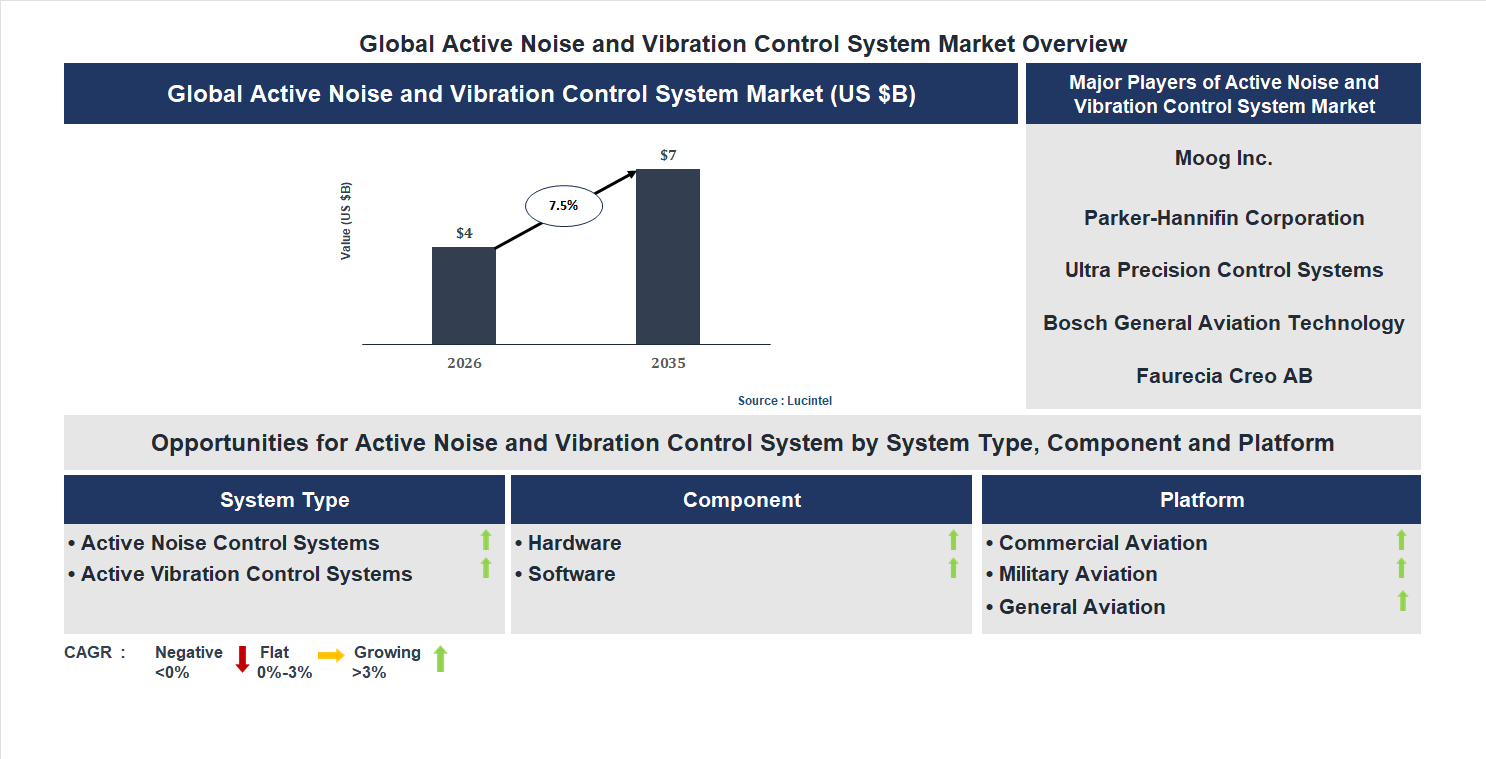
Key data points: The market size in 2035 = $7 billion, growth forecast = 7.5% annually for the next 8 years. Scroll below to get more insights. This market report covers trends, opportunities and forecasts in active noise and vibration control system market to 2035 by system type (active noise control systems and active vibration control systems), component (hardware and software), platform (commercial aviation, military aviation, and general aviation), and region (North America, Europe, Asia Pacific, and the Rest of the World)
We'll send your sample report shortly.
• Lucintel forecasts that, within the system type category, active noise control system is expected to witness higher growth over the forecast period.
• Within the platform category, commercial aviation is expected to witness the highest growth.
• In terms of region, APAC is expected to witness the highest growth over the forecast period. Gain valuable insights for your business decisions with our comprehensive 150+ page report. Sample figures with some insights are shown below.
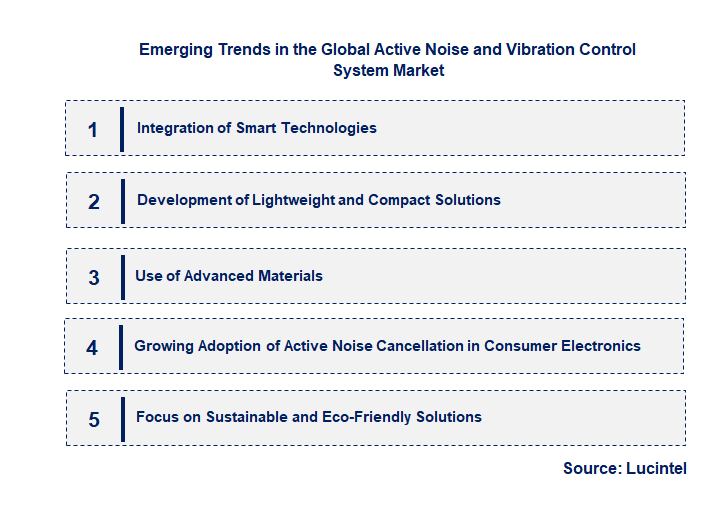
• Integration of Smart Technologies: The adoption of IoT and AI enhances system responsiveness and customization. Smart noise control systems can adapt in real-time to changing environments, improving efficiency and user experience. These systems enable remote monitoring and predictive maintenance, reducing downtime and operational costs. The integration also facilitates data collection for further optimization, making noise control more precise and user-centric.
• Development of Lightweight and Compact Solutions: Manufacturers are focusing on miniaturization and lightweight materials to improve system portability and ease of installation. These compact systems are ideal for automotive and aerospace applications where space and weight are critical. Advances in materials science and design are enabling high-performance noise control without adding significant bulk, thus expanding their applicability in various sectors.
• Use of Advanced Materials: New materials such as piezoelectric composites and metamaterials are being employed to enhance noise absorption and vibration damping. These materials offer superior performance and durability, enabling more effective noise reduction solutions. Their application is particularly significant in environments requiring high precision and long-term reliability, such as in aerospace and industrial machinery.
• Growing Adoption of Active Noise Cancellation in Consumer Electronics: The demand for quieter devices like headphones, smartphones, and home appliances is fueling innovation in active noise cancellation technology. These systems provide immersive audio experiences and reduce ambient noise, improving user satisfaction. As consumer preferences shift towards premium, noise-free experiences, manufacturers are investing heavily in developing more sophisticated and efficient solutions.
• Focus on Sustainable and Eco-Friendly Solutions: Environmental regulations and consumer awareness are driving the development of eco-friendly noise control systems. These include the use of recyclable materials and energy-efficient technologies. Sustainable solutions not only meet regulatory standards but also appeal to environmentally conscious consumers, fostering market growth and encouraging innovation in green noise management. These trends are collectively reshaping the active noise and vibration control system market by fostering innovation, improving system efficiency, and expanding application areas. The integration of smart technologies and advanced materials is making noise control more effective and adaptable. The focus on lightweight, compact, and eco-friendly solutions is broadening market reach and aligning with sustainability goals. As these trends continue to evolve, they will lead to more sophisticated, user-friendly, and environmentally responsible noise and vibration management solutions, ultimately transforming industries and enhancing user experiences across the board.
• Growing Automotive Industry: Enhanced comfort and safety standards are driving demand for active noise and vibration control systems in vehicles, leading to improved ride quality and passenger experience. Automakers are integrating these systems to meet stringent regulations and consumer preferences, resulting in increased market penetration. The expansion of electric vehicles further boosts demand, as noise reduction is critical in electric and hybrid cars. This growth opens avenues for innovation in lightweight, cost-effective solutions, and customization options, strengthening the automotive segments market share.
• Advancements in Material Technologies: Development of lightweight, durable, and high-performance materials has significantly improved the efficiency of noise and vibration control systems. New composites and smart materials enable better damping and absorption, reducing system weight and energy consumption. These innovations facilitate integration into compact devices and structures, expanding applications in aerospace, consumer electronics, and industrial machinery. The improved material properties enhance overall system performance, leading to increased adoption and market growth across multiple sectors.
• Integration with Smart Technologies: The incorporation of IoT, AI, and sensor-based systems has revolutionized noise and vibration control solutions. Smart systems enable real-time monitoring, adaptive control, and predictive maintenance, increasing reliability and user convenience. This integration allows for customized solutions tailored to specific environments, improving effectiveness and energy efficiency. The rise of connected devices and automation in industries accelerates the deployment of intelligent noise and vibration control systems, fostering innovation and expanding market opportunities.
• Expansion in Aerospace and Defense: The aerospace and defense sectors are increasingly adopting active noise and vibration control systems to enhance safety, comfort, and operational efficiency. These systems are used in aircraft cabins, military vehicles, and naval vessels to reduce noise pollution and structural vibrations. The demand for lightweight, high-performance solutions is driving research and development, leading to advanced materials and designs. This sectors growth significantly contributes to the overall market, with substantial investments in R&D and technological innovations.
• Growing Consumer Electronics Market: The surge in demand for quieter, more efficient electronic devices is fueling the adoption of active noise and vibration control systems. Applications include smartphones, laptops, gaming consoles, and home appliances, where noise reduction enhances user experience. Miniaturization and integration with existing electronic components are key trends, enabling seamless incorporation into compact devices. The expanding consumer electronics market offers lucrative opportunities for manufacturers to develop innovative, cost-effective solutions, boosting overall market growth. These developments are significantly transforming the active noise and vibration control system market by enhancing product performance, expanding application areas, and integrating advanced technologies. The automotive, aerospace, consumer electronics, and industrial sectors are experiencing increased adoption, driven by demand for comfort, safety, and efficiency. As innovation continues, the market is poised for sustained growth, with competitive advantages for early adopters and technology leaders. Overall, these trends are shaping a more dynamic, versatile, and resilient market landscape.
• Expansion in Automotive Industry: Active noise and vibration control systems are increasingly integrated into vehicles to enhance passenger comfort and meet noise regulation standards. Electric vehicles, in particular, benefit from these systems due to their quieter operation. The demand for lightweight, efficient, and cost-effective solutions is driving innovation, with sub-segments like cabin noise reduction and engine vibration control showing substantial growth potential.
• Growing Adoption in Aerospace Sector: The aerospace industry is adopting active noise and vibration control systems to improve passenger experience and meet safety standards. These systems are used in aircraft cabins, engines, and structural components to reduce noise pollution and structural vibrations. The increasing number of commercial and private aircraft, along with advancements in lightweight materials, presents significant opportunities for market expansion.
• Integration with Smart and Connected Technologies: The incorporation of active noise and vibration control systems with IoT, AI, and sensor technologies is creating new growth avenues. Smart systems enable real-time monitoring, adaptive control, and predictive maintenance, improving efficiency and user experience. This integration is particularly relevant in industrial machinery, consumer electronics, and automotive applications, fostering innovation and customization.
• Rising Demand in Industrial Machinery and Equipment: Industries such as manufacturing, construction, and energy are adopting active noise and vibration control to improve workplace safety, reduce equipment wear, and comply with environmental regulations. The development of scalable, modular systems tailored for different machinery types offers growth opportunities. Sub-segments like HVAC systems, heavy machinery, and power generation equipment are key focus areas.
• Development of Eco-Friendly and Lightweight Solutions: The push for sustainable and environmentally friendly products is encouraging the development of eco-friendly active noise and vibration control systems. Lightweight materials and energy-efficient designs are gaining prominence, especially in transportation and aerospace sectors. These innovations help reduce overall system weight and energy consumption, aligning with global sustainability goals and expanding market reach. These growth opportunities are set to significantly influence the active noise and vibration control system market, fostering innovation, expanding application areas, and driving overall industry growth through technological advancements and strategic market positioning.
• Technological Innovation: The continuous development of advanced sensors, algorithms, and materials enhances system efficiency and affordability. Innovations like adaptive control algorithms and smart materials enable more precise noise and vibration mitigation, expanding application scope. These technological improvements reduce costs and improve performance, making systems more accessible across industries. As technology evolves, integration with IoT and AI further enhances system capabilities, fostering market growth and opening new avenues for deployment.
• Growing Automotive and Aerospace Industries: Increasing demand for comfort, safety, and noise reduction in vehicles and aircraft drives the adoption of active noise and vibration control systems. Automakers and aerospace companies seek innovative solutions to meet stringent regulatory standards and customer expectations. The expansion of electric vehicles, which require advanced noise management due to the absence of traditional engine noise, significantly boosts market prospects. This growth in transportation sectors directly correlates with increased system deployment, fueling market expansion.
• Stringent Regulatory Standards: Governments and regulatory bodies worldwide are implementing stricter noise pollution and safety standards. These regulations compel industries to adopt active noise and vibration control systems to comply with environmental and safety norms. For example, regulations targeting urban noise pollution and aircraft noise restrictions incentivize manufacturers to incorporate advanced control systems. Compliance not only avoids penalties but also enhances brand reputation, encouraging broader adoption and market growth.
• Increasing Infrastructure Development: Urbanization and infrastructure projects worldwide necessitate noise mitigation solutions to improve living conditions and comply with environmental standards. Construction activities, transportation hubs, and industrial facilities require effective noise and vibration control systems. The integration of active systems in building design and infrastructure projects enhances comfort and safety, driving demand. This trend supports market expansion, especially in rapidly urbanizing regions where noise pollution is a growing concern.
• Rising Awareness and Demand for Comfort: Consumer awareness regarding noise pollutions health impacts and the desire for a comfortable environment are fueling demand for active noise and vibration control systems. Industries are increasingly incorporating these systems into products and infrastructure to enhance user experience. The focus on sustainable and eco-friendly solutions also promotes adoption, as active control systems often contribute to energy efficiency and environmental compliance. This rising demand encourages manufacturers to innovate and expand their offerings. The challenges facing the active noise and vibration control system market include:
• High Implementation Costs: The deployment of active noise and vibration control systems involves significant capital investment in advanced sensors, control units, and installation procedures. These costs can be prohibitive for small and medium-sized enterprises, limiting market penetration. Additionally, ongoing maintenance and calibration expenses add to the financial burden. High costs may slow adoption in cost-sensitive sectors, restricting overall market growth despite technological benefits.
• Technological Complexity: Developing and integrating effective active noise and vibration control systems require sophisticated technology and expertise. The complexity of designing adaptive algorithms and ensuring system stability under varying conditions presents technical challenges. This complexity can lead to longer development cycles and increased R&D costs. Moreover, the need for specialized skills limits widespread adoption, especially in regions with limited technical expertise, hindering market expansion.
• Regulatory and Standardization Challenges: While regulations promote adoption, inconsistent standards across regions create compliance complexities. Navigating different regulatory frameworks can delay product deployment and increase costs for manufacturers. Additionally, evolving standards require continuous updates to systems, adding to development challenges. Lack of harmonization hampers global market integration and may restrict the deployment of standardized solutions, impacting overall growth prospects. The active noise and vibration control system market is driven by technological advancements, expanding industries, regulatory pressures, infrastructure development, and increasing consumer awareness. However, high costs, technological complexity, and regulatory inconsistencies pose significant challenges. These factors collectively influence market dynamics, requiring stakeholders to innovate and adapt strategically. While growth prospects remain promising, addressing these challenges is crucial for sustained expansion and widespread adoption across various sectors.
• Moog Inc.
• Parker-Hannifin Corporation
• Ultra Precision Control Systems
• Bosch General Aviation Technology
• Faurecia Creo AB
• HUTCHINSON S.A.
• Sensata Technologies, Inc.
• Analog Devices, Inc.
• Terma A/S
• Quiet Flight, LLC
• Active Noise Control Systems
• Active Vibration Control Systems
• Hardware
• Software
• Commercial Aviation
• Military Aviation
• General Aviation
• North America
• Europe
• Asia Pacific
• The Rest of the World
• United States: The U.S. market has seen rapid adoption of advanced active noise and vibration control systems, especially in automotive and aerospace industries. Leading tech firms are developing integrated solutions with AI capabilities, enhancing real-time responsiveness and energy efficiency. Regulatory pressures for quieter, more environmentally friendly vehicles are also driving innovation. Additionally, increased investments in research institutions are fostering breakthroughs in material science and system miniaturization, broadening application scopes.
• China: China is experiencing substantial growth in the active noise and vibration control market, fueled by government initiatives to upgrade manufacturing and transportation sectors. The country is focusing on developing cost-effective, scalable solutions for urban infrastructure, high-speed trains, and consumer electronics. Domestic companies are expanding their R&D efforts to compete globally, with a focus on integrating IoT and smart features into control systems. The rapid urbanization and infrastructure development further boost demand for noise mitigation technologies.
• Germany: Germany’s market is characterized by a strong emphasis on automotive and industrial applications, driven by stringent EU noise regulations and environmental standards. German firms are pioneering in high-precision, durable control systems that enhance vehicle comfort and safety. The country’s focus on sustainable manufacturing practices is encouraging innovations in lightweight materials and energy-efficient systems. Collaborations between academia and industry are fostering advanced research, positioning Germany as a leader in high-performance noise and vibration control solutions.
• India: India’s active noise and vibration control market is expanding due to increasing urbanization, infrastructure projects, and automotive manufacturing growth. The focus is on developing affordable, easy-to-install systems suitable for local conditions. Government initiatives aimed at reducing noise pollution are encouraging adoption in public transportation and construction sectors. Local startups and established companies are investing in R&D to create customized solutions that address regional challenges, including high ambient noise levels and resource constraints.
• Japan: Japan continues to innovate in active noise and vibration control, particularly in aerospace, electronics, and high-speed rail sectors. The country’s emphasis on technological excellence and quality drives the development of sophisticated, miniaturized systems with high precision. Japan is also exploring eco-friendly materials and energy-efficient designs to meet environmental standards. Collaborations between industry and academia are fostering cutting-edge research, ensuring Japan maintains its position as a global leader in advanced noise and vibration control technologies.


• Moog Inc.
• Parker-Hannifin Corporation
• Ultra Precision Control Systems
• Bosch General Aviation Technology
• Faurecia Creo AB
• HUTCHINSON S.A.
• Sensata Technologies, Inc.
• Analog Devices, Inc.
• Terma A/S
• Quiet Flight, LLC Q6. Which active noise and vibration control system market segment will be the largest in future? Answer: Lucintel forecasts that, within the system type category, active noise control system is expected to witness higher growth over the forecast period. Q7. In active noise and vibration control system market, which region is expected to be the largest in next 8 years? Answer: In terms of region, APAC is expected to witness the highest growth over the forecast period. Q8. Do we receive customization in this report? Answer: Yes, Lucintel provides 10% customization without any additional cost.


Choose a license that fits your team. Instant PDF delivery.
Prices exclude taxes. Instant delivery. Custom licensing available on request.
Market Report · July 31, 2026
Market Report · July 31, 2026
Market Report · July 31, 2026
Trusted partner for strategic intelligence and business growth


Receive a complimentary market analysis tailored to your industry. Our analysts will identify key growth opportunities and competitive dynamics specific to your business.

Market size, growth rate, and key trend analysis for your specific sector.

Top competitor positioning and market share analysis.

Strategic recommendations backed by data-driven insights.
Get curated market intelligence and competitive moves straight to your inbox.
By subscribing, you agree to receive our monthly insights. Unsubscribe anytime.
Receive a complimentary market analysis tailored to your industry. Our analysts will identify key growth opportunities and competitive dynamics specific to your business.
Market size, growth rate, and key trend analysis for your specific sector.
Top competitor positioning and market share analysis.
Strategic recommendations backed by data-driven insights.
Get curated market intelligence, emerging trends, and competitive moves straight to your inbox each month.
By subscribing, you agree to receive our monthly insights. Unsubscribe anytime.
We'll send your sample report shortly.