
Market Report · July 15, 2026

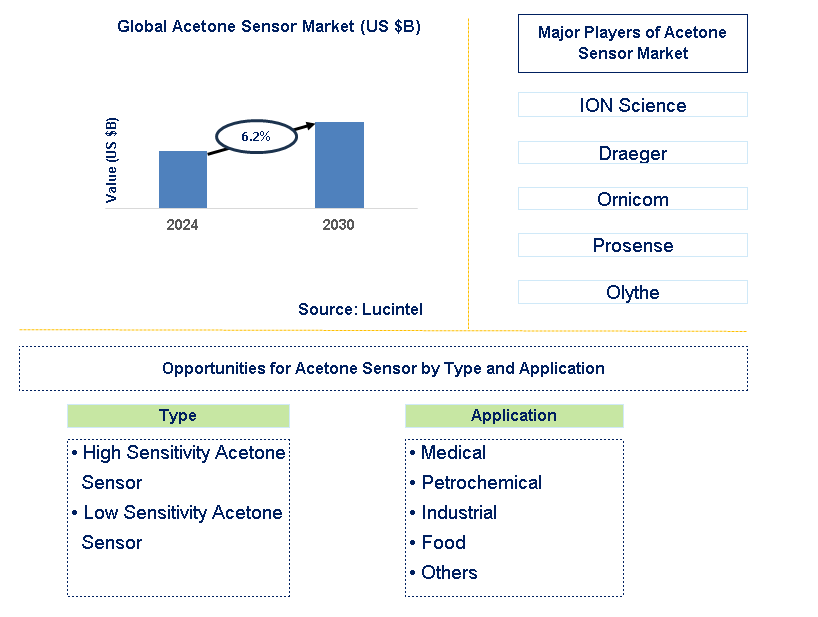
Key data points: The growth forecast = 6.2% annually for the next 6 years. Scroll below to get more insights. This market report covers trends, opportunities, and forecasts in the global acetone sensor market to 2030 by type (high sensitivity acetone sensor and low sensitivity acetone sensor), application (medical, petrochemical, industrial, food, and others), and region (North America, Europe, Asia Pacific, and the Rest of the World)
We'll send your sample report shortly.
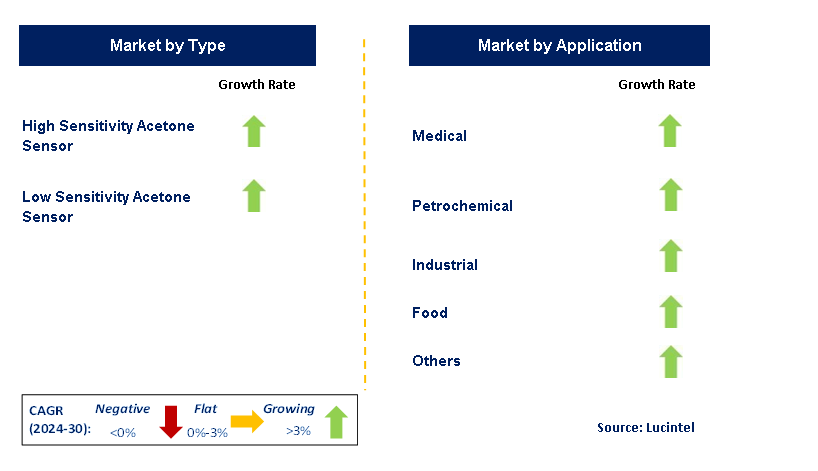
• Lucintel forecasts that, within the type category, high sensitivity acetone sensor is expected to witness a higher growth over the forecast period.
• Within the application, medical is expected to witness the highest growth.
• In terms of regions, APAC is expected to witness highest growth over the forecast period. Gain valuable insight for your business decisions with our comprehensive 150+ page report
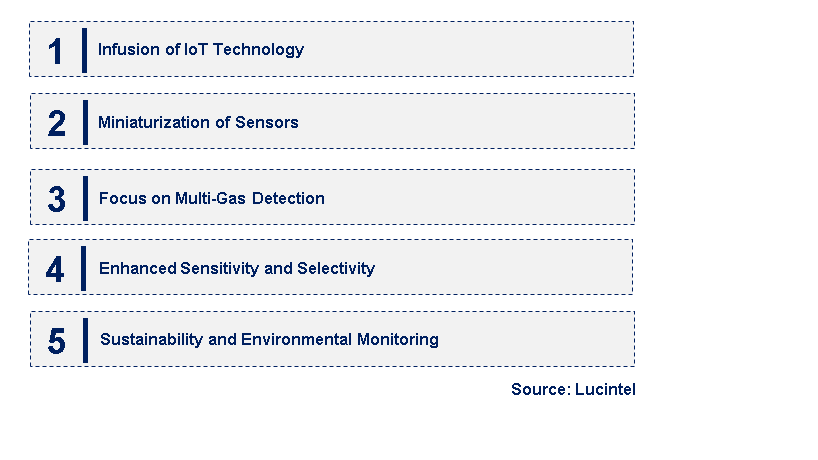
• Infusion of IoT Technology: The infusion of IoT technologies is one of the most important emerging trends involving acetone sensors, which enable real-time data transmission as well as remote monitoring. Hence, acetone levels can be continuously monitored in industrial environments for safety and compliance purposes.
• Miniaturization of Sensors: There is a growing trend toward miniaturizing acetone sensors for portable and wearable applications. Smaller sensors can be integrated into various devices, facilitating personal safety monitoring and expanding their usability across different sectors.
• Focus on Multi-Gas Detection: The demand for multi-gas sensors capable of detecting acetone along with other volatile organic compounds is increasing. This trend supports comprehensive monitoring solutions in various industries, allowing for faster response times to hazardous situations.
• Enhanced Sensitivity and Selectivity: Recent developments in sensor materials, such as nanomaterials, have led to enhanced sensitivity and selectivity in acetone detection. This trend improves the accuracy of measurements, making sensors more reliable for critical applications like medical diagnostics.
• Sustainability and Environmental Monitoring: The trend toward sustainability is driving innovations in acetone sensors designed for environmental monitoring. These sensors support efforts to reduce pollution and comply with environmental regulations, contributing to cleaner air quality. These emerging trends are reshaping the acetone sensor market by enhancing technology, broadening applications, and meeting evolving consumer demands. As these trends continue to evolve, they will significantly influence the future landscape of acetone detection technologies.
• Launch of Advanced Detection Technologies: Several companies have recently launched advanced acetone sensors featuring improved detection capabilities and faster response times. These technologies are crucial for applications in both industrial safety and healthcare, facilitating timely interventions.
• Adoption of Nanotechnology: The integration of nanotechnology in acetone sensors is becoming more prevalent. Nanomaterials enhance sensitivity and selectivity, allowing for more accurate measurements, which is especially important in laboratory and clinical settings.
• Collaboration with Research Institutions: Partnerships between sensor manufacturers and research institutions are driving innovation. Collaborative efforts focus on developing next-generation acetone sensors that leverage cutting-edge technologies and improve performance in various applications.
• Enhanced Calibration Methods: Recent developments include the introduction of advanced calibration methods for acetone sensors. These methods improve long-term stability and reliability, ensuring consistent performance in demanding environments.
• Expansion into New Markets: Companies are expanding their presence in emerging markets by tailoring acetone sensors to local needs. This includes developing cost-effective solutions that meet regulatory requirements, making them accessible to a broader audience. These recent developments are significantly impacting the acetone sensor market by enhancing product offerings and expanding market reach. As manufacturers innovate and adapt to new demands, the market is poised for continued growth.
• Industrial Safety Monitoring: The growing focus on workplace safety creates substantial opportunities for acetone sensors in industrial settings. These sensors help monitor hazardous environments, ensuring compliance with safety regulations and reducing health risks for workers.
• Healthcare Applications: The demand for acetone sensors in healthcare is rising, particularly for diabetes management and breath analysis. These sensors provide non-invasive monitoring solutions, enhancing patient care and expanding applications in medical diagnostics.
• Environmental Monitoring Solutions: Increasing regulatory pressures for air quality monitoring present opportunities for acetone sensors in environmental applications. These sensors can track acetone levels in urban areas, supporting compliance with environmental standards and improving public health.
• Portable Detection Devices: The demand for portable and wearable acetone sensors is increasing. These devices are essential for personal safety in various industries, enabling real-time monitoring and facilitating quicker responses to hazardous situations.
• Smart Technology Integration: The integration of acetone sensors with smart technologies, such as IoT and cloud computing, presents growth opportunities. These solutions allow for real-time data analytics and remote monitoring, making them attractive for various applications. These strategic growth opportunities are shaping the acetone sensor market by expanding its applications and enhancing product relevance. Companies that effectively capitalize on these opportunities are likely to see significant market success.
• Increasing Safety Regulations: Growing regulatory requirements concerning workplace safety and environmental protection are major drivers for the acetone sensor market. Companies are compelled to invest in reliable detection technologies to comply with these regulations.
• Technological Advancements: Continuous innovation in sensor technology enhances performance, leading to increased adoption. Improvements in sensitivity and selectivity make acetone sensors more appealing for various applications, driving market growth.
• Rising Demand from Healthcare: The healthcare sector's increasing need for non-invasive monitoring solutions is a significant driver. Acetone sensors are gaining traction in medical diagnostics, particularly for diabetes management, expanding their application scope.
• Growth in Chemical Industries: The expansion of chemical manufacturing and processing industries contributes to the demand for acetone sensors. Monitoring acetone levels is crucial for safety and compliance in these environments, fostering market growth.
• Consumer Awareness of Environmental Issues: Rising public awareness of environmental issues is driving the demand for acetone sensors in environmental monitoring applications. Consumers and industries alike seek solutions to minimize pollution and ensure air quality. Challenges in the acetone sensor market are:
• High Initial Costs: The high upfront costs of advanced acetone sensors can deter some potential buyers, particularly in cost-sensitive markets. Manufacturers must explore ways to offer more affordable options while maintaining quality.
• Intense Competition: The acetone sensor market is competitive, with numerous players offering similar products. Differentiating through innovation and quality is essential for maintaining market share.
• Market Saturation: As the market matures, saturation may lead to slower growth rates. Companies must focus on innovation and exploring new applications to sustain their competitive edge. The interplay of these drivers and challenges significantly impacts the acetone sensor market. By understanding these factors, stakeholders can develop strategies to leverage opportunities and mitigate potential risks, ensuring sustained growth in this evolving market.
• ION Science
• Draeger
• Ornicom
• Prosense
• Olythe
• Sensidyne
• Riken Keiki
• High Sensitivity Acetone Sensor
• Low Sensitivity Acetone Sensor
• Medical
• Petrochemical
• Industrial
• Food
• Others
• North America
• Europe
• Asia Pacific
• The Rest of the World
• United States: New developments in acetone sensors across the US are taken on more sensitivity and lower response times. Companies are now targeting the integration of nanomaterials with the sensor to enhance its performance so as to detect better in healthcare, industrial usage, and similar other uses. Increased concern for workplace safety regulations also makes the demand for reliable acetone monitoring solutions increase across the workforce sectors at workplaces.
• China: China has a significant development in acetone sensors. In China, the pace of development in the manufacturing and chemical industries is motivating the growth of the acetone sensor market. In recent times, several low-cost sensors designed for online monitoring in industrial processes have come into the marketplace. It appears that environmental protection by the government is also encouraging the use of advanced technology to monitor urban pollution through improved acetone sensing.
• Germany: Germany maintains a leadership position in the market for acetone sensors and is also orientated to precision and reliability. Recent inventions include miniaturization of sensors that can be integrated into personal, portable devices. This trend further supports application both in environmental monitoring and in medical diagnostics. It represents Germany's aim at quality engineering.
• India: The acetone sensor market in India is gaining momentum due to growing regulatory pressure and safety concerns in the chemical industry. It was only recently that robust industrial-grade sensors were developed. Local industry manufacturers' focus will, however, be on low prices, which will make acetone sensors more accessible to small businesses.
• Japan: In terms of growth, Japan is developing its acetone sensor technologies, mainly in health and the industry. The new versions involve sensors with superior calibration capabilities and stability if used for consecutive monitoring. The deployments of such sensors in smart systems mainly manifest this way in Japan, as new inventions push toward a sustainable development approach.


• ION Science
• Draeger
• Ornicom
• Prosense
• Olythe
• Sensidyne
• Riken Keiki Q5. Which acetone sensor market segment will be the largest in future? Answer: Lucintel forecasts that, within the type category, high sensitivity acetone sensor is expected to witness the higher growth over the forecast period. Q6. In acetone sensor market, which region is expected to be the largest in next 5 years? Answer: In terms of regions, APAC is expected to witness highest growth over the forecast period. Q7. Do we receive customization in this report? Answer: Yes, Lucintel provides 10% customization without any additional cost.


Choose a license that fits your team. Instant PDF delivery.
Prices exclude taxes. Instant delivery. Custom licensing available on request.
Market Report · July 15, 2026
Market Report · July 13, 2026
Market Report · July 13, 2026
Trusted partner for strategic intelligence and business growth


Receive a complimentary market analysis tailored to your industry. Our analysts will identify key growth opportunities and competitive dynamics specific to your business.

Market size, growth rate, and key trend analysis for your specific sector.

Top competitor positioning and market share analysis.

Strategic recommendations backed by data-driven insights.
Get curated market intelligence and competitive moves straight to your inbox.
By subscribing, you agree to receive our monthly insights. Unsubscribe anytime.
Receive a complimentary market analysis tailored to your industry. Our analysts will identify key growth opportunities and competitive dynamics specific to your business.
Market size, growth rate, and key trend analysis for your specific sector.
Top competitor positioning and market share analysis.
Strategic recommendations backed by data-driven insights.
Get curated market intelligence, emerging trends, and competitive moves straight to your inbox each month.
By subscribing, you agree to receive our monthly insights. Unsubscribe anytime.
We'll send your sample report shortly.