
Market Report · July 22, 2026

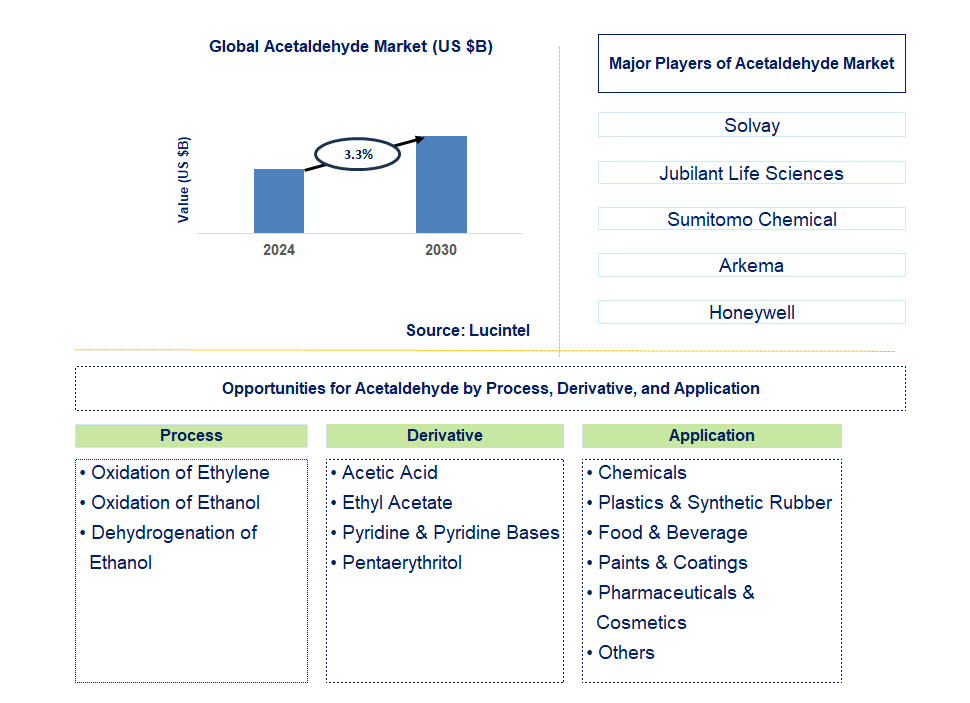
Key data points: The growth forecast = 3.3% annually next 6 years. Scroll below to get more insights. This market report covers trends, opportunities, and forecast in the global acetaldehyde market to 2030 by process (oxidation of ethylene, oxidation of ethanol, and dehydrogenation of ethanol), derivative (acetic acid, ethyl acetate, pyridine & pyridine bases, and pentaerythritol), application (chemicals, plastics & synthetic rubber, food & beverage, paints & coatings, pharmaceuticals & cosmetics, and others), and region (North America, Europe, Asia Pacific, and the Rest of the World)
We'll send your sample report shortly.
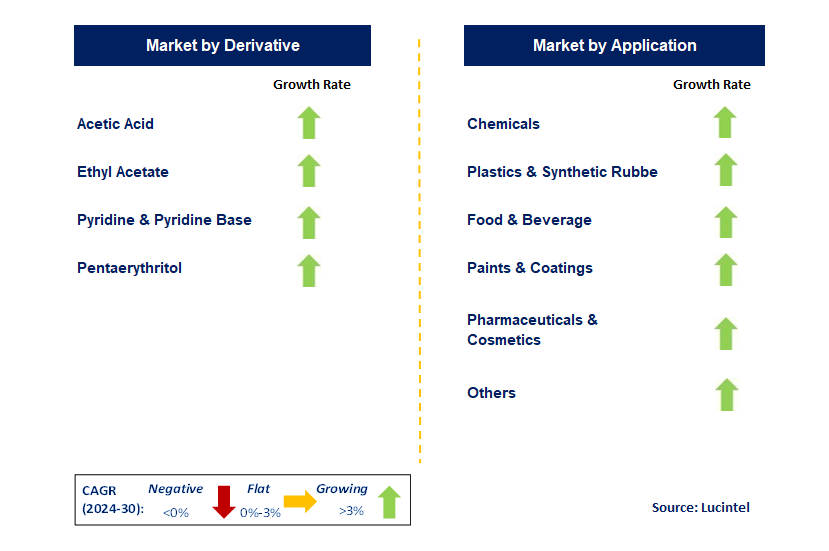
• Lucintel forecasts that pyridine & pyridine bases is expected to witness the highest growth over the forecast period due to its quality like they are highly soluble in alcohol, water, benzene, and ether.
• Within this market, food & beverage will remain the largest segment due to it high usage as preservative for fruits, fish, and as a flavoring agent.
• APAC is expected to witness highest growth over the forecast period due to growing demand from domestic as well as international markets. A more than 150-page report is developed to help in your business decisions.
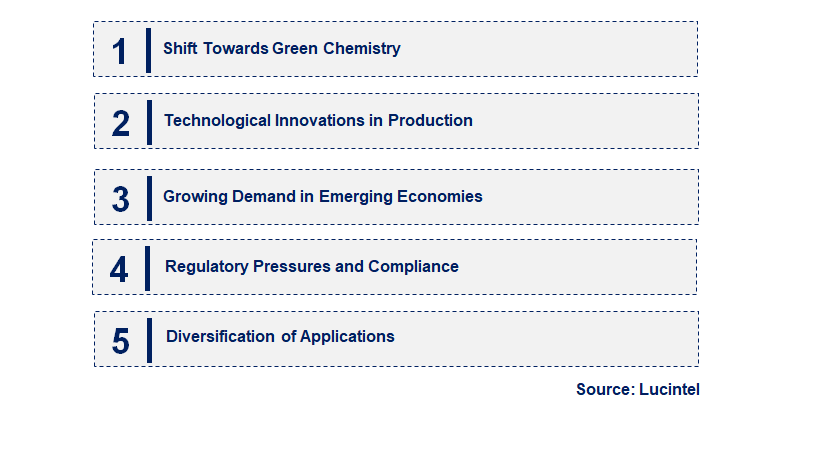
• Shift Towards Green Chemistry: The push towards green chemistry is reshaping the acetaldehyde market by focusing on reducing environmental impact. Companies are investing in cleaner production technologies and alternative methods that generate fewer by-products and lower emissions. This trend reflects a broader industry movement towards sustainability, driven by regulatory requirements and consumer demand for environmentally friendly products. As green chemistry becomes more mainstream, it is expected to lead to significant changes in production practices and market dynamics.
• Technological Innovations in Production: Advancements in production technologies are enhancing the efficiency and reducing the cost of acetaldehyde manufacturing. Innovations such as improved catalytic processes and automation are streamlining operations and minimizing waste. These technological improvements not only boost productivity but also help in meeting stricter environmental regulations. The adoption of new technologies is critical for companies to remain competitive and responsive to market demands.
• Growing Demand in Emerging Economies: Emerging economies, particularly in Asia, are driving increased demand for acetaldehyde due to rapid industrialization and urbanization. Countries like India and China are expanding their production capacities to meet this growing demand. This trend is resulting in increased investment in new facilities and infrastructure, which are crucial for supporting economic growth in these regions. The rising demand is also influencing global supply chains and market strategies.
• Regulatory Pressures and Compliance: Stricter environmental regulations are impacting the acetaldehyde market by forcing companies to adopt cleaner production methods and comply with new standards. Regulatory bodies are imposing limits on emissions and waste, pushing industries to invest in advanced technologies and sustainable practices. Compliance with these regulations is becoming a key factor for market competitiveness and operational efficiency.
• Diversification of Applications: The diversification of acetaldehyde applications is expanding its market potential. Beyond traditional uses in plastics and chemicals, acetaldehyde is finding new applications in pharmaceuticals, electronics, and high-tech industries. This trend is driven by innovations in product development and increasing demand for specialized applications. As acetaldehyde’s versatility is recognized, new markets and opportunities are emerging, influencing production and consumption patterns. These trends are fundamentally reshaping the acetaldehyde market by emphasizing sustainability, technological advancement, and market diversification. Companies are adapting to regulatory pressures and exploring new applications, which are driving changes in production practices and market dynamics. As these trends continue to evolve, they will have significant implications for how acetaldehyde is produced, used, and managed globally.
• Adoption of Green Production Technologies: Recent advancements include the adoption of green production technologies that aim to reduce the environmental footprint of acetaldehyde manufacturing. These technologies focus on minimizing waste and emissions through more efficient processes and cleaner raw materials. The shift towards greener practices is driven by increasing regulatory pressures and a growing emphasis on sustainability. This development is leading to more eco-friendly production methods and improved compliance with environmental standards.
• Expansion of Production Facilities in Asia: Significant investments are being made in expanding acetaldehyde production facilities in Asia, particularly in China and India. This expansion is driven by rising demand due to rapid industrialization and economic growth in these regions. New facilities are being established with advanced technologies to increase production capacity and efficiency. This development is crucial for meeting the growing market demand and supporting economic development in emerging economies.
• Innovations in Catalytic Processes: Innovations in catalytic processes are improving the efficiency and cost-effectiveness of acetaldehyde production. New catalysts are being developed to enhance reaction rates and selectivity, resulting in higher yields and reduced production costs. These advancements are helping companies to stay competitive and meet market demands more effectively. The ongoing research and development in this area are expected to drive further improvements in production technologies.
• Stricter Environmental Regulations: Stricter environmental regulations are influencing the acetaldehyde market by mandating reductions in emissions and waste. Regulatory bodies are implementing new standards that require companies to invest in cleaner technologies and practices. Compliance with these regulations is becoming increasingly important for maintaining market access and operational efficiency. The focus on environmental sustainability is driving changes in production methods and industry practices.
• Growing Use in High-Tech Applications: The use of acetaldehyde in high-tech applications, such as electronics and pharmaceuticals, is expanding. Innovations in product development are opening up new markets and applications for acetaldehyde. This diversification is providing new growth opportunities and driving demand in specialized sectors. Companies are exploring novel uses of acetaldehyde to leverage its properties in advanced technologies, which are influencing market trends and production strategies. These key developments are reshaping the acetaldehyde market by driving advancements in production technologies, expanding facilities, and diversifying applications. The emphasis on sustainability and regulatory compliance is influencing industry practices and market dynamics. As these developments continue to unfold, they will have a significant impact on how acetaldehyde is produced, used, and managed globally.
• Expansion in Plastic Manufacturing: The growing demand for high-performance plastics presents a key growth opportunity for acetaldehyde. Used in the production of plasticizers and resins, acetaldehyde’s role is vital for creating materials with enhanced properties. As the plastic industry continues to expand, particularly in the packaging and automotive sectors, the need for acetaldehyde will rise. Companies that invest in advanced production technologies and establish strong supply chains can capitalize on this increasing demand and gain a competitive edge.
• Development of Specialty Chemicals: Acetaldehyde is crucial for producing specialty chemicals used in diverse applications such as flavorings, fragrances, and agrochemicals. As consumer preferences shift towards personalized and high-quality products, the demand for specialty chemicals is increasing. This trend creates opportunities for acetaldehyde producers to diversify their product offerings and cater to niche markets. Investing in research and development to create innovative specialty chemicals can unlock new revenue streams and strengthen market positioning.
• Growth in Pharmaceutical Applications: In the pharmaceutical industry, acetaldehyde is used in the synthesis of various drugs and medicinal compounds. The growing focus on drug development and personalized medicine is driving demand for acetaldehyde in pharmaceutical applications. Companies that explore new drug formulations and enhance production processes will benefit from increased market opportunities. Strategic partnerships with pharmaceutical firms and investment in cutting-edge technologies can further drive growth in this sector.
• Adoption in Electronics Manufacturing: Acetaldehyde is used in the production of certain electronic components and materials. With the rise of technology-driven industries, such as consumer electronics and semiconductors, the demand for acetaldehyde in electronics manufacturing is growing. As electronics become more advanced, the need for high-purity acetaldehyde and specialized applications will increase. Companies that focus on supplying high-quality acetaldehyde for electronics can tap into this lucrative market and support technological advancements.
• Utilization in Renewable Energy Technologies: The renewable energy sector, including biofuels and energy storage solutions, presents a new growth opportunity for acetaldehyde. Its role in producing bioethanol and other renewable energy products is gaining prominence as the world shifts towards sustainable energy sources. Companies that innovate in biofuel production and explore new applications for acetaldehyde in renewable energy technologies can position themselves as leaders in this emerging market. These strategic growth opportunities are driving expansion in the acetaldehyde market across diverse applications. By focusing on industries such as plastics, specialty chemicals, pharmaceuticals, electronics, and renewable energy, companies can leverage increasing demand and technological advancements. Capitalizing on these opportunities will enable market participants to enhance their competitive edge and drive sustainable growth.
• Technological Advancements: Technological advancements in production processes are a major driver of the acetaldehyde market. Innovations such as improved catalytic systems and more efficient manufacturing techniques enhance production efficiency and reduce costs. These advancements enable companies to meet growing demand while maintaining competitive pricing. Investing in cutting-edge technology can lead to significant improvements in yield, quality, and environmental impact.
• Rising Demand in Emerging Markets: Rapid industrialization and urbanization in emerging markets, particularly in Asia, are driving up the demand for acetaldehyde. These regions are experiencing growth in industries such as plastics, chemicals, and pharmaceuticals, which rely heavily on acetaldehyde. The increasing economic activity and infrastructure development in these areas present substantial opportunities for market expansion and investment.
• Expansion of End-Use Industries: The expansion of end-use industries, including automotive, packaging, and pharmaceuticals, is fueling demand for acetaldehyde. As these sectors grow, their need for acetaldehyde-based products and intermediates increases. Companies that align their production strategies with the evolving needs of these industries can capitalize on the expanding market and enhance their profitability. However, the acetaldehyde market also faces several challenges, including:
• Environmental Regulations: Stringent environmental regulations are a significant challenge for the acetaldehyde market. Governments worldwide are implementing stricter emissions standards and waste management regulations, which can increase production costs and compliance burdens for manufacturers. Companies must invest in cleaner technologies and processes to meet these regulatory requirements, which may impact profitability and operational efficiency.
• Fluctuating Raw Material Prices: The volatility in raw material prices poses a challenge for acetaldehyde producers. Prices for key feedstocks can fluctuate due to market dynamics, geopolitical factors, and supply chain disruptions. These fluctuations can impact production costs and profit margins, making it essential for companies to adopt effective risk management strategies and explore alternative sourcing options.
• Competitive Market Landscape: The acetaldehyde market is characterized by intense competition among key players. Companies must continually innovate and improve their product offerings to differentiate themselves in a crowded market. The pressure to reduce costs while maintaining quality and sustainability can strain resources and hinder growth. Establishing strong partnerships and leveraging technological advancements are crucial for staying competitive in this dynamic environment. Understanding these drivers and challenges will enable stakeholders to make informed decisions and develop effective strategies to navigate the acetaldehyde market successfully. By leveraging opportunities and addressing challenges, companies can enhance their market position and drive sustainable growth. Technological advancements, rising demand in emerging markets, and a focus on sustainability are key drivers, while stringent regulations, raw material price volatility, and competition from alternatives present significant challenges. Navigating these factors effectively will be crucial for stakeholders to capitalize on growth opportunities and address market hurdles.
• Solvay
• Jubilant Life Sciences
• Sumitomo Chemical
• Arkema
• Honeywell
• Oxidation of Ethylene
• Oxidation of Ethanol
• Dehydrogenation of Ethanol
• Acetic Acid
• Ethyl Acetate
• Pyridine & Pyridine Bases
• Pentaerythritol
• Chemicals
• Plastics & Synthetic Rubber
• Food & Beverage
• Paints & Coatings
• Pharmaceuticals & Cosmetics
• Others
• North America
• Europe
• Asia Pacific
• The Rest of the World
• United States: In the U.S., the acetaldehyde market has been characterized by increased environmental regulations and a push toward greener production methods. New technologies aimed at reducing emissions and enhancing efficiency are being adopted. Companies are also investing in research to find alternative, less toxic production methods. The market is seeing a gradual shift toward sustainable practices, driven by both regulatory pressures and consumer demand for eco-friendly products.
• China: China remains a major player in the acetaldehyde market, driven by its robust manufacturing sector. Recent developments include a focus on increasing production capacities and improving the efficiency of existing plants. However, the country faces challenges related to environmental regulations and the need to upgrade its infrastructure to reduce pollution. The government’s push for cleaner technologies is influencing market dynamics, leading to a modernization of production techniques.
• Germany: The German acetaldehyde market is heavily influenced by its commitment to sustainability and environmental protection. Recent developments include significant investments in green chemistry and advanced production technologies aimed at reducing emissions. German companies are also exploring new applications for acetaldehyde in high-tech industries. The market is adapting to stringent EU regulations, which are pushing for cleaner and more efficient production processes.
• India: In India, the acetaldehyde market is expanding rapidly due to growing industrial activities and infrastructure development. Recent advancements include the establishment of new production facilities and technological upgrades to enhance efficiency. However, the market is also facing challenges related to environmental regulations and the need for improved waste management practices. The Indian government’s focus on industrial growth is driving demand, but sustainability remains a key concern.
• Japan: The Japanese acetaldehyde market is marked by technological innovation and a strong emphasis on quality control. Recent developments include the adoption of advanced production technologies and efforts to reduce environmental impact. Japanese companies are also focusing on developing high-value applications for acetaldehyde in electronics and pharmaceuticals. The market is influenced by both domestic regulations and global trends, driving continuous improvement in production methods.


• Eastman
• Jubilant Life Sciences
• Sumitomo Chemical
• Celanese
• Lonza Q6. Which acetaldehyde market segment will be the largest in future? Answer: Lucintel forecasts that pyridine & pyridine bases is expected to witness the highest growth over the forecast period due to its quality like they are highly soluble in alcohol, water, benzene, and ether. Q7. In acetaldehyde market, which region is expected to be the largest in next 5 years? Answer: APAC is expected to witness highest growth over the forecast period due to growing demand from domestic as well as international markets. Q8. Do we receive customization in this report? Answer: Yes, Lucintel provides 10% customization without any additional cost.


Choose a license that fits your team. Instant PDF delivery.
Prices exclude taxes. Instant delivery. Custom licensing available on request.
Market Report · July 22, 2026
Market Report · July 22, 2026
Market Report · July 22, 2026
Trusted partner for strategic intelligence and business growth


Receive a complimentary market analysis tailored to your industry. Our analysts will identify key growth opportunities and competitive dynamics specific to your business.

Market size, growth rate, and key trend analysis for your specific sector.

Top competitor positioning and market share analysis.

Strategic recommendations backed by data-driven insights.
Get curated market intelligence and competitive moves straight to your inbox.
By subscribing, you agree to receive our monthly insights. Unsubscribe anytime.
Receive a complimentary market analysis tailored to your industry. Our analysts will identify key growth opportunities and competitive dynamics specific to your business.
Market size, growth rate, and key trend analysis for your specific sector.
Top competitor positioning and market share analysis.
Strategic recommendations backed by data-driven insights.
Get curated market intelligence, emerging trends, and competitive moves straight to your inbox each month.
By subscribing, you agree to receive our monthly insights. Unsubscribe anytime.
We'll send your sample report shortly.