
Report Feature
4K Display Resolution Market Trends and Forecast
The 4K display resolution market technologies have undergone significant changes over the past years, moving away from traditional LCD technology toward more advanced display technologies, including OLED and QLED. These advancements have improved color accuracy, contrast ratios, and provided better viewing angles, creating a far more immersive experience. New HDR (High dynamic range) technologies and mini-LED backlighting have also enhanced image quality, offering better brightness levels, deeper blacks, and richer colors, shifting the trend toward OLED and QLED technologies in 4K display applications, primarily in consumer electronics and professional fields.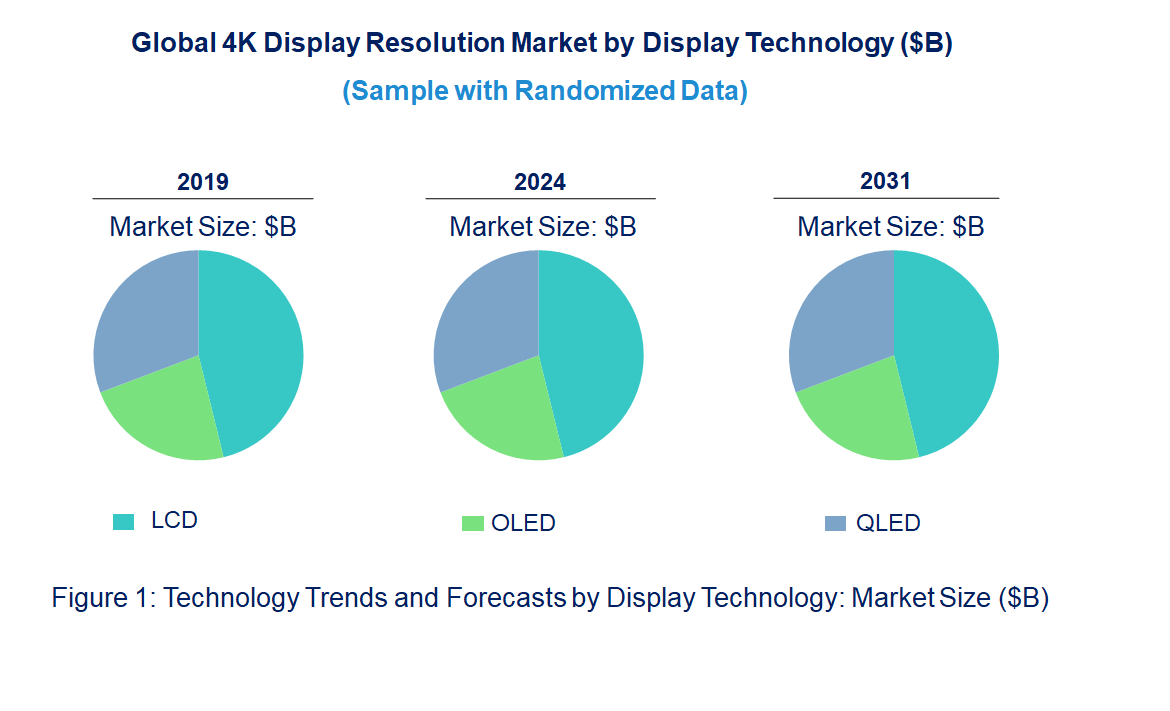
Emerging Trends in the 4K Display Resolution Market
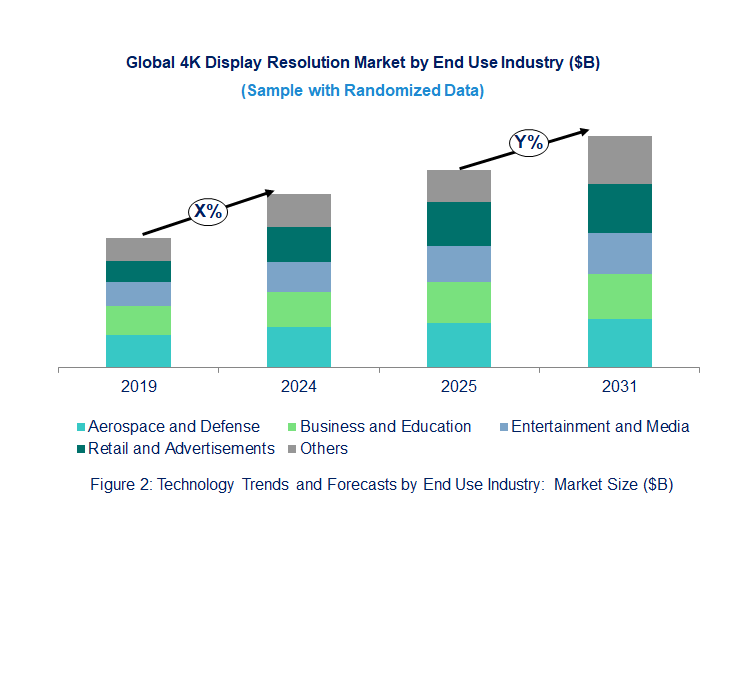
The 4K display resolution market is rapidly evolving, with technological innovations that are changing the market landscape. These developments are fueled by consumer demands for better image quality, enhanced features, and a wider range of applications. The five key emerging trends in the market are as follows:• From LCD to OLED and QLED Displays: The big trend is the shift away from standard LCD technology toward OLED and QLED. OLED offers superior picture quality with deeper blacks, better contrast ratios, and higher color accuracy. So far, the gains have been primarily in OLED, which offers bright, vivid displays and longer longevity, while QLED offers similar advantages, especially in brightness.
• Mini-LED and Micro-LED: The integration of these new technologies into 4K displays has enhanced their performance. In terms of contrast and brightness, Mini-LED backlighting is improving LCDs, while Micro-LED offers further advancements in brightness, color accuracy, and lifespan, taking visual displays to a completely new level.
• Increasing Adoption of 4K Displays in Consumer Electronics: As 4K content continues to gain popularity, the adoption of 4K displays in consumer electronics applications is on the rise. These include televisions, monitors, and gaming consoles. Manufacturers have even introduced this capability in price-sensitive product lines, ensuring the mass adoption of high-definition displays.
• Advancement of High Dynamic Range (HDR) Technology: The integration of HDR technology with 4K displays is enhancing color depth and contrast, providing more vivid and lifelike images for viewers. As more content is produced in HDR, the demand for HDR-compatible 4K displays will continue to increase.
• Establishment of 4K in Business and Professional Applications: 4K displays are increasingly finding their place in business, educational, and entertainment markets. From high-resolution presentations in conference rooms and digital signage to medical imaging and virtual learning environments, 4K resolution delivers sharp, crisp visuals that enrich communication in professional settings. The 4K display resolution market is, therefore, growing quickly, with key trends driving the shift toward OLED and QLED technologies, mini-LED and Micro-LED innovations, and the increasing adoption of 4K displays in both consumer and professional markets. These advancements have significantly improved visual experiences and expanded the applications of 4K technology across various industries.
4K Display Resolution Market : Industry Potential, Technological Development, and Compliance Considerations
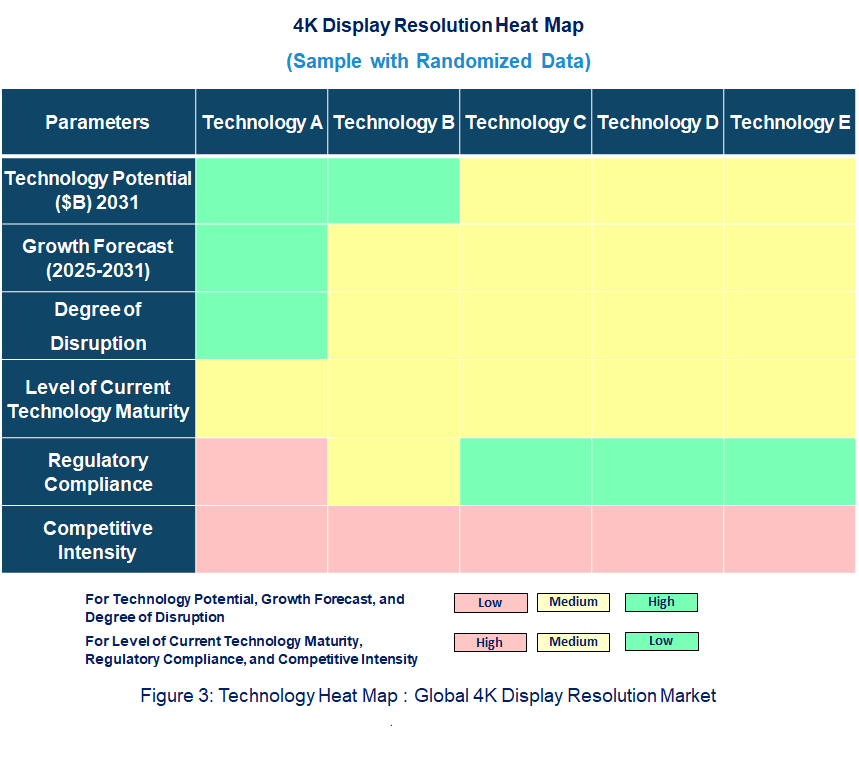
The growth of 4K display resolution is rapid, driven by the consumer demand for better quality visual experiences in entertainment, gaming, and professional applications. 4K displays have a resolution of 3840 x 2160 pixels, offering four times the detail of Full HD displays, providing sharper images and more vibrant colors for a richer viewing experience. The technology has matured significantly but remains dynamic with ongoing innovations in display panels, color accuracy, refresh rates, and integration with emerging technologies like AI and augmented reality (AR).• Technology Potential: There is vast potential for 4K display technology in entertainment, gaming, healthcare, and digital signage. With increased demand for larger screens and more immersive experiences, 4K technology is poised to expand into new applications, such as augmented and virtual reality, advanced medical imaging, and remote collaboration. OLED, MicroLED, and quantum dot displays will continue to develop, enhancing visual clarity, energy efficiency, and screen longevity.
• Degree of Disruption: 4K displays have already disrupted industries like media and entertainment, as content shifts to higher resolutions. Gaming and esports are now major market disruptors, with 4K adding realism to games. As 8K and other advanced display technologies emerge, 4K will remain the cornerstone for mainstream adoption.
• Technology Maturity: 4K display technology is highly mature in the consumer market, being widely available in TVs, monitors, and mobile devices. Key areas of improvement include color accuracy, refresh rates, and HDR support.
• Regulatory Compliance: Regulatory compliance primarily concerns environmental standards for energy consumption and hazardous materials in the 4K display market. Products must meet certifications such as Energy Star, RoHS, and CE.
Recent Technological development in 4K Display Resolution Market by Key Players
As the 4K display resolution market is highly competitive, market leaders frequently introduce new products, ensuring continuous innovation. Below are some recent developments from key players in the market:• Samsung Electronics: Samsung is a leader in QLED and Neo QLED technology, having enhanced 4K displays with mini-LED backlighting. The company is a leading seller of 4K TVs and has extended its brand portfolio to include gaming at 4K display, which offers better low latency and high refresh rates for an enhanced gaming experience.
• LG Electronics: LG’s OLED panels have introduced a new standard for color accuracy and deep blacks. LG has integrated OLED Evo technology into its 4K TV product line, specifically designed to enhance brightness and overall picture quality. The company has also expanded its 4K OLED displays into the gaming and home theater markets.
• Sony Corporation: Sony’s BRAVIA XR series represents its commitment to improving 4K display offerings, incorporating advanced processing technologies, such as the Cognitive Processor XR, to enhance picture and sound quality. Sony’s 4K displays are gaining popularity for their superior motion handling, making them ideal for sports and fast-action content.
• Panasonic Corporation: Panasonic is focusing on 4K OLED displays for premium home theater experiences. Its high-end 4K OLED models feature precise color reproduction and cinematic quality, making them ideal for filmmakers and professional video producers.
• Sharp Corporation: Sharp has embedded 4K technology into its professional displays designed for business, retail, and education markets. Sharp’s 4K displays provide exceptional image clarity and are used in digital signage as well as collaborative workspaces.
• Toshiba Corporation: Toshiba has introduced a range of 4K UHD smart TVs with advanced AI and voice control features. The company is targeting the mid-tier market with affordable 4K displays, catering to mainstream consumers.
• Hisense International: Hisense has launched 4K ULED TVs that combine next-generation LED backlighting with Quantum Dot technology for vibrant color reproduction. The company is expanding its reach into affordable 4K displays.
• TCL Corporation: TCL is gaining market share by offering affordable 4K TVs with Quantum Dot technology and HDR10+. The company’s focus on providing feature-rich 4K displays at competitive prices has made it a top choice for budget-conscious consumers.
• Koninklijke Philips: Philips continues to expand its range of 4K displays featuring Ambilight technology, which enhances the viewing experience by projecting ambient light that matches the on-screen action. The company focuses on improving the entertainment and gaming experience.
• Innolux Corporation: Innolux is working on high-performance 4K displays for automotive, industrial, and commercial applications. The company is exploring large-format 4K panels with superior ruggedness and flexibility for professional use. These developments demonstrate how 4K display market leaders continue to innovate by introducing novel technologies that meet the demands of various customers and industries.
4K Display Resolution Market Driver and Challenges
The 4K display resolution market is growing rapidly due to technological advancements, changing consumer preferences, and the widespread adoption of 4K content. However, challenges such as high production costs and the limited availability of 4K content may impede further progress. Below are the major drivers and challenges in the market: The factors responsible for driving the 4K Display Resolution include:• Increasing Consumer Demand for Superior Quality Content: As consumers seek more immersive viewing experiences, the demand for 4K displays in home entertainment, gaming, and media consumption is growing. This trend is further fueled by the increased availability of 4K content across streaming platforms.
• Technological Advancements in Display Technologies: The shift from LCD to OLED, QLED, and mini-LED technologies has improved the quality of 4K displays. These technologies offer better color accuracy, contrast, and energy efficiency, driving consumer interest in upgrading to 4K TVs and monitors.
• Growing Adoption of 4K in Professional Applications: More professionals are using 4K displays in business, education, and healthcare for presentations, videoconferencing, and medical imaging. These growing markets create new opportunities for display manufacturers.
• Declining Prices of 4K Displays: As production technologies improve and competition increases, the prices of 4K displays are becoming more affordable. This trend is leading to greater market penetration, particularly among budget-conscious consumers who previously opted for lower-resolution displays. Challenges in the 4K Display Resolution include:
• High Production Costs: Although 4K displays are becoming more affordable, the production costs for advanced technologies like OLED and QLED remain high. This can result in higher retail prices for premium models, potentially limiting mass adoption in some markets.
• Limited Availability of 4K Content: Despite the growing availability of 4K content through streaming services, content remains limited in certain niche markets, which restricts the full potential of 4K displays in these applications.
• Varied Industry Standards: The market is currently fragmented, with different display technologies (e.g., OLED, QLED, Mini-LED) and HDR formats. This variety can confuse consumers and businesses, leading to decision-making challenges. Inconsistent standards hinder adoption. While the market is growing due to technological advancements, rising demand, and falling prices, challenges such as high production costs and limited content availability still pose barriers. However, as these issues are addressed, the 4K display resolution market is expected to continue expanding across both consumer and professional applications.
List of 4K Display Resolution Companies
Companies in the market compete based on product quality offered. Major players in this market focus on expanding their manufacturing facilities, R&D investments, infrastructural development, and leverage integration opportunities across the value chain. With these strategies 4K display resolution companies cater to increasing demand, ensure competitive effectiveness, develop innovative products & technologies, reduce production costs, and expand their customer base. Some of the 4K display resolution companies profiled in this report include.• Samsung Electronics
• LG Electronics
• Sony Corporation
• Panasonic Corporation
• Sharp Corporation
• Toshiba Corporation
4K Display Resolution Market by Technology
• Technology Readiness by Technology Type: LCD is the most mature technology, being widely used in 4K TVs, monitors, and other displays due to its cost-effectiveness and reliable performance. OLED, designed for premium displays, offers cutting-edge technology with vibrant colors and deep blacks, although challenges such as screen burn-in and cost remain. QLED is highly mature for both consumer and professional displays, competing directly with OLED but without burn-in issues. OLED and QLED are both ready for high-end applications like premium TVs, smartphones, and monitors. While LCD dominates the entry and mid-range market, OLED and QLED continue to gain ground in the high-end market, with superior performance and regulatory compliance increasingly posing challenges to LCD.
• Competitive Intensity and Regulatory Compliance: Competition is fierce in the 4K display resolution market, with LCD, OLED, and QLED competing across different price points and applications. LCD dominates in volume due to its low cost, but OLED and QLED are increasingly competing in premium segments. OLED holds the lead in high-end TVs and smartphones, while QLED offers an excellent alternative with superior brightness and color quality. OLED and QLED tend to comply with stricter environmental standards due to organic compounds and quantum dots, while the market continues to evolve in terms of picture quality, energy efficiency, and longevity.
• Disruption Potential of Different Technologies for the 4K Display Resolution Market: LCD, OLED, and QLED each have unique disruption potentials in the 4K display resolution market. While LCD remains cost-effective and widely adopted in budget-friendly segments, its potential for disruptive innovation is limited compared to OLED and QLED. OLED provides superior contrast, deeper blacks, and vibrant colors, making it a strong disruptor in premium display markets. QLED excels in brightness and durability, making it a significant disruptor in high-end consumer and professional display markets. OLED’s flexibility, superior color reproduction, and QLED’s brightness and energy efficiency give these technologies the highest disruption potential in premium consumer electronics, while LCD remains dominant in lower-priced, mass-market devices.
4K Display Resolution Market Trend and Forecast by Display Technology [Value from 2018 to 2030]:
• LCD
• OLED
• QLED
4K Display Resolution Market Trend and Forecast by End Use Industry [Value from 2018 to 2030]:
• Aerospace and Defense
• Business and Education
• Entertainment and Media
• Retail and Advertisements
• Others
4K Display Resolution Market by Region [Value from 2018 to 2030]:
• North America
• Europe
• Asia Pacific
• The Rest of the World
• Latest Developments and Innovations in the 4K Display Resolution Technologies
• Companies / Ecosystems
• Strategic Opportunities by Technology Type
Features of the Global 4K Display Resolution Market
Market Size Estimates: 4K display resolution market size estimation in terms of ($B). Trend and Forecast Analysis: Market trends (2018 to 2023) and forecast (2024 to 2030) by various segments and regions. Segmentation Analysis: Technology trends in the global 4K display resolution market size by various segments, such as display technology and end use industry in terms of value and volume shipments. Regional Analysis: Technology trends in the global 4K display resolution market breakdown by North America, Europe, Asia Pacific, and the Rest of the World. Growth Opportunities: Analysis of growth opportunities in different end use industries, display technologies, and regions for technology trends in the global 4K display resolution market. Strategic Analysis: This includes M&A, new product development, and competitive landscape for technology trends in the global 4K display resolution market. Analysis of competitive intensity of the industry based on Porter’s Five Forces model.Table of Contents
Methodology
- In-depth interviews of the major players in this market
- Detailed secondary research from competitors’ financial statements and published data
- Extensive searches of published works, market, and database information pertaining to industry news, company press releases, and customer intentions
- A compilation of the experiences, judgments, and insights of Lucintel’s professionals, who have analyzed and tracked this market over the years.


Buy Now
Choose a license that fits your team. Instant PDF delivery.
Prices exclude taxes. Instant delivery. Custom licensing available on request.
Key Questions
- • What are some of the most promising potential, high-growth opportunities for the technology trends in the global 4k display resolution market by display technology (lcd, oled, and qled), end use industry (aerospace and defense, business and education, entertainment and media, retail and advertisements, and others), and region (North America, Europe, Asia Pacific, and the Rest of the World)?
- • Which technology segments will grow at a faster pace and why?
- • Which regions will grow at a faster pace and why?
- • What are the key factors affecting dynamics of different display technologies? What are the drivers and challenges of these display technologies in the global 4K display resolution market?
- • What are the business risks and threats to the technology trends in the global 4K display resolution market?
- • What are the emerging trends in these display technologies in the global 4K display resolution market and the reasons behind them?
- • Which technologies have potential of disruption in this market?
- • What are the new developments in the technology trends in the global 4K display resolution market? Which companies are leading these developments?
- • Who are the major players in technology trends in the global 4K display resolution market? What strategic initiatives are being implemented by key players for business growth?
- • What are strategic growth opportunities in this 4K display resolution technology space?
- • What M & A activities did take place in the last five years in technology trends in the global 4K display resolution market?


