
Market Report · May 18, 2026

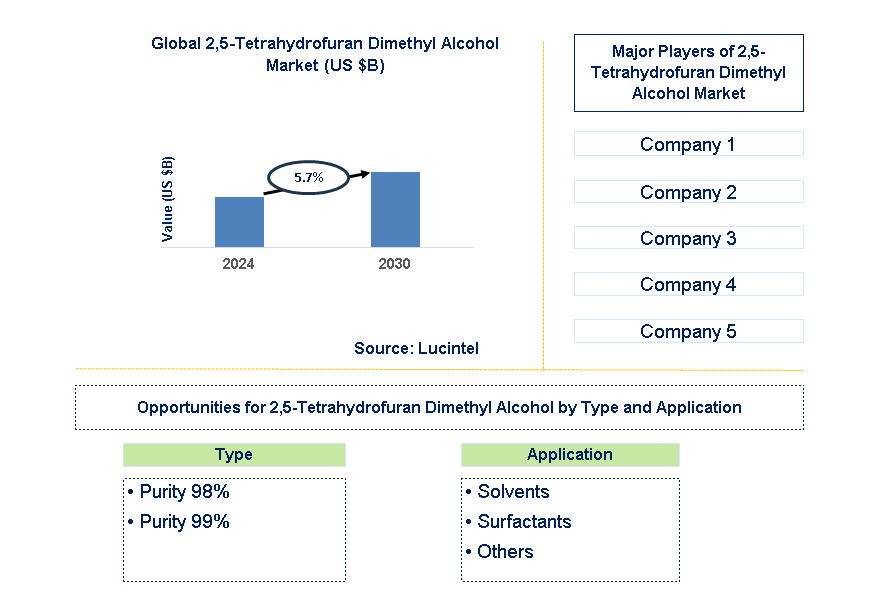
Key data points: The growth forecast = 5.7% annually next 6 years. Scroll below to get more insights. This market report covers trends, opportunities, and forecast in the global 2,5-tetrahydrofuran dimethyl alcohol market to 2030 by type (purity 98% and purity 99%), application (solvents, surfactants, and others), and region (North America, Europe, Asia Pacific, and the Rest of the World)
We'll send your sample report shortly.
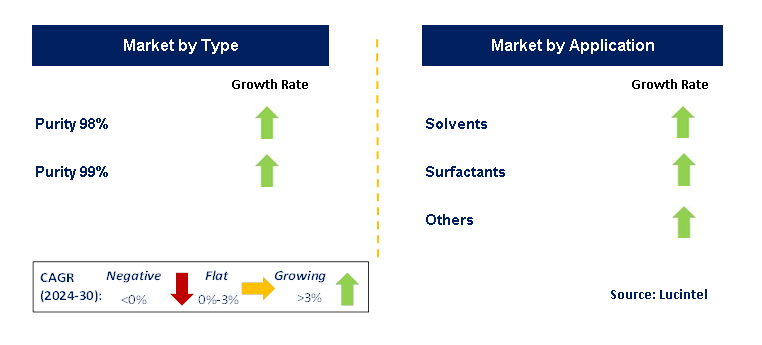
• Lucintel forecasts that, within the type category, the purity 98% is expected to witness the higher growth over the forecast period.
• Within the application category, solvent is expected to witness the higher growth.
• In terms of regions, North America is expected to witness highest growth over the forecast period. Gain valuable insights for your business decisions with our comprehensive 150+ page report.
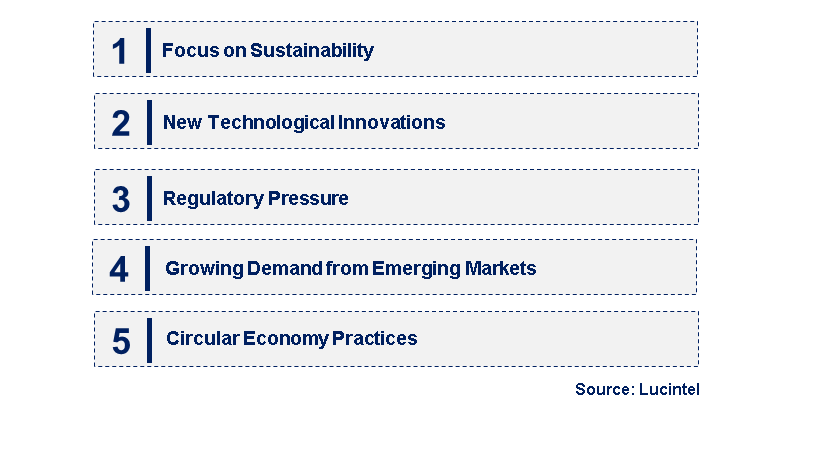
• Focus on Sustainability: The demand for bio-based 2,5-Tetrahydrofuran Dimethyl Alcohol is fueled by the rapid shift toward eco-friendly chemicals. Companies are engaging in more sustainable sourcing and manufacturing practices that cause less harm to the environment. In an era of consumerism and lenient regulations favoring green products, embracing this strategy keeps companies ahead.
• New Technological Innovations: Advances in production technologies include better and more cost-effective efficiency. The development of continuous flow chemistry, catalytic processes, and similar methods improves yield and purity. These technologies optimize resource use and align with industry efforts to minimize waste, leading to more sustainable manufacturing practices.
• Regulatory Pressure: Stringent global regulations on environmental impact are forcing industries to seek safer and greener solvents. Manufacturers' product lines are evolving to adhere to these regulations. Market opportunities for 2,5-Tetrahydrofuran Dimethyl Alcohol as an alternative solvent are significant, as it complies with more conventional solvents.
• Growing Demand from Emerging Markets: In emerging economies like India and China, greater industrialization leads to an increasing number of consumers for solvents in multiple applications. This growth increases opportunities for manufacturers willing to invest in these markets, particularly in the automotive, pharmaceutical, and coatings sectors.
• Circular Economy Practices: Recycling and reusability are becoming increasingly important, influencing product development and consumption patterns. Companies are exploring how to implement circular economy principles such as waste minimization and resource recovery in their operations. This boosts the sustainability profile of the market and attracts environmentally conscious consumers. All these factors impact the 2,5-Tetrahydrofuran Dimethyl Alcohol market, driving innovation in response to changing scenarios and promoting growth in sustainable applications.
• Increased Production Capacity: Manufacturers are ramping up production to meet growing demand. This improvement is crucial for overcoming bottlenecks in the supply chain and ensuring availability for diverse applications. Increased capacity allows for competitive pricing to attract both producers and consumers, especially in the pharmaceutical and coatings sectors.
• Focus on Bio-Based Feedstocks: Bio-based feedstocks present opportunities for increased adoption to achieve sustainability on the international front. Companies are investing in processes that move away from fossil-based feedstocks. This approach benefits environmental impact and enhances brand reputation among environmentally conscious consumers.
• Product Formulations: Research is key to formulating improvements with 2,5-Tetrahydrofuran Dimethyl Alcohol, yielding high performance efficiency in industrial applications and opening market growth. Innovations are focused on raising purity levels and expanding compatibility with other solvents. Formulations can be tailored to meet the specific needs of certain industries, further facilitating market growth.
• Research and Development Collaboration: Innovation is incubating through engagement among industry players, academia, and research institutions. Collaboration in joint research initiatives accelerates the development of new technologies and applications, enhancing the competitive landscape of the market.
• Development into New Applications: The market is expanding due to increased applications in the automotive and electronics sectors. Manufacturers are striving to enter these markets, characterized by high growth rates and the demand for cleaner solvents. Trends in application diversification stabilize demand and enhance market resilience. The development of 2,5-Tetrahydrofuran Dimethyl Alcohol is significantly changing the market, initiating growth in sustainability, product offerings, and new opportunities.
• Pharmaceuticals: 2,5-Tetrahydrofuran Dimethyl Alcohol presents a massive growth opportunity in the pharma sector. The demand for high-purity solvents is essential for pharmaceutical companies to capitalize on this opportunity created by specialty formulations meeting strict industry requirements. Its status as an eco-friendly alternative and the growing demand will strengthen this market.
• Automotive Coatings: Sustainable materials could unlock opportunities for 2,5-Tetrahydrofuran Dimethyl Alcohol in coatings, allowing this solvent to comply with the evolving regulatory requirements of the automotive industry regarding low-VOC and high-performance coatings.
• Adhesives and Sealants: The market for adhesives and sealants is increasing, particularly in the construction and manufacturing industries. 2,5-Tetrahydrofuran Dimethyl Alcohol has properties that can be leveraged in formulating high-performance adhesives. Markets for the product will arise from industries focusing on performance and sustainability.
• Textile Industry: The growing trend of textile industries shifting toward sustainability is creating demand for green solvents. 2,5-Tetrahydrofuran Dimethyl Alcohol will play a significant role in textile processing and finishing applications. Its benefits can be capitalized upon in this industry to tap into a rapidly emerging market segment and improve sustainability credentials.
• Consumer Products: There is increasing demand for sustainable consumer products, with consumers becoming more environmentally aware. The addition of 2,5-Tetrahydrofuran Dimethyl Alcohol to personal care and household products can meet this requirement. As part of its marketing strategy, companies may emphasize its green features as a selling proposition to the expanding base of eco-aware consumers. Transformations in growth opportunities are changing the market, allowing stakeholders to position themselves better regarding their preferred sustainability trends and expand their applications.
• Global Demand for Sustainability: Sustainability is a major driver propelling the 2,5-Tetrahydrofuran Dimethyl Alcohol market. Firms are keen to embrace green chemistry and environmentally friendly products in accordance with regulations, consumer demands, and ongoing efforts to improve the market through sustainable resource sourcing and production practices.
• Technological Innovations: Innovations in production processes and extraction techniques boost efficiency and reduce costs. Improved production methods enhance yield and product quality, encouraging more industries to switch to 2,5-Tetrahydrofuran Dimethyl Alcohol. Advancements in technology may lead to new applications and market growth.
• Compliance with the Law: Environmental regulations and scrutiny are compelling companies to seek alternatives to traditional solvent solutions. This demand pressure, driven by regulatory initiatives, opens new avenues for 2,5-Tetrahydrofuran Dimethyl Alcohol as a compliant alternative. Focus on regulatory compliance can become a significant competitive advantage in the growing eco-conscious market.
• Growing Industrial Applications: The increasing demand for 2,5-Tetrahydrofuran Dimethyl Alcohol in the pharmaceutical, automotive, and textile industries drives market growth. These industries, in their relentless pursuit of sustainability, place certain demands on the forward-moving solvent. Growing Markets: High-growth opportunities exist in emerging economies due to rapid industrialization. Countries like India and China are developing their manufacturing sectors, which enhances the market for green solvents. Companies targeting these markets can benefit from increased consumption and growth in applicable areas. Challenges:
• High Production Costs: The use of bio-based feedstock may result in high production costs, making 2,5-Tetrahydrofuran Dimethyl Alcohol expensive. These costs may limit market penetration and associated capabilities. Manufacturers must invest in optimizing production processes to address these challenges and improve profitability.
• Market Competition: The primary threat to the 2,5-Tetrahydrofuran Dimethyl Alcohol market is the highly competitive nature of the alternative solvents market. Many competitors offer similar products, making differentiation a challenge. Companies require constant innovation and effective branding/marketing strategies to stand out in this overcrowded marketplace.
• Supply Chain Disruptions: Intermittent global supply chain issues often lead to raw material shortages and low production efficiency, especially during events like the COVID-19 pandemic. Such challenges can result in reduced growth or price instability in the market. Companies need to strategize and design robust supply chains. Sustainability and technological advancements are promoting growth in the 2,5-Tetrahydrofuran Dimethyl Alcohol market, but strategic responses to issues like high production costs and competition are essential for industry stakeholders.
• Company 1
• Company 2
• Company 3
• Company 4
• Company 5
• Purity 98%
• Purity 99%
• Solvents
• Surfactants
• Others
• North America
• Europe
• Asia Pacific
• The Rest of the World
• United States: In US, the market is driven due to stringent regulation and emphasis on green material. Large players are investing in production technologies to improve efficiency as well as minimizing emissions. Forging in collaboration between industrial players and research institutions help innovate and improve formulations and applications in pharmaceuticals and polymers.
• China: The People's Republic of China market is expanding fast as the government announces eco-friendly chemicals. Many manufacturers increase production capacities with renewable feedstocks integration. Both pharmaceutical and automotive industries rely heavily on the country, which forces the demand for more efficient solvents. Improvements in extraction and purification technology improve the quality of products.
• Germany: Germany is found at the forefront of the development of green chemical solutions and holds a very strong legal base supporting sustainable practice. Its recent advancement has been that bio-based feedstocks are utilized in the manufacture of 2,5-Tetrahydrofuran Dimethyl Alcohol. The German companies are quite up to date with the innovations in recycling and reusing in the prevention of waste and increasing the circular economy. There is fast-paced research engagement among academia and industry.
• India: The Indian market is increasing due to the industrialization of the region and the practice of green chemistry. The paints, coatings, and adhesives market is growing with demand and makes them invest in modern production facilities. Thus, the government is promoting green chemistry research and development in India. As the Indian market matures, its value grows in the supply chain.
• Japan: Research and new technology and high-purity products constitute the primary drivers in the 2,5-Tetrahydrofuran Dimethyl Alcohol market in Japan. Investment in R&D by the Japanese manufacturers in order to enhance the efficiency and quality of the product. The demand from the automotive and electronics industry for cleaner solvents is an important trend. Moreover, the commitment to sustainability by the country leads to higher adoption of bio-based alternatives as it also aligns with global aspirations for clean environment


• Company 1
• Company 2
• Company 3
• Company 4
• Company 5 Q5. Which 2,5-tetrahydrofuran dimethyl alcohol market segment will be the largest in future? Answer: Lucintel forecasts that purity 98% is expected to witness the higher growth over the forecast period. Q6. In 2,5-tetrahydrofuran dimethyl alcohol market, which region is expected to be the largest in next 5 years? Answer: North America is expected to witness highest growth over the forecast period. Q.7 Do we receive customization in this report? Answer: Yes, Lucintel provides 10% customization without any additional cost.


Choose a license that fits your team. Instant PDF delivery.
Prices exclude taxes. Instant delivery. Custom licensing available on request.
Market Report · May 18, 2026
Market Report · December 12, 2025
Market Report · July 15, 2025
Trusted partner for strategic intelligence and business growth


Receive a complimentary market analysis tailored to your industry. Our analysts will identify key growth opportunities and competitive dynamics specific to your business.

Market size, growth rate, and key trend analysis for your specific sector.

Top competitor positioning and market share analysis.

Strategic recommendations backed by data-driven insights.
Get curated market intelligence and competitive moves straight to your inbox.
By subscribing, you agree to receive our monthly insights. Unsubscribe anytime.
Receive a complimentary market analysis tailored to your industry. Our analysts will identify key growth opportunities and competitive dynamics specific to your business.
Market size, growth rate, and key trend analysis for your specific sector.
Top competitor positioning and market share analysis.
Strategic recommendations backed by data-driven insights.
Get curated market intelligence, emerging trends, and competitive moves straight to your inbox each month.
By subscribing, you agree to receive our monthly insights. Unsubscribe anytime.
We'll send your sample report shortly.