
Market Report · July 15, 2026

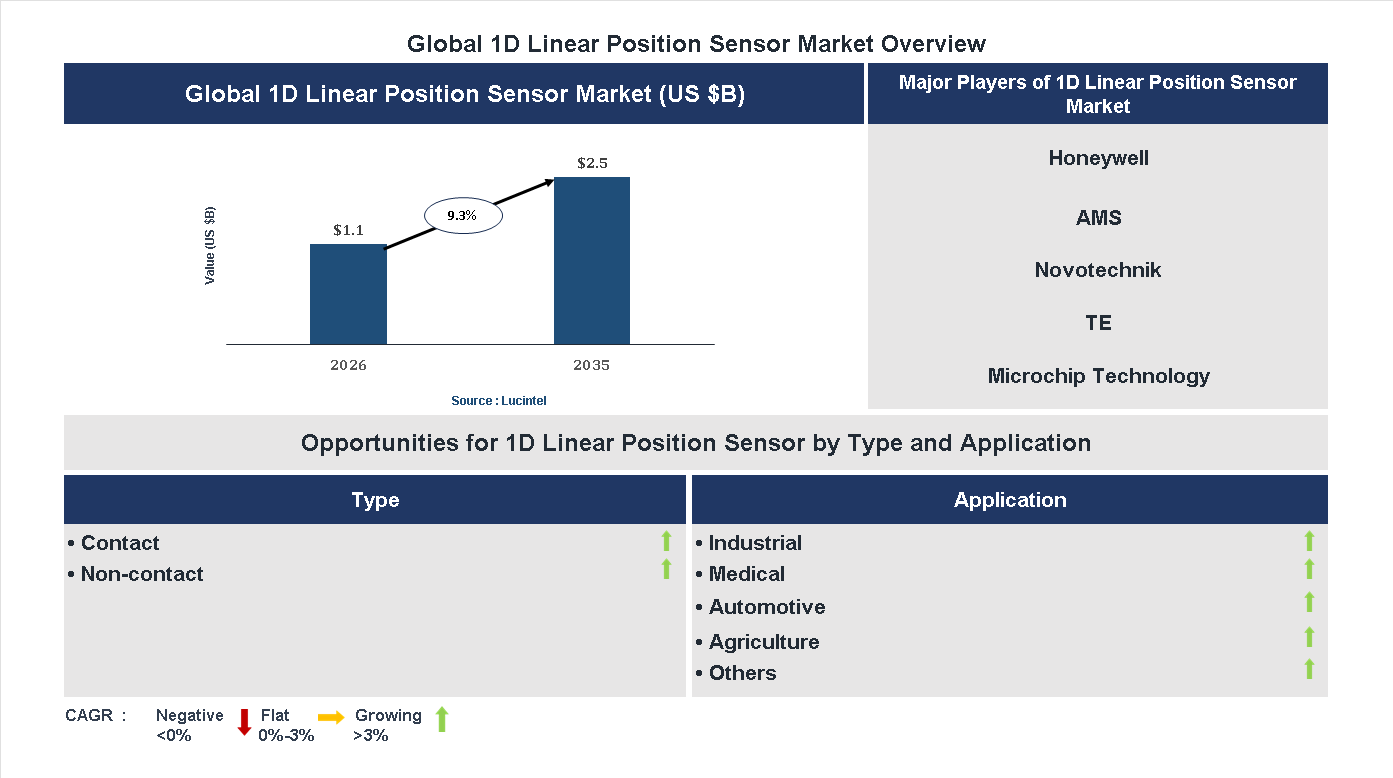
Key data points: The market size in 2035 = $2.5 billion, growth forecast = 9.3% annually for the next 8 years. Scroll below to get more insights. This market report covers trends, opportunities and forecasts in 1D linear position sensor market to 2035 by type (contact and non-contact), application (industrial, medical, automotive, agriculture, and others), and region (North America, Europe, Asia Pacific, and the Rest of the World)
We'll send your sample report shortly.
• Lucintel forecasts that, within the type category, non-contact is expected to witness higher growth over the forecast period.
• Within the application category, automotive is expected to witness the highest growth.
• In terms of region, APAC is expected to witness the highest growth over the forecast period. Gain valuable insights for your business decisions with our comprehensive 150+ page report. Sample figures with some insights are shown below.
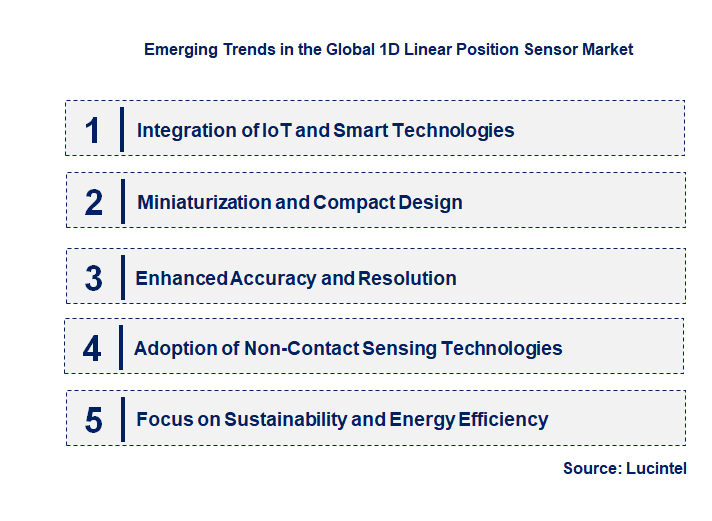
• Integration of IoT and Smart Technologies: The incorporation of Internet of Things (IoT) capabilities into linear position sensors is transforming their functionality. These sensors now offer real-time data transmission, remote monitoring, and predictive maintenance features. This integration enhances operational efficiency, reduces downtime, and enables smarter decision-making processes in manufacturing, automotive, and aerospace industries. As IoT adoption accelerates, sensors with connectivity features are becoming a standard requirement, driving market growth and innovation.
• Miniaturization and Compact Design: Advances in materials and manufacturing techniques are enabling the development of smaller, more compact linear position sensors. These miniaturized sensors are ideal for applications with space constraints, such as medical devices, robotics, and consumer electronics. The trend towards miniaturization improves system integration, reduces overall device size, and enhances performance. This shift is expanding the application scope of linear position sensors, making them more versatile and accessible across various sectors.
• Enhanced Accuracy and Resolution: Market demand for high-precision measurements is pushing manufacturers to develop sensors with improved accuracy and resolution. Innovations include the use of advanced sensing elements, better signal processing algorithms, and noise reduction techniques. These enhancements are critical for applications requiring meticulous control, such as semiconductor manufacturing, aerospace, and scientific research. The focus on precision is elevating the performance standards of linear position sensors and opening new avenues for their use.
• Adoption of Non-Contact Sensing Technologies: Non-contact sensors, such as inductive, capacitive, and optical types, are gaining popularity due to their durability and reliability. These sensors eliminate wear and tear associated with contact-based sensors, offering longer lifespan and maintenance-free operation. They are particularly suitable for harsh environments with dust, moisture, or high temperatures. The shift towards non-contact sensing is improving sensor longevity and expanding its applicability in challenging industrial settings.
• Focus on Sustainability and Energy Efficiency: Environmental concerns and energy-saving initiatives are influencing sensor development. Manufacturers are designing sensors that consume less power and are made from eco-friendly materials. Energy-efficient sensors contribute to sustainable manufacturing practices and reduce operational costs. This trend aligns with global efforts to minimize environmental impact and promotes the adoption of green technologies across industries, further fueling market expansion. These trends are collectively reshaping the 1D linear position sensor market by enhancing sensor capabilities, expanding application areas, and promoting sustainable practices. The integration of smart technologies, miniaturization, improved accuracy, non-contact sensing, and sustainability initiatives is driving innovation and growth, positioning the market for a more connected, efficient, and environmentally conscious future.
• Growing Adoption in Manufacturing: The manufacturing sector is increasingly adopting 1D linear position sensors for automation and quality control. These sensors provide precise position feedback, improving efficiency and reducing errors. As factories move toward Industry 4.0, the demand for reliable sensors that can withstand harsh environments is rising. This trend enhances productivity, minimizes downtime, and supports smart manufacturing initiatives, making sensors a vital component in modern industrial processes.
• Automotive Industry Expansion: The automotive industry is a significant driver for 1D linear position sensors, especially in autonomous vehicles and advanced driver-assistance systems (ADAS). These sensors enable accurate measurement of component positions, contributing to vehicle safety and performance. The shift toward electric and autonomous vehicles increases the need for precise, durable sensors capable of operating under extreme conditions. This expansion is expected to boost sensor sales and innovation in automotive applications.
• Technological Innovations and Miniaturization: Advances in sensor technology are leading to smaller, more accurate, and cost-effective 1D linear position sensors. Innovations such as MEMS-based sensors and wireless integration are enhancing performance and ease of installation. Miniaturization allows for integration into compact devices and systems, broadening application possibilities. These developments are making sensors more accessible across various sectors, including consumer electronics, healthcare, and aerospace, thereby expanding market reach.
• Integration with IoT and Smart Systems: The integration of 1D linear position sensors with IoT platforms is transforming data collection and system automation. These sensors enable real-time monitoring and predictive maintenance, reducing operational costs. IoT connectivity enhances sensor functionality, allowing remote diagnostics and data analytics. This trend supports the development of smart factories, connected vehicles, and intelligent infrastructure, significantly impacting how industries optimize processes and improve efficiency.
• Increasing Focus on Durability and Environmental Resistance: Market players are emphasizing the development of sensors that can operate reliably in extreme conditions, such as high temperatures, moisture, and vibrations. Enhanced durability extends sensor lifespan and reduces maintenance costs, making them suitable for harsh environments like oil & gas, aerospace, and heavy machinery. This focus on environmental resistance is expanding the application scope and ensuring consistent performance, thereby strengthening market competitiveness and customer confidence. These developments are significantly impacting the 1D linear position sensor market by driving innovation, expanding application areas, and improving performance and reliability. The integration with IoT and focus on durability are creating new opportunities for growth across industries. As technology advances and demand increases, the market is poised for sustained expansion, with companies investing in smarter, more durable, and versatile sensors to meet evolving industry needs.
• Expansion Into Industrial Automation and Robotics: The integration of 1D linear position sensors into industrial automation and robotics systems offers enhanced precision and control. As factories adopt smart manufacturing practices, these sensors enable real-time position feedback, improving process efficiency and safety. The demand for reliable, high-performance sensors in automated machinery is expected to grow, creating opportunities for manufacturers to develop specialized solutions that cater to complex industrial environments and increase productivity.
• Growing Adoption in Automotive and Transportation Sectors: The automotive industry increasingly relies on 1D linear position sensors for applications such as throttle control, suspension systems, and autonomous vehicle navigation. The push toward electric and autonomous vehicles drives demand for accurate, durable sensors capable of operating under harsh conditions. This sector’s expansion offers manufacturers opportunities to innovate with rugged, high-precision sensors that meet stringent safety and performance standards, thereby capturing a larger market share.
• Integration with IoT and Smart Devices: The rise of IoT-enabled devices and smart systems is creating new avenues for 1D linear position sensors. These sensors facilitate real-time data collection and remote monitoring in smart homes, wearables, and industrial IoT applications. Developing low-power, wireless, and easily integrable sensors can unlock significant growth potential. As connectivity becomes essential, sensor manufacturers can capitalize on the demand for seamless integration and enhanced data analytics capabilities.
• Advancements in Sensor Technology and Miniaturization: Continuous innovation in sensor materials, design, and manufacturing processes is enabling the production of smaller, more accurate, and cost-effective 1D linear position sensors. Miniaturization allows integration into compact devices and complex systems, expanding application possibilities. These technological advancements help meet the needs of emerging markets such as consumer electronics and medical devices, providing opportunities for companies to differentiate their offerings and gain competitive advantages.
• Focus on Customization and Industry-Specific Solutions: Tailoring sensors to meet specific industry requirements is a key growth opportunity. Custom solutions for sectors like aerospace, defense, and medical devices demand high precision, reliability, and environmental resilience. Companies that develop adaptable, industry-specific sensors can better serve niche markets, foster long-term customer relationships, and command premium pricing. This focus on customization enhances market penetration and supports sustained growth in diverse application areas. The 1D linear position sensor market is poised for substantial expansion driven by technological innovation, industry-specific needs, and the integration of sensors into emerging digital ecosystems. These growth opportunities enable manufacturers to diversify their offerings, improve product performance, and address evolving customer demands. As industries continue to adopt smarter, more connected systems, the market’s overall impact will be characterized by increased efficiency, safety, and technological advancement, fostering long-term growth and competitiveness.
• Technological Innovation: The rapid development of sensor technologies, including improved accuracy, miniaturization, and integration capabilities, has expanded application possibilities across sectors such as manufacturing, automotive, and aerospace. These advancements enable more precise control and monitoring, leading to increased demand. Continuous R&D investments foster new product development, enhancing market competitiveness, and opening new revenue streams. As technology evolves, sensors become more reliable and cost-effective, further accelerating adoption.
• Growing Automation and Industry 4.0: The global shift towards automation and Industry 4.0 initiatives is a major growth driver. Manufacturing plants, logistics, and robotics rely heavily on linear position sensors for precise movement control. The demand for smart factories and automated systems necessitates high-performance sensors, boosting market growth. This trend is supported by the need for increased efficiency, reduced labor costs, and improved safety standards, making sensors integral to modern industrial processes.
• Increasing Adoption in Automotive and Aerospace Sectors: The automotive industry’s focus on autonomous vehicles, electric vehicles, and advanced driver-assistance systems (ADAS) significantly drives demand for linear position sensors. Similarly, aerospace applications require high-precision sensors for navigation, control, and safety systems. The expanding use of sensors in these sectors enhances vehicle safety, performance, and reliability, contributing to market expansion. As these industries grow and innovate, the need for sophisticated position sensing solutions intensifies.
• Regulatory and Safety Standards: Stringent safety and quality regulations across industries compel manufacturers to adopt reliable and certified sensors. Compliance with standards such as ISO, IEC, and industry-specific regulations ensures product safety and performance, fostering market growth. Regulatory frameworks also encourage innovation in sensor design to meet evolving standards, creating opportunities for new product development and differentiation in the market. The challenges facing the 1D linear position sensor market include:-
• High Development and Manufacturing Costs: Developing advanced linear position sensors involves significant R&D investment, sophisticated manufacturing processes, and high-quality materials. These costs can limit market entry for smaller players and increase product prices, potentially restricting adoption in cost-sensitive markets. Additionally, maintaining quality standards and technological updates adds to ongoing expenses, impacting overall profitability and competitiveness.
• Supply Chain Disruptions: The global supply chain has faced disruptions due to geopolitical tensions, pandemics, and logistical challenges. Shortages of critical components, raw materials, and manufacturing delays can hinder production schedules and lead to increased costs. These disruptions threaten timely delivery and can diminish customer trust, ultimately affecting market growth and profitability.
• Regulatory Compliance and Certification Challenges: Navigating complex regulatory landscapes requires significant effort and resources. Achieving compliance with diverse standards across regions can delay product launches and increase costs. Non-compliance risks include legal penalties, product recalls, and damage to brand reputation. Staying ahead of evolving regulations demands continuous adaptation, which can be resource-intensive for manufacturers. In summary, the 1D linear position sensor market is driven by technological advancements, automation trends, and industry-specific demands, which foster growth and innovation. However, high costs, supply chain issues, and regulatory hurdles pose significant challenges that could impede market expansion. The overall impact hinges on how effectively stakeholders can leverage technological opportunities while managing these obstacles. Strategic investments, supply chain resilience, and regulatory compliance will be crucial for sustained growth and competitive advantage in this evolving market landscape.
• Honeywell
• AMS
• Novotechnik
• TE
• Microchip Technology
• Infineon Technologies
• Allegro MicroSystems
• TT Electronics
• Vish
• Renishaw
• Contact
• Non-contact
• Industrial
• Medical
• Automotive
• Agriculture
• Others
• North America
• Europe
• Asia Pacific
• The Rest of the World
• United States: The US market has seen increased adoption of advanced sensor technologies, including IoT-enabled sensors for smart manufacturing and automation. Major players are investing in R&D to develop more accurate and durable sensors, with a focus on automotive and aerospace applications. The rise of Industry 4.0 has further propelled demand for high-precision sensors, and collaborations between tech firms and sensor manufacturers are expanding the market scope.
• China: China continues to lead in manufacturing and automation, with rapid adoption of 1D linear position sensors across industrial sectors. The government’s push for smart factories and Industry 4.0 initiatives has accelerated sensor deployment. Local companies are innovating in cost-effective sensor solutions, and there is a growing emphasis on integrating sensors with AI and machine learning for predictive maintenance and enhanced performance.
• Germany: Germany’s market is characterized by a focus on high-quality, reliable sensors for automotive, robotics, and industrial machinery. The country’s emphasis on precision engineering and automation has driven innovations in sensor accuracy and durability. German firms are also investing in sustainable sensor solutions, aligning with the country’s environmental goals and Industry 4.0 standards.
• India: India’s market is witnessing rapid growth due to increased industrialization and infrastructure development. The adoption of linear position sensors is expanding in manufacturing, automotive, and renewable energy sectors. Local manufacturers are focusing on affordable, robust sensors suitable for diverse environmental conditions, while government initiatives support the adoption of automation technologies.
• Japan: Japan remains a leader in sensor technology innovation, with a focus on miniaturization and high-performance sensors for robotics, electronics, and automotive industries. Japanese companies are pioneering in integrating sensors with AI and IoT platforms to enable smarter automation solutions. The emphasis on quality and precision continues to drive advancements in sensor design and functionality.


• Honeywell
• AMS
• Novotechnik
• TE
• Microchip Technology
• Infineon Technologies
• Allegro MicroSystems
• TT Electronics
• Vish
• Renishaw Q6. Which 1D linear position sensor market segment will be the largest in future? Answer: Lucintel forecasts that, within the type category, non-contact is expected to witness higher growth over the forecast period. Q7. In 1D linear position sensor market, which region is expected to be the largest in next 5 years? Answer: In terms of region, APAC is expected to witness the highest growth over the forecast period. Q8. Do we receive customization in this report? Answer: Yes, Lucintel provides 10% customization without any additional cost.


Choose a license that fits your team. Instant PDF delivery.
Prices exclude taxes. Instant delivery. Custom licensing available on request.
Market Report · July 15, 2026
Market Report · July 13, 2026
Market Report · July 13, 2026
Trusted partner for strategic intelligence and business growth


Receive a complimentary market analysis tailored to your industry. Our analysts will identify key growth opportunities and competitive dynamics specific to your business.

Market size, growth rate, and key trend analysis for your specific sector.

Top competitor positioning and market share analysis.

Strategic recommendations backed by data-driven insights.
Get curated market intelligence and competitive moves straight to your inbox.
By subscribing, you agree to receive our monthly insights. Unsubscribe anytime.
Receive a complimentary market analysis tailored to your industry. Our analysts will identify key growth opportunities and competitive dynamics specific to your business.
Market size, growth rate, and key trend analysis for your specific sector.
Top competitor positioning and market share analysis.
Strategic recommendations backed by data-driven insights.
Get curated market intelligence, emerging trends, and competitive moves straight to your inbox each month.
By subscribing, you agree to receive our monthly insights. Unsubscribe anytime.
We'll send your sample report shortly.